
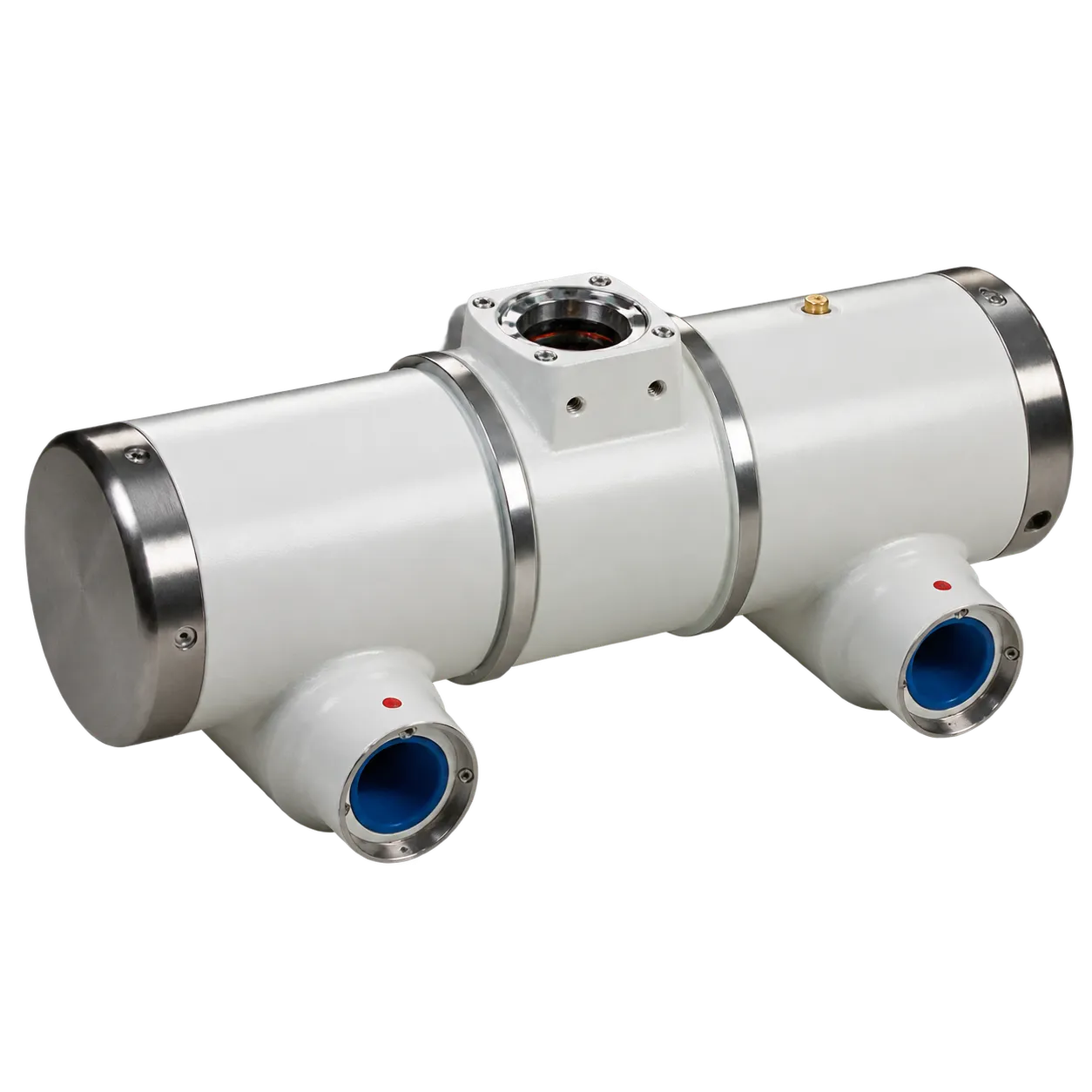
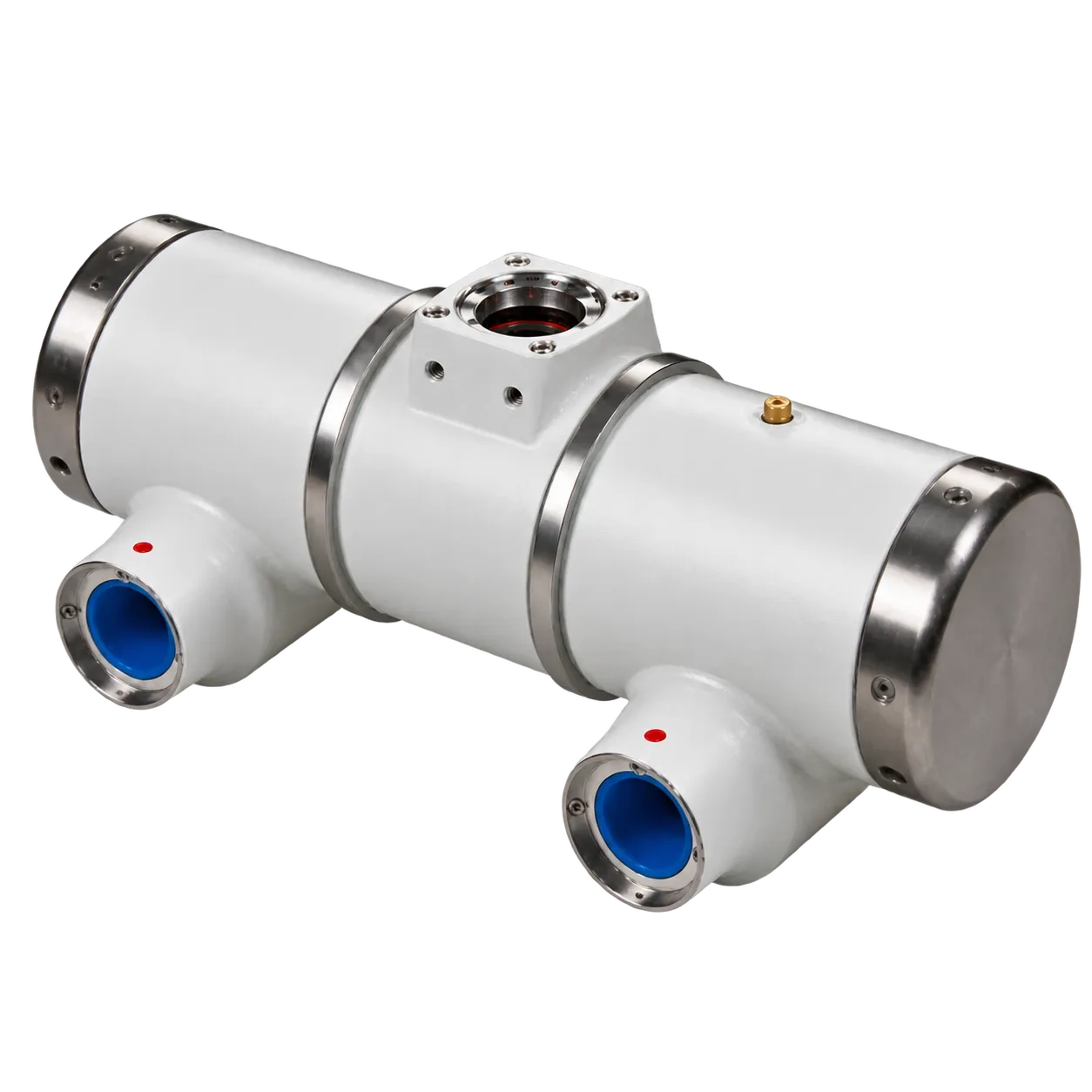
Tube choice determines how a room behaves, and this X-ray tube assembly combines two focal spots in one housing. The finer one sharpens small bones and joints, where a small source keeps edges crisp, while the broader one carries the heavier trunk projections. That combination suits a general room covering extremities in the morning and abdomens in the afternoon, which is the pattern most departments run through a working week.
Low-speed rotation is the trade-off. A slower anode presents the focal track to the beam less quickly, so heat builds in one place sooner, and the tube cannot absorb as much energy in a very brief exposure as a high-speed design would. For routine radiography, at the exposure times most examinations use, that is rarely a problem. It becomes one if a department expects millisecond exposures at high current, which is exactly what the larger generators in this range are built to deliver.
Two figures are missing, and both bear on daily work. Anode heat storage decides how many exposures can follow one another before the tube needs to cool, which shapes throughput on a busy list. Inherent filtration contributes to the total the room must meet, and a physics team measures that at commissioning against the required minimum. After any tube change, output, dose and image quality are measured before clinical use resumes.
Medigear.uk gathers the heat data, filtration and type number from Blackstone, so the engineer and the physics team have them well in advance of the work.