
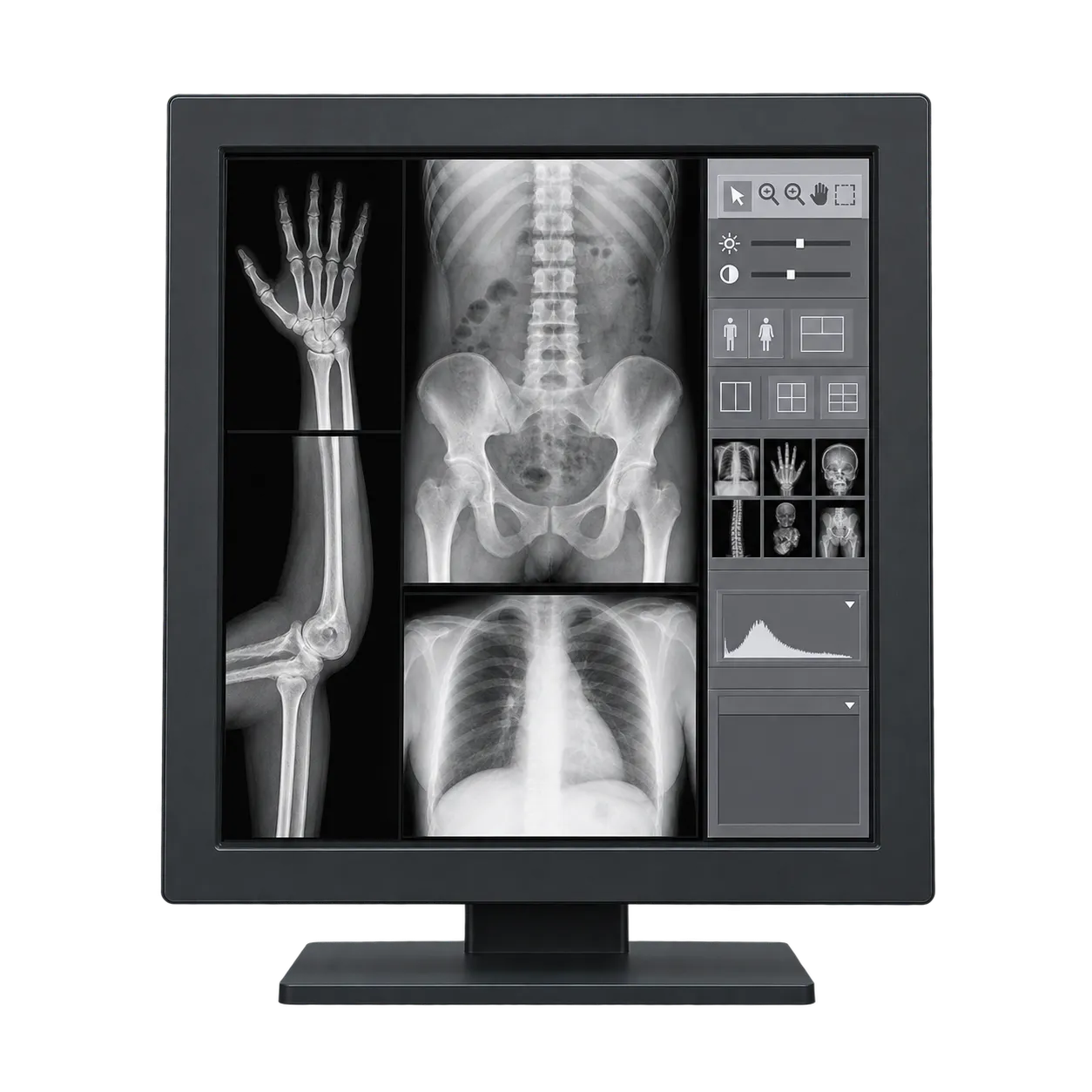

Where a screen sits in the imaging pathway decides what it needs to do. A display in the X-ray room lets the radiographer check positioning, collimation and exposure before the patient leaves. A display at a ward station lets a clinician look at a result. A display in a reporting room carries the radiologist's diagnosis, and it has the tightest requirements of all. Each role has its own expectations, and they are not interchangeable.
UK guidance draws the line clearly. Primary diagnostic workstations are expected to have at least 3 megapixels, a luminance range of at least 1 to 350 candelas per square metre, and hardware calibration that holds within ten per cent of the DICOM grayscale standard. Clinical review displays should reach at least 2 megapixels, run from 0.8 to 250 candelas, and be calibrated at least annually within twenty per cent of the same standard. Mammography sits higher again, needing more resolution and more brightness than general reporting.
Read against that, a panel quoted at 19 inches and 2 megapixels is a clinical review screen. It suits checking images beside the equipment or on a ward, which is a perfectly reasonable job. What it should not be asked to do is carry primary reporting without the department satisfying itself on resolution, luminance and calibration.
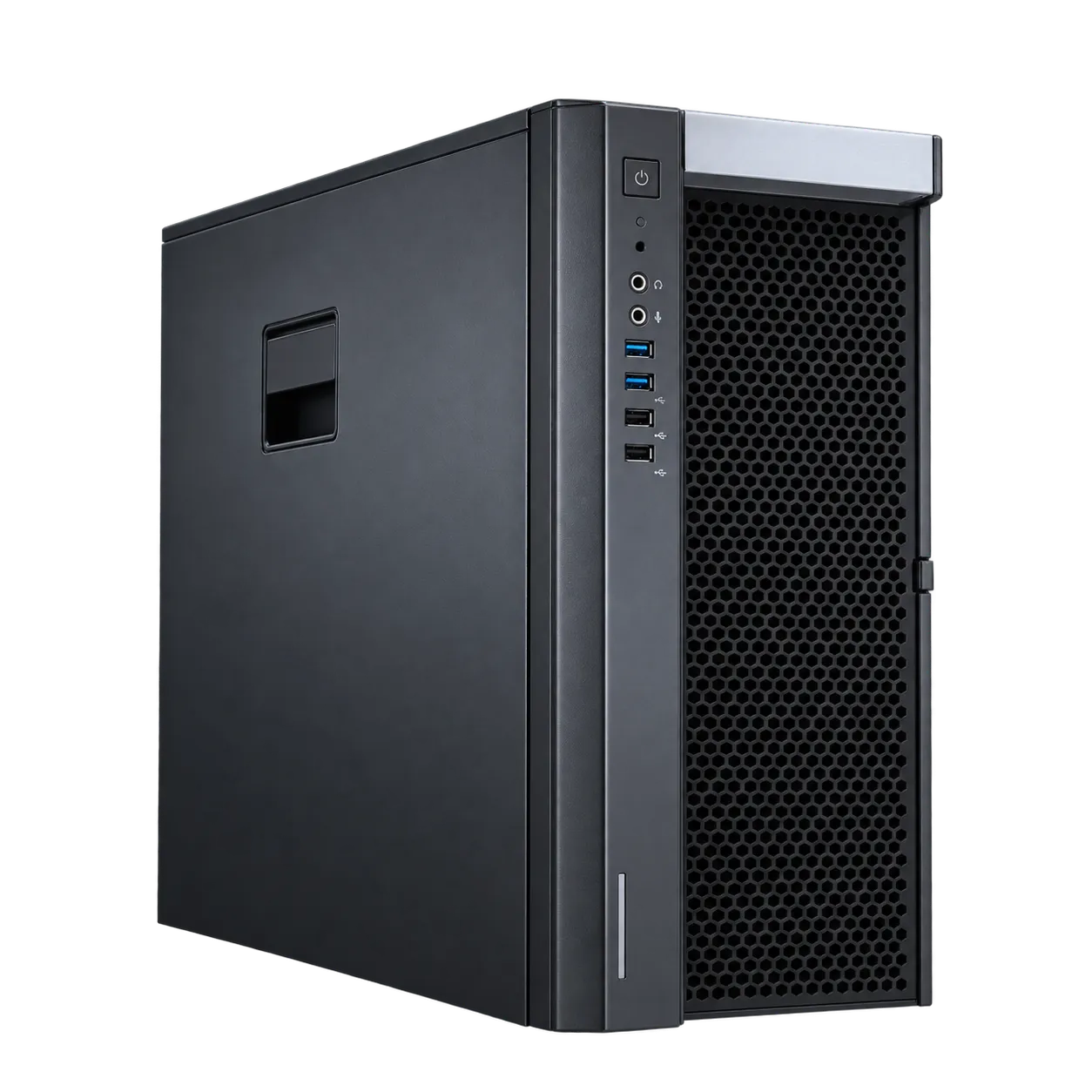
Medigear.uk obtains the panel's figures and the computer's actual specifications so that the imaging team can place this medical LCD workstation correctly in its pathway before installation.