
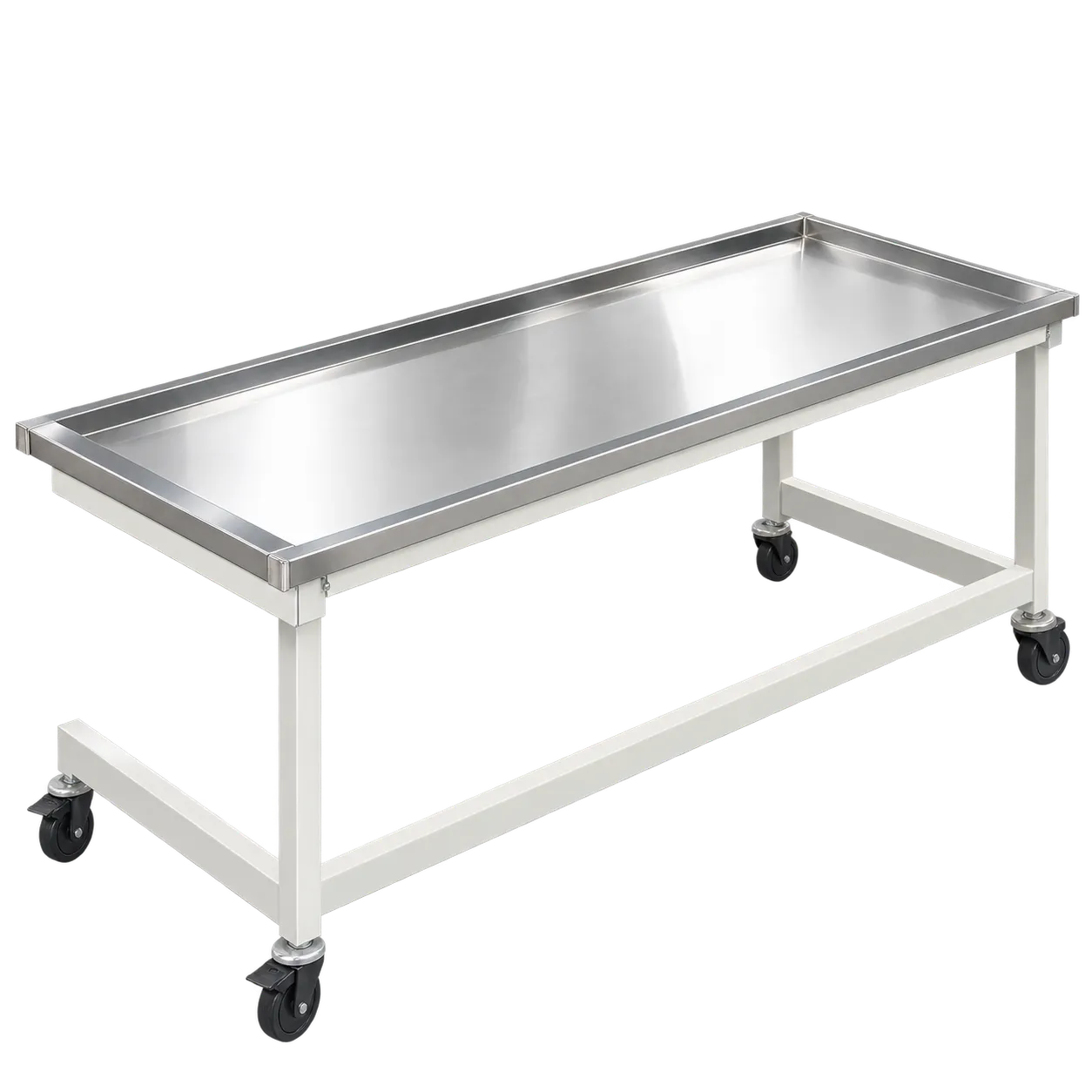
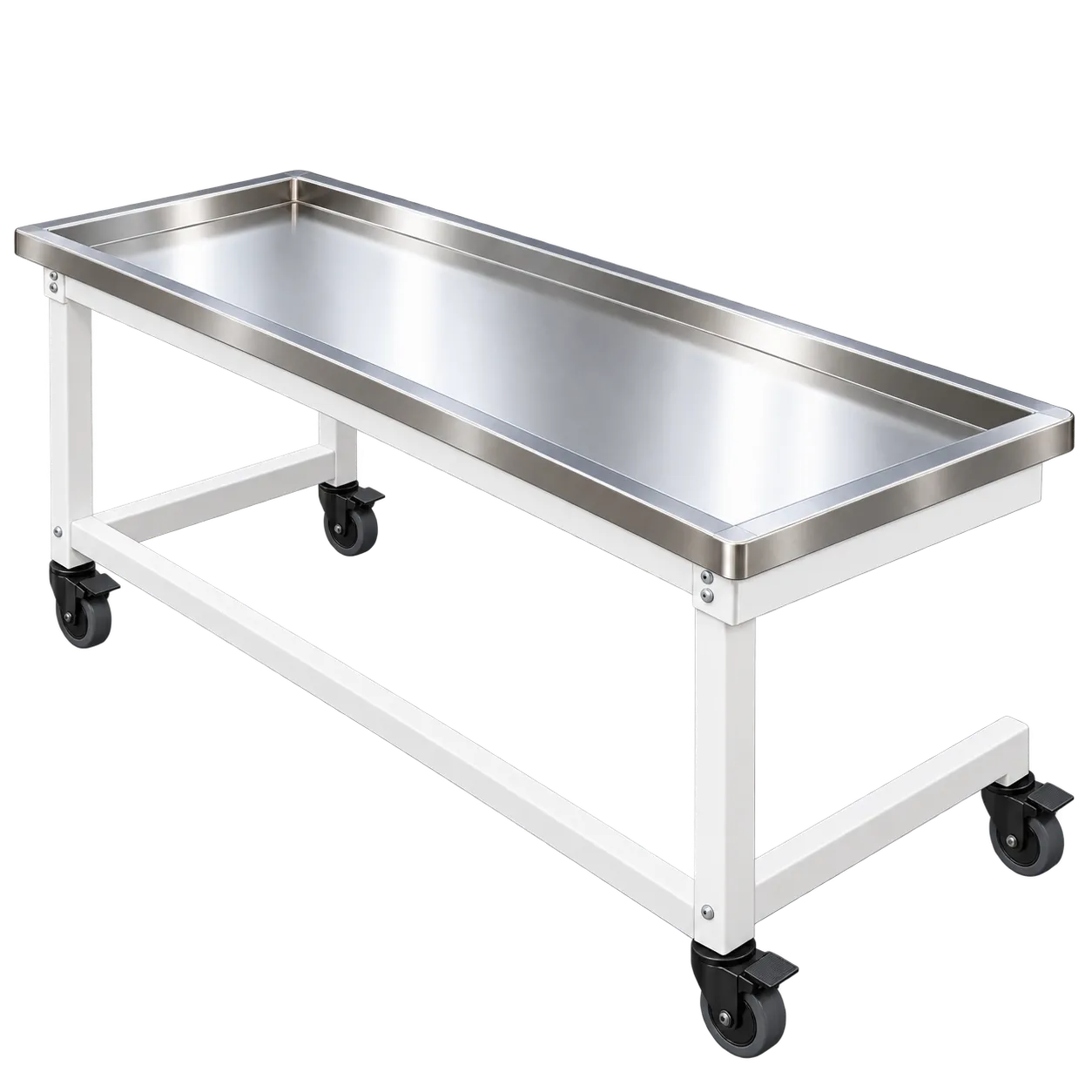
A radiography table like this pairs with a mobile or portable unit rather than a fixed room with its own bucky. The patient lies on the top, the tube comes to them, and the cassette or detector goes under the patient or beneath the surface, depending on how the table is built. That makes the surface material central to how the table can be used, and it is exactly what the page leaves out. Services should settle it before ordering.
At 680 mm, the height suits transfers from a trolley set to match, and staff can work without stooping far. There is no adjustment, though, so patients who find climbing difficult cannot be met halfway, and radiographers cannot raise the top for a lateral projection. Wheelchair users in particular may need a hoist or a step. A width just under 700 mm is on the narrow side for larger patients, which sits consistently with the stated load boundary.
Practical checks follow from that. Castor brakes need to hold firmly while a patient moves on and off. The frame and top need a finish that tolerates repeated cleaning between patients. Any patient support needs a published safe working load, and UK services record it in their risk assessments.
Medigear.uk gathers those details from Blackstone, so the imaging team can judge whether the table suits their patients and their equipment. Accessories such as a mattress or straps are worth asking about when the order is placed.