
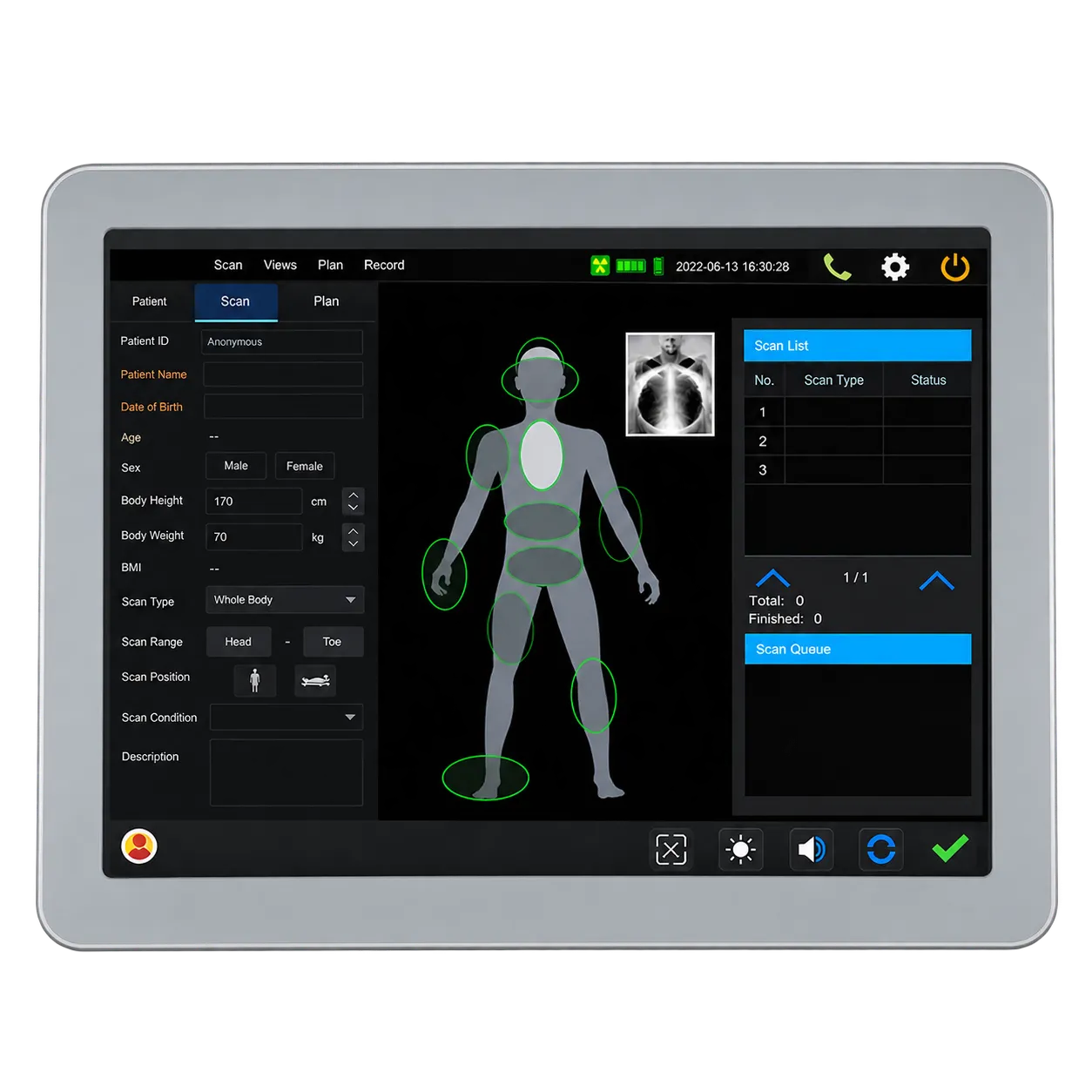
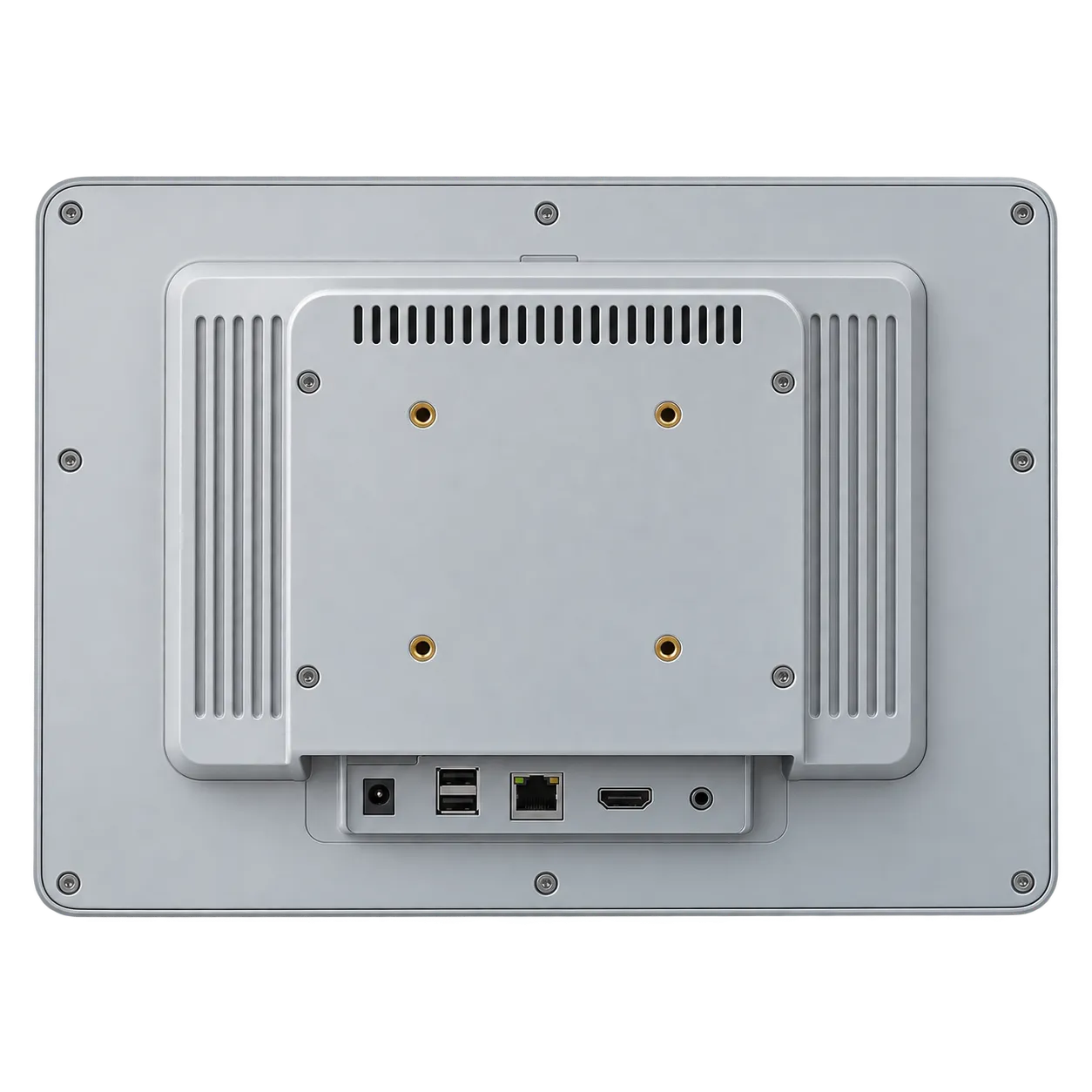
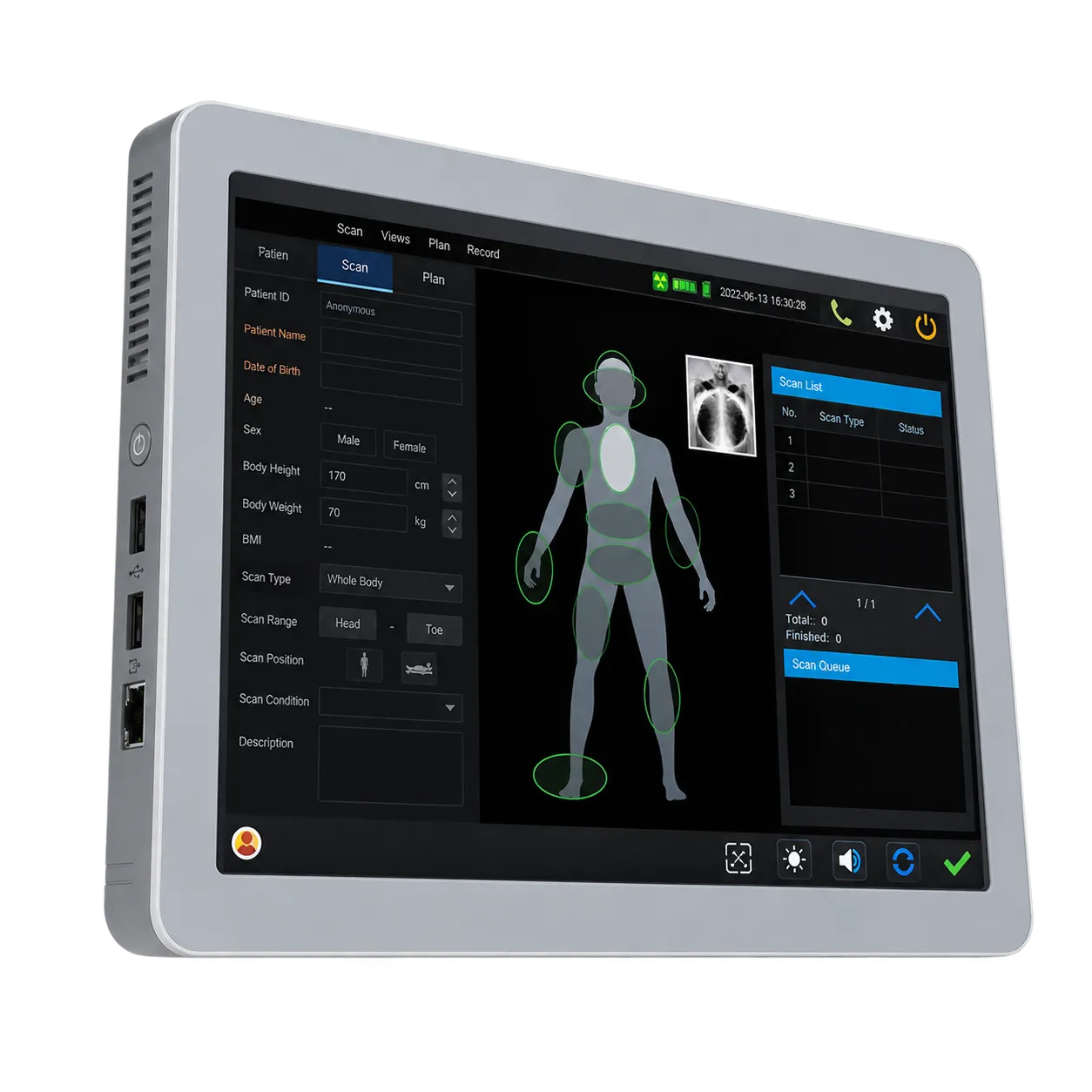
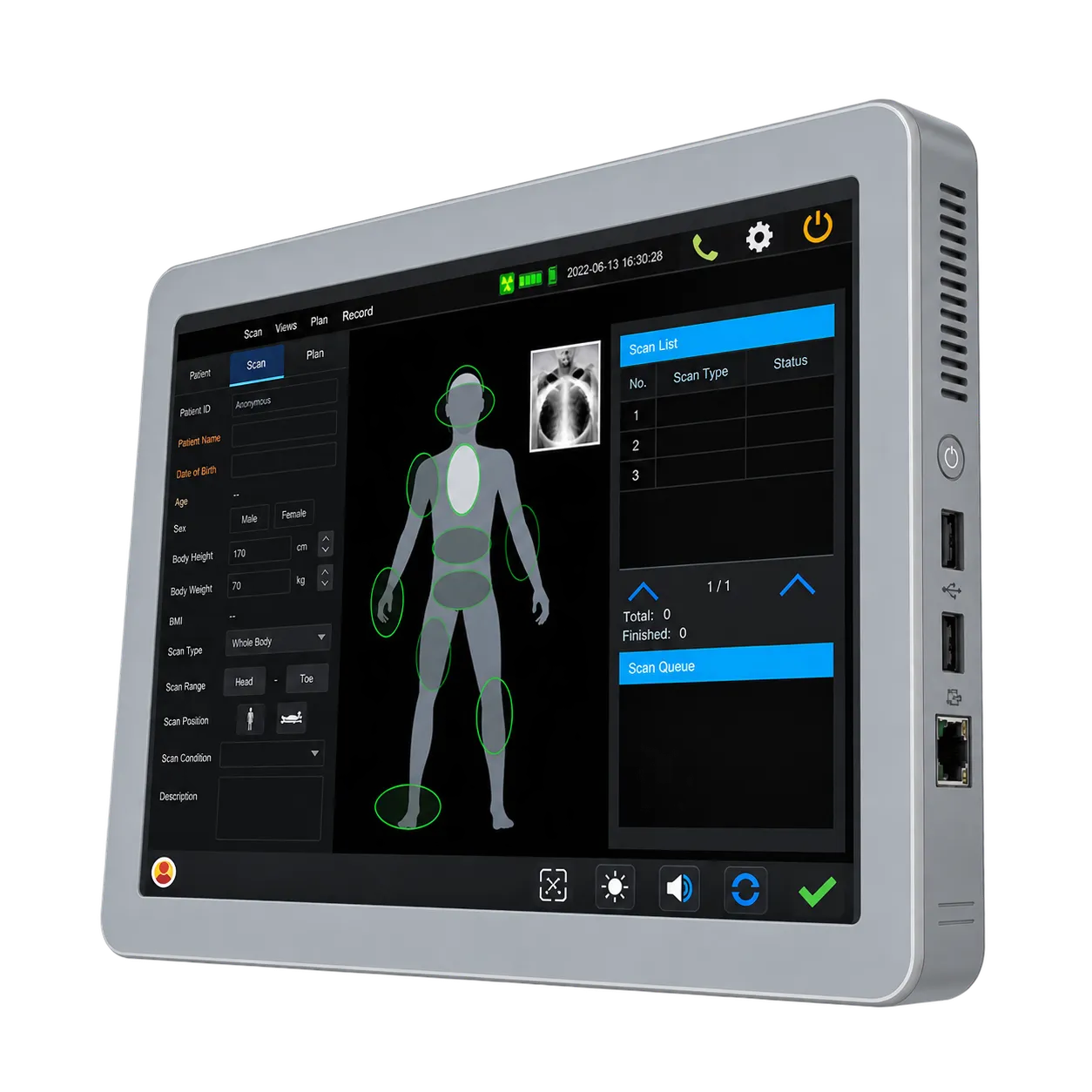
An acquisition console sits beside the X-ray equipment and runs the workday. Staff choose the examination, set the exposure, check each image and send it onward. The anatomical selection screen in the photograph is the usual approach, letting a radiographer pick the projection and load the right settings. A 19-inch display is ample for that work. A touch interface, if one is fitted, keeps things quick between patients. Most of a radiographer's contact with a digital system happens here, so responsiveness matters more than raw specification.
It is not a reporting station, and that distinction matters in the UK. Radiologists read images on calibrated diagnostic displays, and breast imaging uses high-brightness monitors under a formal quality assurance regime. An acquisition console is for capture and checking, with images travelling to PACS for radiologist reporting. That makes the DICOM question central, and the sheet says nothing about worklists, storage commitment or export formats.
Local storage deserves a thought too. At roughly 18 MB per uncompressed radiograph, a 500 GB disk holds about 25,000 images before the operating system takes its share. That is a useful buffer if the network drops, but it is not an archive by any measure. The bigger question for a UK buyer is governance. An unsupported operating system on a hospital network raises issues with security teams, and any patching has to be agreed with the equipment manufacturer.
Medigear.uk collects the software, DICOM and update information for the IT and imaging teams to review together.