
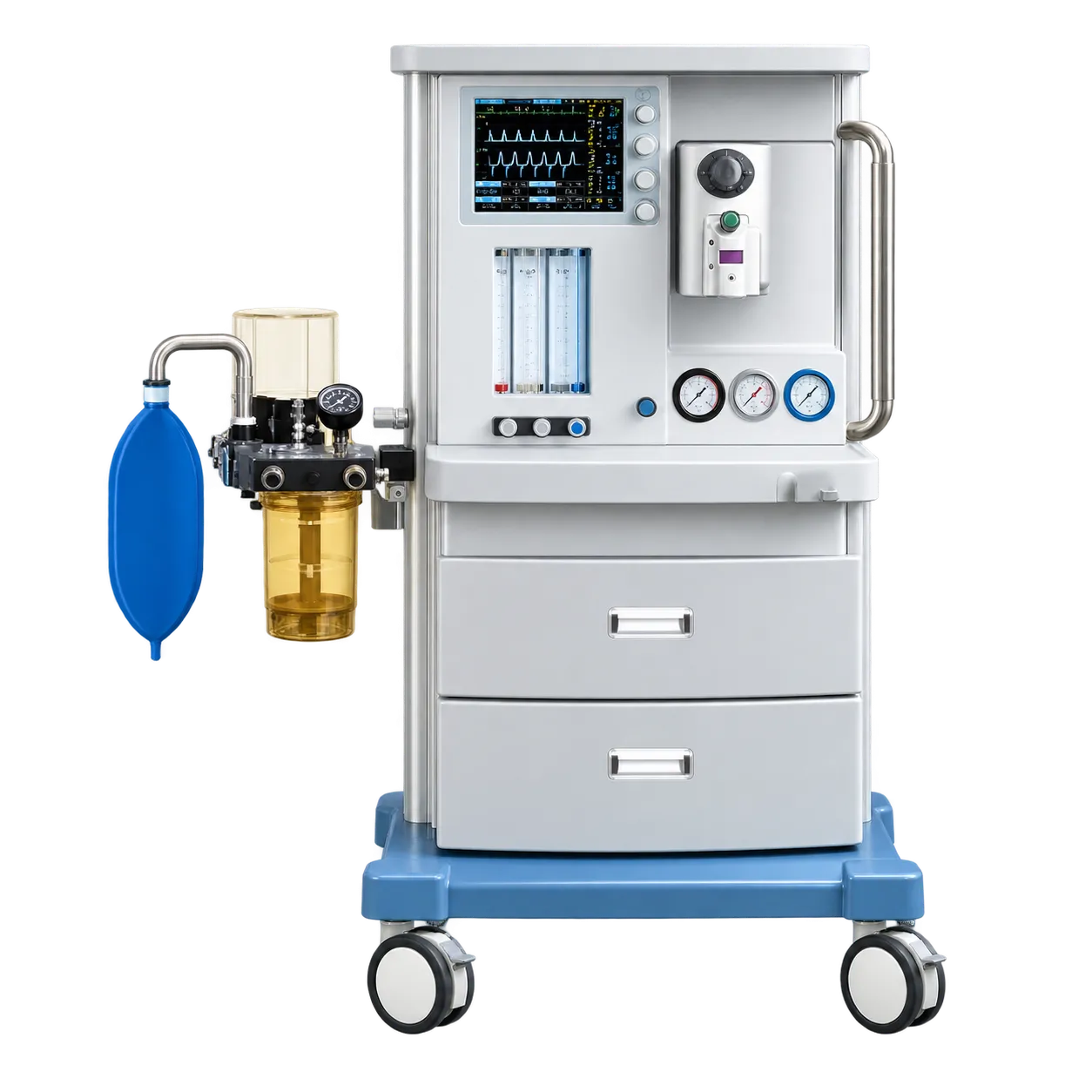
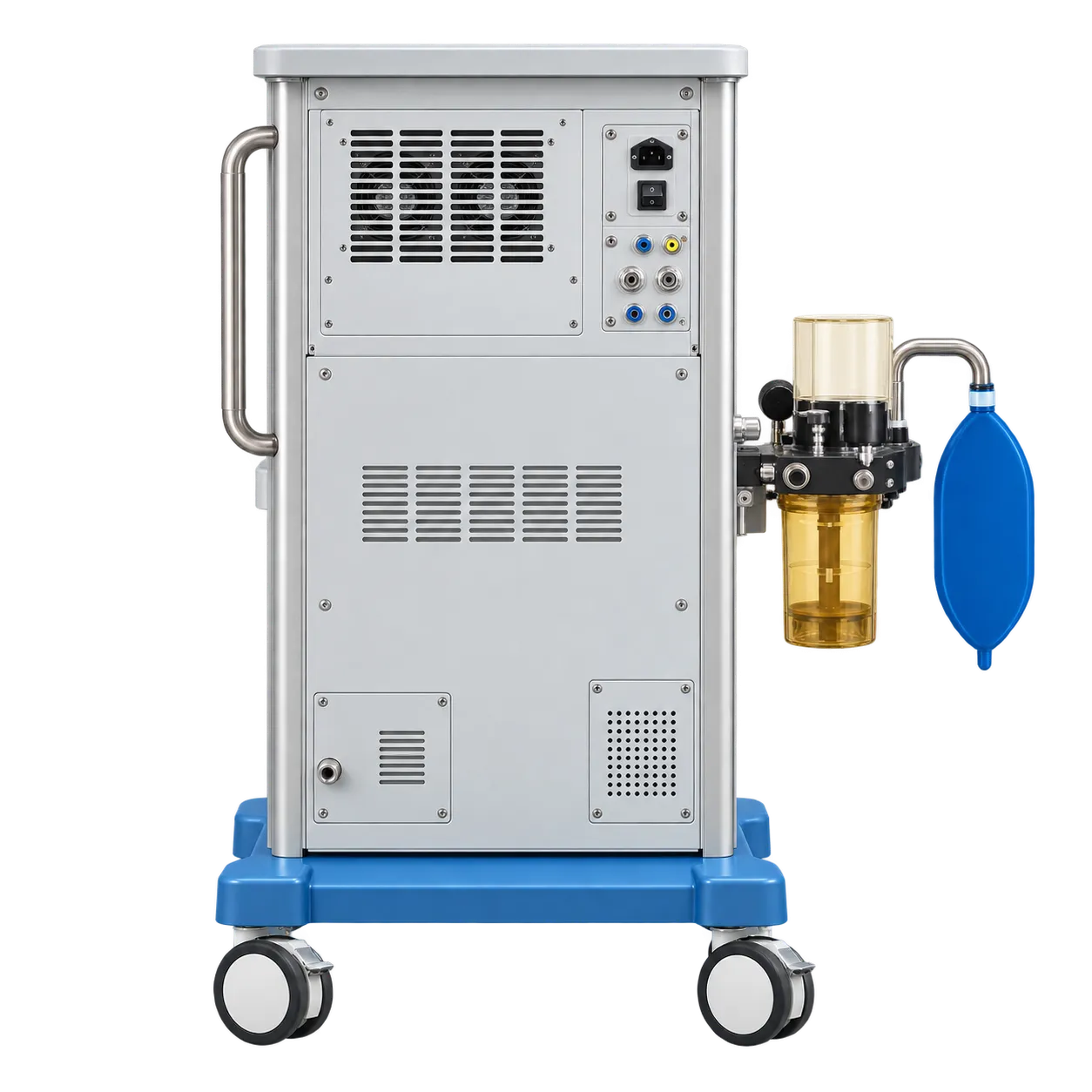
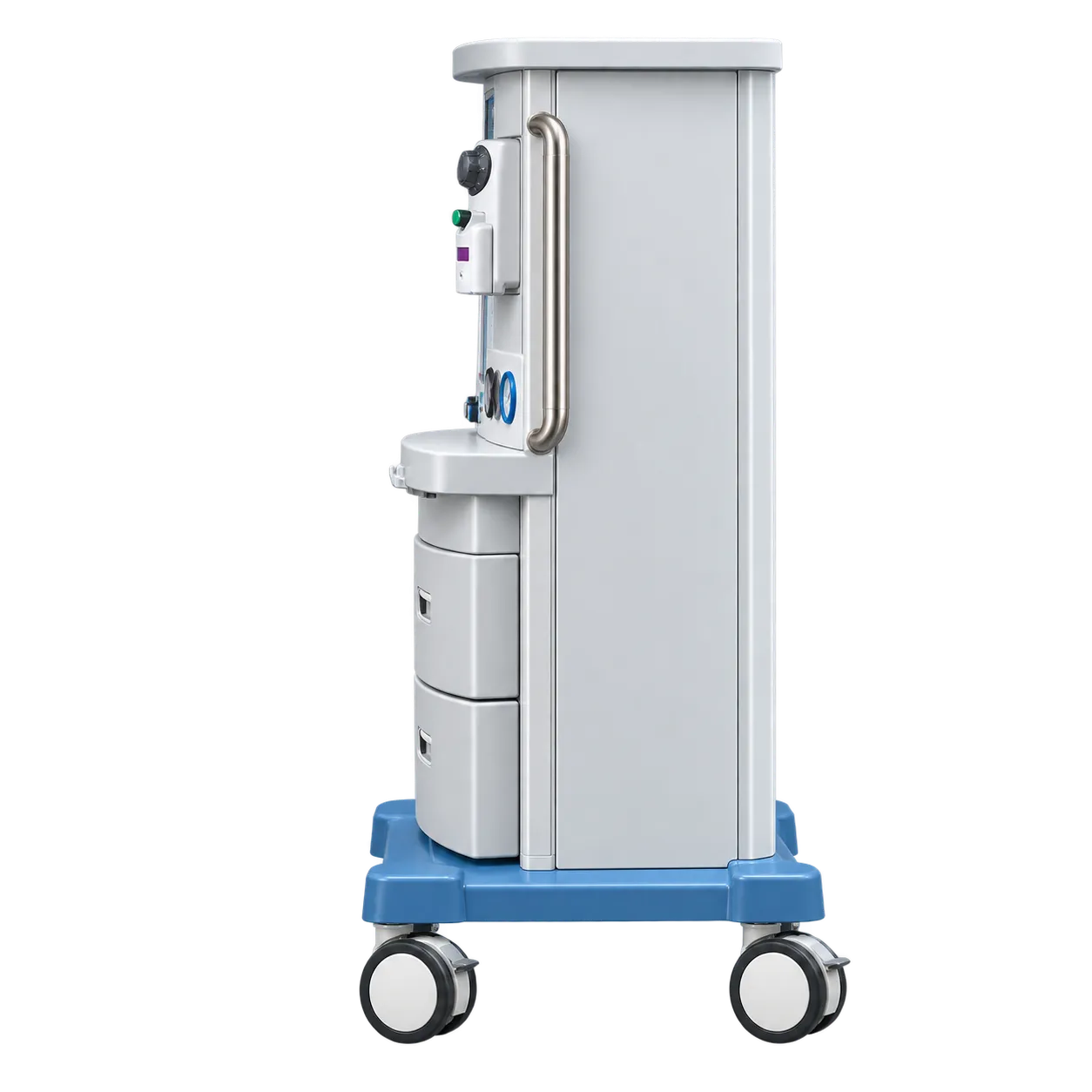
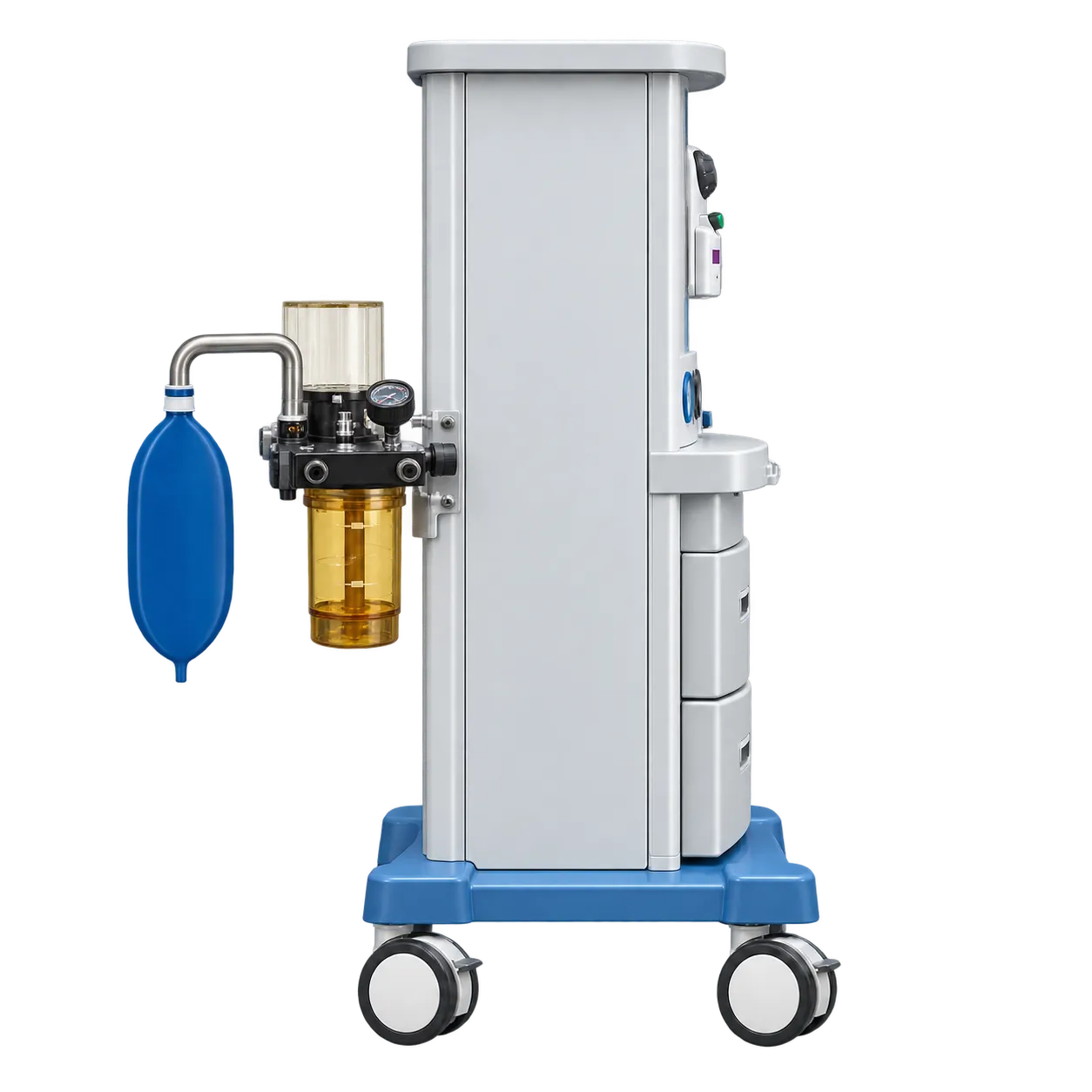
The value of this anaesthetic machine depends almost entirely on one unanswered question. If air is plumbed to the fifth tube, it becomes the only Blackstone machine below the HS-850 that can deliver oxygen and air anaesthesia, opening it to every department avoiding nitrous oxide, which is a growing number. If air is not fitted, it inherits the same restriction as the HS-820 and the HS-01B, and every diluted mixture must use nitrous oxide.
What this anaesthetic machine does publish unambiguously is the breathing rate, and it is welcome. A span of 1 to 99 per minute covers everything from a slow adult rate through to what a small child requires, and having the figure printed rather than absent lets a department check the machine against its practice. Across four previous Blackstone sheets, that figure was missing altogether, so its appearance here marks a real step forward in what the manufacturer chooses to disclose.
The limitations carried over are the familiar ones. Six modes without PEEP puts this anaesthetic machine behind both the HS-820 and the HS-850 on ventilation, and PEEP is applied as routine in modern practice rather than kept in reserve. Delivered volume from 50 ml keeps infant work outside the published range, despite a breathing rate figure that would otherwise suit it perfectly well. Capnography is unmentioned again, exactly as on the four sheets before it.
Medigear.uk establishes the air supply, the PEEP position and the capnography arrangement before either variant reaches a theatre.