


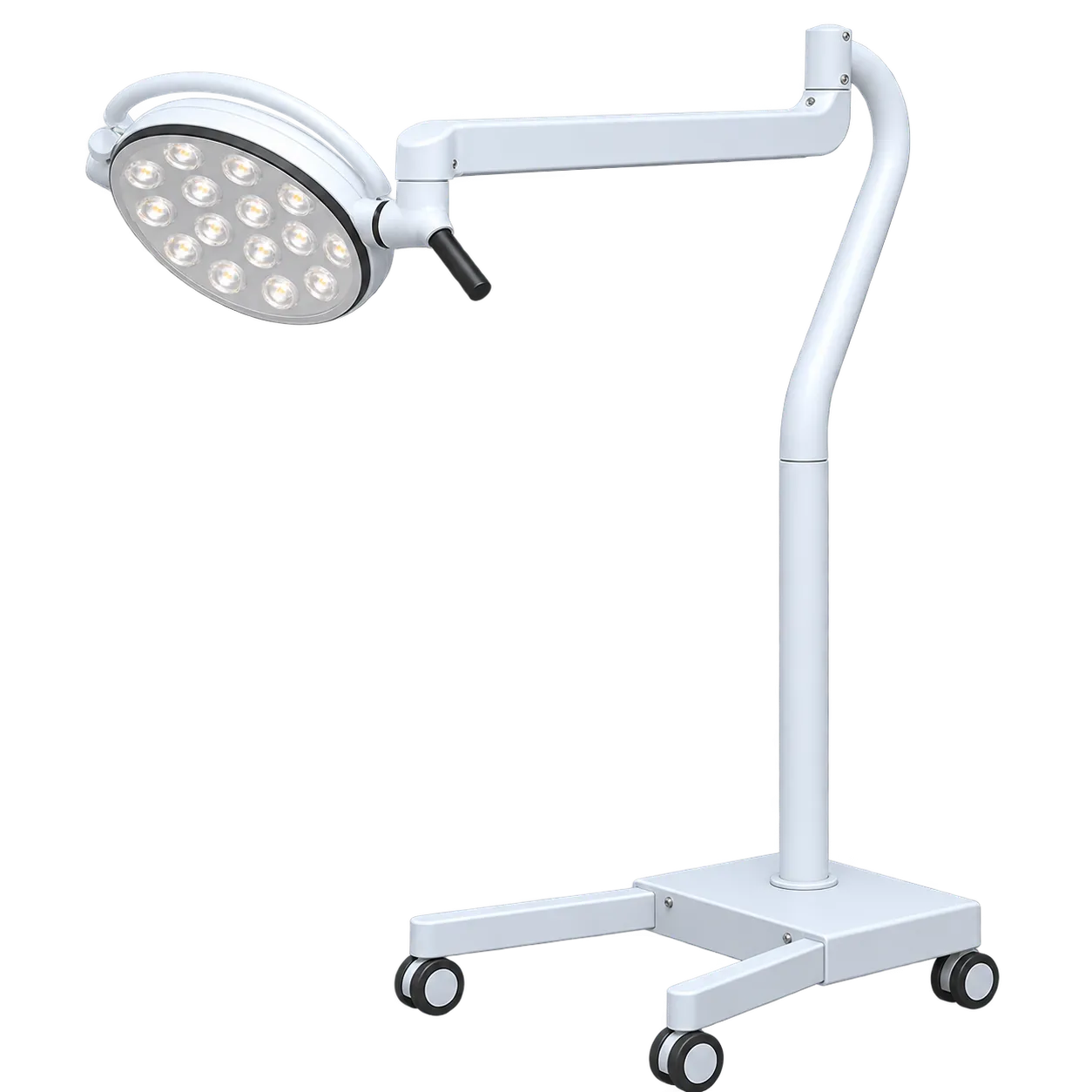
Examination and small procedures are this light's territory, in hospitals and community clinics alike. GP treatment rooms use lights like this for minor surgery and wound care, gynaecology clinics for speculum examination and coil fitting, and dermatology clinics for skin checks and biopsies. Emergency departments use them in minors for suturing and removing foreign bodies, and podiatry clinics doing nail surgery have the same needs. In each case, the field is small, the clinician works close, and the light needs to follow the patient from room to room rather than stay fixed over one couch.
The 125 mm spot suits that work, concentrating light where it is needed without flooding the patient's face. Many of these patients are awake and lie close under the lamp, so glare is a real concern, yet nothing on the sheet suggests the output can be lowered from its 80,000 lux minimum. A mobile examination light that cannot dim may still serve for short tasks. For longer procedures, and for patients who are sensitive to bright light, it is a question worth settling before purchase.
Dermatology shows why the colour figure matters. Judging the margin of a lesion or the colour change around a wound depends on how faithfully the light renders reds and browns, and a guaranteed floor of Ra 80 is below the standard. Medigear.uk puts that question to Blackstone first. The answer then goes to the clinical lead, along with the stand's height range, stability results, and power arrangements, before any order is placed.