


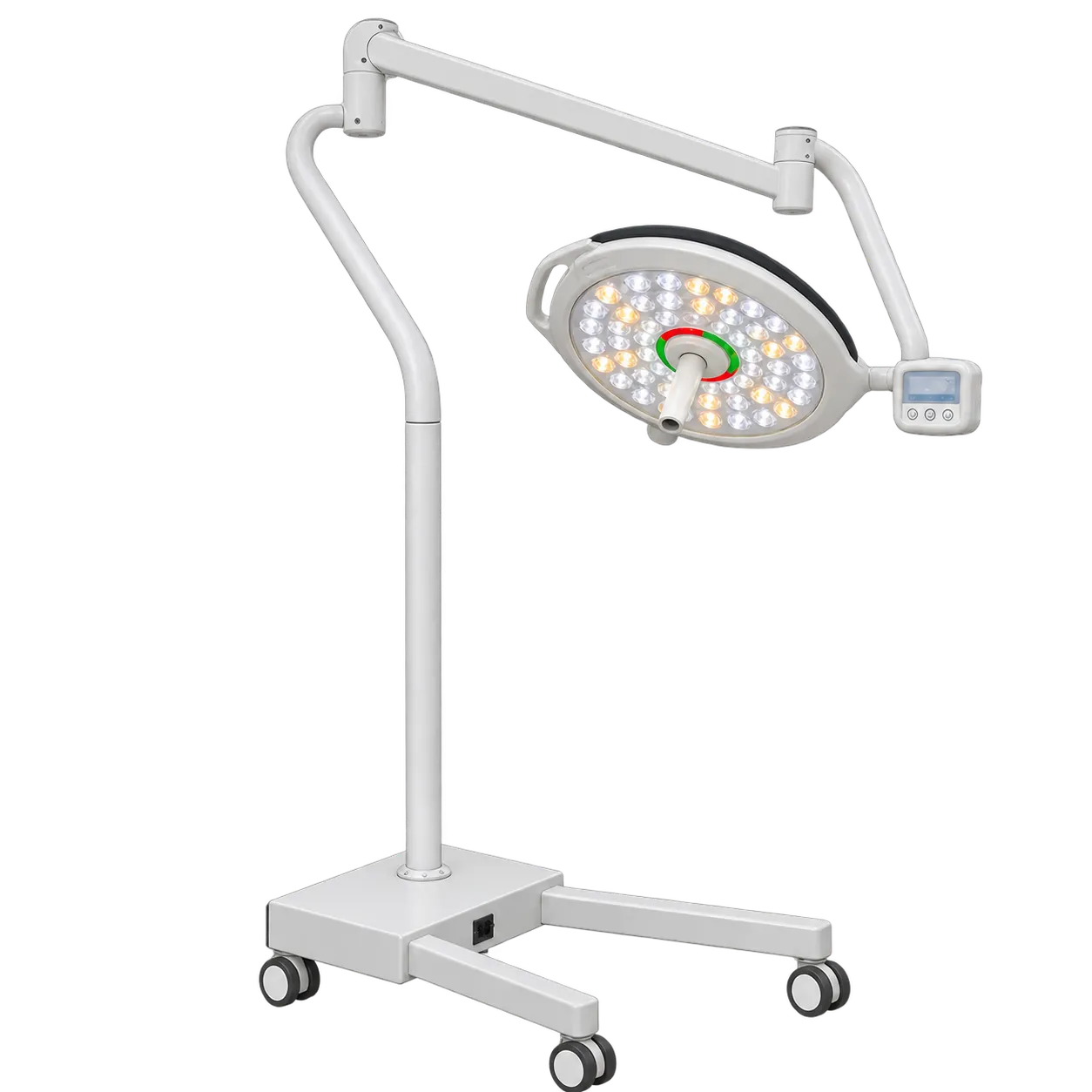
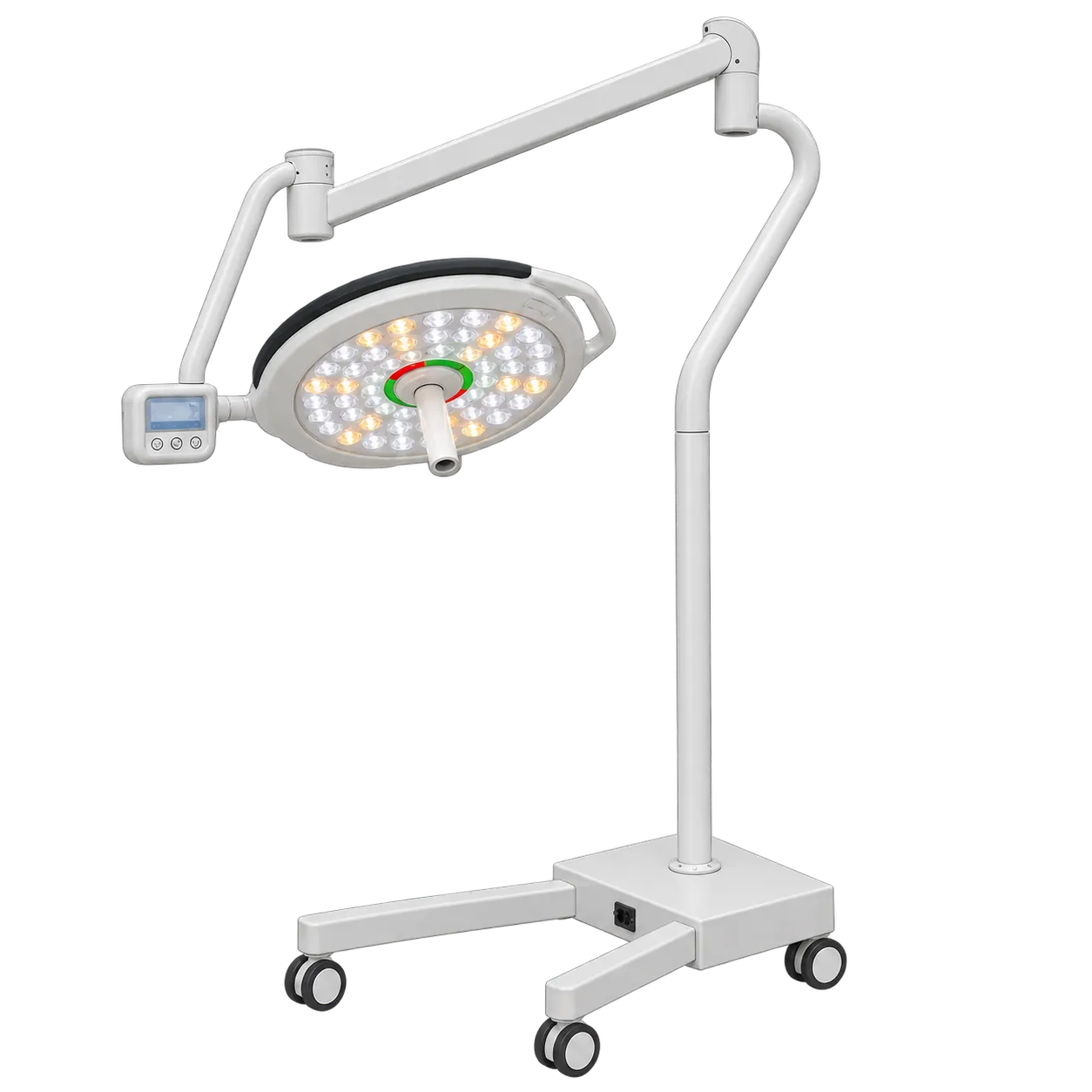
A compact mobile head suit is ideal for tight spaces and close work. Birth rooms need good light for perineal repair, gynaecology clinics need it for outpatient procedures, and emergency departments need it for cubicles too small for a larger stand. Minor surgery in general practice and dermatology follows the same pattern, and wound care clinics use the same kind of light to inspect and clean wounds. The clinician works near the patient, often at the side of a couch, and a 500 mm head can be brought in low without crowding anyone.
It also works as a mobile satellite. Wheeled beside a ceiling light in theatre, it adds a second direction of light to a field that one fixed head leaves shadowed. That use suits this model well, because it lists no shadow compensation of its own. The endoscope mode supports laparoscopic cases in rooms without fixed theatre lighting. Ten brightness steps let staff reduce glare for conscious patients, who are most patients in these settings.
The R9 mode helps where colour tells the clinician something, such as the edge of a skin lesion or the state of a wound bed. Before an order, the room itself needs checking, from door widths and the space beside the couch to the floor surface and whether a trailing mains lead is acceptable. A battery, if Blackstone offers one, would remove the lead altogether.
Medigear.uk gathers the stand dimensions, weight, battery details and stability test results from Blackstone. The clinical lead can then decide whether this mobile procedure light fits the room with the facts in hand.