
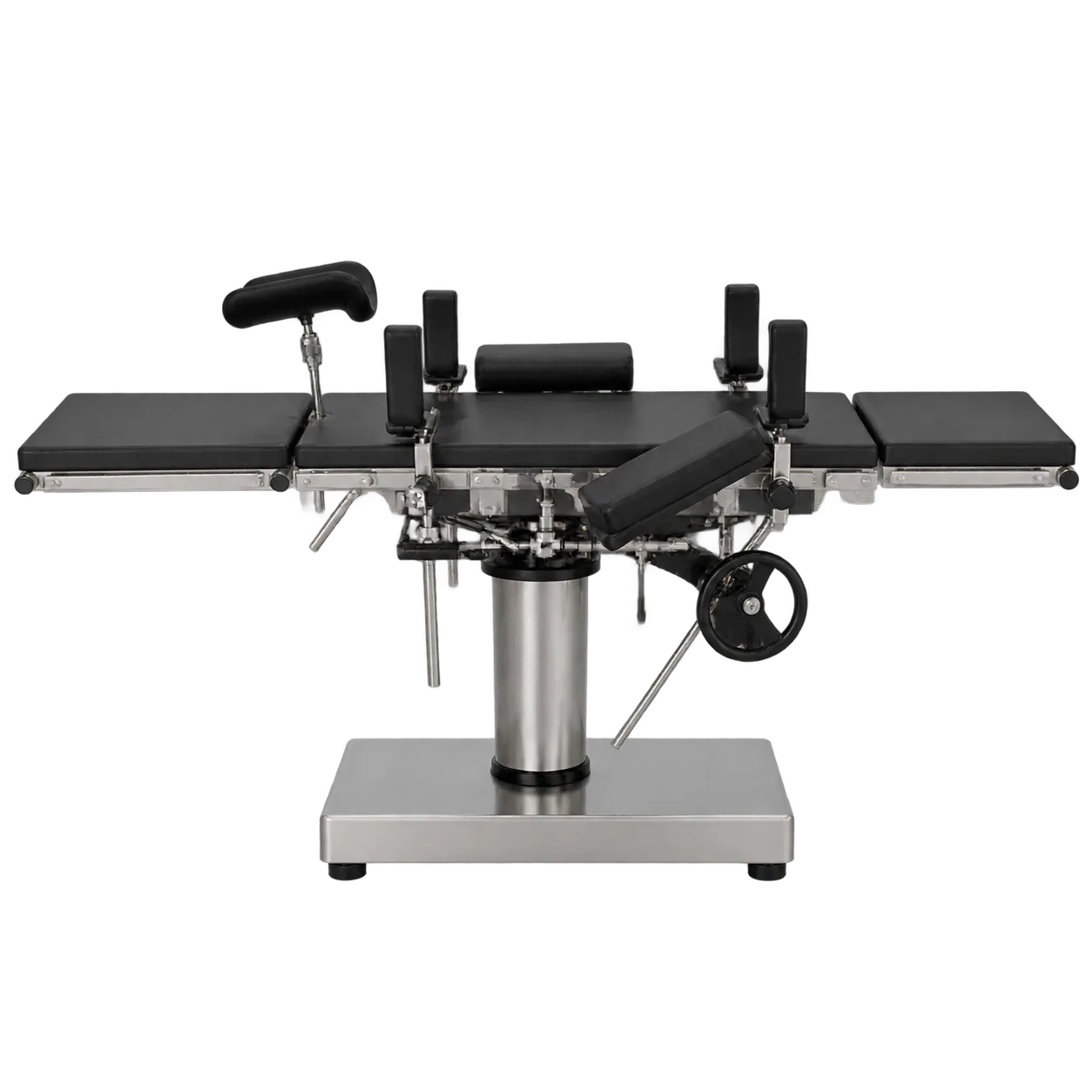


Hip fracture fixation is one of the most common trauma operations in UK hospitals, and it is the kind of case a traction-capable table is designed for. With the leg in traction, the surgeon can reduce the fracture and maintain reduction while placing a dynamic hip screw or intramedullary nail under X-ray guidance. Femoral shaft fractures and some tibial fractures are handled the same way. Most of these patients are older and frail, so safe, steady positioning matters as much as the fixation itself.
For that work, imaging access is as important as traction. The 350 mm slide lets staff move the patient so the C-arm can reach the hip in both views, but only if the relevant sections of the top are radiolucent. Blackstone does not confirm that, so theatre teams should obtain it before planning fracture lists. Beyond trauma, the table's knee crutch and body supports also allow it to serve general, gynaecological, and urological cases.
Manual operation suits orthopaedic departments where power is unreliable, and it provides a back-up where electric tables are the norm. The trade-off is effort, which increases in traction cases where heavy limbs must be repositioned. At 500 mm, the top is moderately wide, and no safe working load is given.
Medigear.uk collects the load rating, traction frame details, radiolucency information, and a maintenance schedule from Blackstone. It passes them to the orthopaedic and theatre leads, so the table is judged against the fracture lists it would actually carry.