
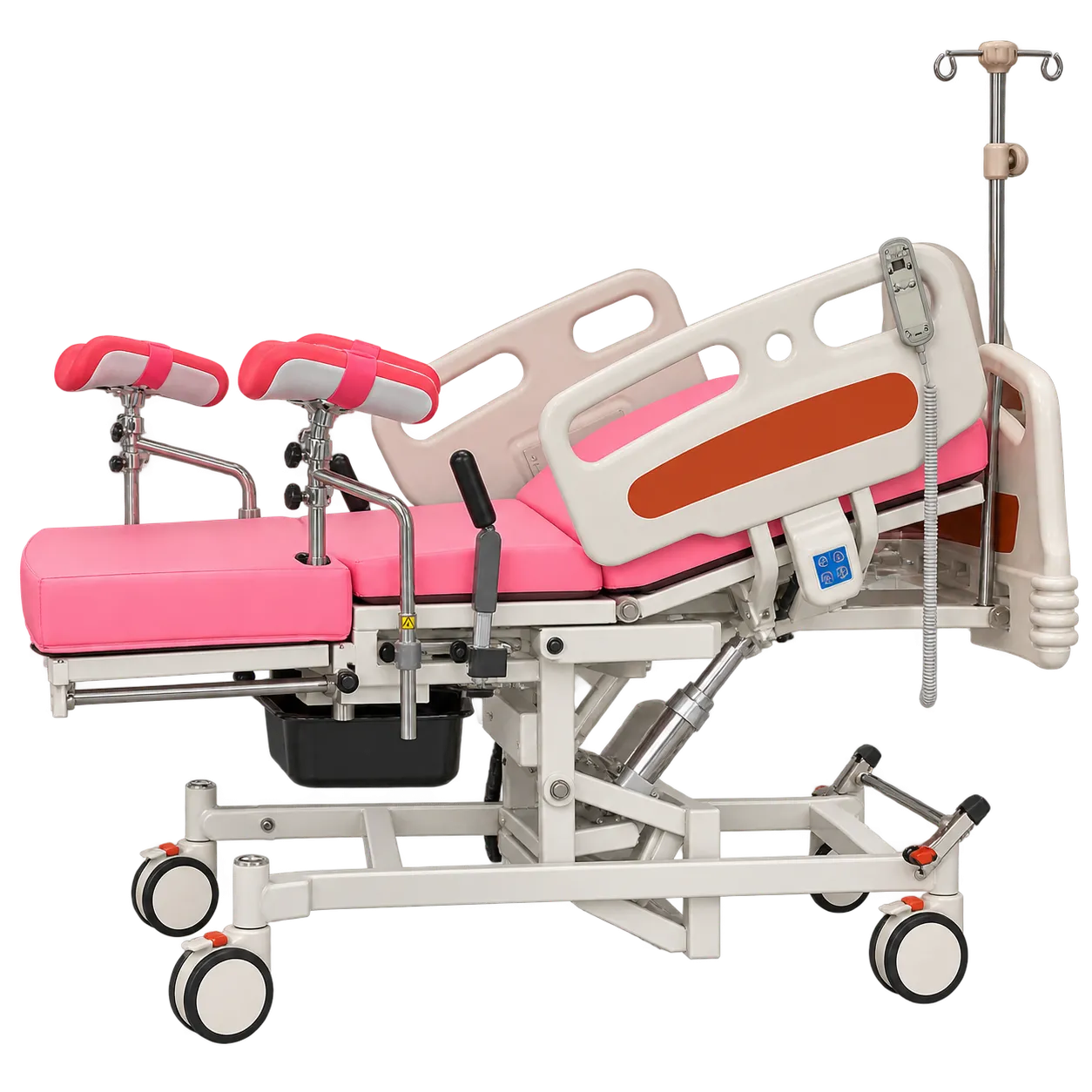
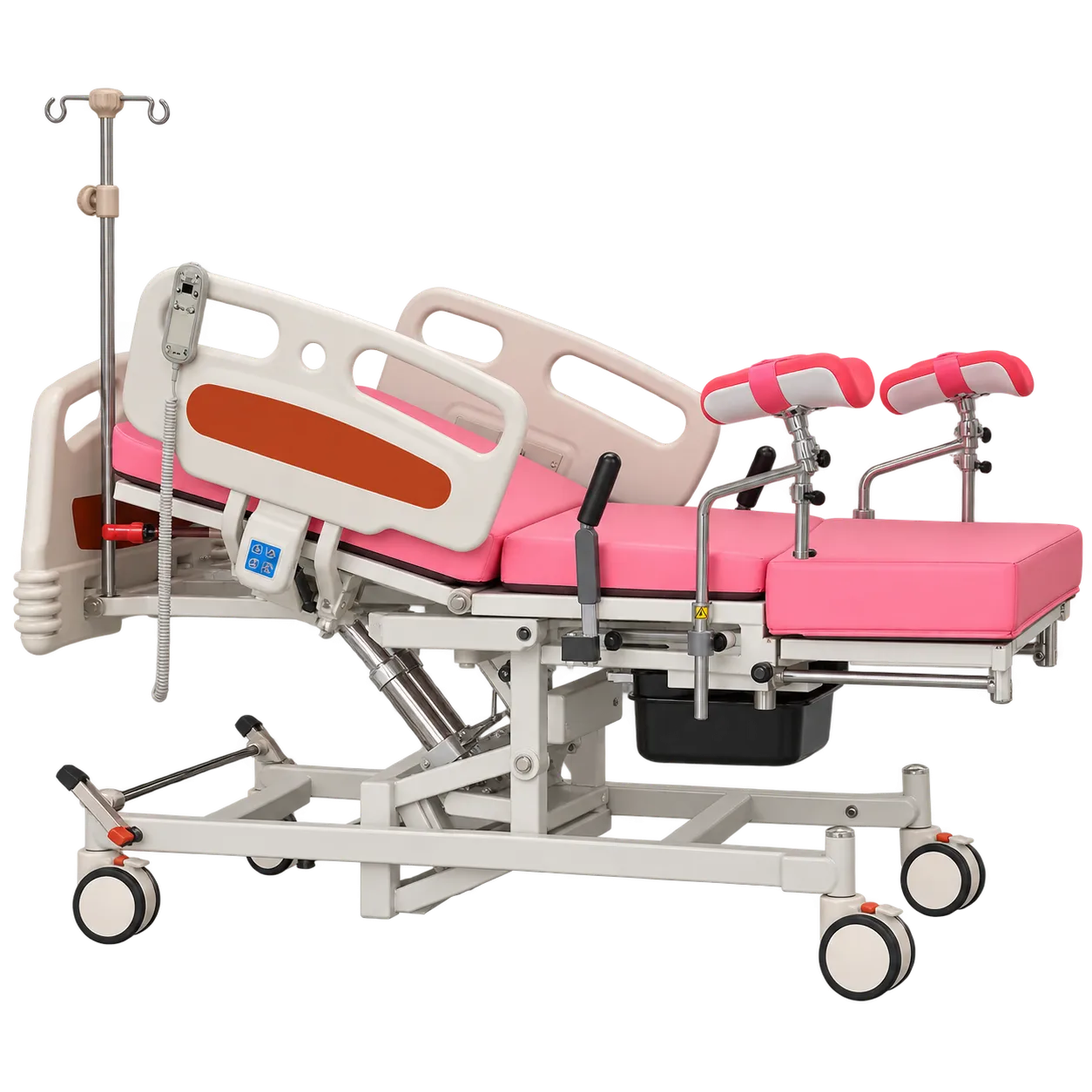
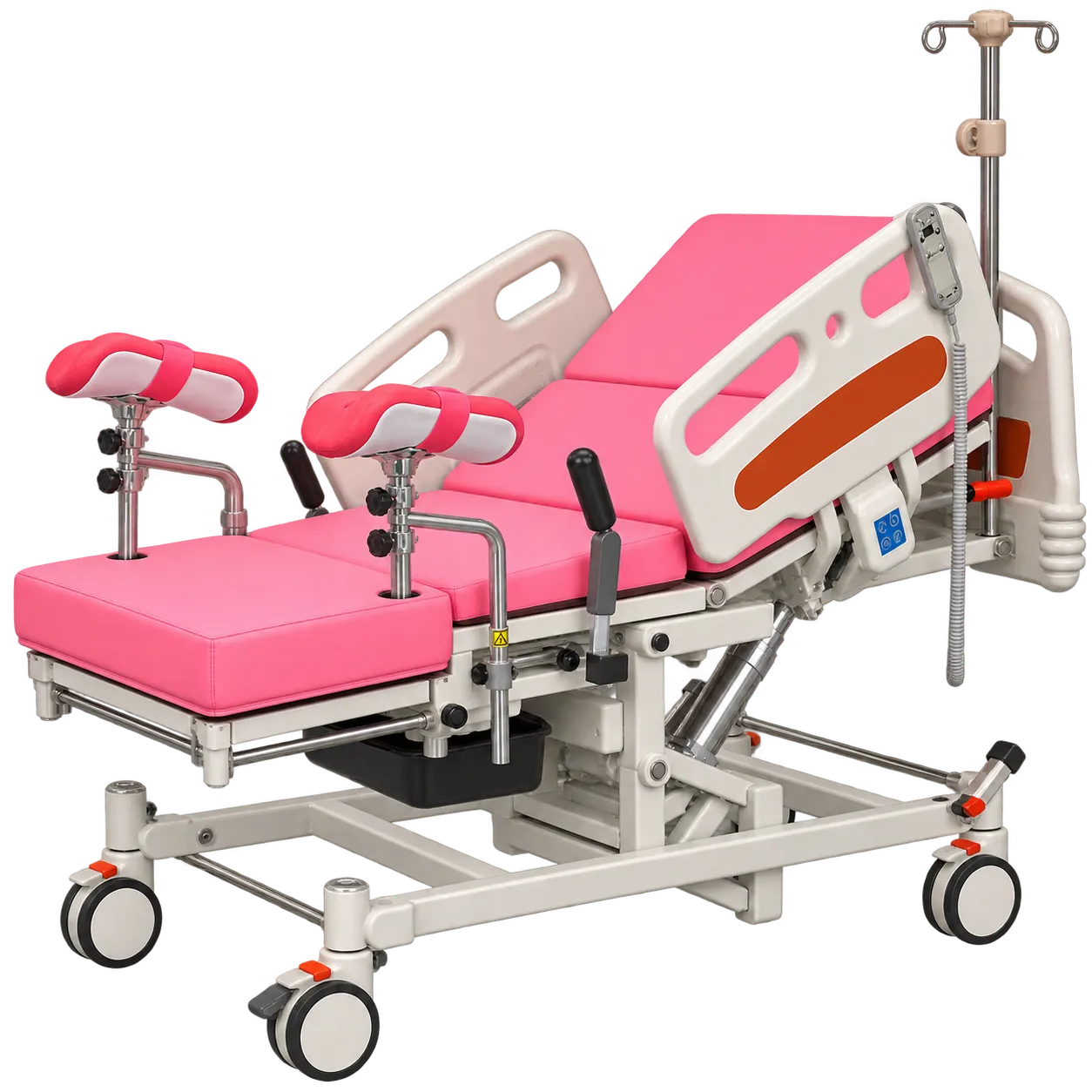
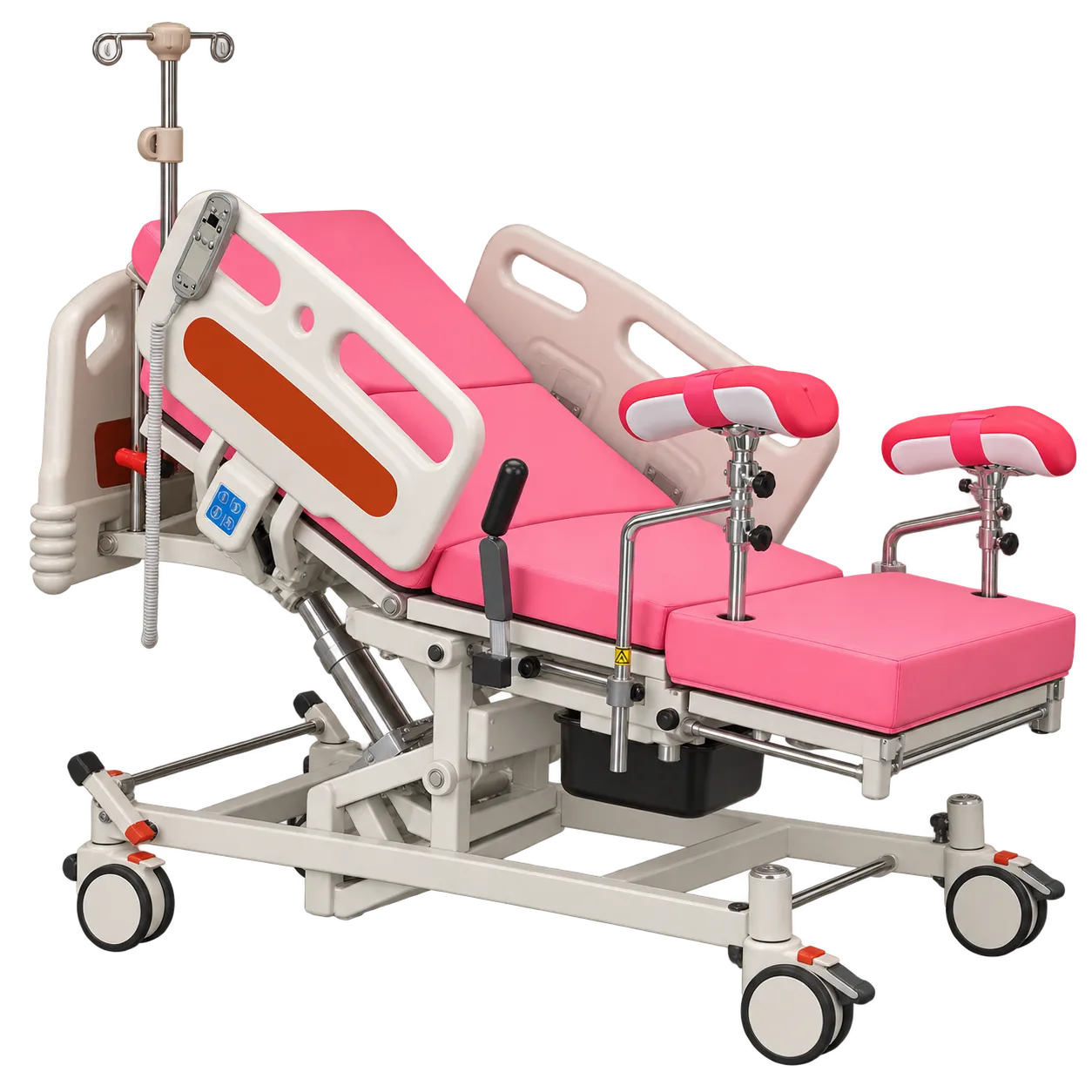
An LDR bed keeps the mother in one place from admission to recovery. That avoids transfers between a labour bed, a delivery table and a ward bed, each of which disturbs her and takes staff time. The extending mattress base supports her full length while she labours or rests. It shortens for the birth so that the midwife can reach the perineum with the legs in the holders. After delivery, extending it again returns her to a normal bed for recovery and early feeding.
The side rails help prevent falls when the mother is drowsy after an epidural or exhausted after a long labour. The IV pole keeps infusions and oxytocin drips close at hand, without a separate stand crowding the room. Castors let the bed move to theatre if a caesarean section becomes necessary, a real advantage over pedestal delivery beds. The low 580 mm setting makes it easier to get on and off. The 805 mm maximum, however, is modest for clinicians who stand to work, so teams should check it against their own staff.
Those benefits depend on details the sheet leaves out. Staff need to know which functions are powered, whether the bed keeps working in a power cut, how the castors brake, and what load it carries. Rail and mattress compatibility matters for entrapment risk, so the mattress specification and the gap dimensions should be confirmed against BS EN 60601-2-52.
Medigear.uk is requesting all of this from Blackstone for the maternity lead and the medical devices safety officer, who can then assess the bed against local policy.