

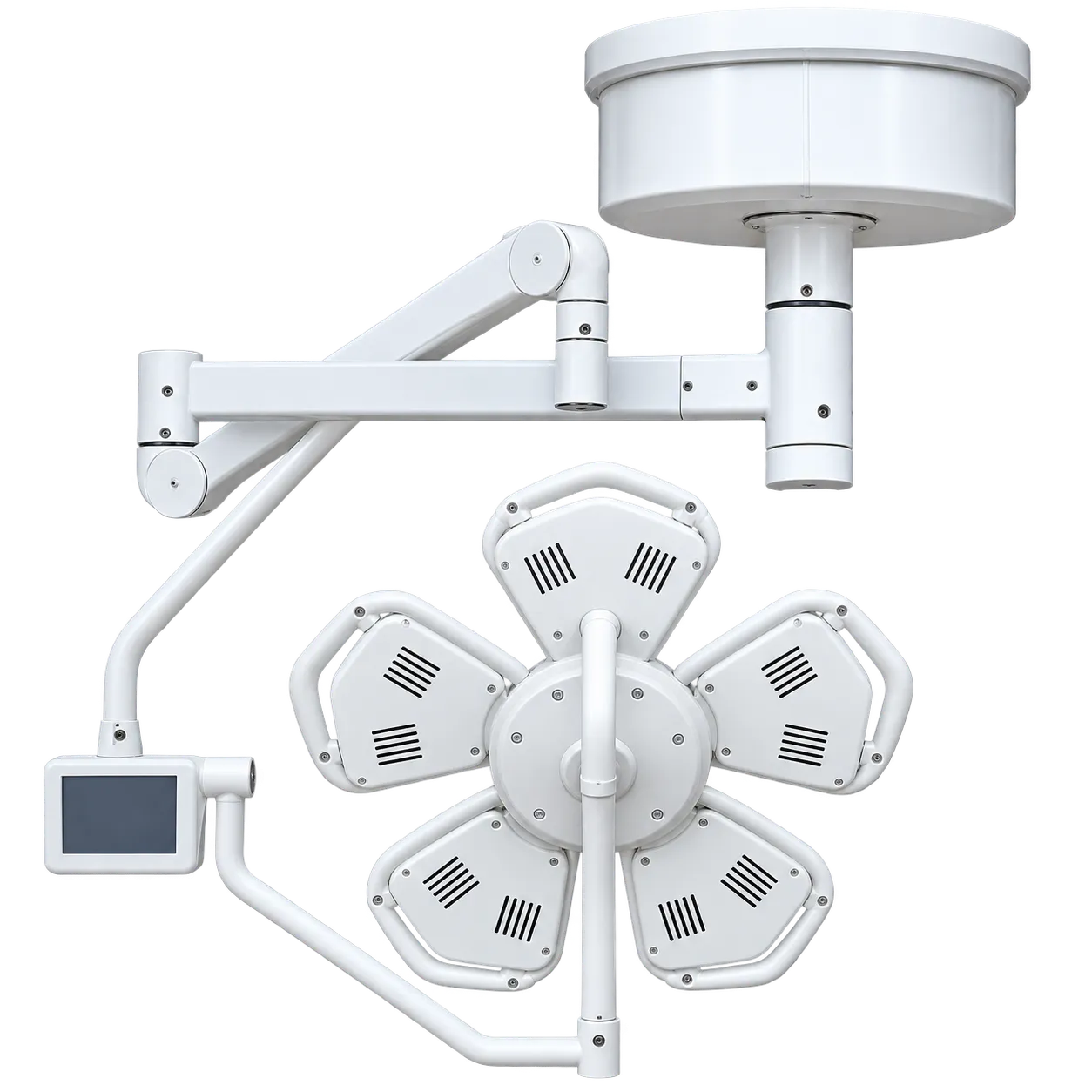
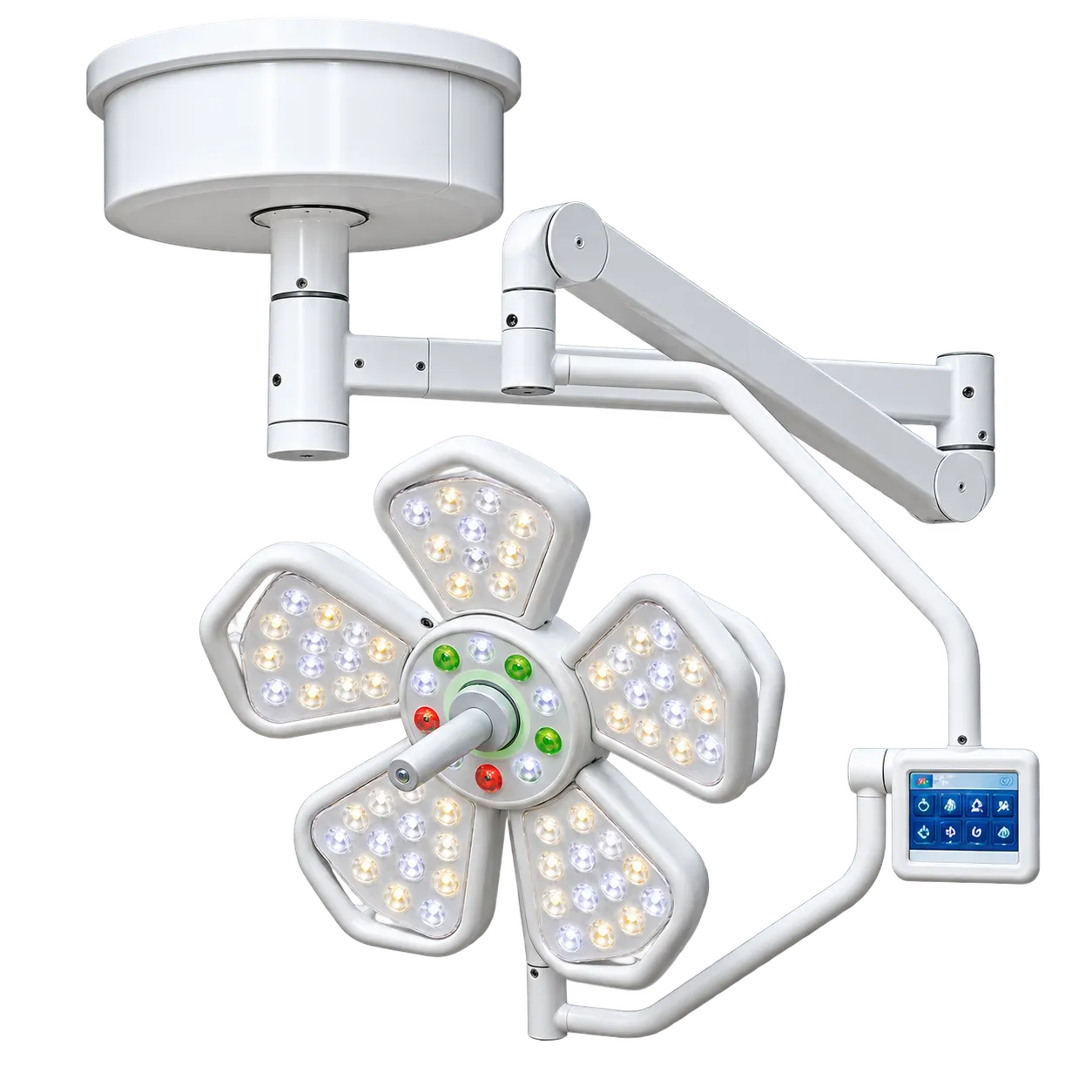

On a segmented head surgical lamp, shadow recovery is the practical reason emitter count is worth counting. A surgeon leaning over the field blocks a portion of the light, and what keeps the wound lit is whatever arrives from directions still clear. Sixty-five sources give more of those than 48, which makes this the better of the two 500 mm Blackstone heads for work where people crowd the field. A single operator at arm's length asks a good deal less of a lamp than three people gathered around one wound.
The airflow question is worth raising with whoever manages the theatre rather than with the surgeon. Ultraclean ventilation systems push filtered air downward over the sterile field, and anything large and solid hanging in that stream disrupts the pattern. Lamp heads are the usual culprit, which is why segmented and perforated designs exist at all. This head is plainly segmented in the manufacturer image, and the sheet never mentions why, so the question is whether Blackstone designed it that way deliberately and can show what difference it makes.
What remains missing runs the same as across the rest of the range. No field diameter is given. No illumination depth. No shadow dilution figure, and that last absence is awkward on the one head whose emitter count is its argument. The Blackstone HS-005E publishes field diameter and illumination depth, so the figures plainly exist in the company somewhere.
Medigear.uk obtains them, along with the airflow position, before this lamp reaches any theatre.