
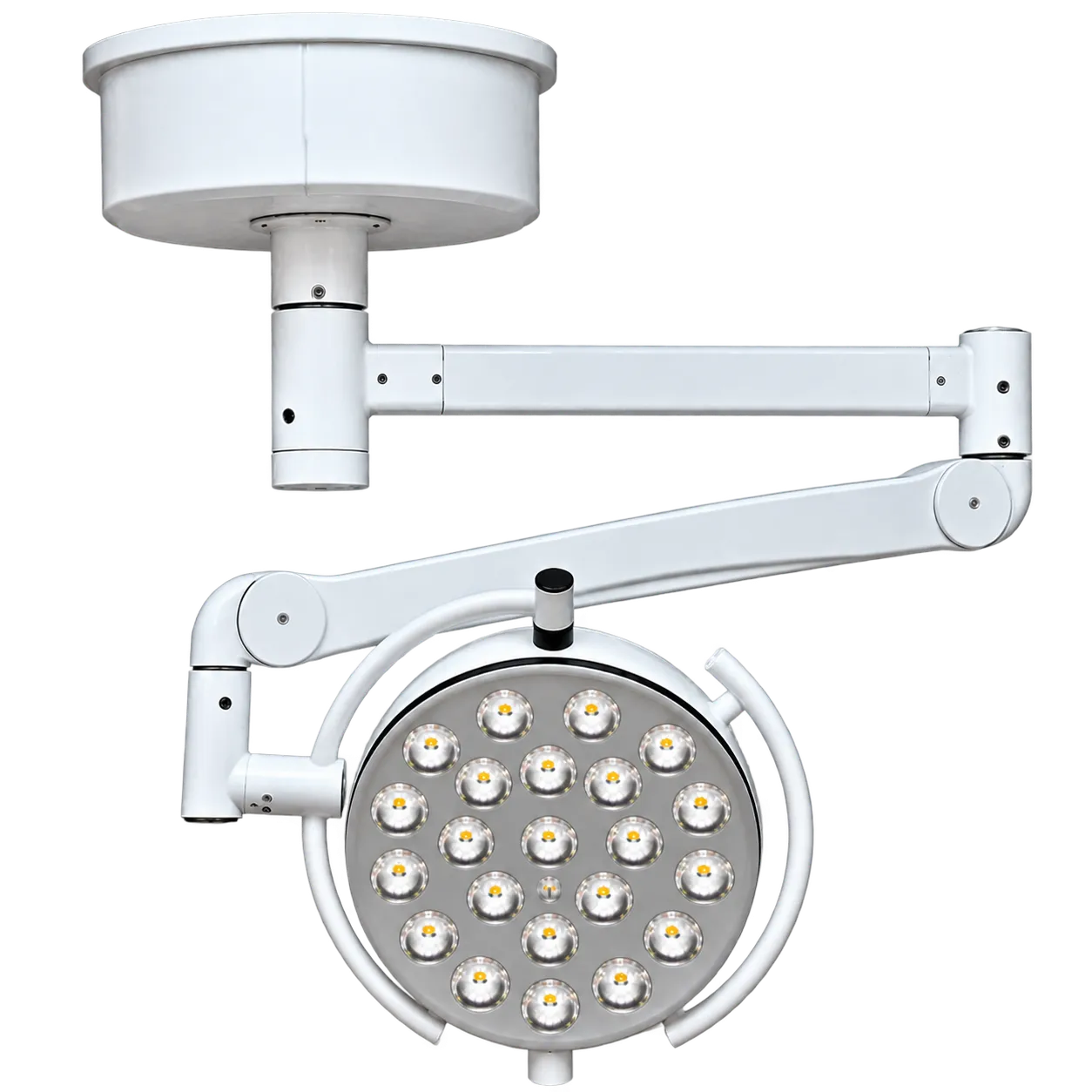

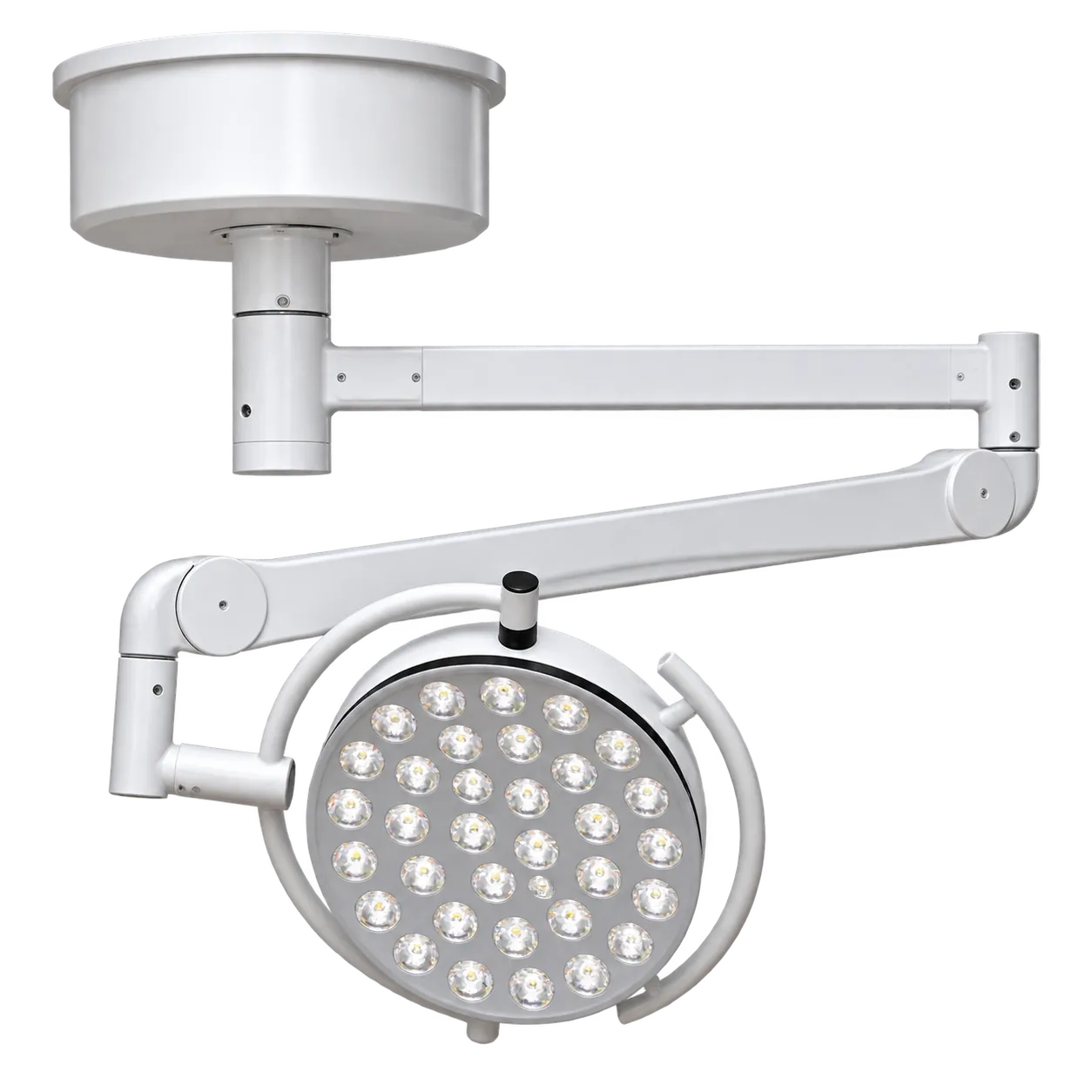
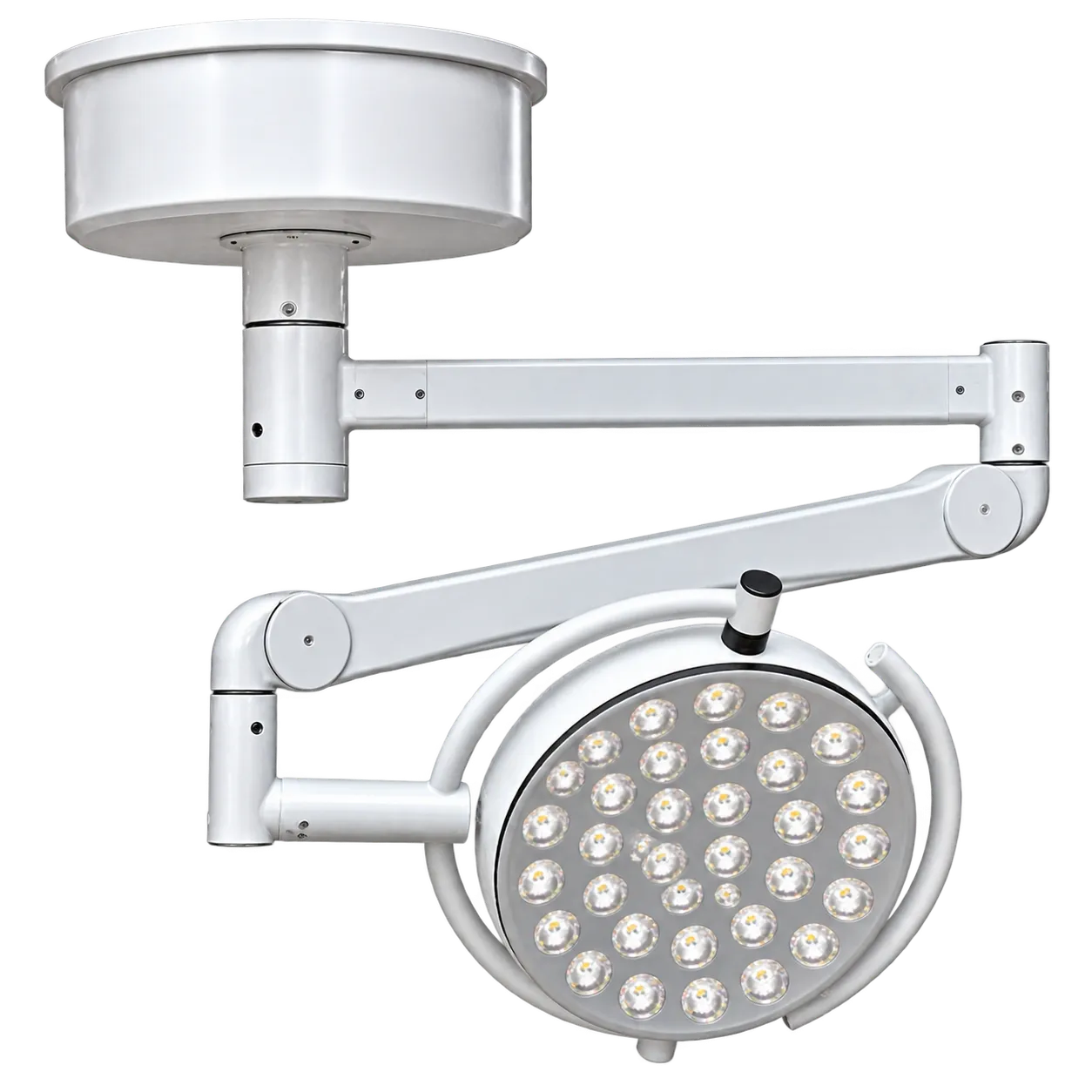
The spot diameter is what decides where this minor procedure light belongs, and 125 mm across is a genuinely small field. It suits suturing, a dental chair, an ENT examination, a dressing change, a minor excision under local anaesthetic. It does not suit an abdomen. Pairing that with 200 mm of illumination depth says the same thing again: enough to light a wound or a cavity opened a little way, not enough for work at the bottom of a deep one.
Colour is where a department should press. A surgical or procedural light is judged partly on how faithfully it renders tissue, because distinguishing viable from non-viable, or one structure from another, is done by eye and by colour. Quoting a band from Ra 80 to Ra 100 gives no commitment above 80, and Ra 80 is the level ordinary office lighting reaches. The other Blackstone lamps promise 95 or better. A buyer should ask which figure this lamp actually delivers rather than accept a range whose upper end is unreachable by any luminaire.
Two absences follow from the simpler design and are worth noting rather than criticising. There is no R9 mode, so the deep red the Ra average excludes is not addressed separately. And no adjustment steps are described at all, where the other three lamps each offer ten for brightness and ten for colour temperature, which raises the question of whether output here is fixed.
Medigear.uk establishes the colour minimum, the adjustability, and the irradiance before this minor procedure light reaches a room.