
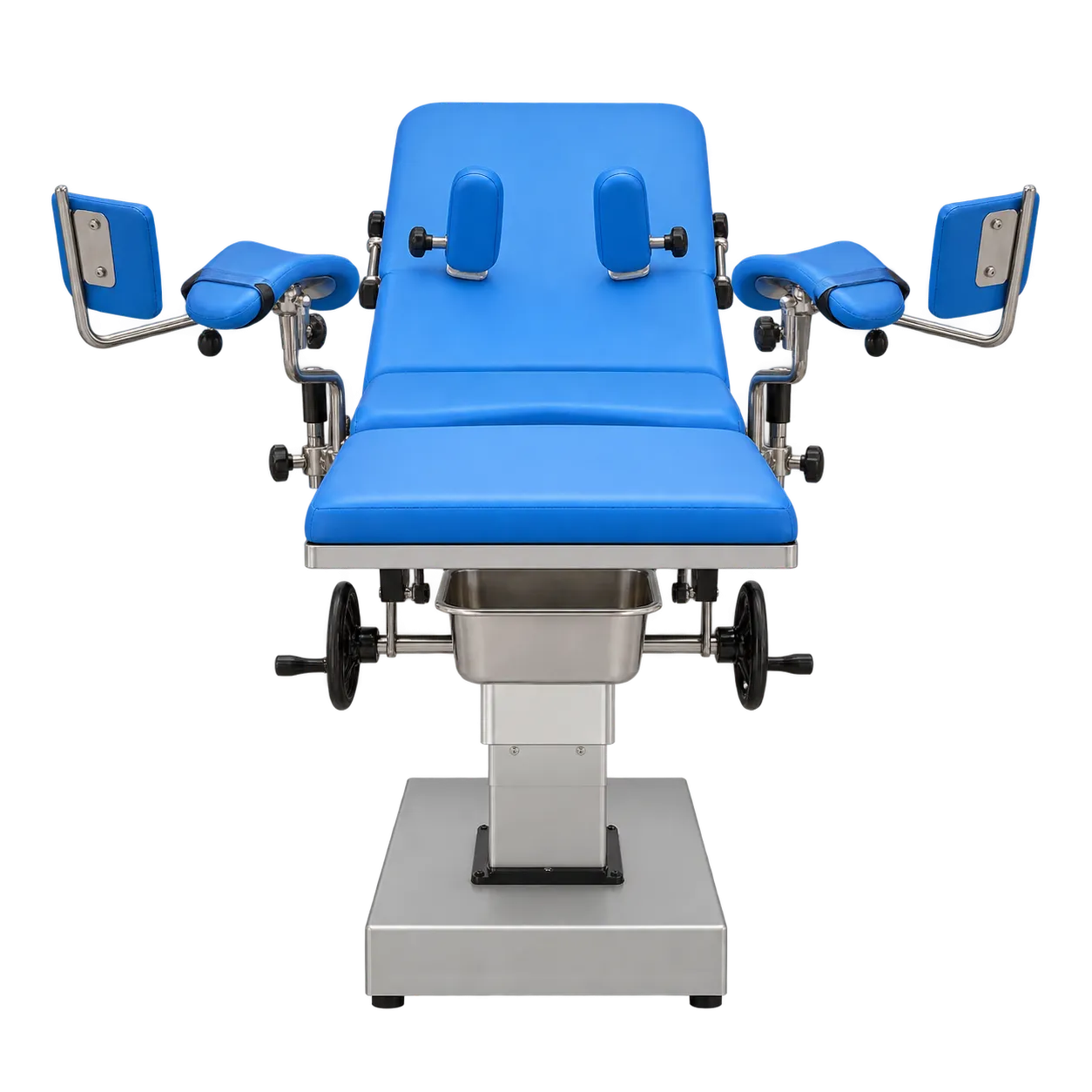
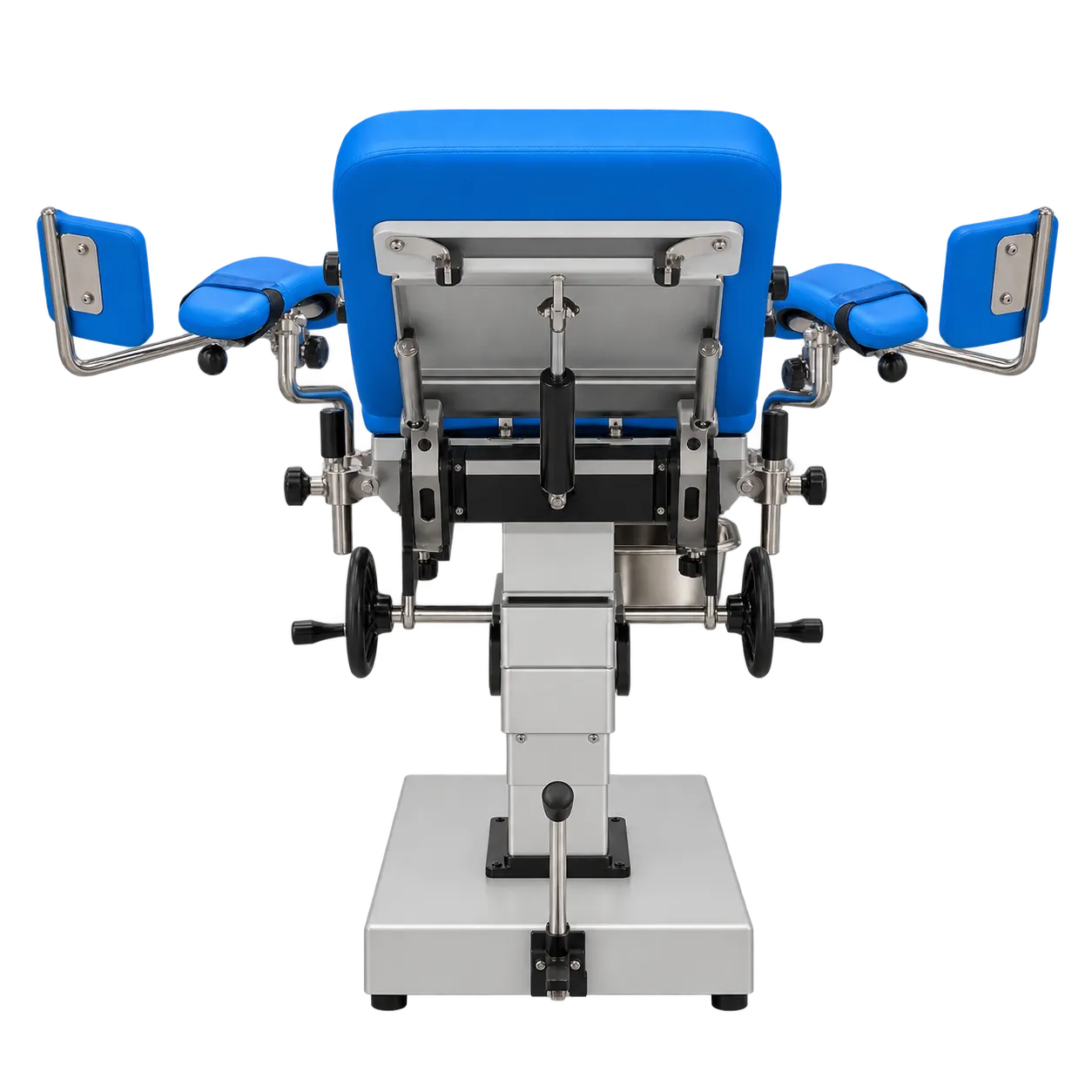
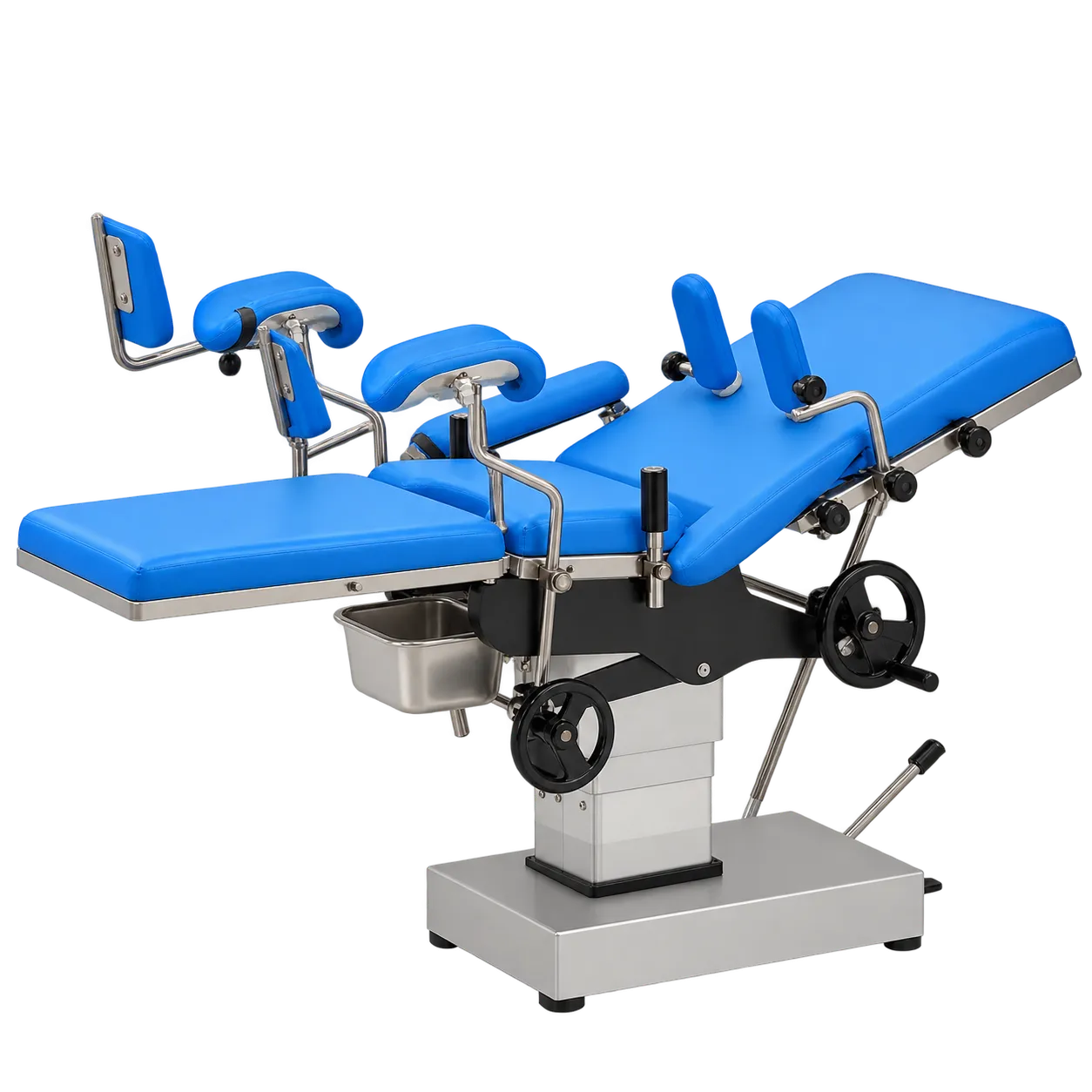
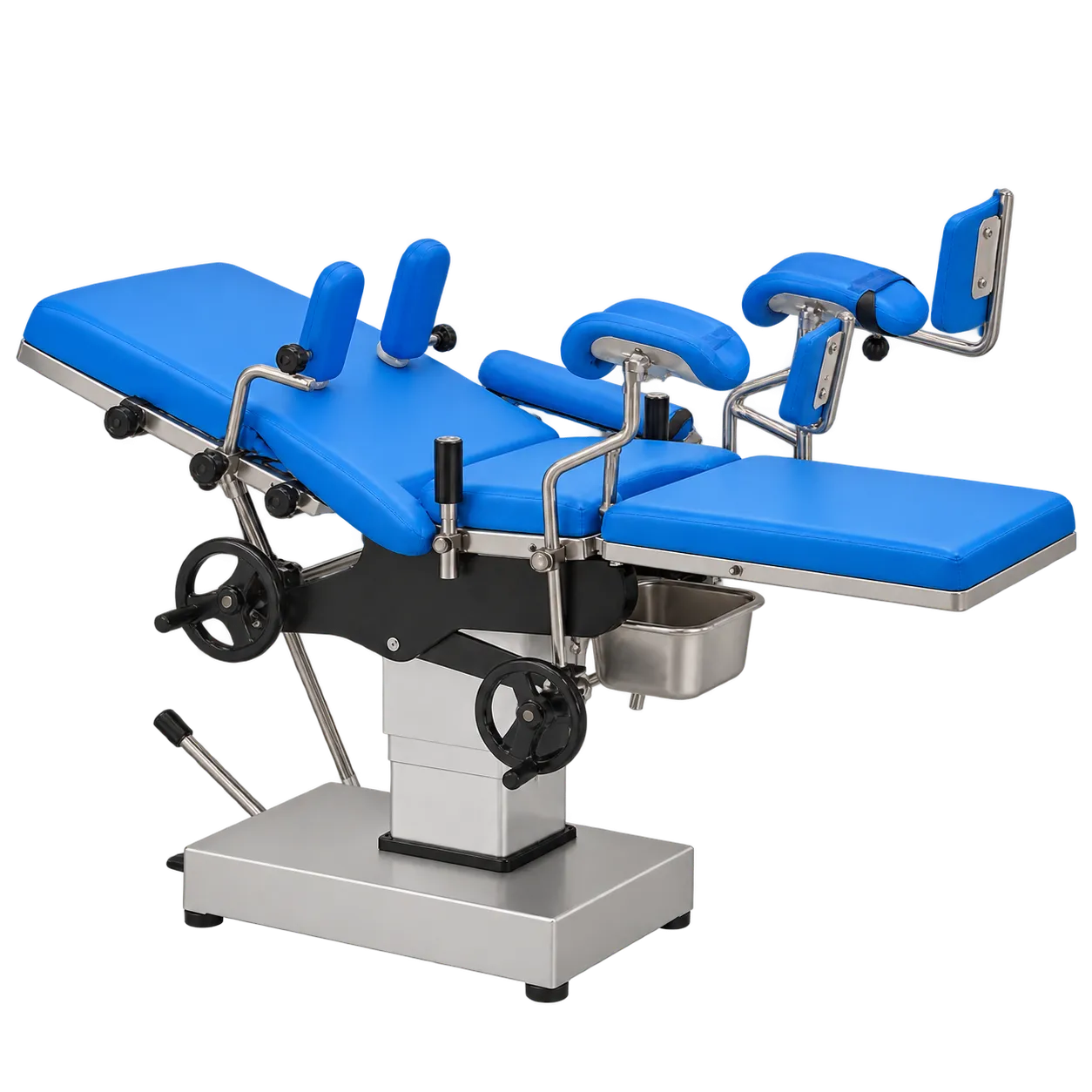
Manual obstetric beds are widely used wherever power cannot be guaranteed, and they make sensible backups in units that normally rely on electric beds. The HS-004G supports labour with a raised back section and hand grips. When the birth is near, staff lift the leg section away and support the legs in the holders. That position also serves instrumental deliveries, perineal repair and gynaecological examination, so one bed can cover most of what a labour room needs.
Height matters in a different way on this bed. The 620 mm lowest setting eases getting on and off. The 860 mm maximum, however, is the lowest top setting in Blackstone's obstetric range, which may leave taller clinicians stooping during long deliveries or repairs. The handwheels allow steady adjustment of the back section and tilt, if those are the movements they control, and the pedal raises the bed without motors. Teams should check both ends of the range against their own staff.
Emergencies are the real test for any manual bed. A shoulder dystocia or haemorrhage may demand fast repositioning, so staff must know which wheel does what before they need it. Labelling the controls and rehearsing their use during commissioning would help. A printed quick-reference card at the bedside is another simple safeguard. The stainless parts clean easily, although chlorine-releasing products should be rinsed off the steel to prevent pitting.
Medigear.uk confirms the wheel functions, the rated load, the pad specification, and the service needs with Blackstone. The answers then go to the maternity lead before an order is placed.