
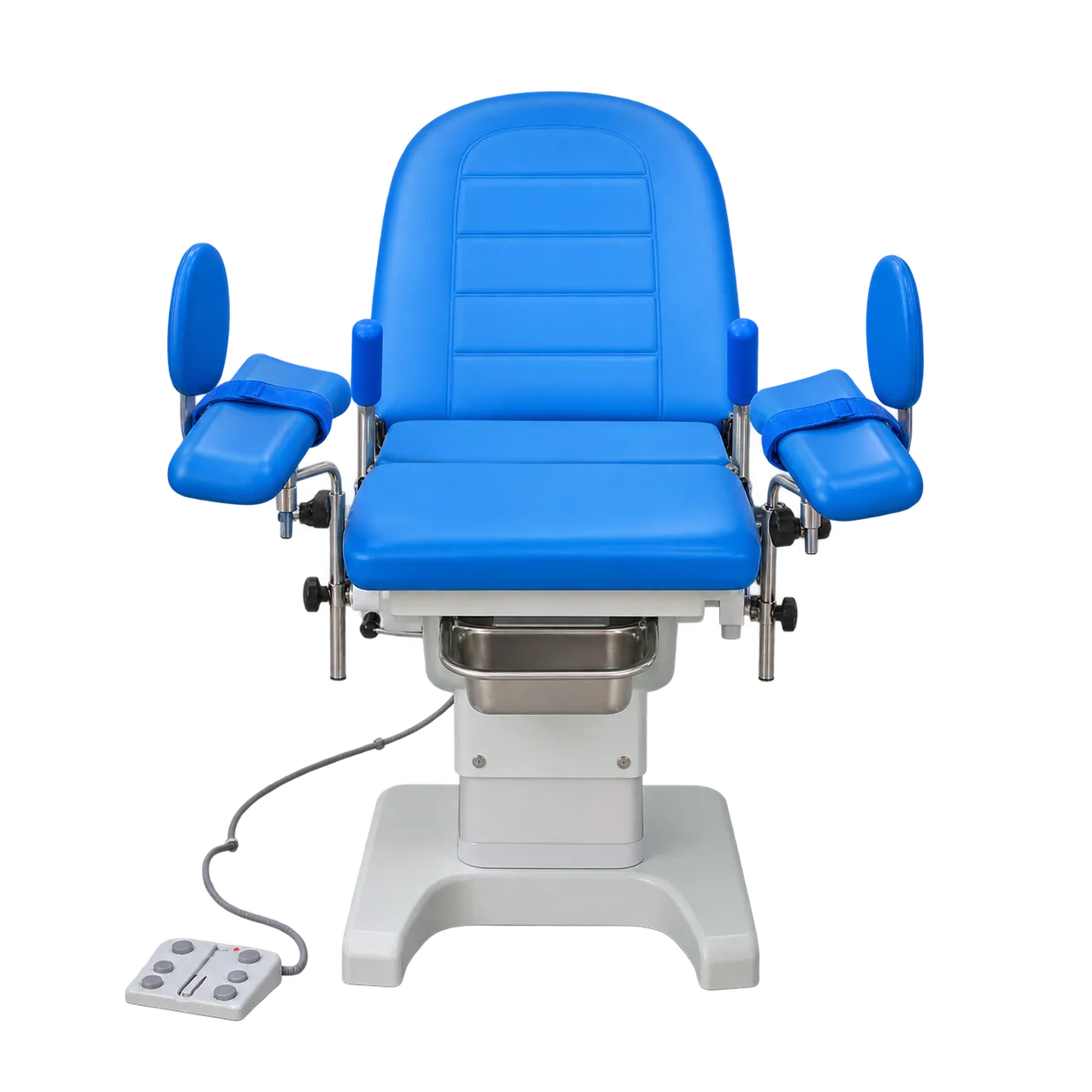
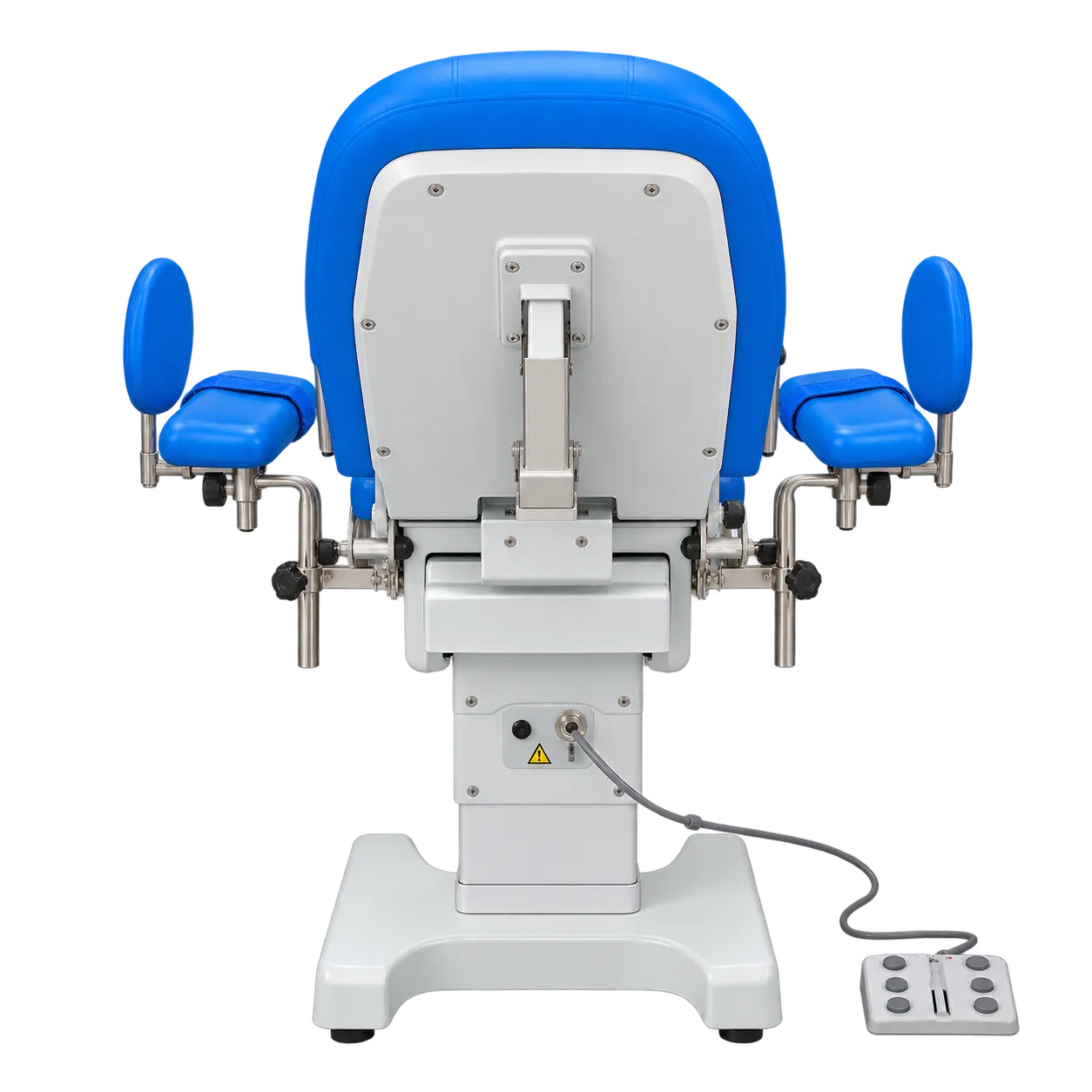
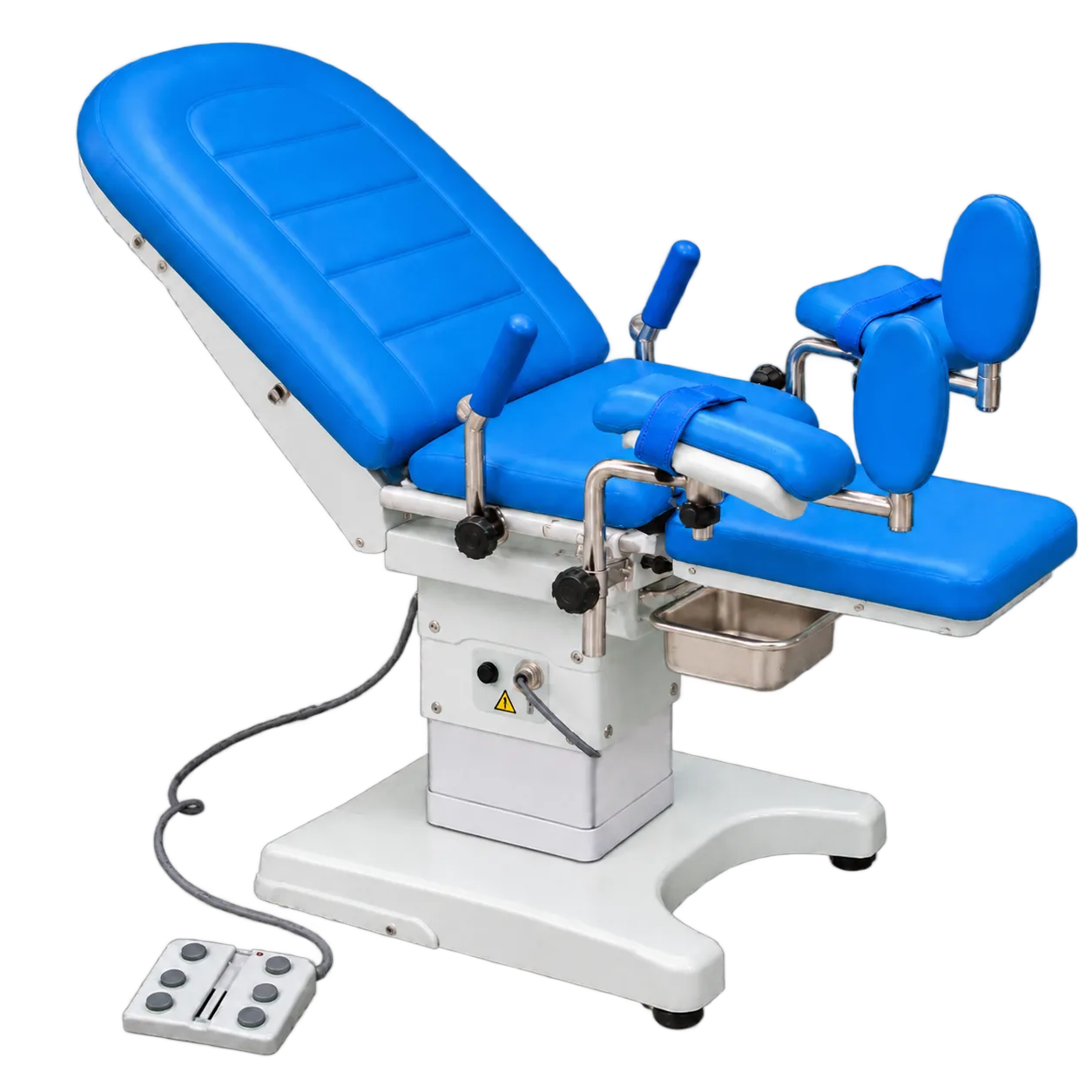
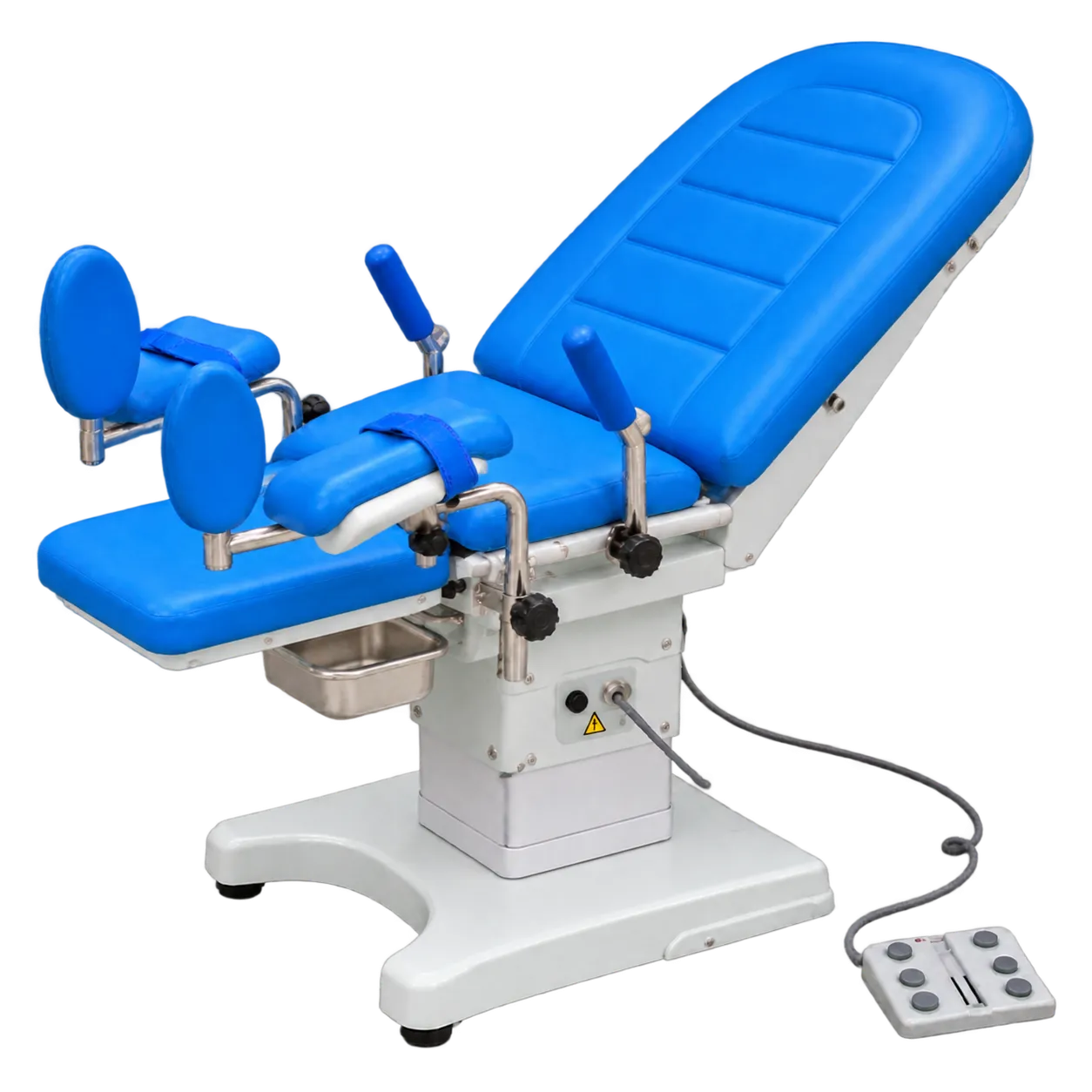
A labour and delivery bed of this size gives the mother more room during a long labour. The 680 mm width leaves space to change position, the tall backrest supports her in a semi-sitting position, and the hand grips give her purchase while pushing. The low 620 mm starting height helps women climb on and off. That matters late in pregnancy, when getting onto a higher bed is awkward, and after a long labour, when many women are exhausted.
For delivery, the leg section comes off, and the legs go into the holders, opening access for the birth, an instrumental delivery or perineal repair. The foot switch then lets the clinician reposition the bed while sterile hands stay where they are needed. The same arrangement suits gynaecological examination and minor procedures. With the leg section removed, the clinician can sit close to the patient, helped by the cut-out in the base, and the tray beneath the seat catches fluids.
Practical questions remain. A removable section has to be stored somewhere clean and refitted quickly, so its weight and attachment matter. Staff should also practise removing and refitting it before the bed goes into use. Infection prevention teams will want to know what the moulded covers and pads are made of, since the sheet claims no stainless steel for this model. Emergencies such as a shoulder dystocia leave little time, so staff need to know in advance which movements are motorised and whether a battery keeps them running.
Medigear.uk obtains those answers from Blackstone for the maternity lead before any order.