
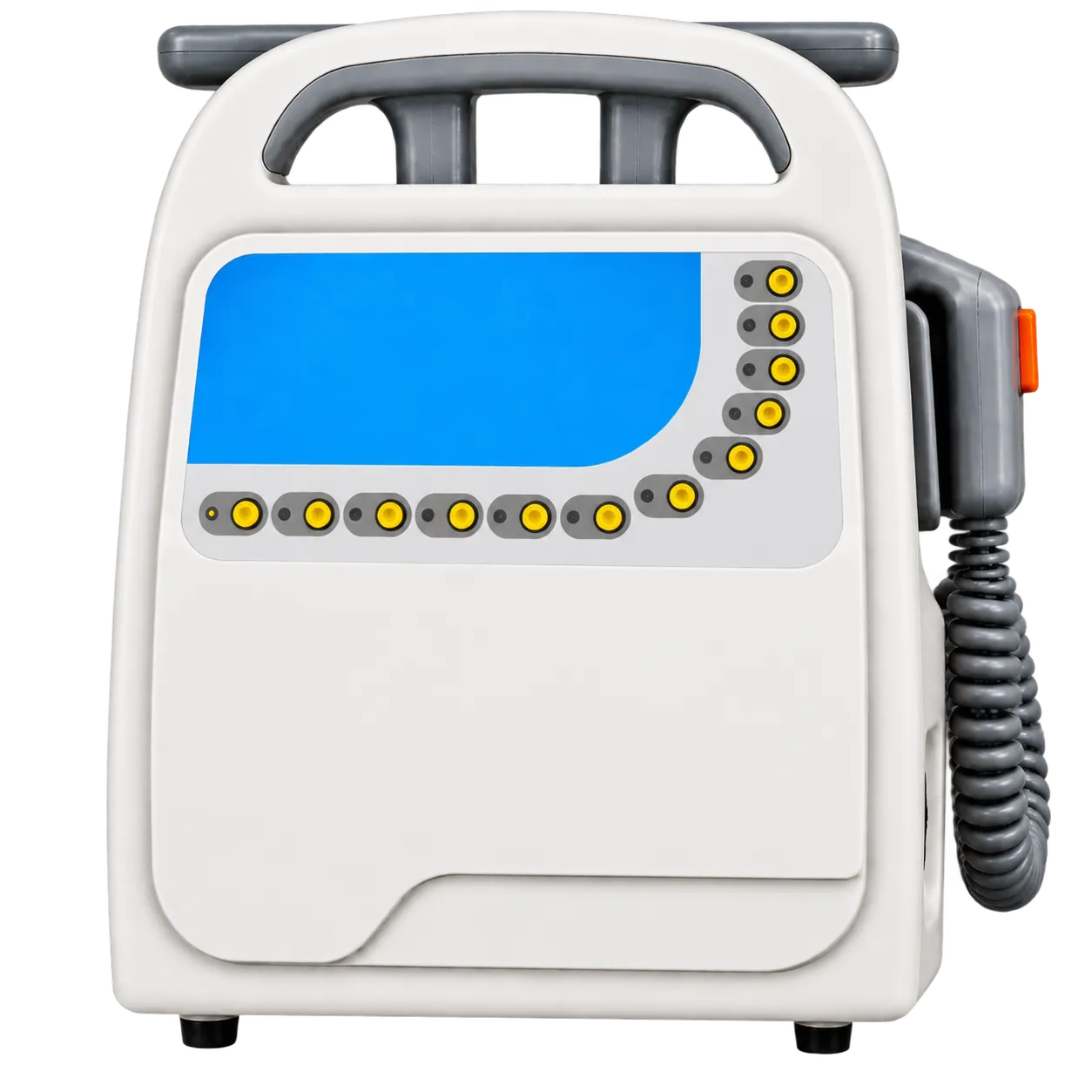
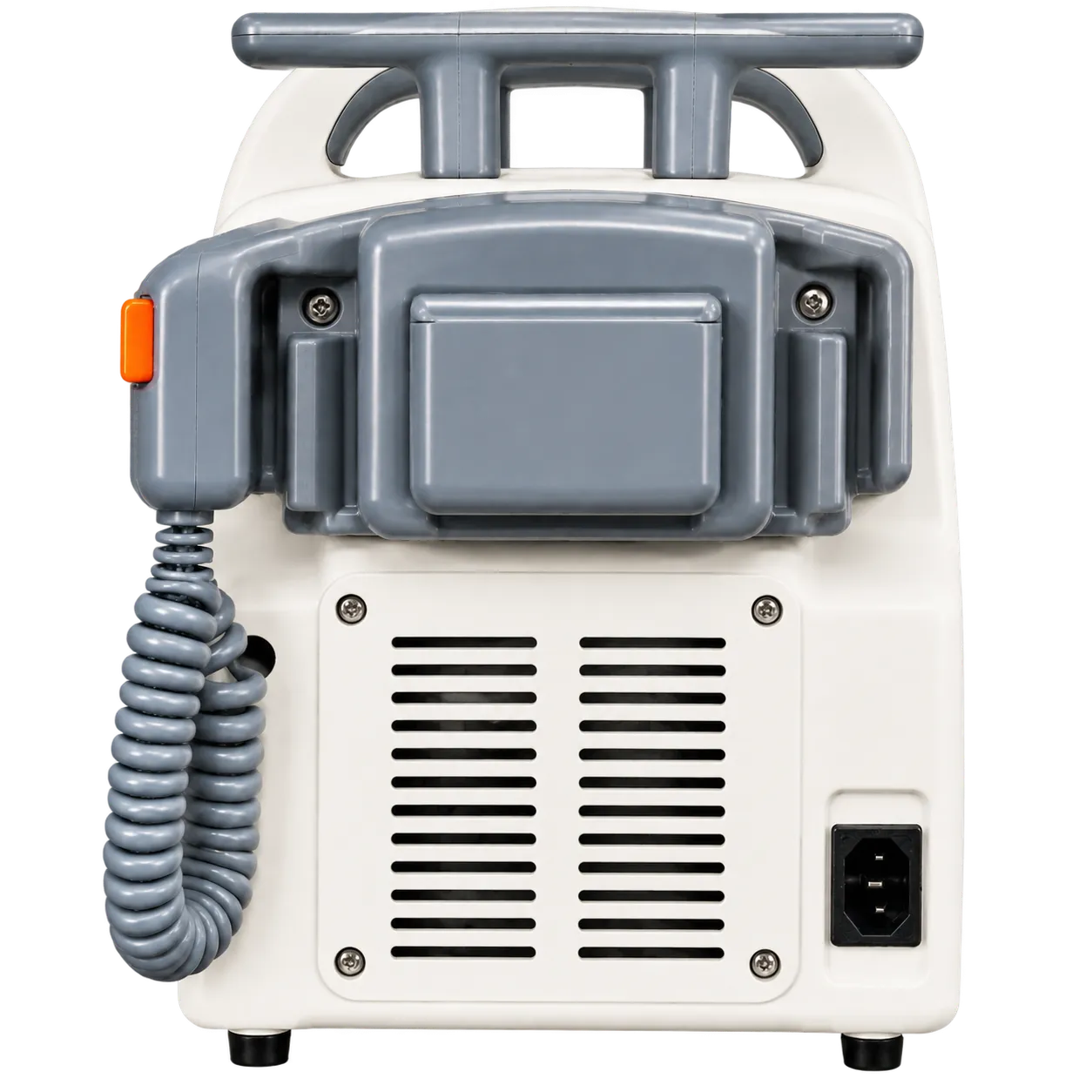
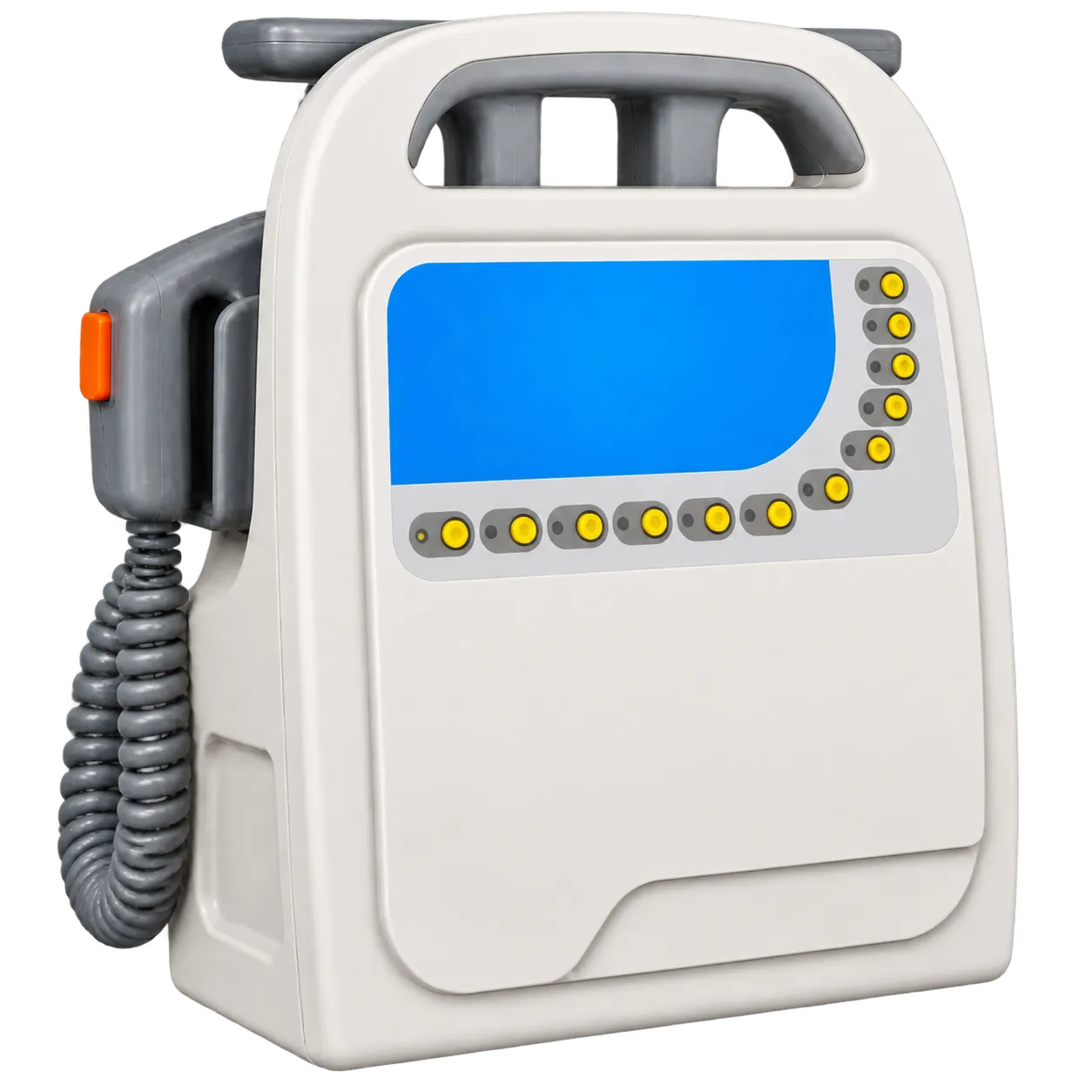
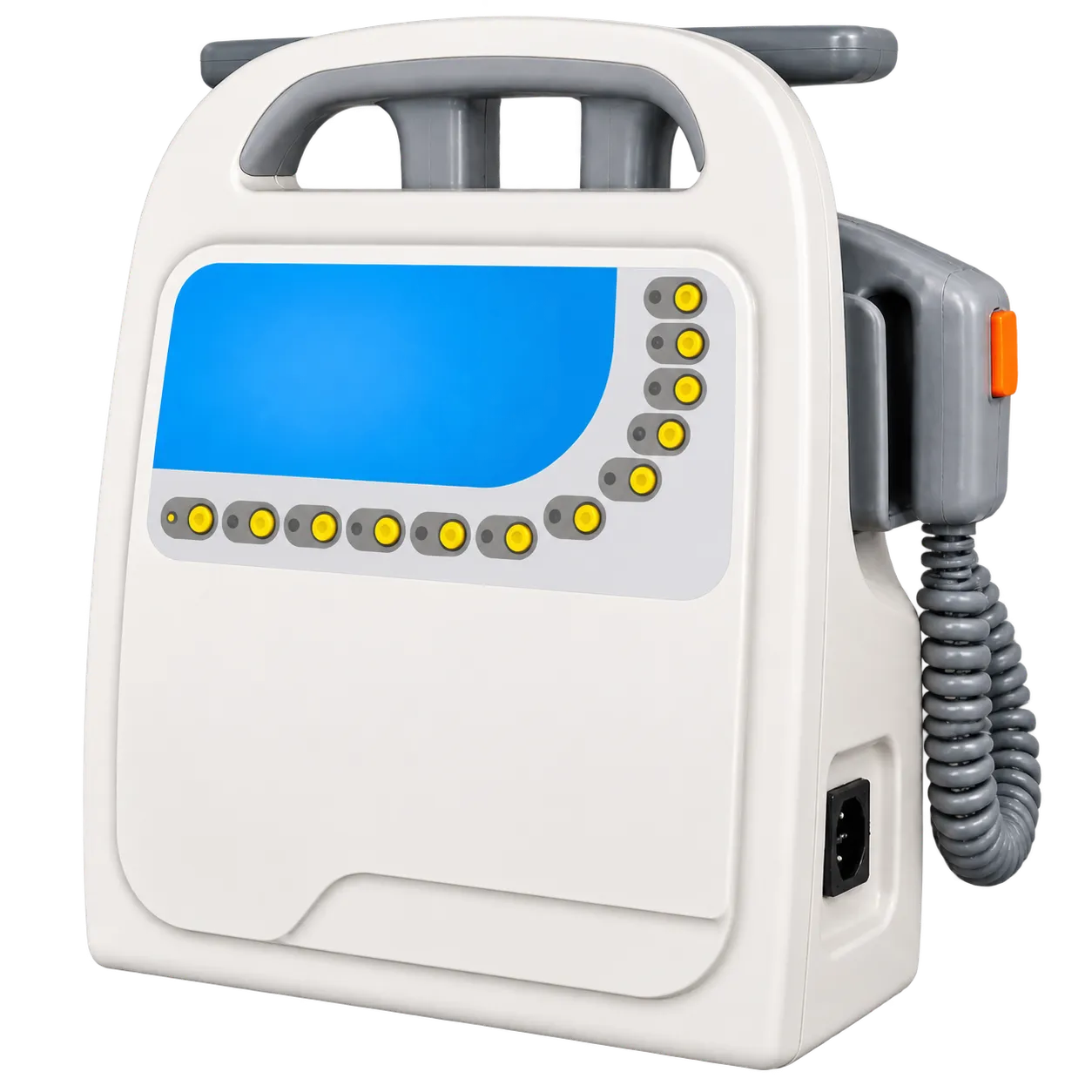
Paediatric resuscitation is where this stepped-energy defibrillator earns its place in a range. A defibrillator is used on a child rarely, and under considerable pressure, and the dose there is weight-based rather than fixed, so the difference between a machine with steps at three, five, seven, and ten joules and one starting at twenty is the difference between selecting a dose and improvising one. Adult paddles are no use on a small chest either, and the paediatric set comes with this unit rather than being an extra.
The battery is where a department should think about routine rather than specification. Lead-acid holds charge reasonably well on float and suits a machine kept plugged in on a bracket, which is how most defibrillators live. What it does not tolerate is being run flat and left, because a discharged lead-acid cell sulfates and never recovers the lost capacity. That makes a charging discipline part of owning this machine rather than an optional extra, and it makes a spare cell worth quoting from the outset.
What is absent matters as much as usual. No modes are stated beyond a manual sequence printed on the panel, so whether synchronised cardioversion is possible is unknown, and the HS-002D provides it. No ECG specification appears anywhere, yet manual defibrillation needs a visible rhythm before anyone delivers a shock. No endurance figure for the battery. No self-test. No energy accuracy either.
Medigear.uk obtains every one of those before this stepped-energy defibrillator reaches a clinical area.