
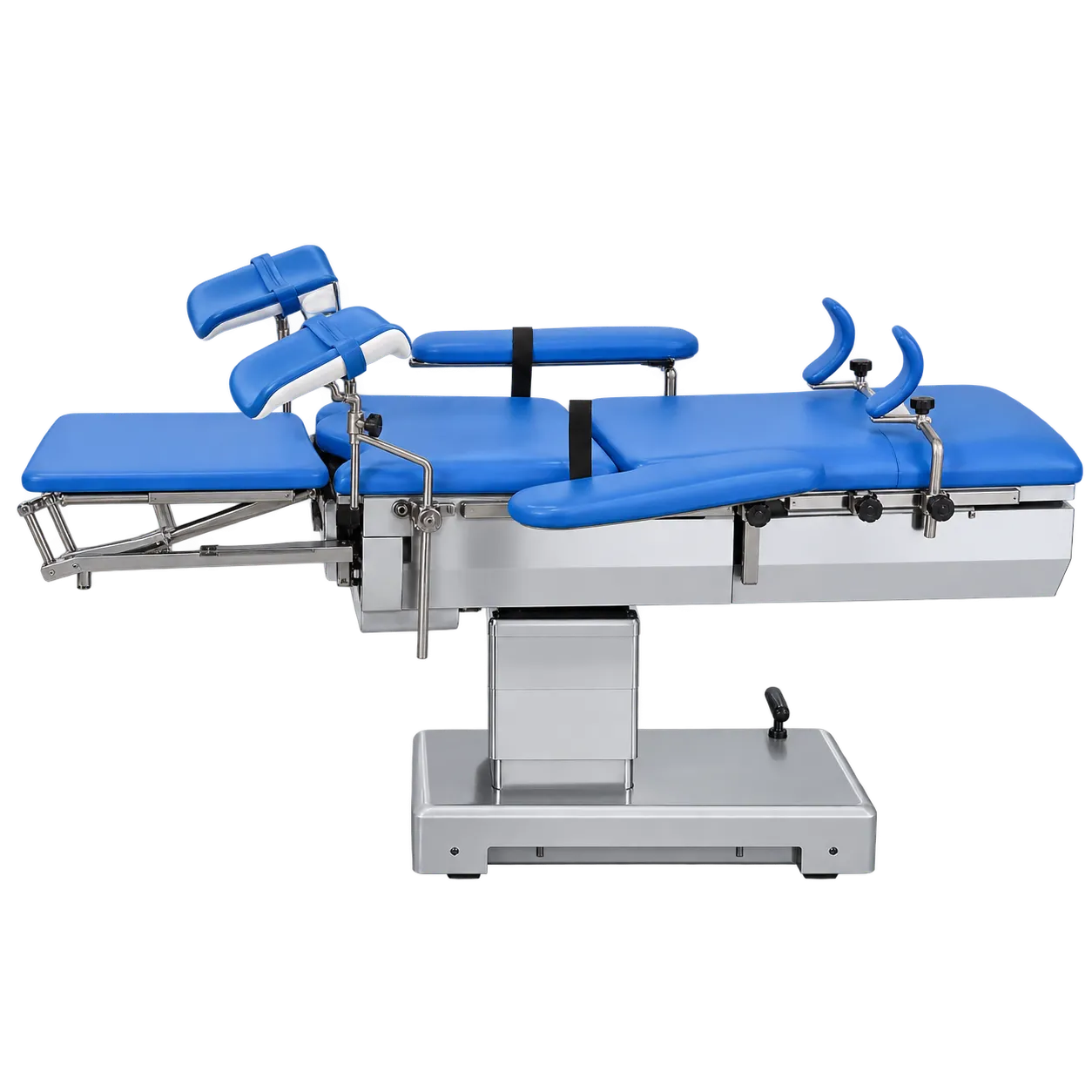
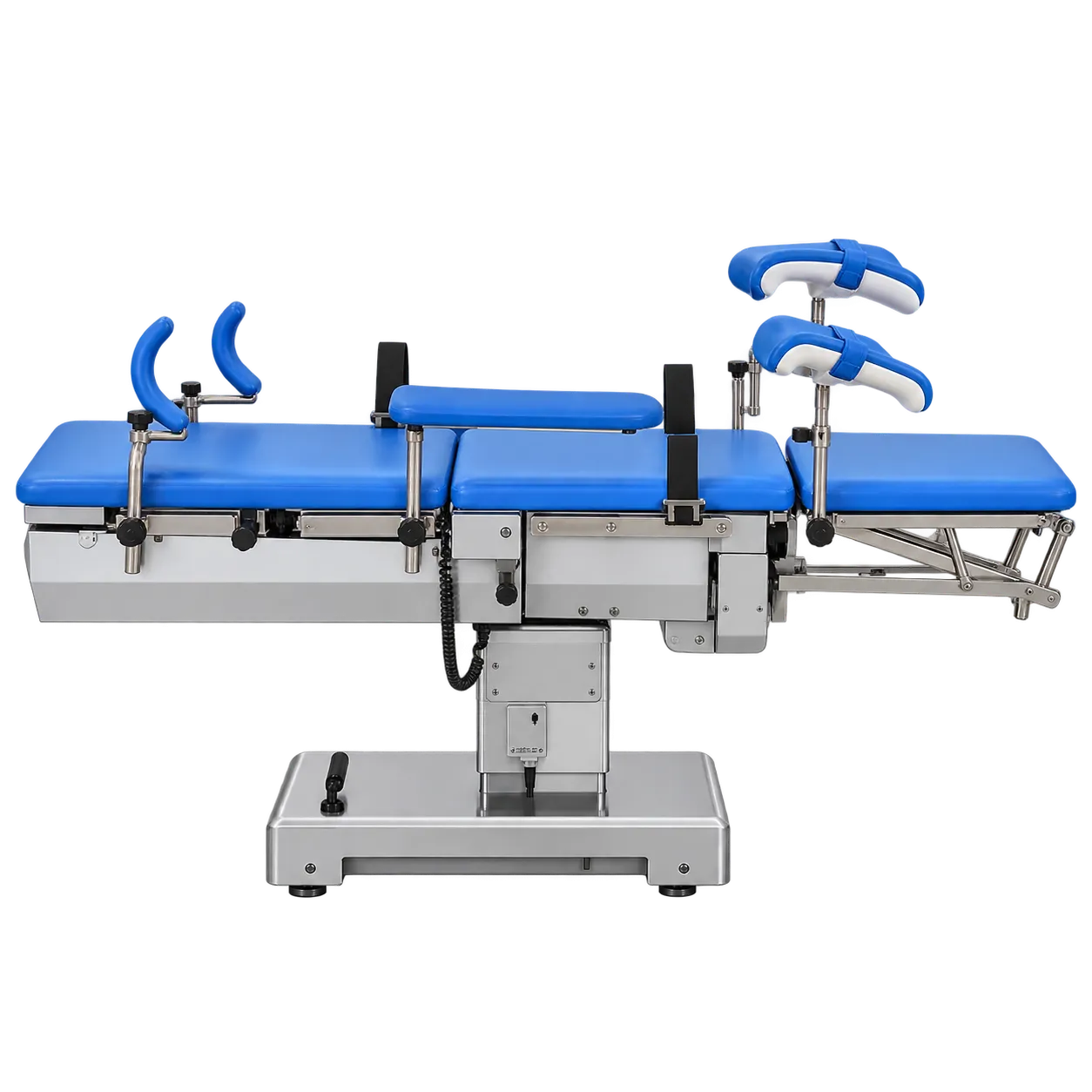
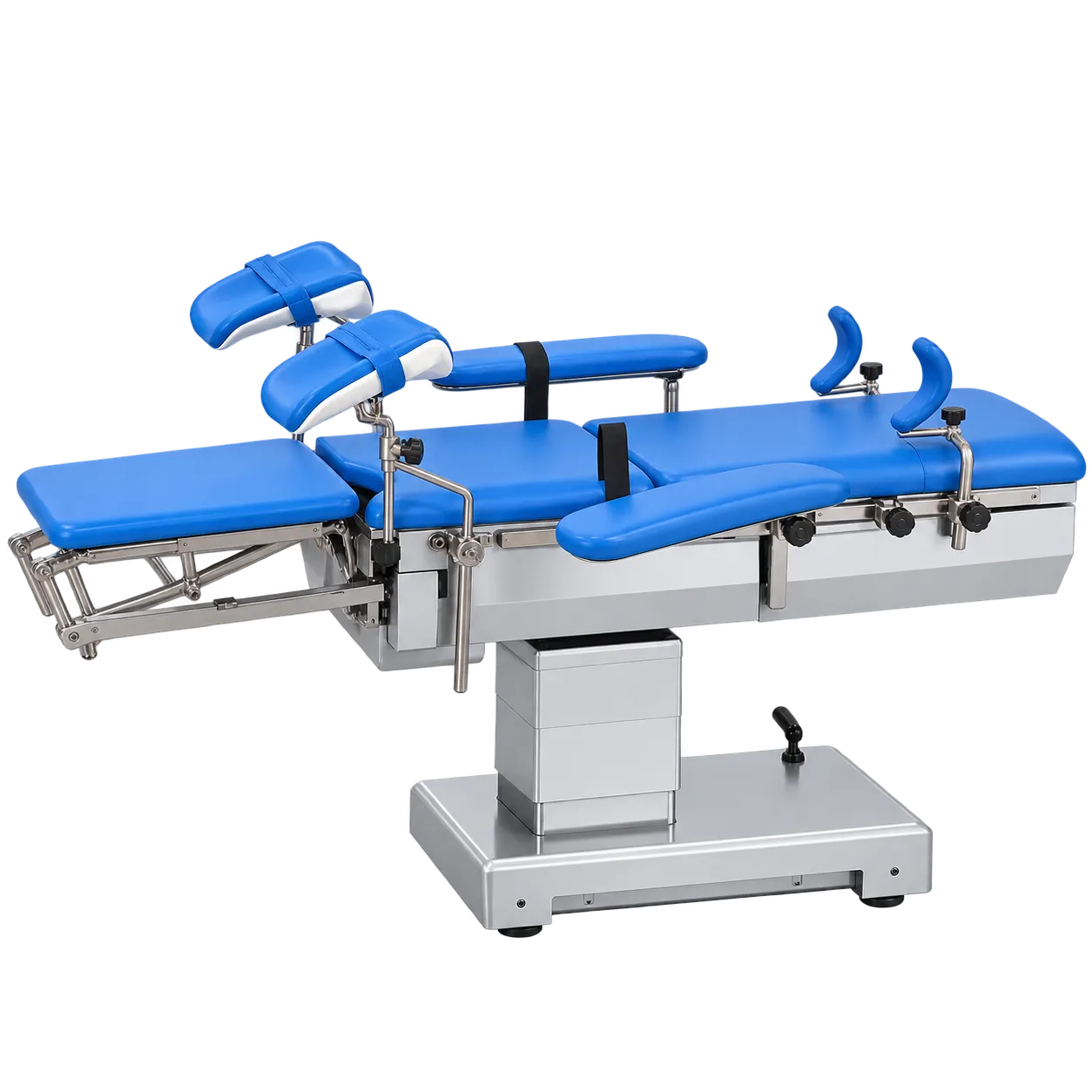
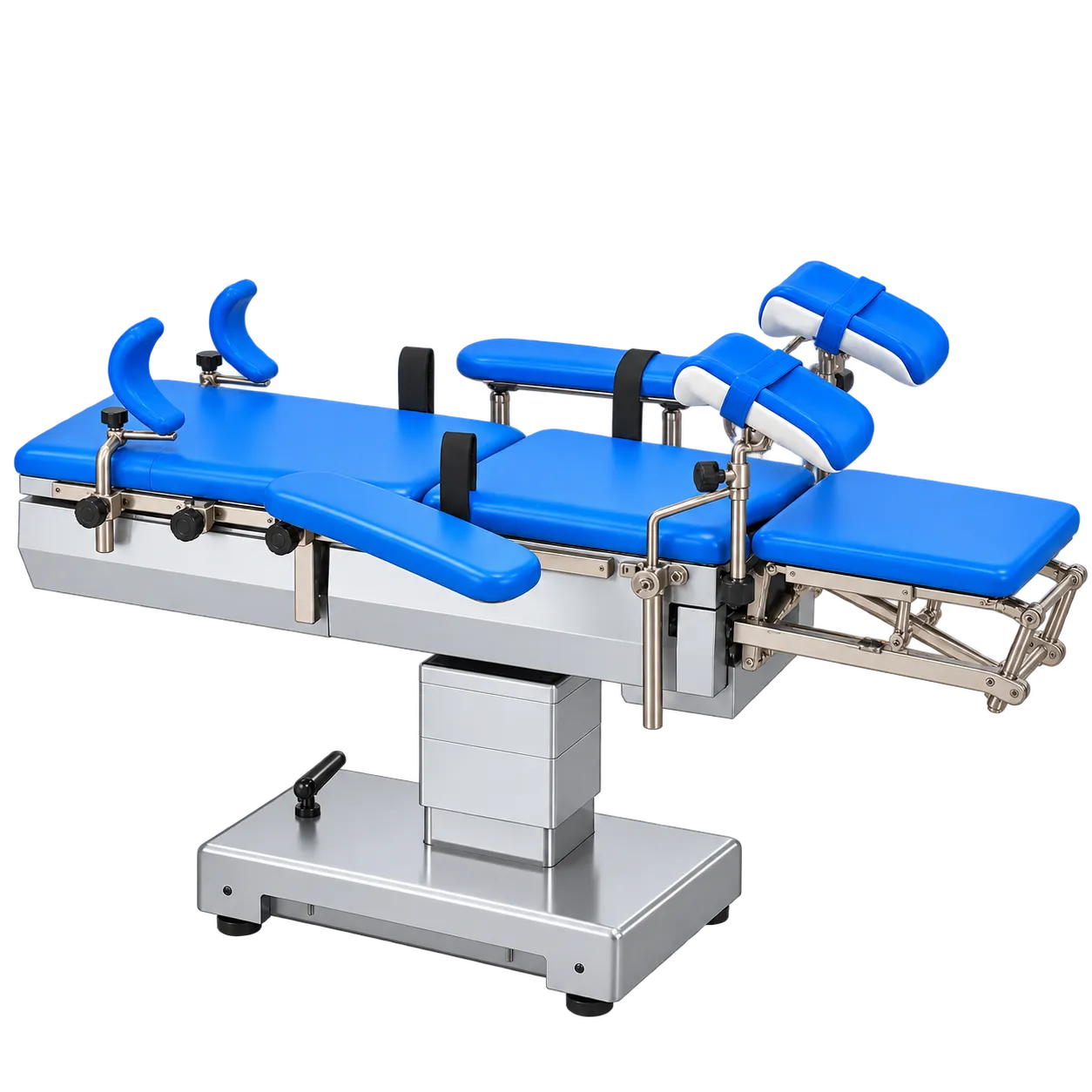
An electric obstetric bed serves delivery rooms, obstetric units and gynaecology clinics. During a normal labour, the back section supports the mother. The leg board can stay in place until the second stage, when it slides under the seat to give the midwife access. The same set-up suits instrumental deliveries with forceps or ventouse, and perineal repair afterwards, with the legs resting in the holders. Between births, the stainless surfaces and basin make turnaround quicker, which matters in a busy delivery suite.
Gynaecology clinics use this configuration for examinations, colposcopy and minor procedures, which is the use Blackstone names on its sheet. Powered height adjustment lets the clinician set a comfortable working level, and the lower end of the range helps patients get on and off. The hand grips give a labouring mother something to hold and push against. The shoulder supports would steady her in a head-down tilt, although the sheet does not confirm that the bed can tilt at all.
Obstetric emergencies leave no time for equipment problems. A shoulder dystocia or postpartum haemorrhage may call for rapid repositioning. Staff therefore need to know which functions are powered, how quickly they move, and what happens if mains power fails mid-delivery. Pressure care during long labours depends on the pads, whose material is not given. Medigear.uk gathers the full function list, the backup arrangements, the rated load,d and the pad specification from Blackstone.
The maternity lead receives those answers before any order is placed, along with cleaning guidance for the stainless parts.