
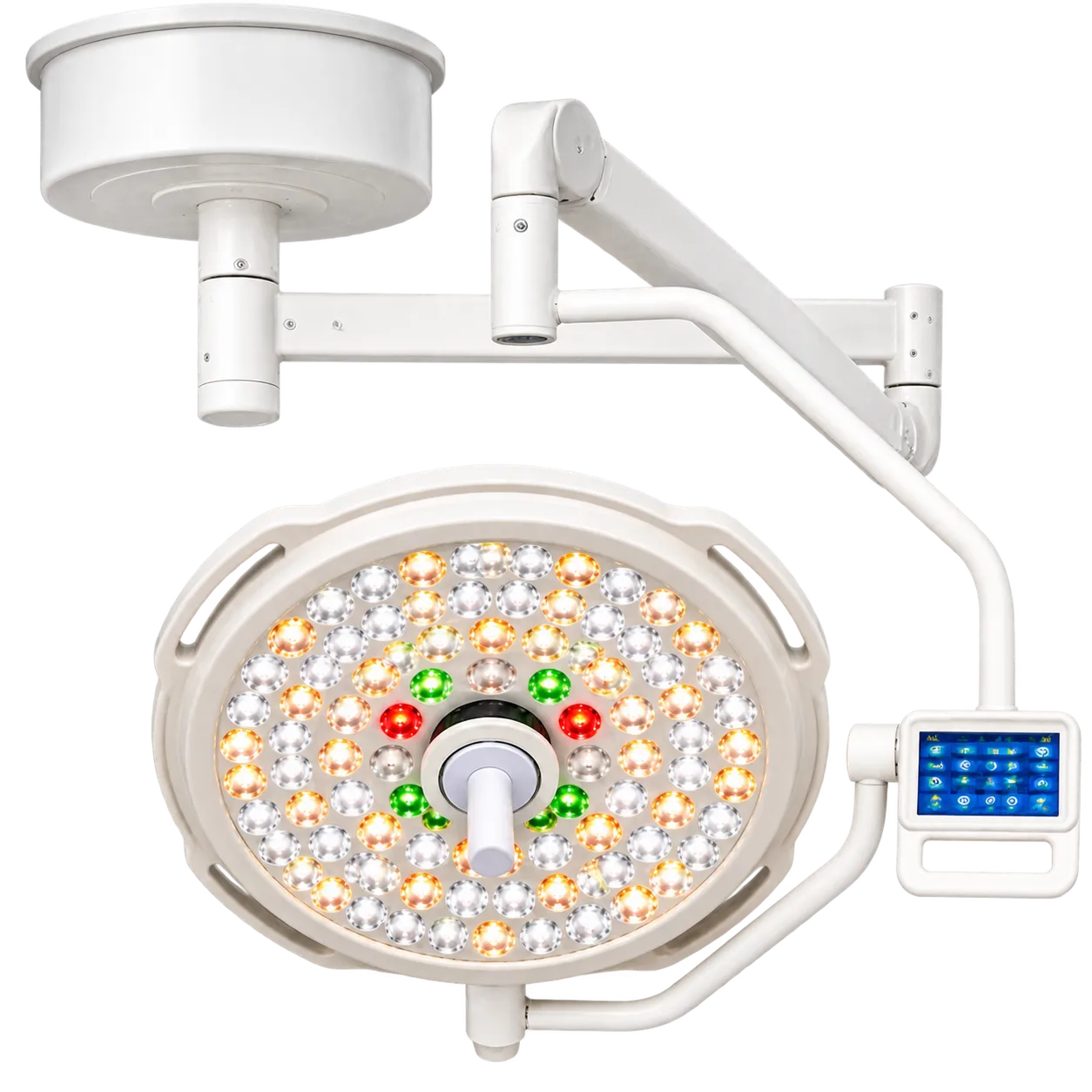
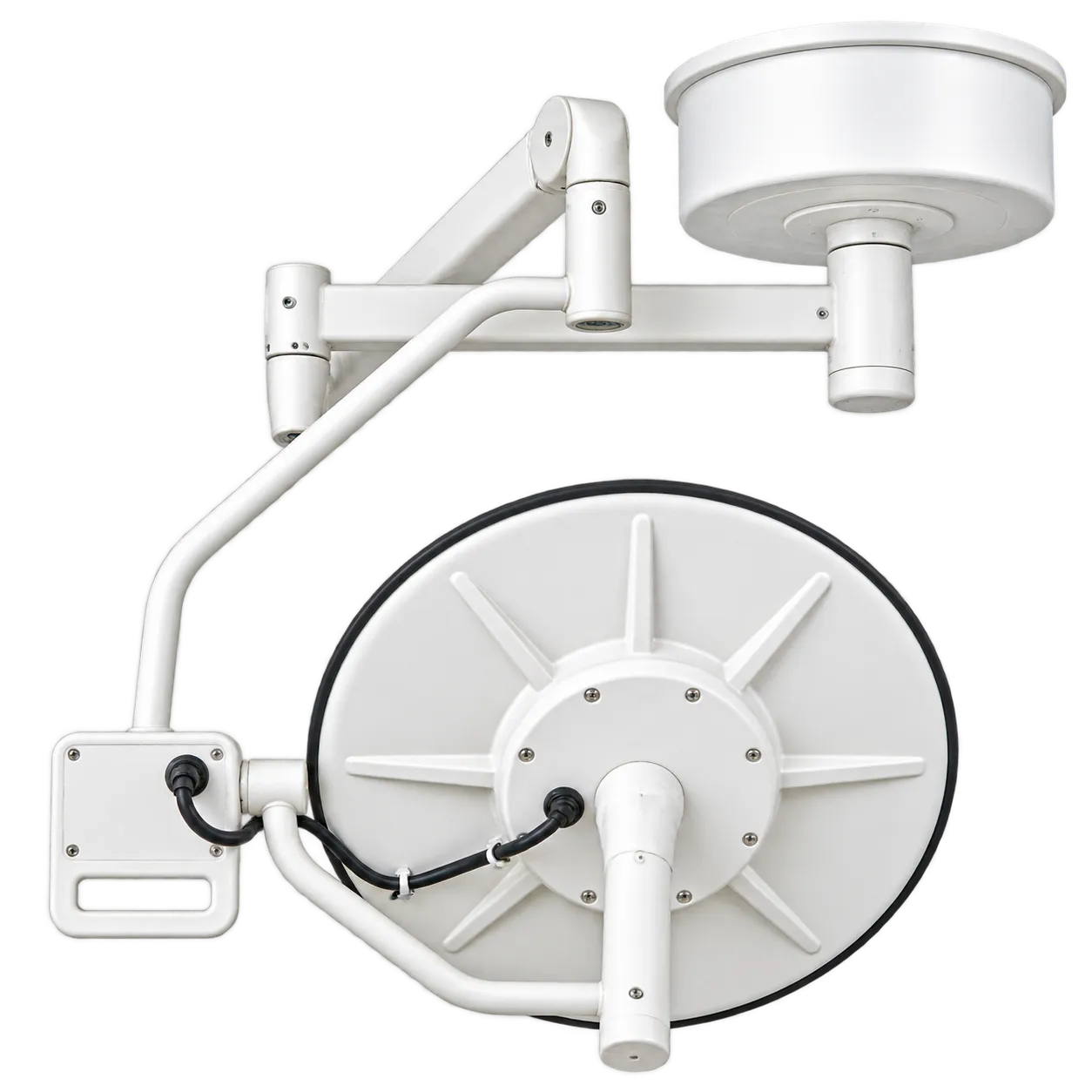
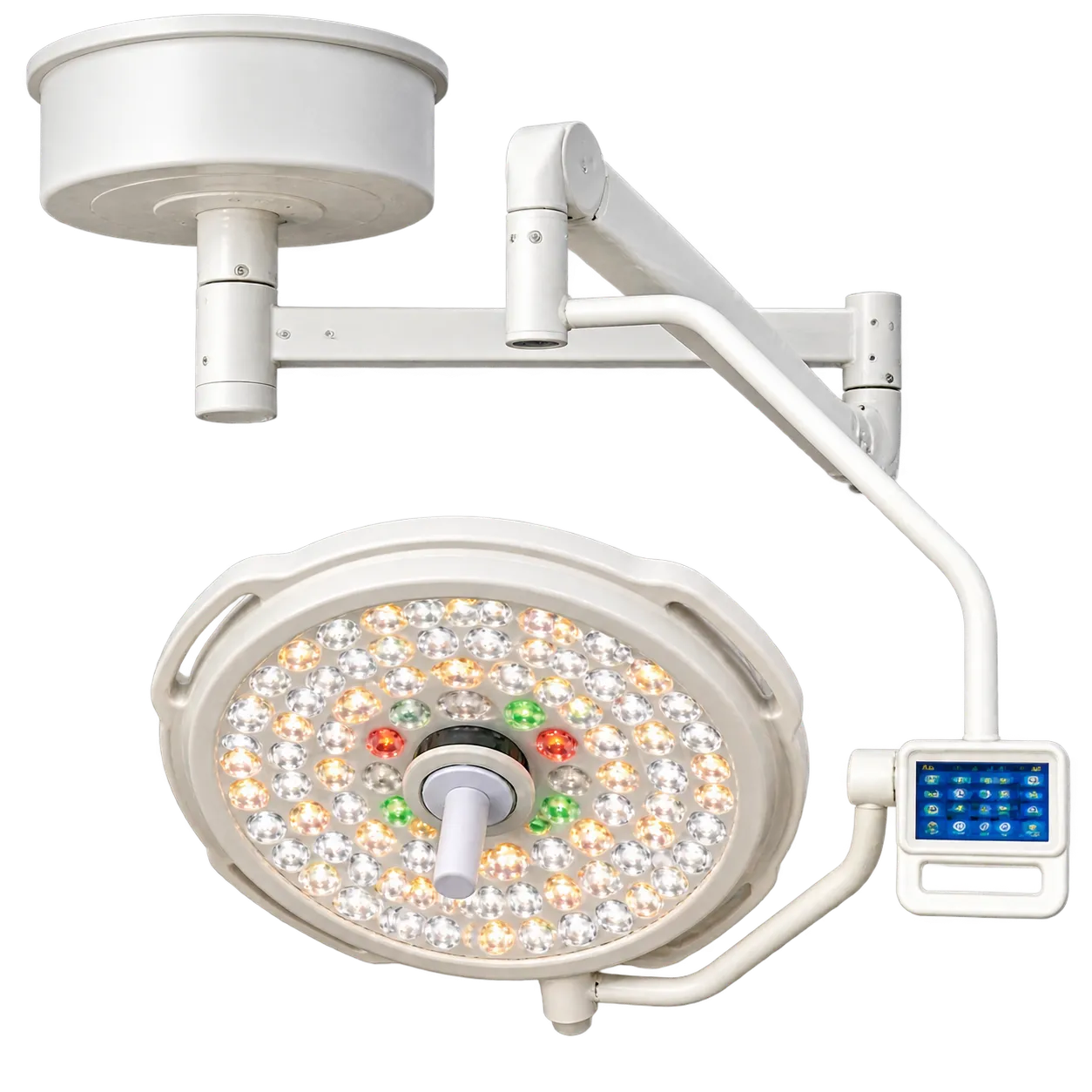
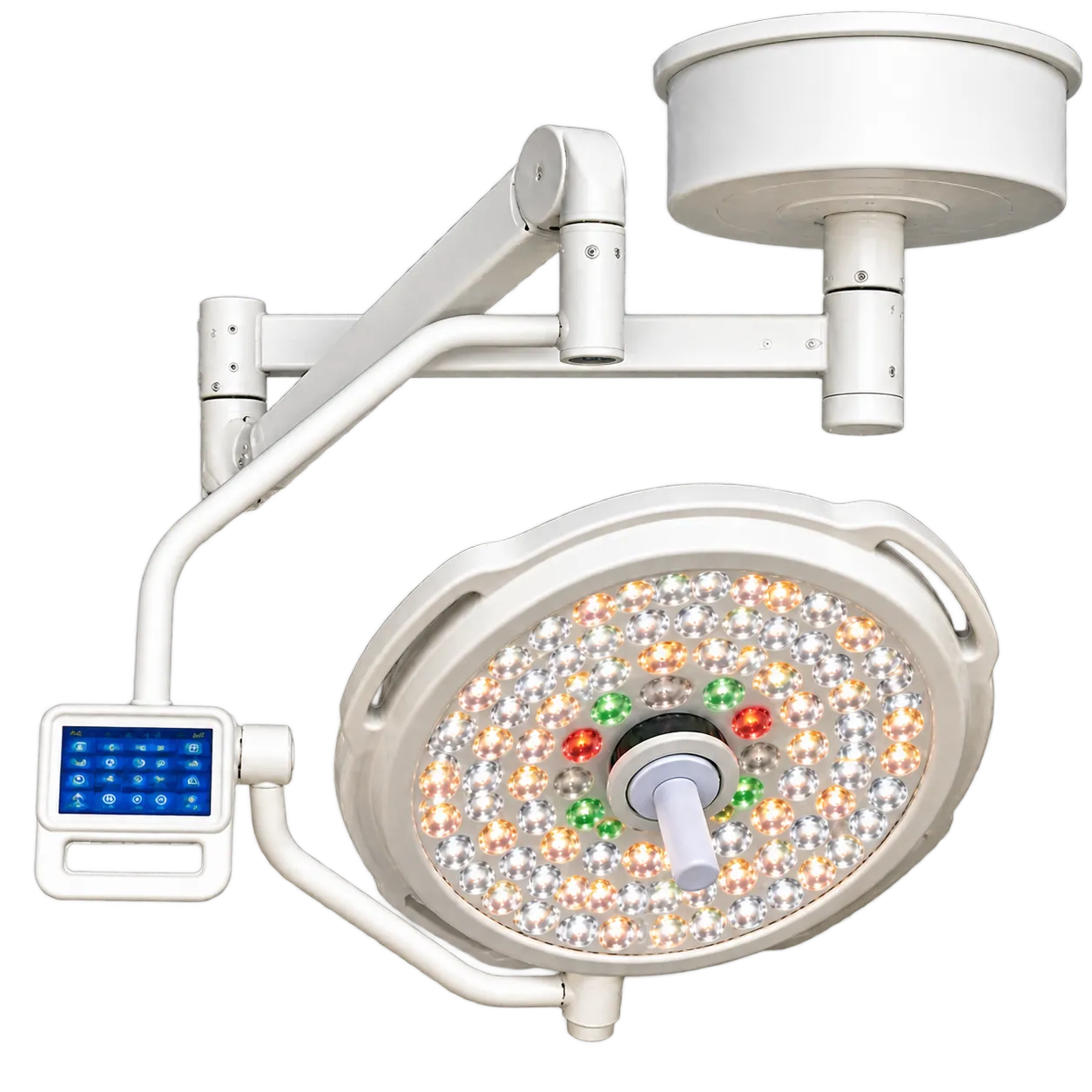
Shadow is what an operating theatre luminaire is fundamentally for. Eighty emitters spread across a 700 mm head already do a good deal, because light reaching the field from many directions means an obstruction removes some of it rather than all. What compensation adds is a response. When part of the beam is blocked, whatever remains simply works harder to make up the difference. A surgeon leaning in to look closely is the commonest cause of a field going dim at exactly the moment they most want to see it. That makes compensation worth having wherever it is offered.
What the sheet leaves out about compensation is the useful detail. How obstruction is detected, how fast the response is, and how much spare output exists to compensate with all determine whether the feature works in practice or merely exists on a list. A lamp already running near its own ceiling has nothing at all left in reserve to raise when something blocks the beam.
Electric focus raises a different question. Changing field size during a procedure is entirely normal practice, and motorising that change is a convenience worth having. But the sheet still publishes no light field diameter whatever, and no depth of illumination either, and those are the figures a theatre specifies against, and a motorised adjustment across an unstated range becomes harder to assess rather than easier.
Medigear.uk establishes the field range, the depth of illumination, the compensation detail, and the irradiance figure before this luminaire reaches a theatre.