
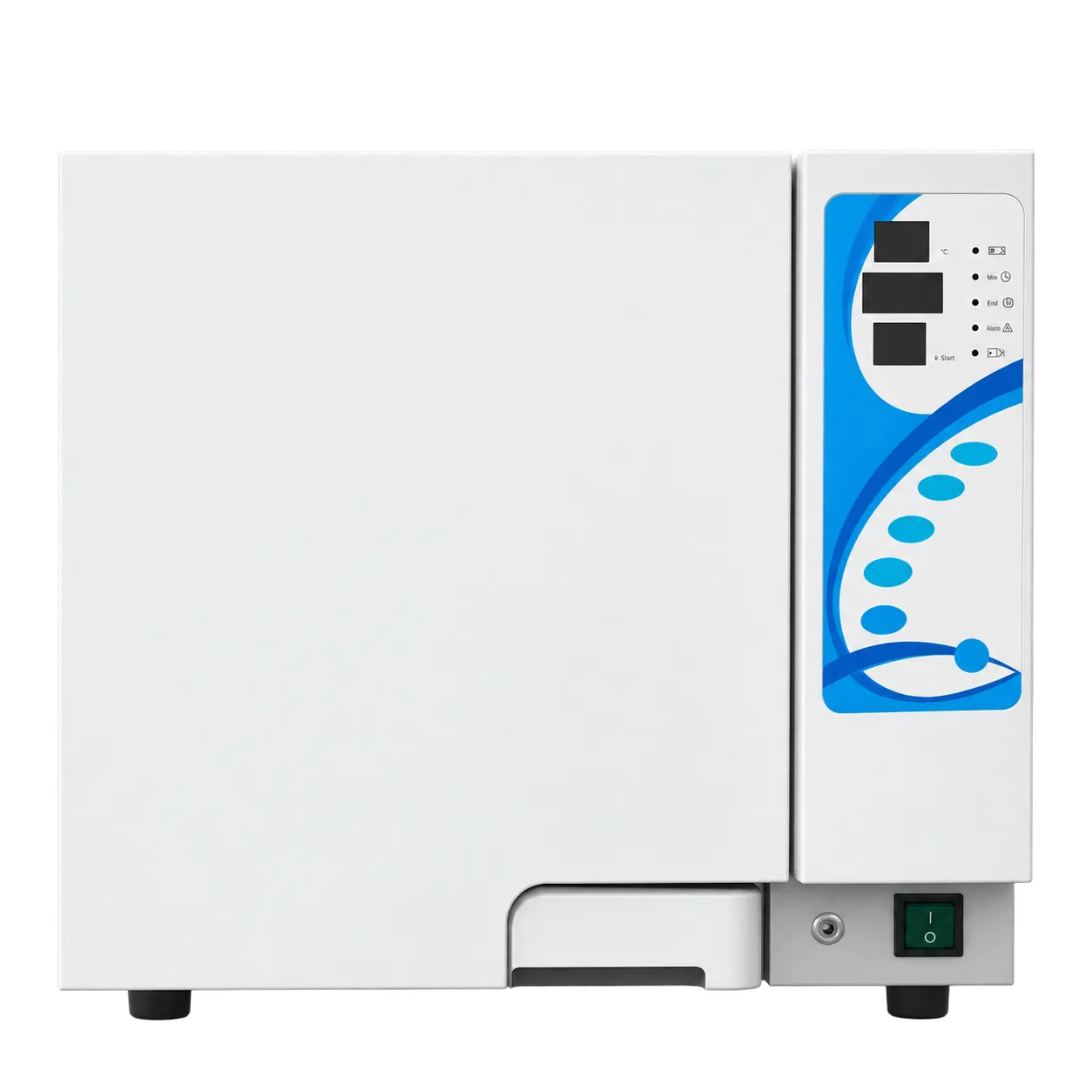
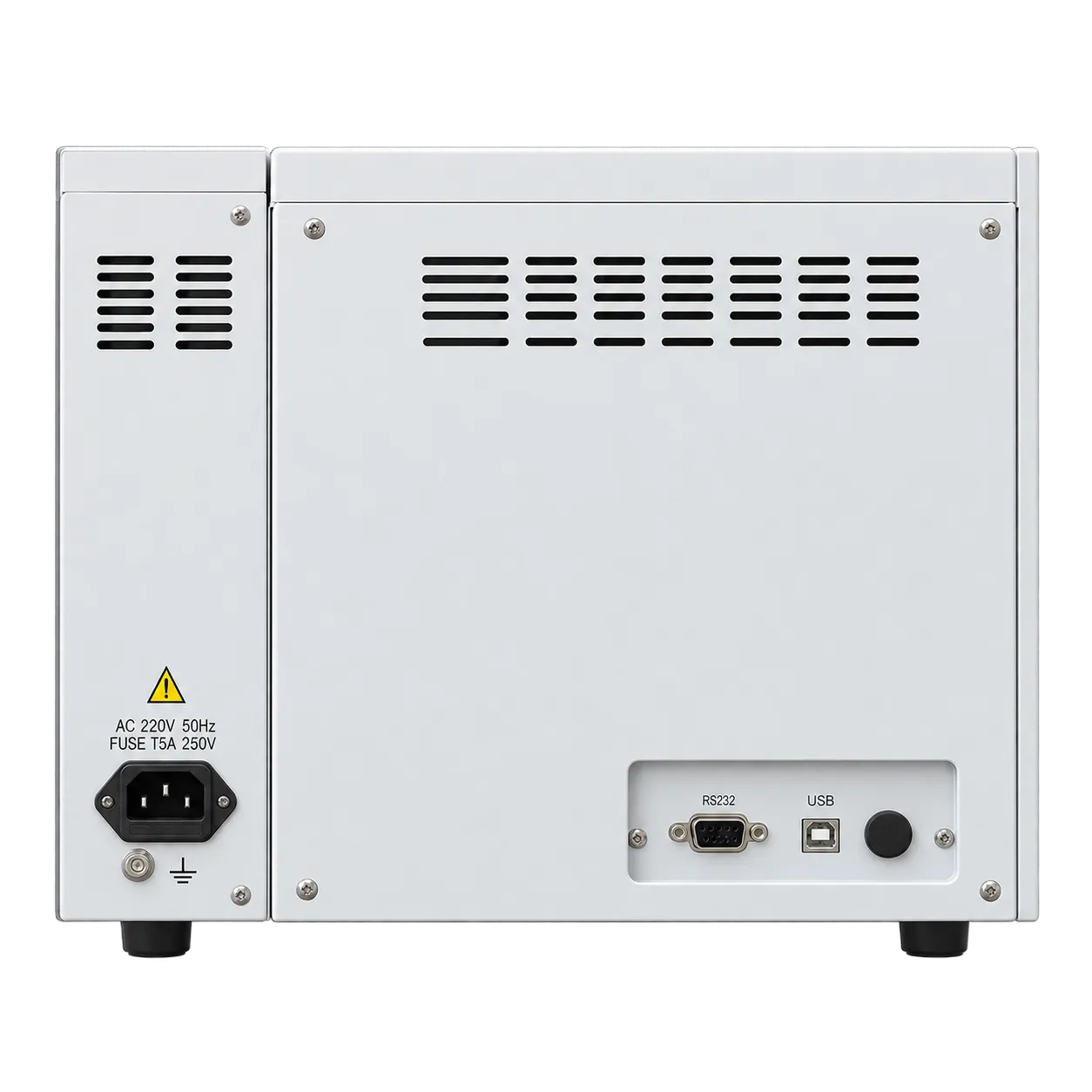
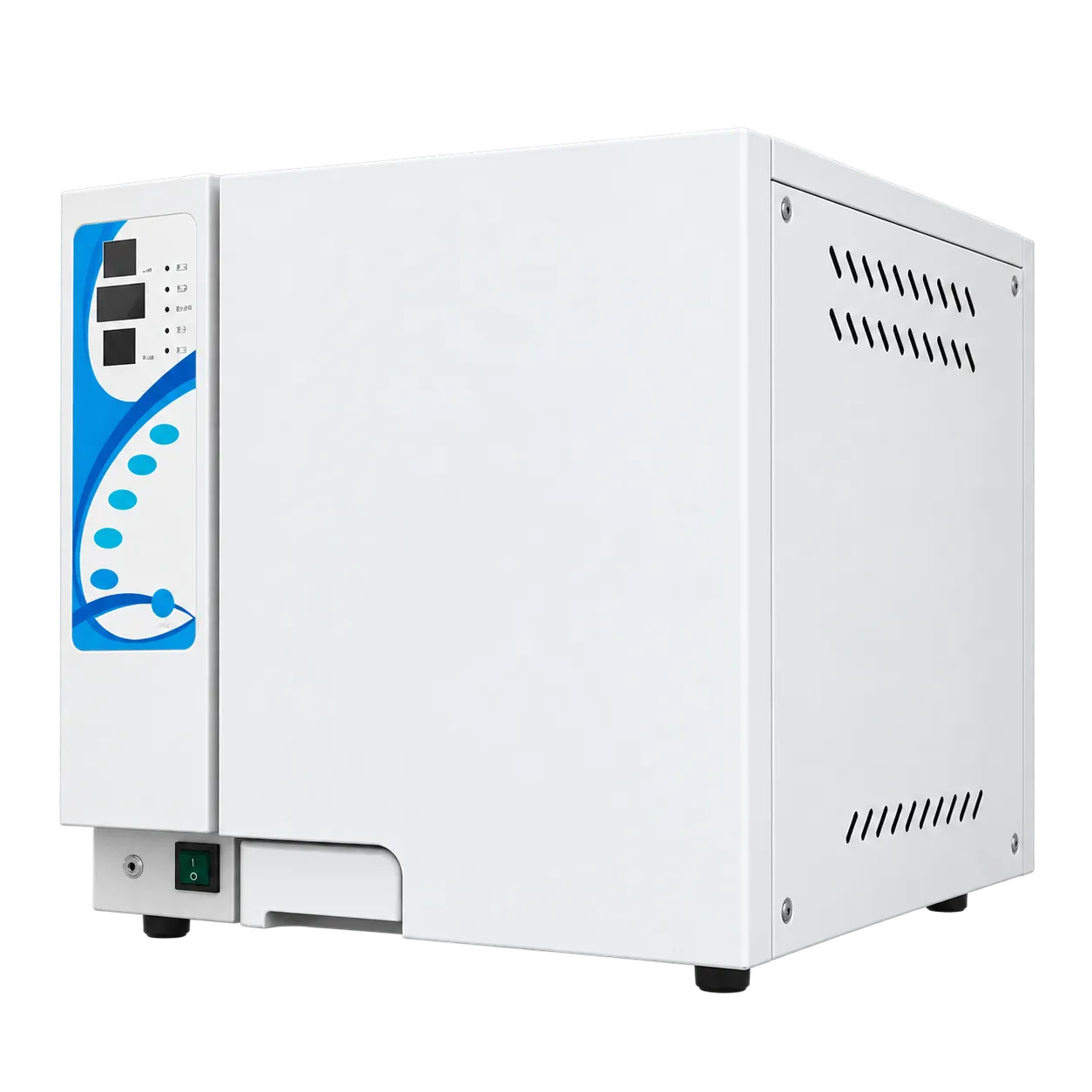
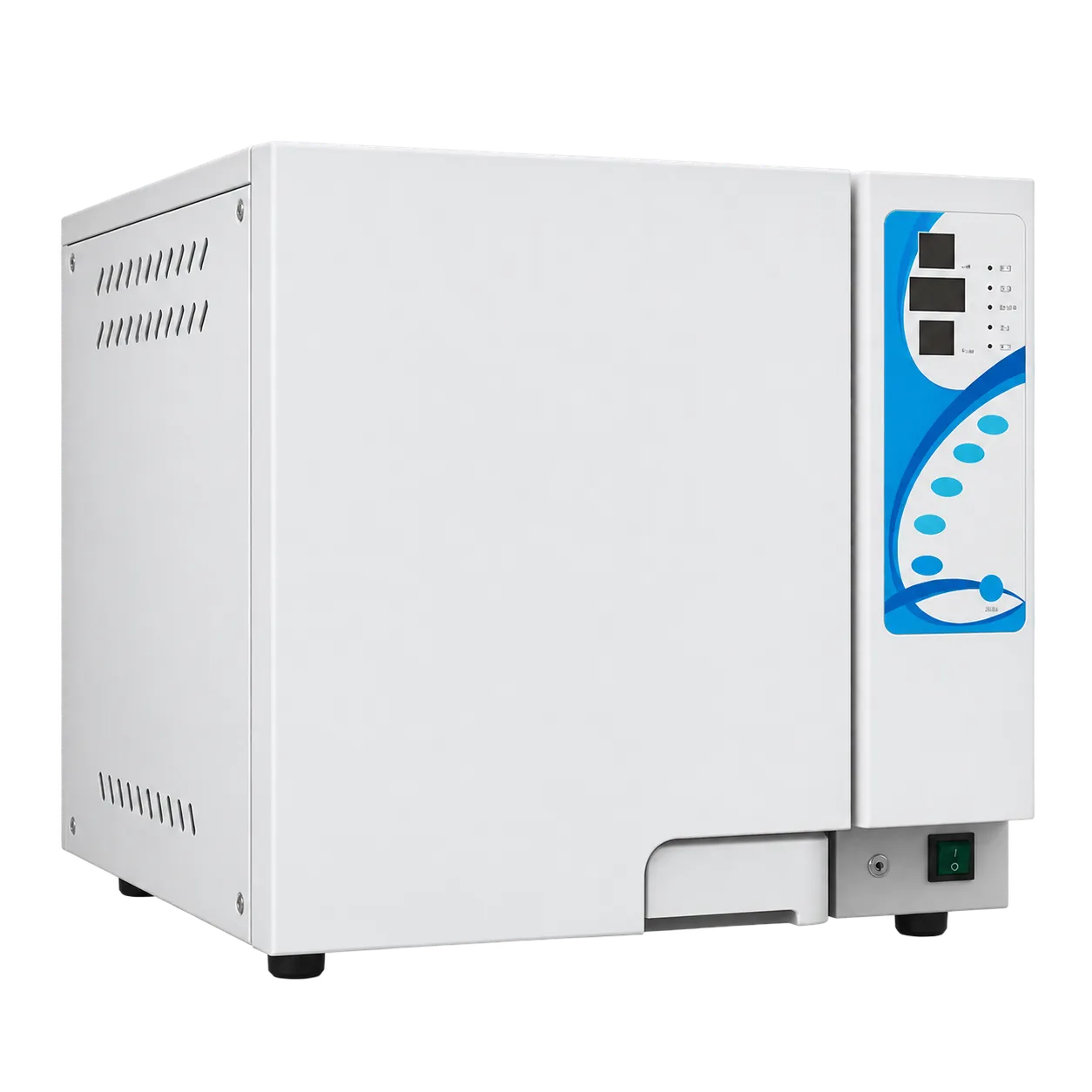
In a dental practice, a compact 18-litre Class N autoclave such as the E318 suits the steady flow of solid, unwrapped instruments from examination and restorative trays. The standard UK cycle under HTM 01-05 is 134 to 137 °C held for at least 3 minutes, at 2.1 to 2.2 bar gauge. The E318's 134 °C cycle holds for 10 minutes by default, which clears that minimum comfortably but lengthens every run. Handpieces, lumened suction tips and pouched instruments belong in a vacuum steriliser instead.
Because the unit does not dry its load, the steps after each cycle carry more weight. HTM 01-05 expects instruments from a non-vacuum steriliser to be dried with disposable non-linting cloths, then used, stored or wrapped. Unwrapped instruments may be kept for one day in the clinical area or one week in a non-clinical area. Instruments wrapped after sterilisation can be stored for up to a year under a quality system that tracks dates.
Daily running follows the same guidance. Fill the reservoir with freshly distilled or RO water, drain it at the end of the day, and leave it empty with the door open. An automatic control test is due each day, and every cycle needs a record, whether by printer, data logger or handwritten logbook. As a pressure vessel, the steriliser also needs a written scheme of examination under the Pressure Systems Safety Regulations 2000.
Medigear.uk has asked Blackstone about recording options, the reservoir and EN 13060 test evidence for the E318, and it will share what comes back with the practice.