
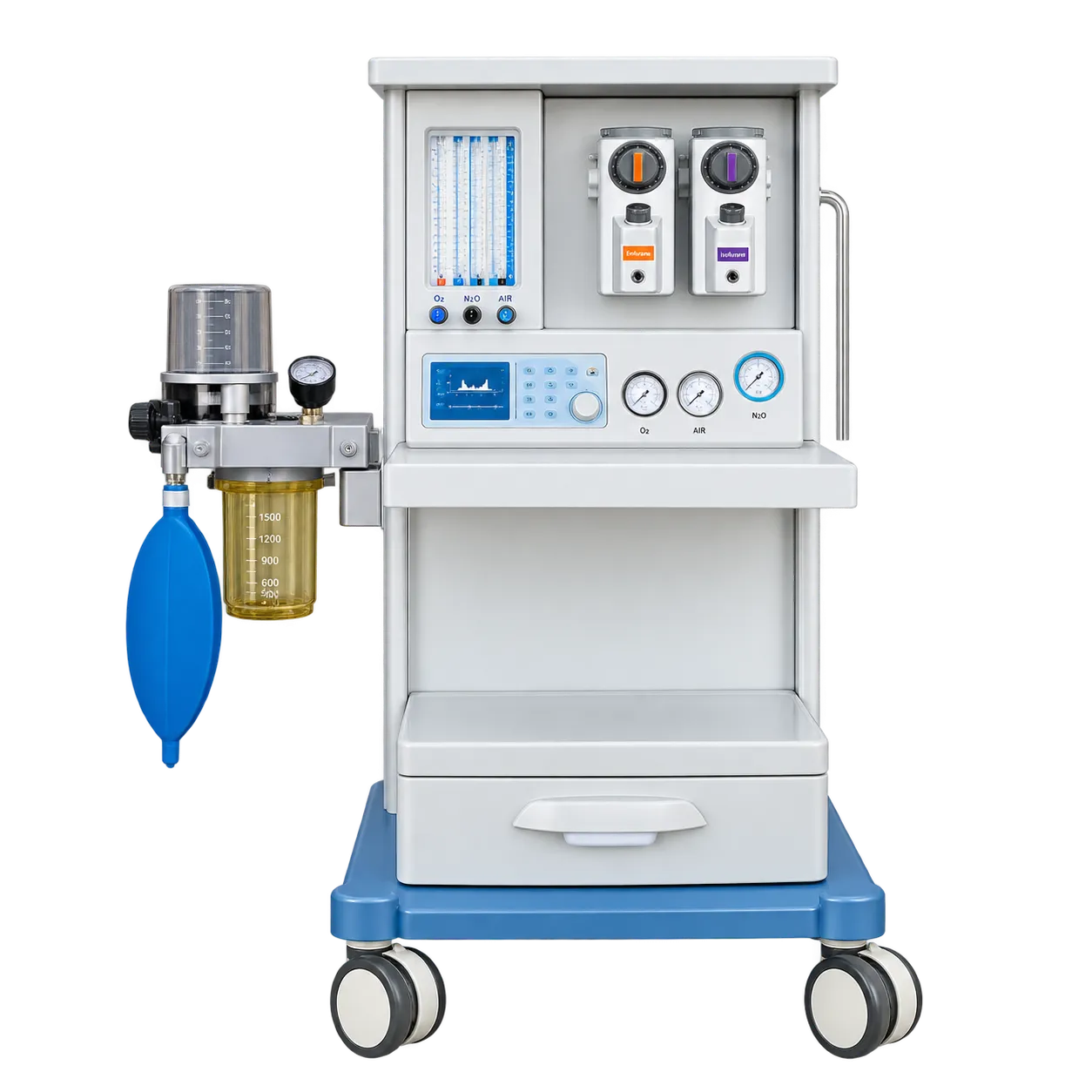
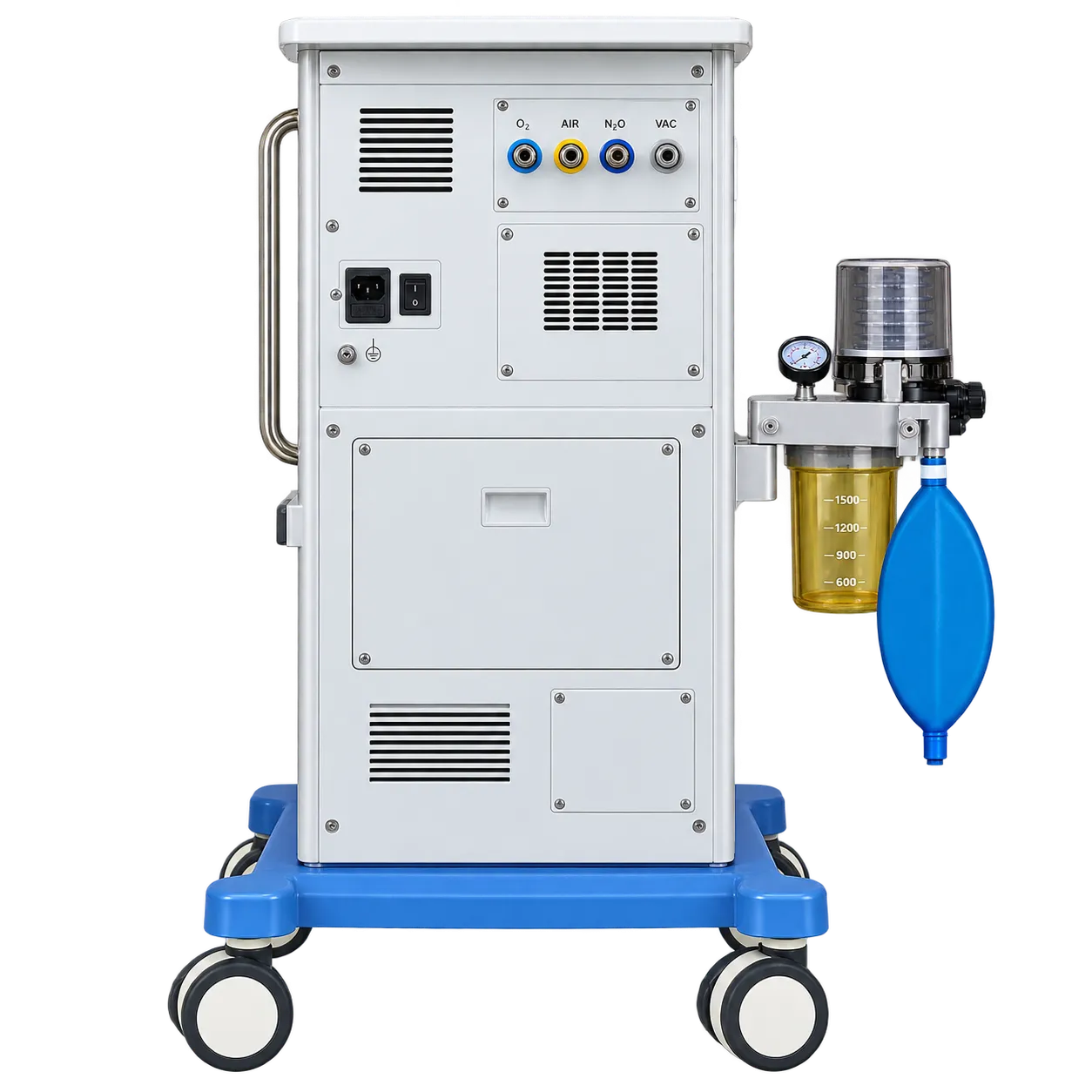
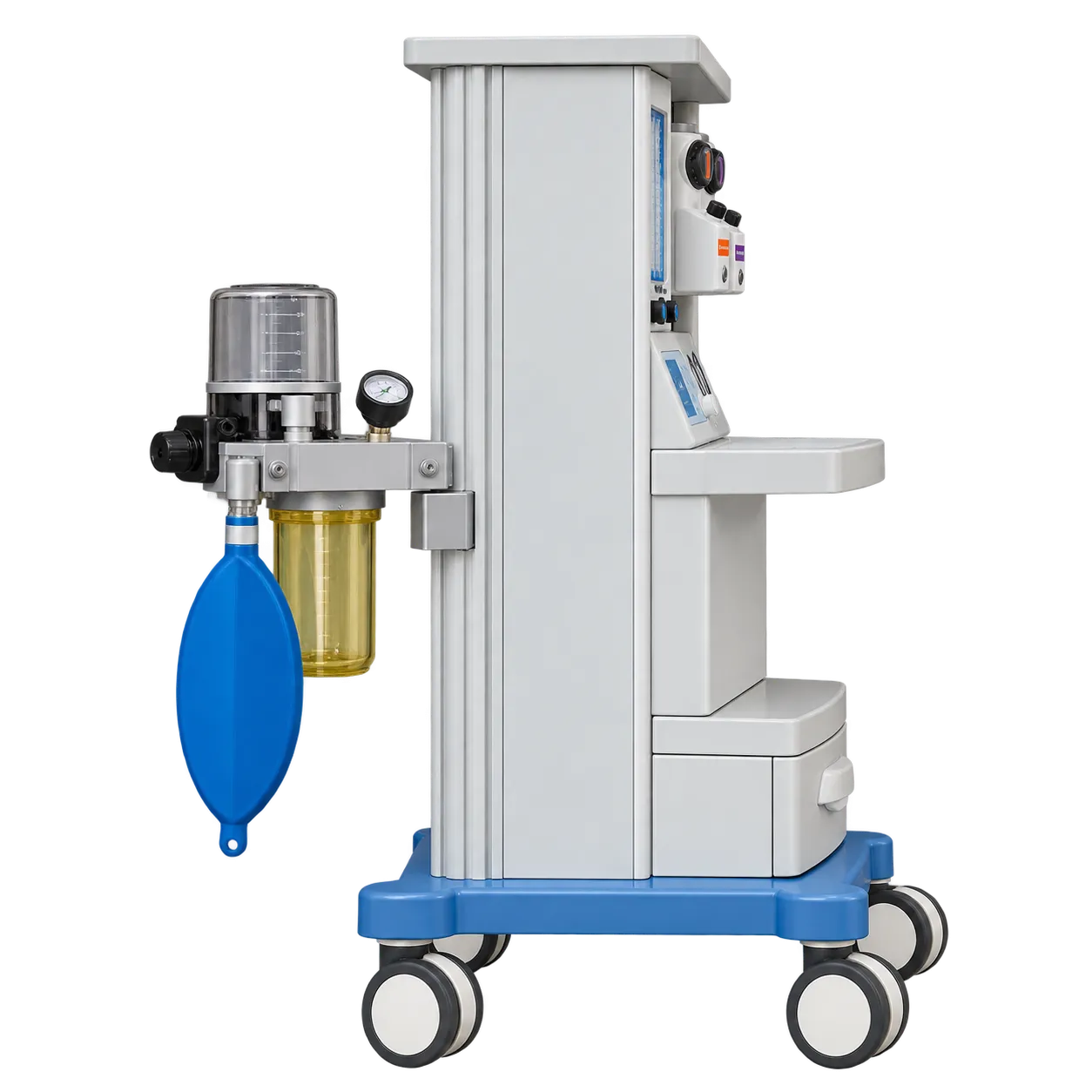
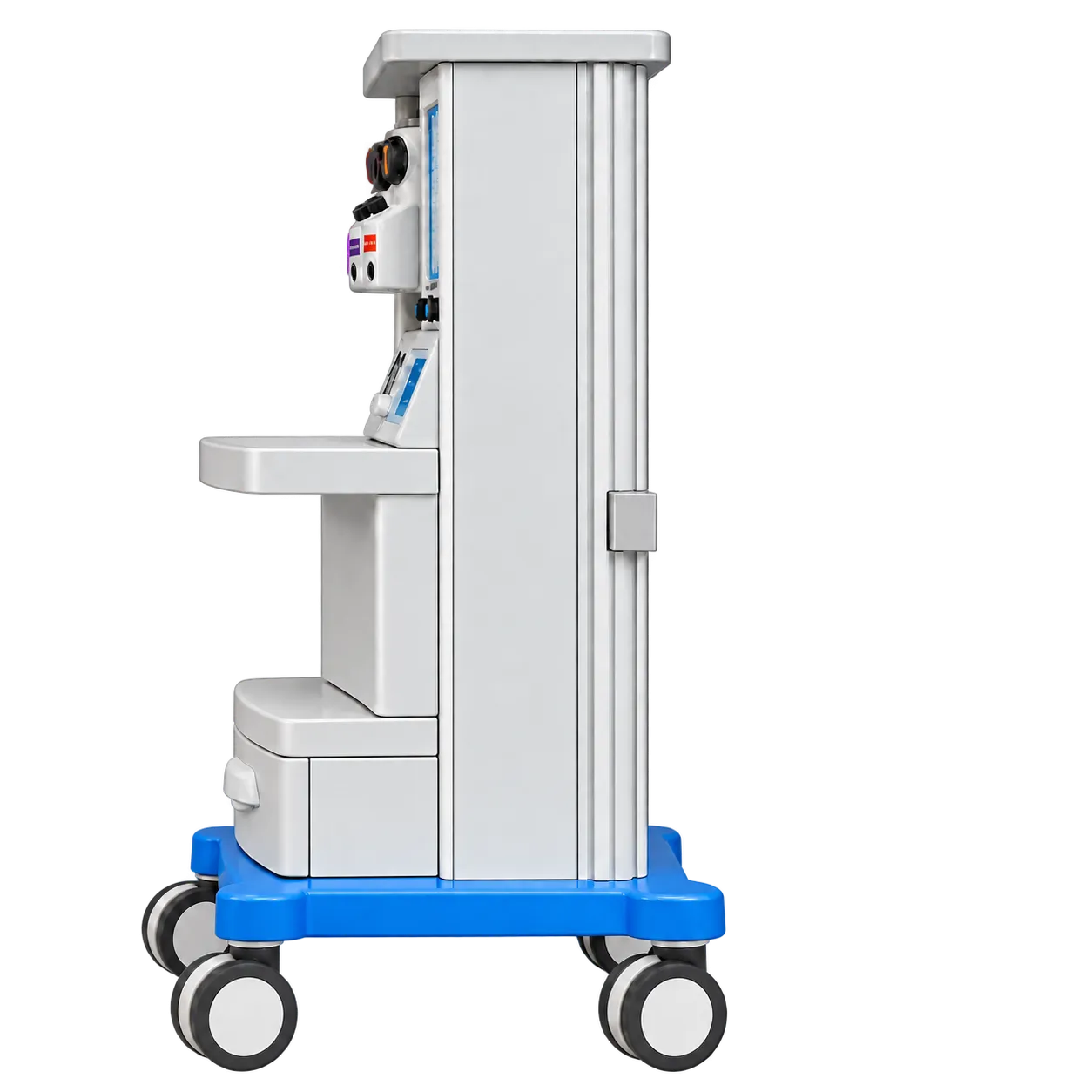
The trade-off between this dual vaporiser machine and the HS-820 is unusual because it doesn't run in one direction. A second vaporiser position is a real advantage when a department alternates agents. Swapping a vaporiser between cases is handling nobody wants in the middle of a list. Against that, the mode list is shorter by two, and the two that have gone are not decorative.
Modern anaesthetic practice applies PEEP as routine rather than as a rescue measure. Atelectasis begins developing within minutes of induction, and a few centimetres of end-expiratory pressure limits it through a case. Obese patients, head-down laparoscopic positioning and long procedures all make that more important rather than less, and none of those is an unusual case in a general theatre. Most departments, told a machine offers no PEEP, would end the conversation there. Establishing whether the omission is real is therefore the first task on this sheet, ahead of every other question.
The remaining limitations are shared with the HS-820 and apply equally. With no air at the block, everything must be diluted with nitrous oxide, which rules the machine out wherever that agent is avoided or has been taken out. A tidal volume starting at 50 ml places the infant's work outside its published range. Capnography is unmentioned anywhere, and British practice requires it throughout every anaesthetic without exception.
Medigear.uk settles the PEEP question, the capnography arrangement and the regulatory position before this dual vaporiser machine reaches a theatre.