
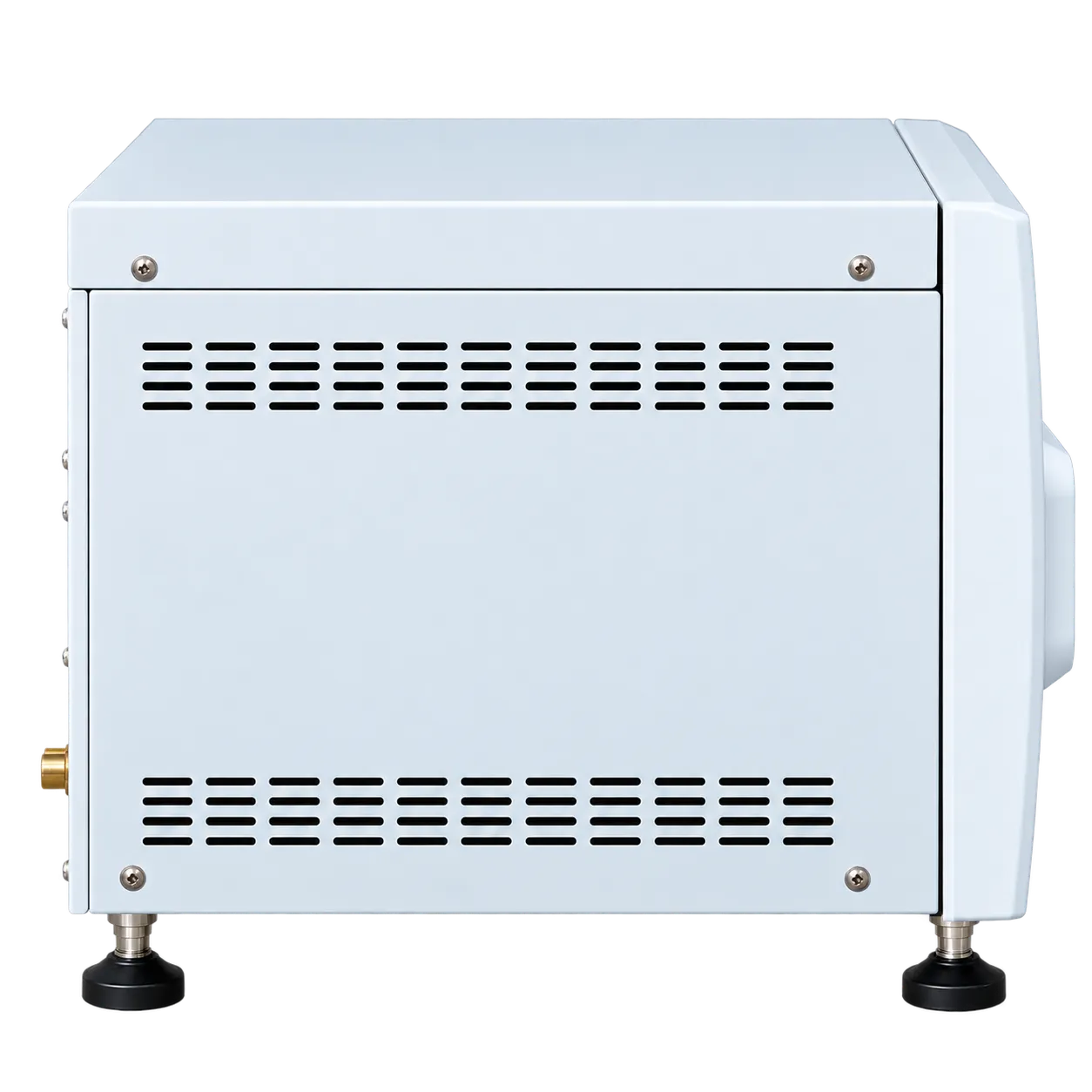
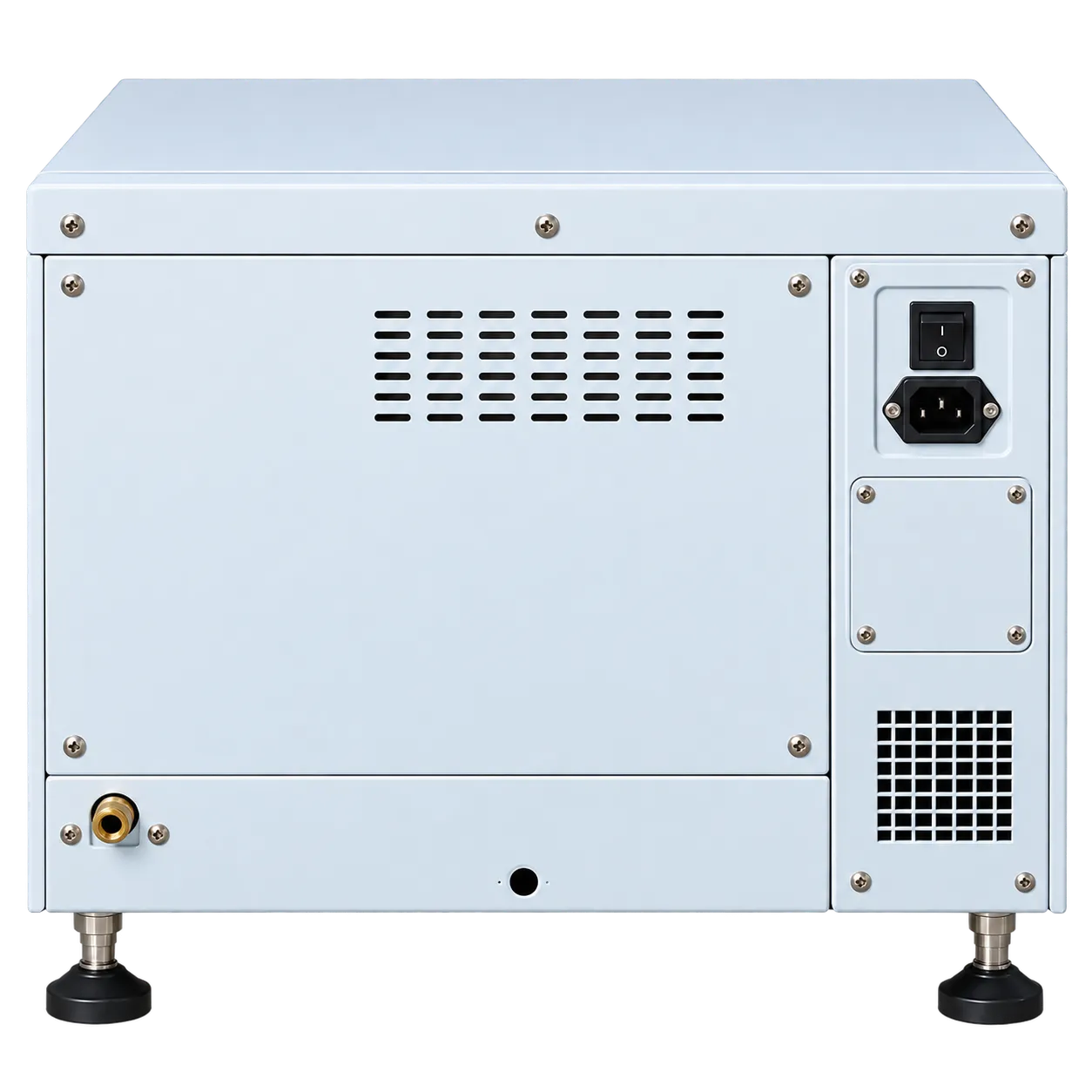
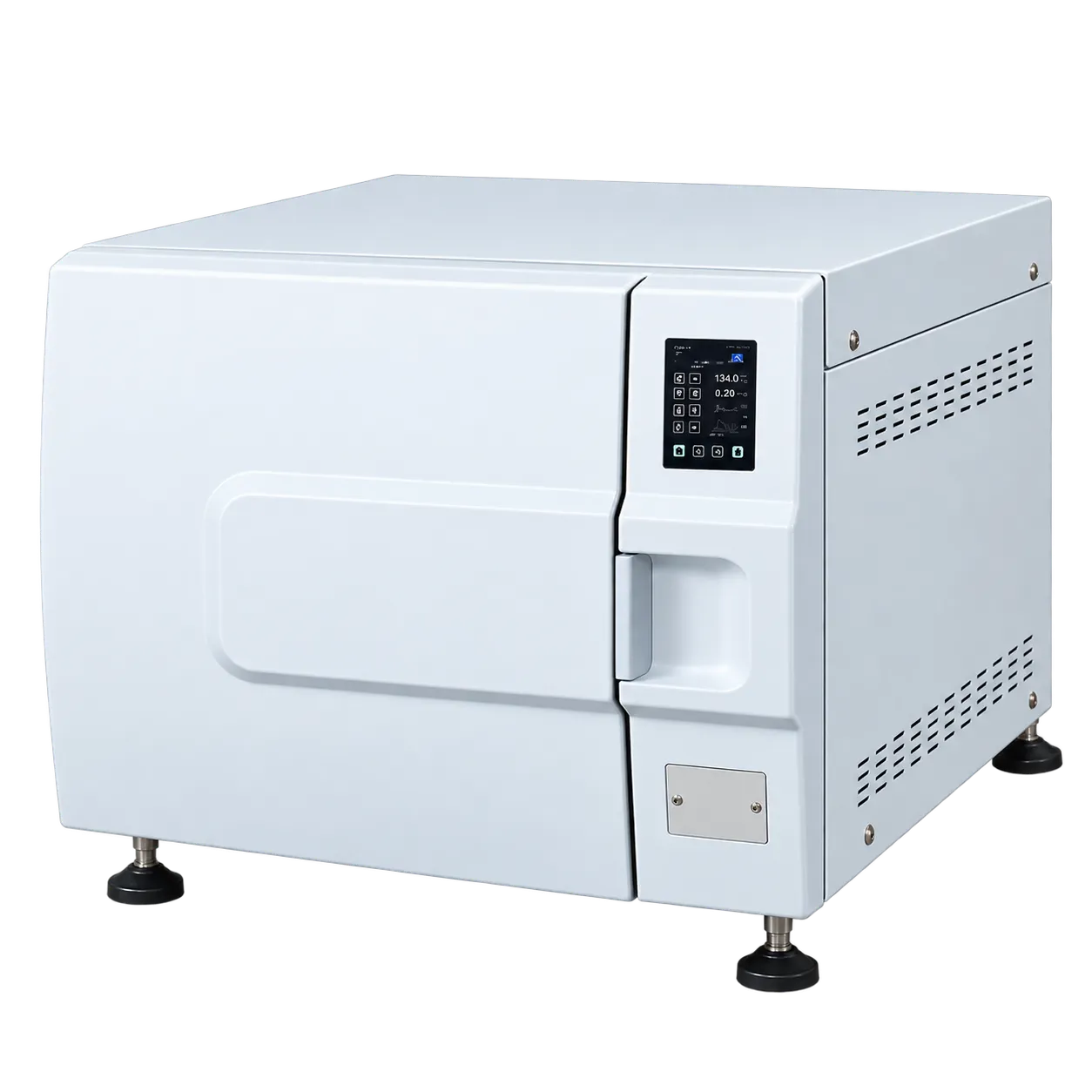
Busy dental practices and dental hubs, hospital outpatient and day surgery units, and clinics that process full tray sets in each cycle are the natural buyers for the DGT-45Z. As a Class B steriliser, it takes wrapped and pouched sets, handpieces and other hollow instruments, and porous items, with 45 litres of chamber volume on a bench.
A unit of this size makes its own demands on the building. Its 3.5 kW rating draws about 15 A on a 230 V supply, beyond the 13 A rating of a standard plug, so the installation requires a dedicated circuit. At 102 kg, it is also well past the HSE guideline lifting figures of 25 kg for men and 16 kg for women in good conditions, and a two-person team should handle only about two-thirds of their combined capacity: mechanical handling, not a team lift, gets it to the bench.
The bench matters as much as the lift. A base of 850 × 660 mm overhangs most standard worktops, so departments plan either a deeper bench or a purpose-built stand rated for the unit, its water and a full load, with clear space around the side vents.
Treated as an estates project from the start, with circuit, support, ventilation and water agreed before delivery, the DGT-45Z gives a department large-batch vacuum sterilising without moving to a floor-standing machine.
Tender specifications, including NHS ones, set out electrical, structural, and capacity requirements for equipment of this size, and buyers in other public systems work the same way. The conformity documentation those procurement routes require is issued by the manufacturer and shared by the enquiry team.