
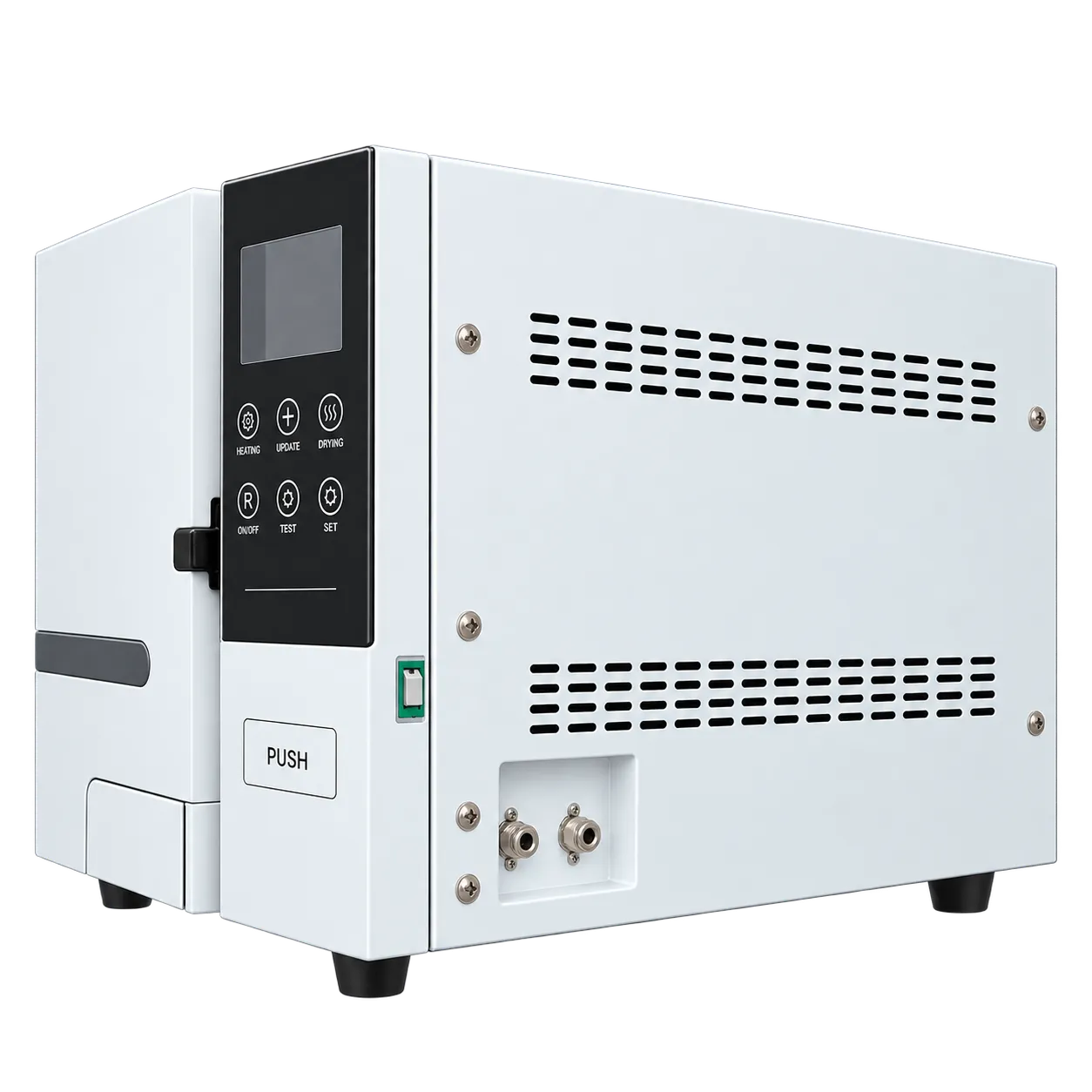
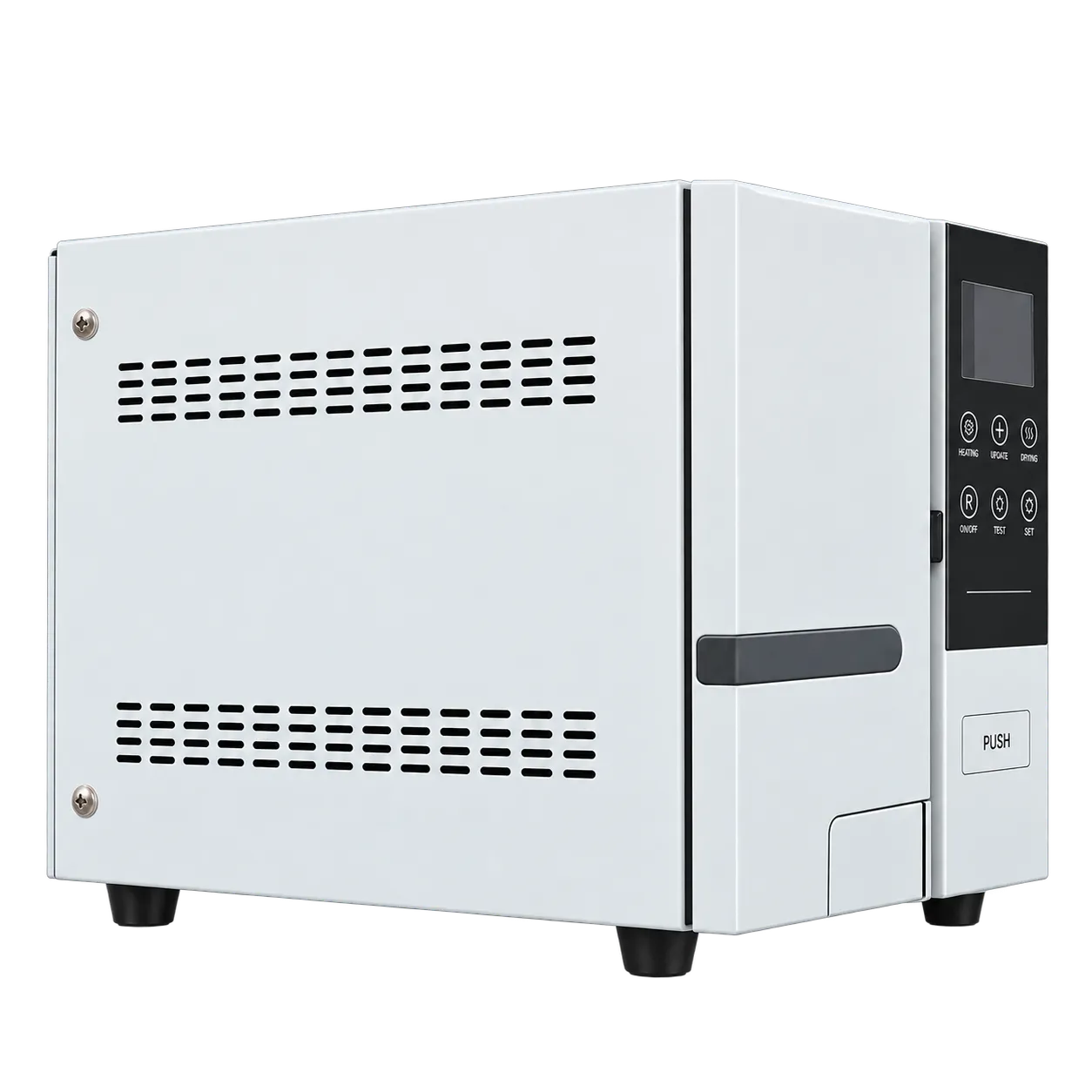
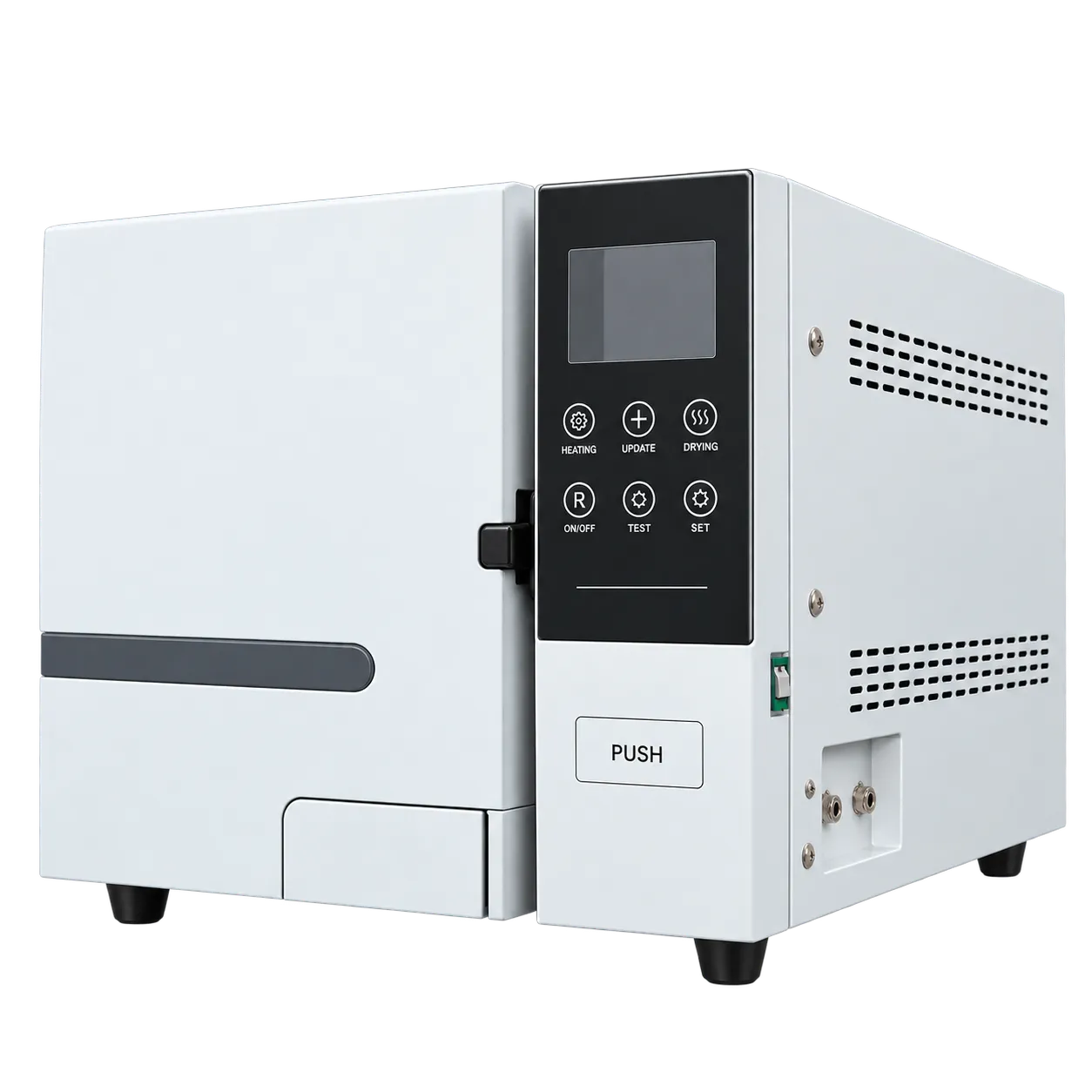
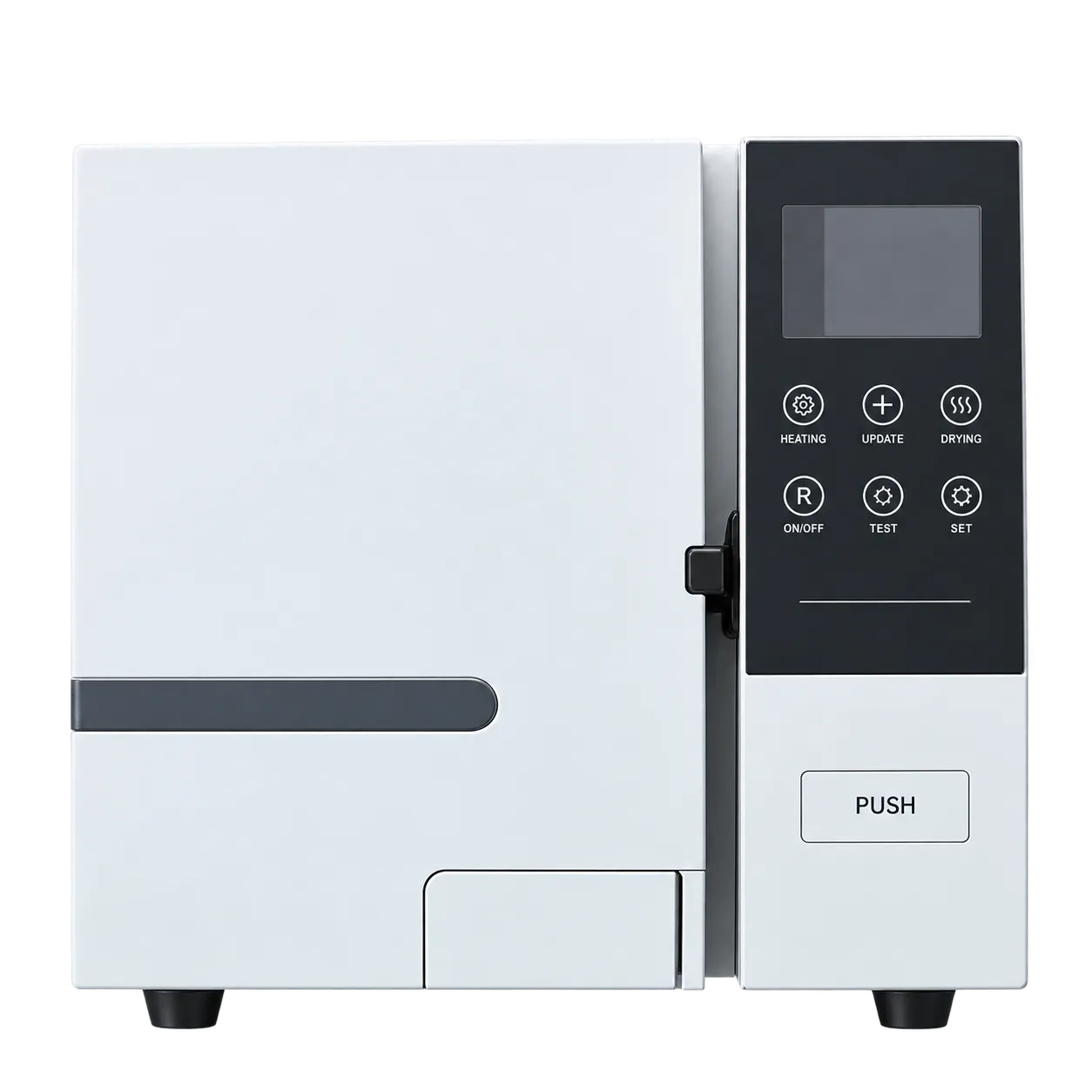
Dental practices and dental hospitals that reprocess turbines, surgical handpieces and contra-angles, along with oral surgery and implant clinics, are the natural buyers for the DGT-23X. Its Class B cycles also suit pouched instrument sets, hollow instruments and small porous items in a 23-litre chamber.
The case for vacuum rests on what happens inside a handpiece. A 2017 study recorded 140 temperature measurements inside dental handpiece lumens under non-vacuum and vacuum processes. Non-vacuum cycles were slower to bring the inside of the handpiece to 134 °C. The measurement point at the handpiece base failed the standard in all nine runs, while the vacuum process with fractionated pre-vacuum and post-vacuum phases recorded no failures. A companion study using thermometric, chemical, and biological indicators inside handpieces found significant failures under non-vacuum conditions and concluded those processes are unreliable for dental handpieces.
The mechanism explains the result. Air left in a narrow channel insulates it, so the steam never condenses on the surfaces it needs to heat. The vacuum phase before the load removes that air, and the vacuum phase afterwards dries the load so pouches can go into storage.
For the practice, the routine is short: run the daily air removal test, load within limits, follow each handpiece maker's instructions and keep the pouches dry.
Tender specifications, including NHS ones, ask for vacuum processes and hollow-load evidence when handpieces are in scope, and public buyers in other countries do the same. The conformity documentation those procurement routes require is issued by the manufacturer and shared by the enquiry team.