
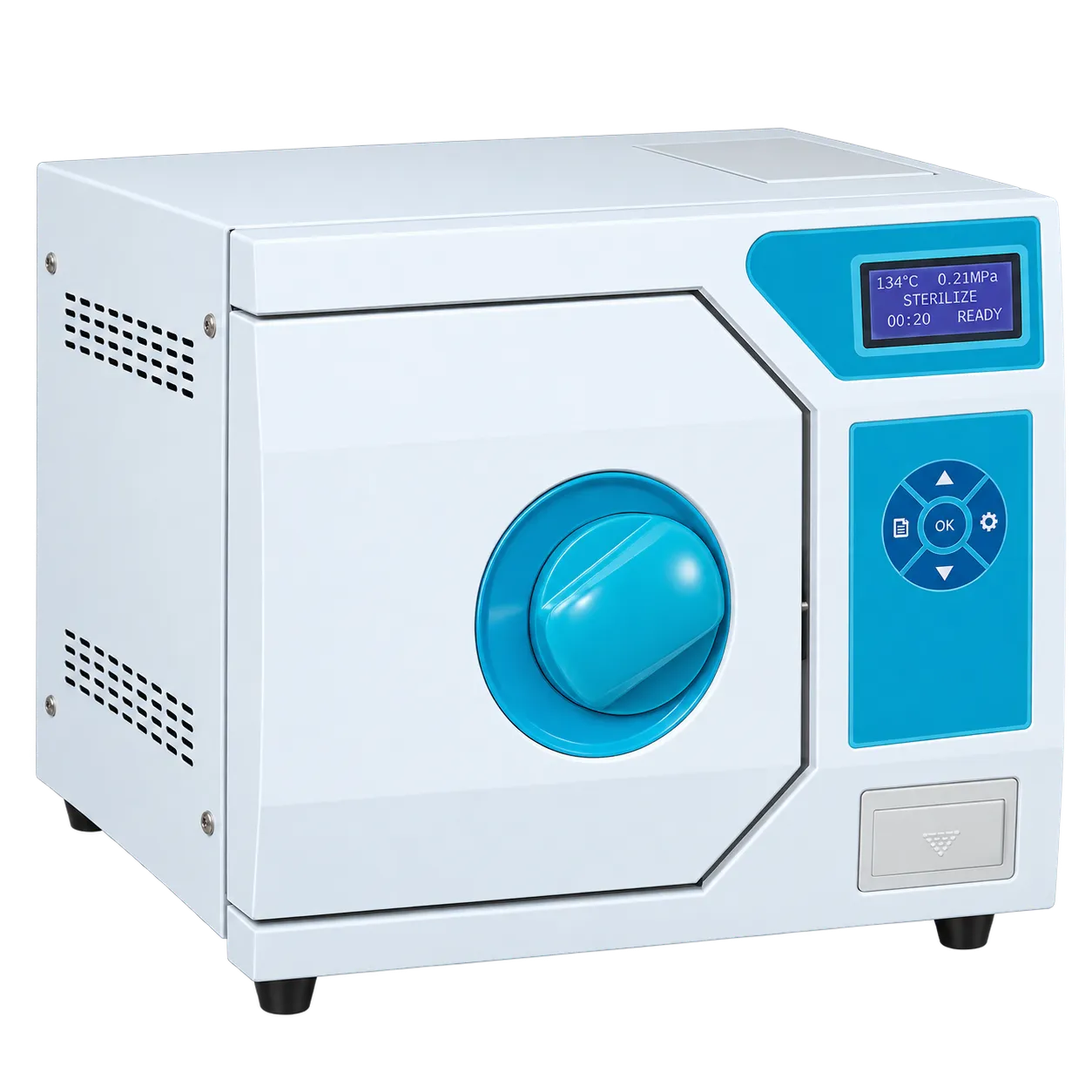
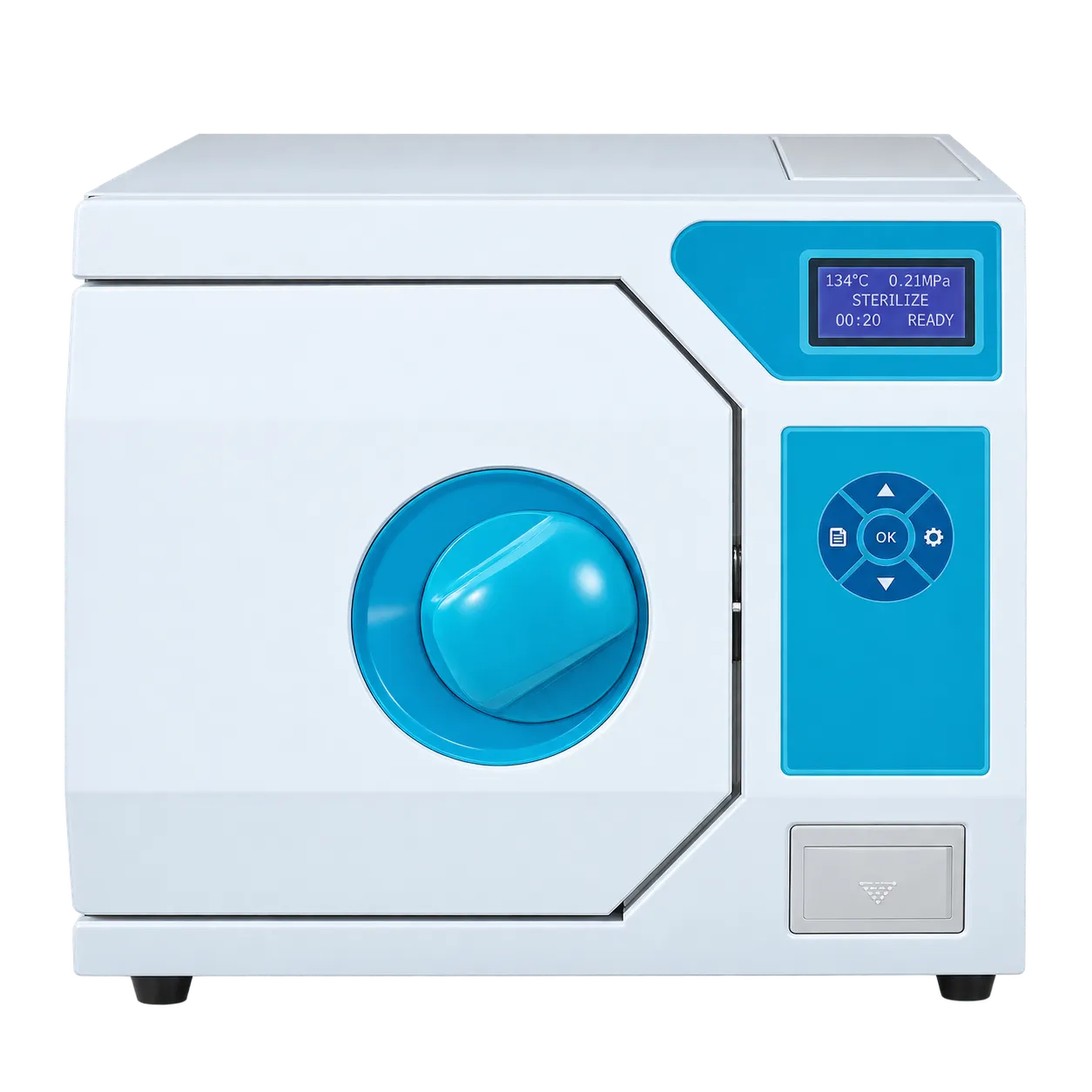
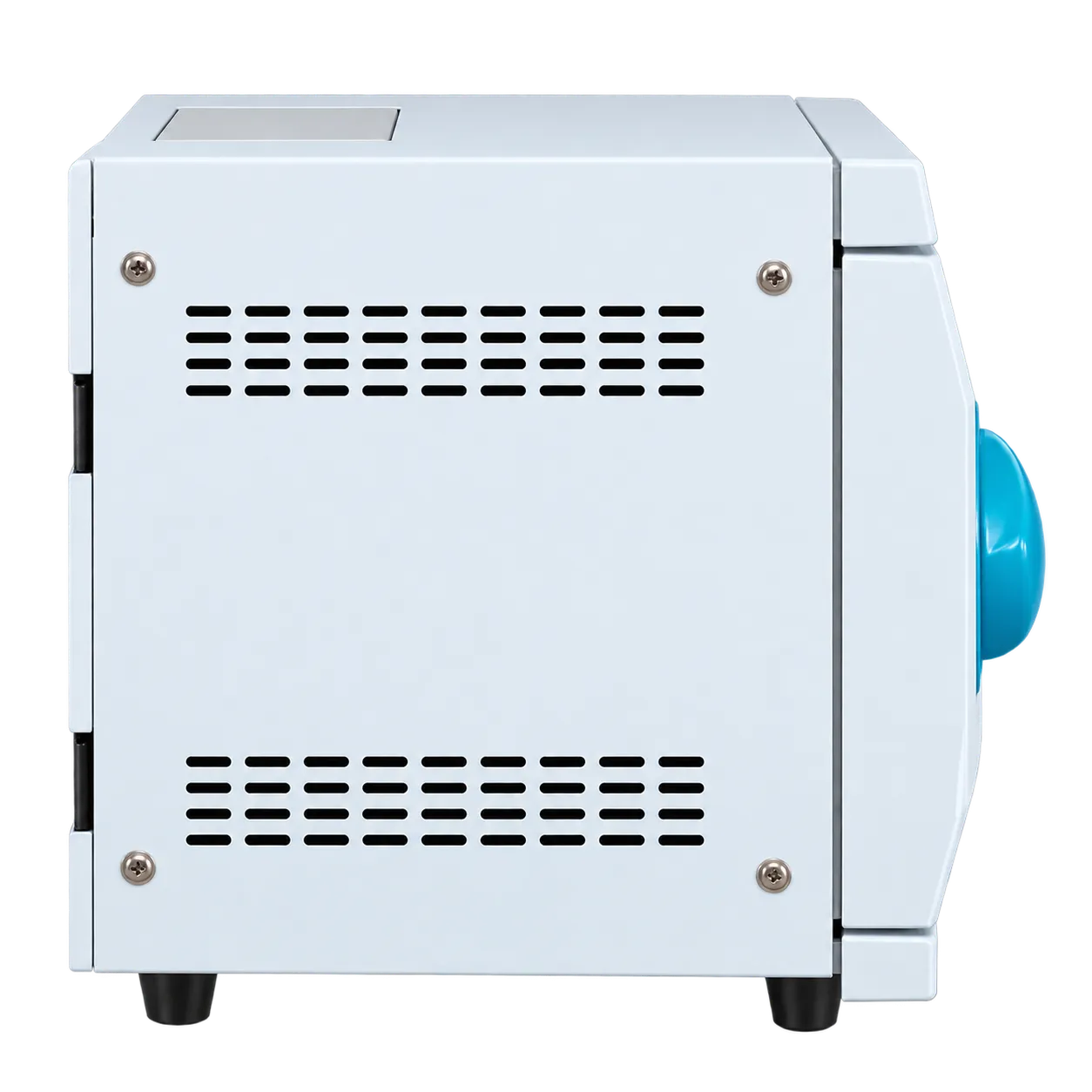

Dental practices are the closest fit. Handpieces carry narrow internal channels, and pouched examination kits and wrapped extraction sets sit inside paper and film, so each depends on air leaving the load before steam can touch the steel. Dental nurses running the decontamination room start the day with the Bowie-Dick or Helix programme, then run preset cycles between patients and keep each record on USB.
Podiatry clinics reprocess nippers, rotary burrs and scalpel handles, usually pouched so they stay sterile until the next appointment. The 355 mm chamber depth takes these instruments comfortably, and the 4 to 120 minute hold range lets the podiatrist match the programme to a wrapped or unwrapped load. GP surgeries and minor-operations rooms put small wrapped packs for suturing and skin surgery through the same chamber.
Aesthetic clinics, tattoo studios and piercing studios sterilise reusable stainless steel instruments, grips and tubes between clients. Tubes are hollow loads in their own right, which is where the triple pulsed vacuum earns its place. Veterinary practices and small laboratories with heat-stable instruments and labware also suit the 12-litre scale, and in a laboratory, empty glassware and metal tools count as hollow and solid loads. Because water comes from a tank, the unit can stand on any bench with a suitable socket, including rooms with no plumbing. Clinics at altitude need no adjustment either, since it calibrates itself to local air pressure.
It does not belong in a central sterile department processing full trays all day. Heat-sensitive endoscopes, and any device that will not survive steam at 116 °C, call for a low-temperature method this unit does not have.