
Every laparoscopic list depends on the insufflator, whether the case is a cholecystectomy, an appendicectomy, a hernia repair, bowel surgery, or a gynaecological procedure. Entry is the first moment of risk. As gas starts to flow through the Veress needle, the team watches the actual pressure, and RCOG notes that a low opening pressure, under 8 mmHg, with gas flowing freely is the most useful sign of correct placement. The separate actual pressure readout supports that check.
Pressure has physiological consequences. A raised intra-abdominal pressure reduces venous return and splints the diaphragm, while absorbed carbon dioxide raises blood CO2, which the anaesthetist offsets through ventilation. The EAES guideline therefore recommends the lowest pressure that gives adequate exposure, and it treats end-tidal CO2 monitoring as mandatory during laparoscopy. The 5 mmHg floor allows low-pressure work, which the same guideline places at 5 to 7 mmHg.
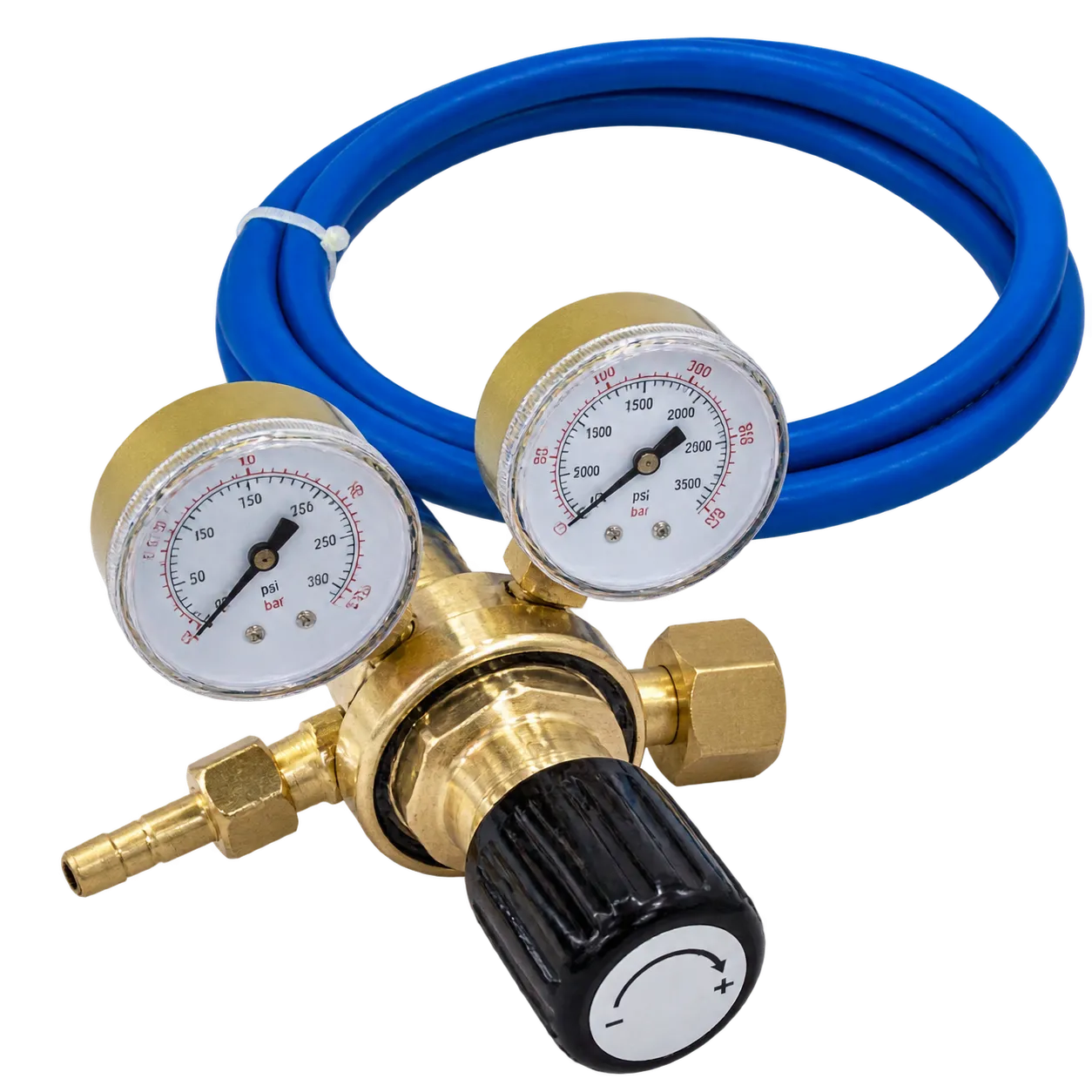
Gas supply needs planning too. Carbon dioxide is chosen because it does not support combustion besides diathermy and dissolves readily in blood, which makes any embolism less dangerous than one of air. The photograph shows an adjustable two-gauge cylinder regulator and a blue hose, so the unit appears to run from a cylinder. That regulator must suit the valve on the hospital's medical CO2 cylinders and deliver the inlet pressure the insufflator expects, and neither detail is stated. A spare cylinder belongs on hand for long cases, and any low supply warning needs confirming.
Medigear.uk has asked Blackstone for the inlet pressure, the cylinder connection,n and the alarm behaviour of this CO2 insufflator.