
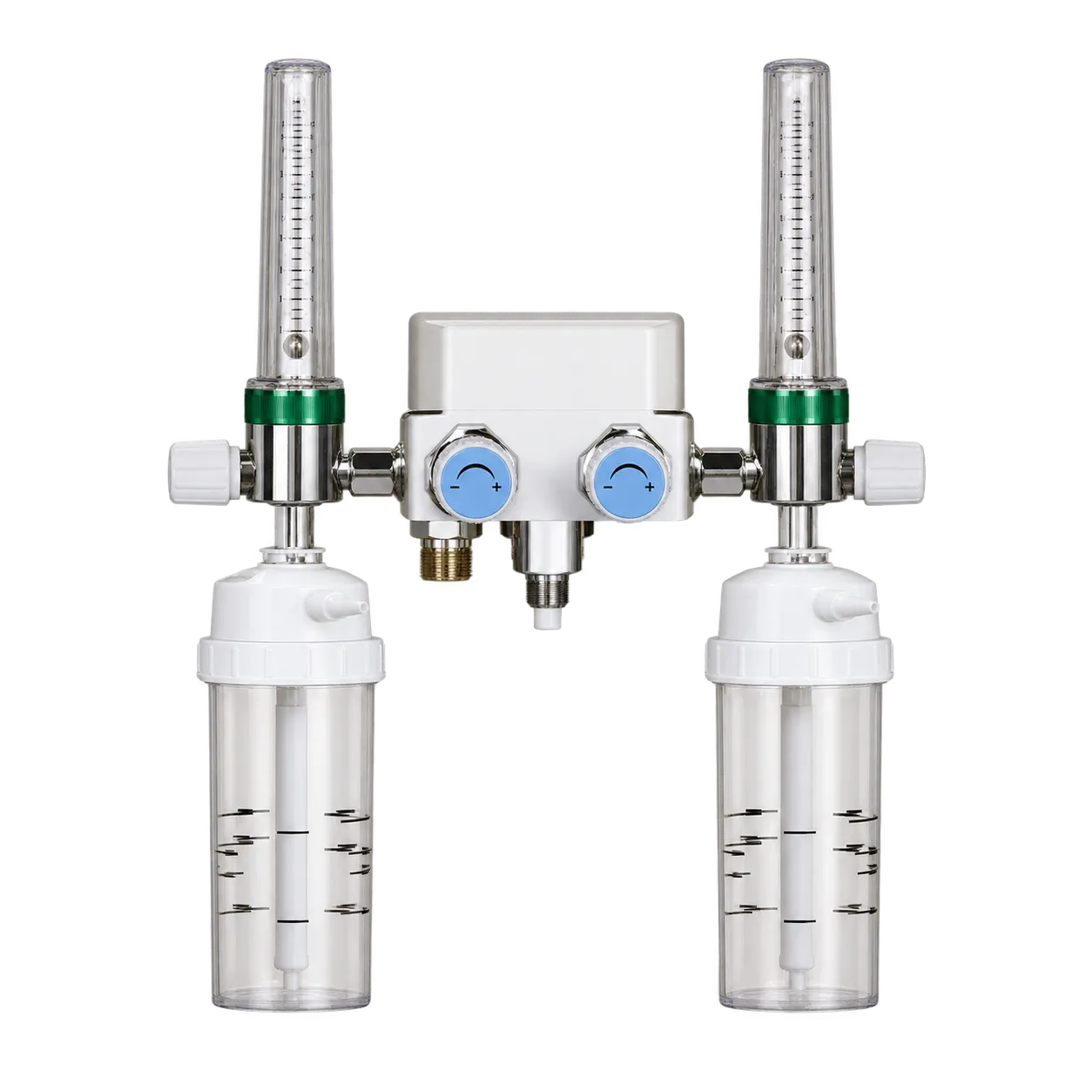
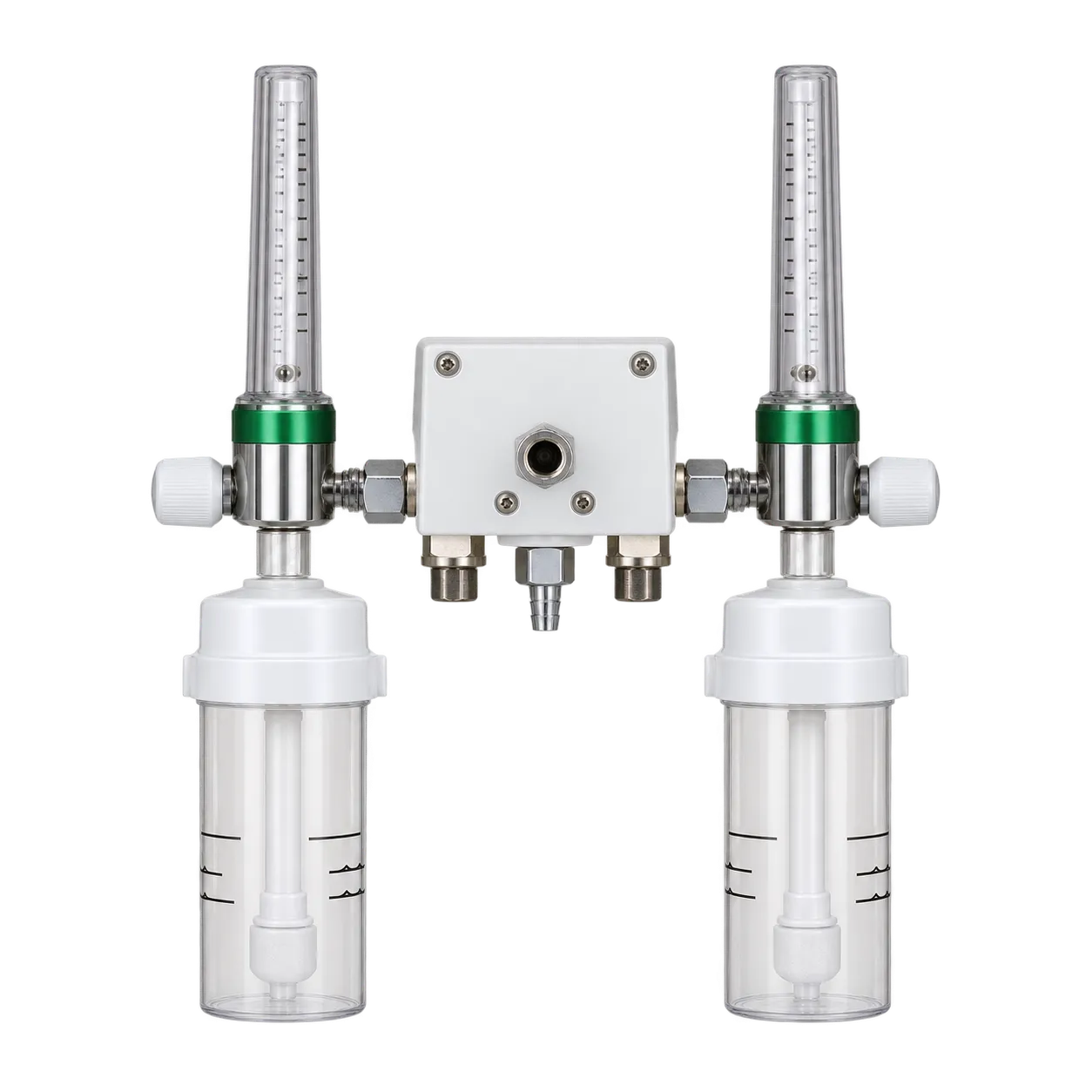
Neonatal intensive and special care units are the main home for the Blackstone air-oxygen blender. A preterm baby on CPAP, under an oxygen hood or in an incubator receives gas at the concentration set on the dial, and the nurse moves that setting in small steps as the baby's oxygen needs shift. Flow is set separately at the flowmeter, so changing CPAP flow does not alter the oxygen percentage the baby breathes.
Delivery suites keep it beside the resuscitation area, so a newborn who needs oxygen can receive a set concentration from the first breath. Paediatric wards use it for children on hood or mask oxygen, and theatres and recovery areas for patients whose oxygen needs a defined mix.
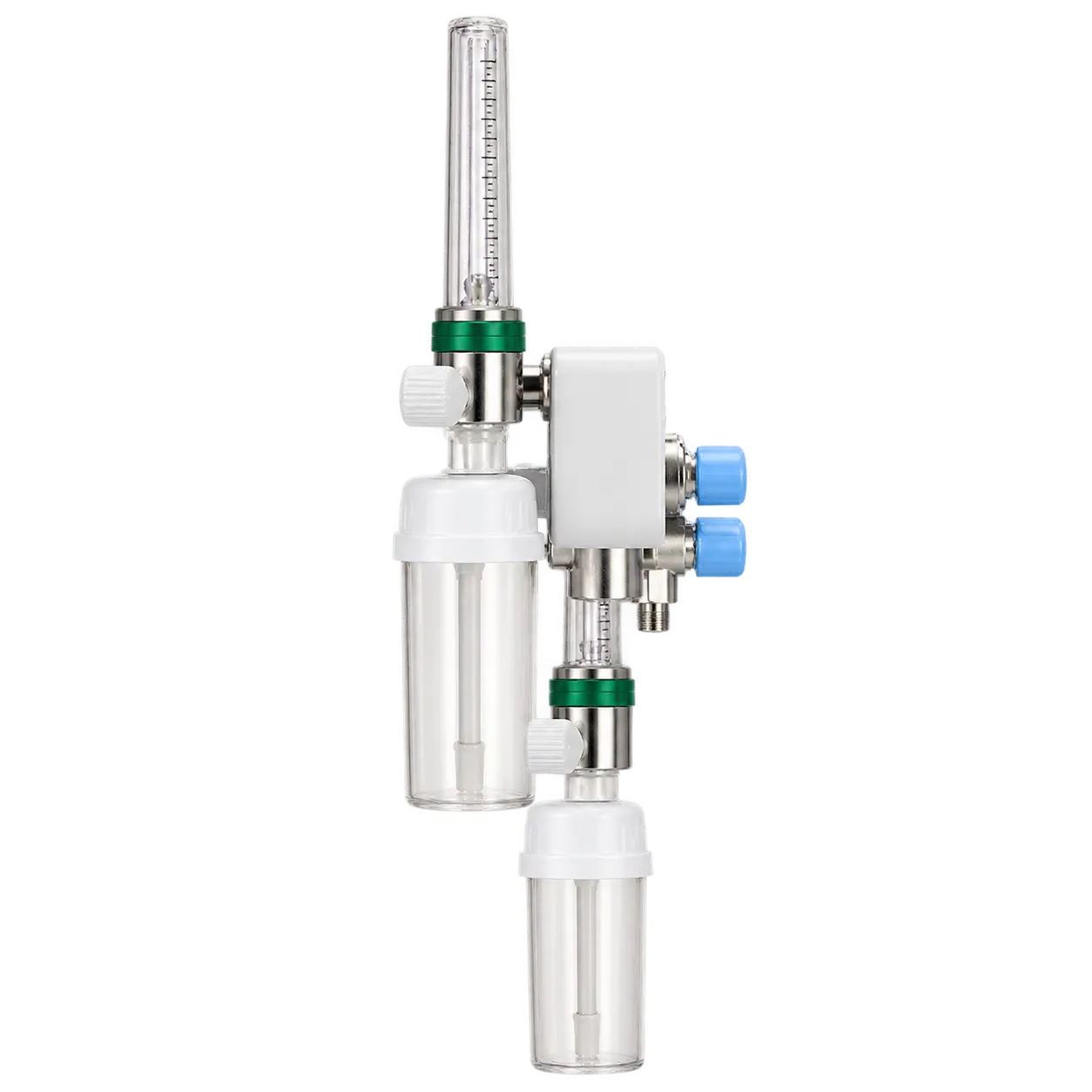
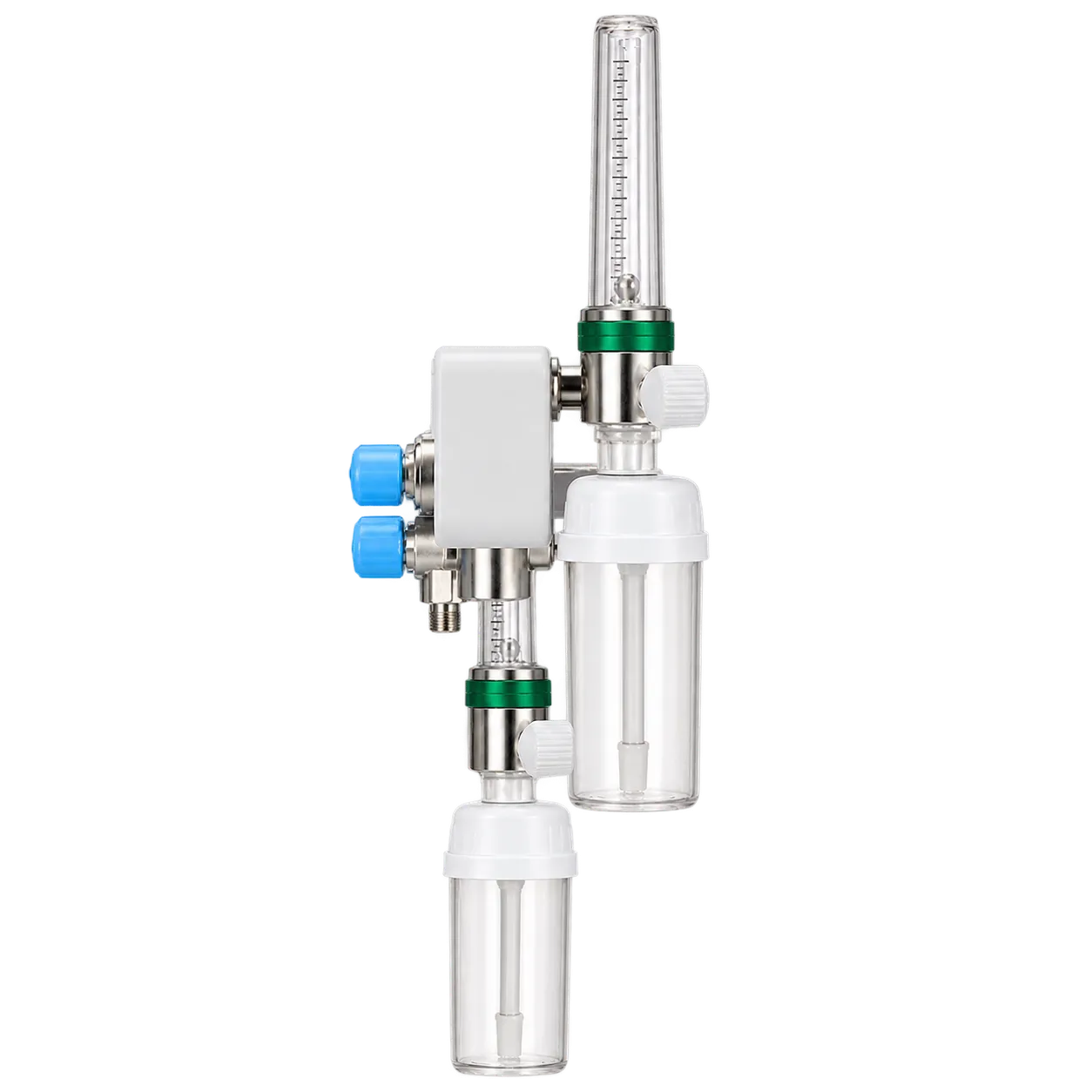
Fill the humidifier bottles to the marked levels before use so the gas reaches the patient moistened, and use the clear walls to see when a refill is due. Because the two flowmeters share one blend, two lines can run from the same unit at the same concentration and different flows. The gas bleed valve releases a small stream of mixed gas to support mixing at the low flows newborns are given, and that stream uses a little gas while it runs.
Being pneumatic, the blender keeps working through a mains power failure as long as both gases keep flowing, with no battery to charge or cable to route. Both supplies connect at its inlets, whether piped to the bedspace or delivered from cylinders.
The delivered concentration follows the dial, so units that record a measured oxygen value run an analyser on the line. Bedspaces without medical air, and patients who need a ventilator, call for other equipment.