
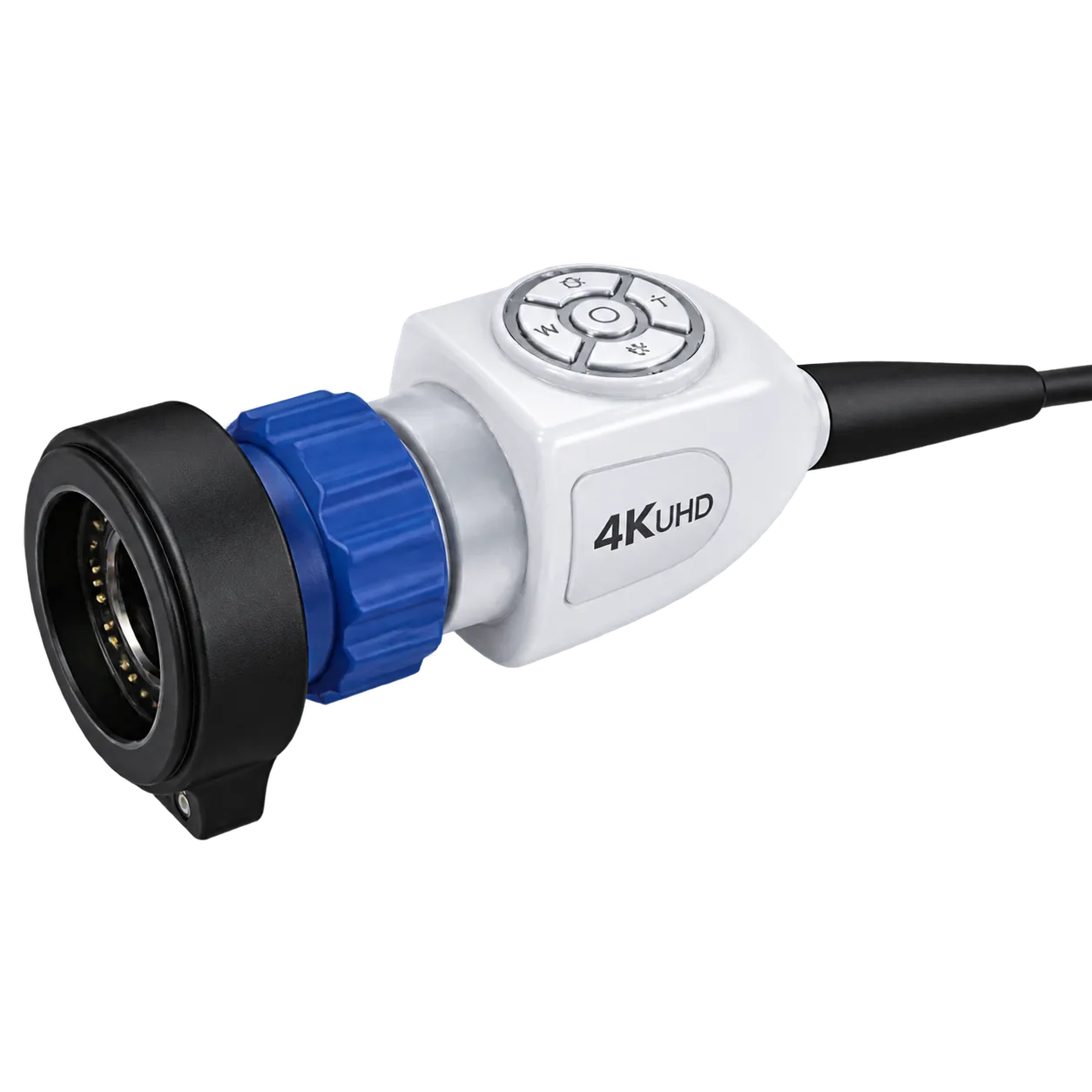
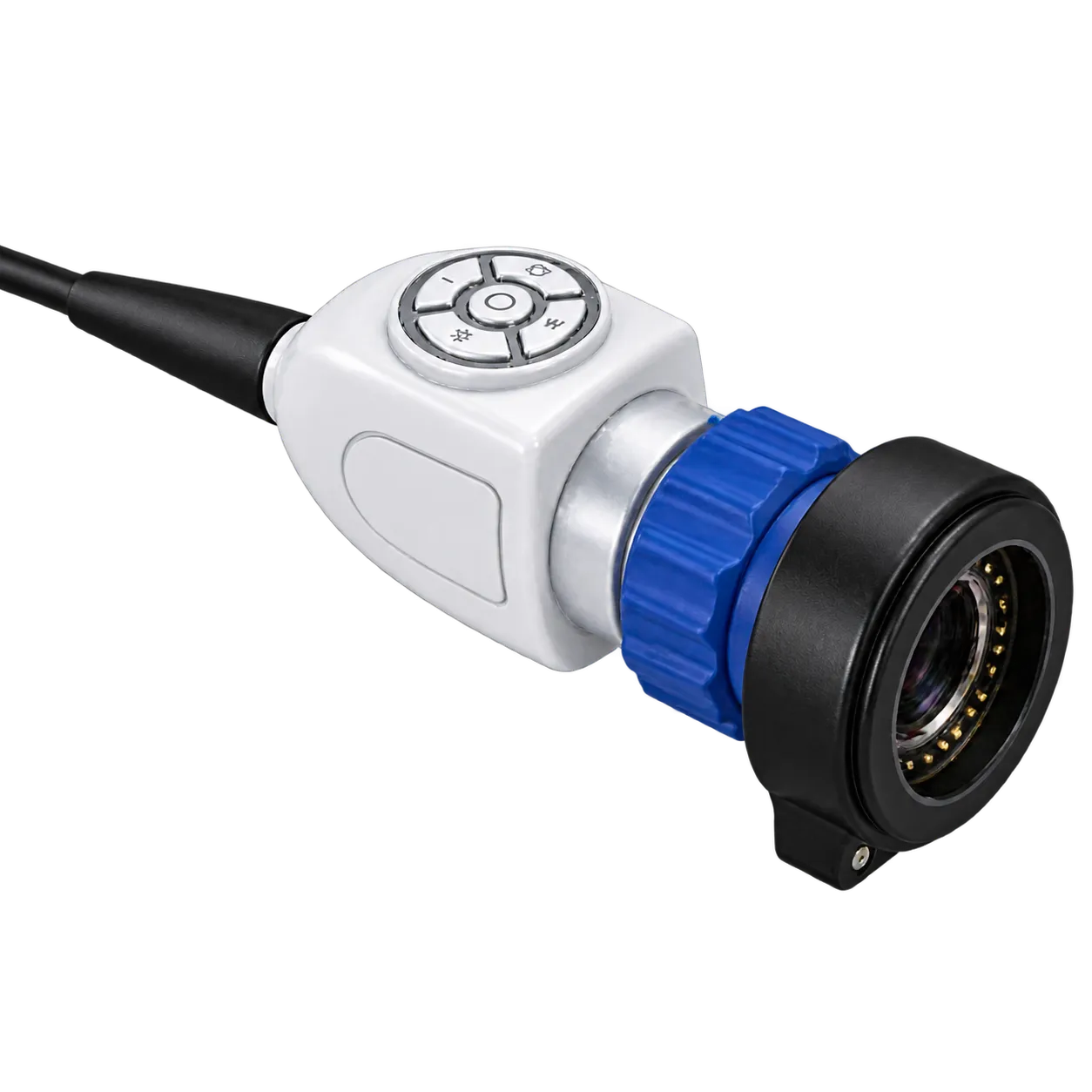
The head is the only part of a video chain a surgeon actually touches, so its ergonomics carry weight in every sense. It is held for the length of a procedure, often at an awkward angle, and a heavy or badly balanced head tires a hand that has plenty of other work to do. Neither a weight nor a set of dimensions appears here, and that is a real gap on a hand-held instrument, rather than an oversight about a box sitting in a rack.
Buttons under the fingers are the other everyday matter. Freeze and white balance are the two used most, and having them on the head rather than the console keeps a surgeon's attention on the field in front of them. Three further buttons exist without being described, and on most systems those handle image capture, video recording, or light source control. Whether they can be reassigned to suit a department's habits is the sort of detail that decides how well a system is adopted.
Cables deserve the attention nobody gives them until one fails. The cable flexes through every case, gets caught, gets trodden on,n and eventually gives up, and on many systems it is integral, which means a failure replaces the whole head. A serviceable cable changes the economics of ownership considerably over a few years of use.
None of this appears on the sheet, so Medigear.uk is obtaining the cable arrangement, the weight, the decontaminationrouteu, te and the scopes the head accepts.