
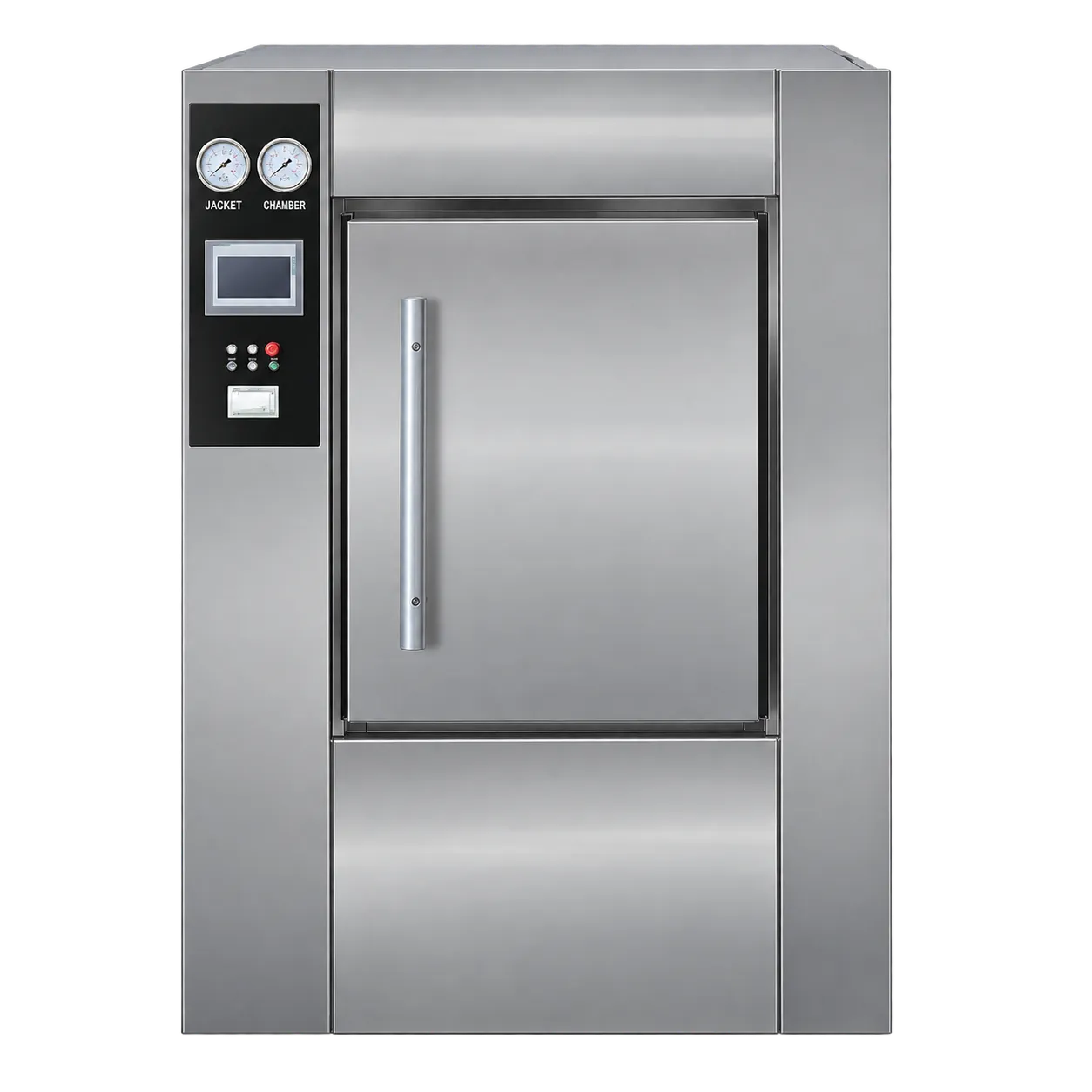
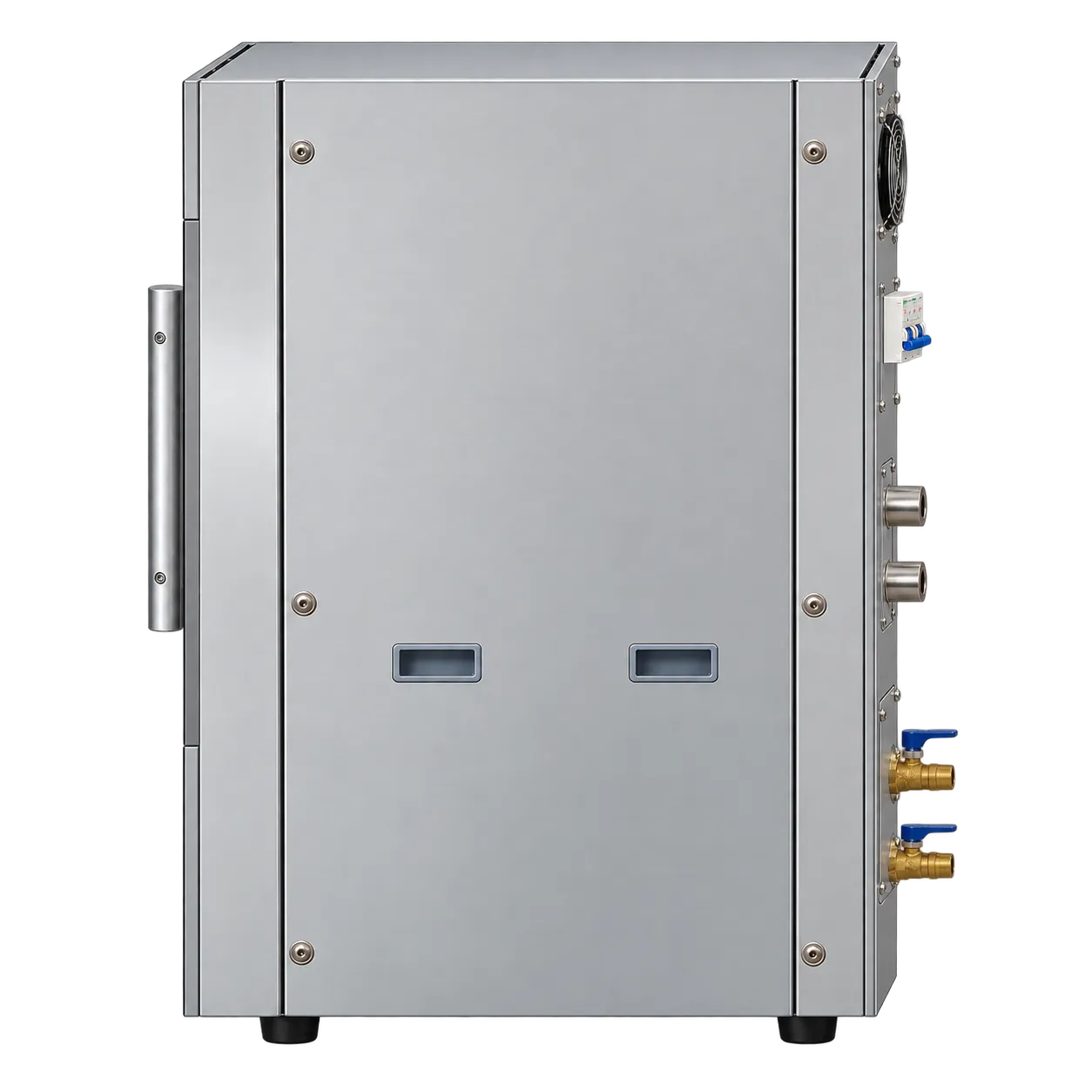
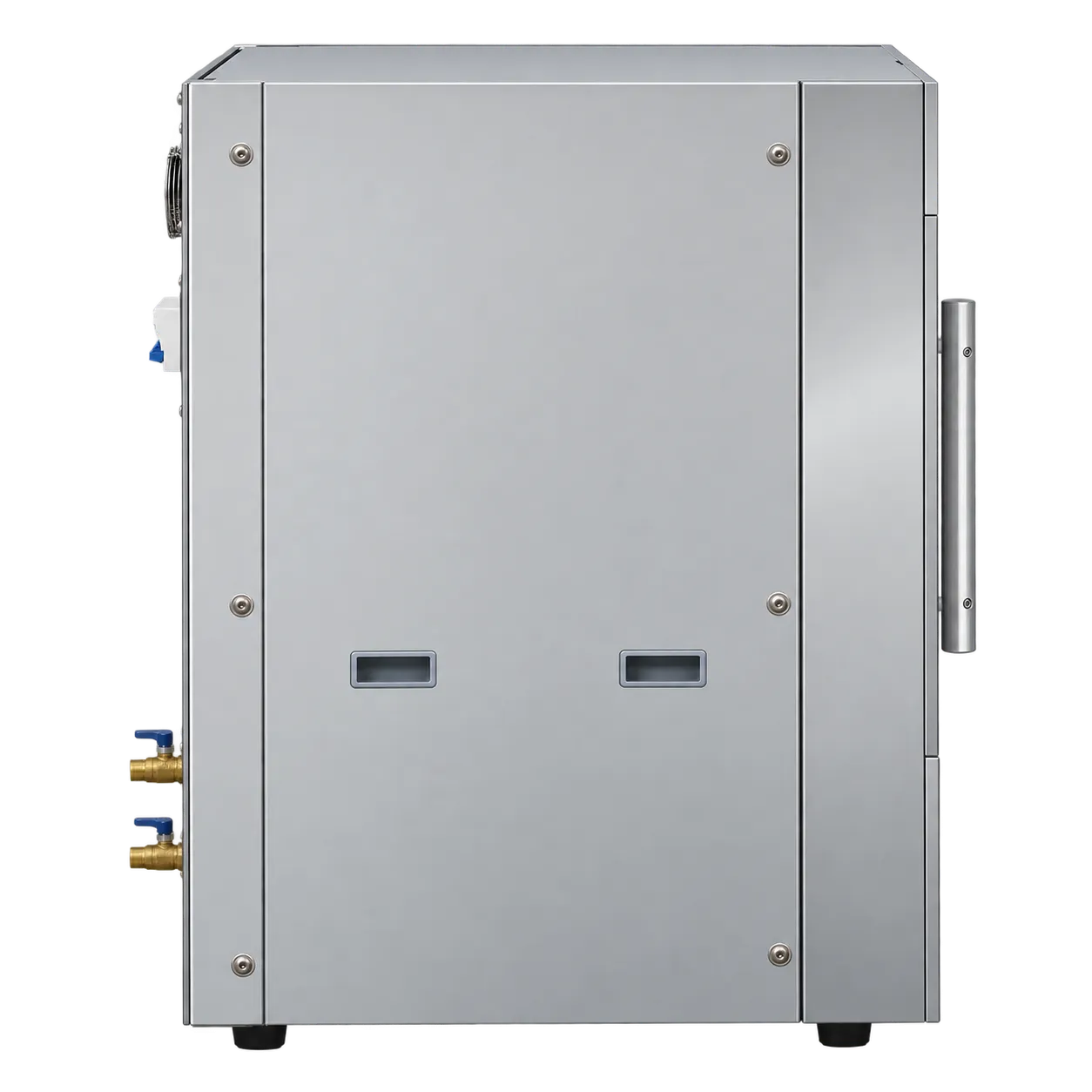
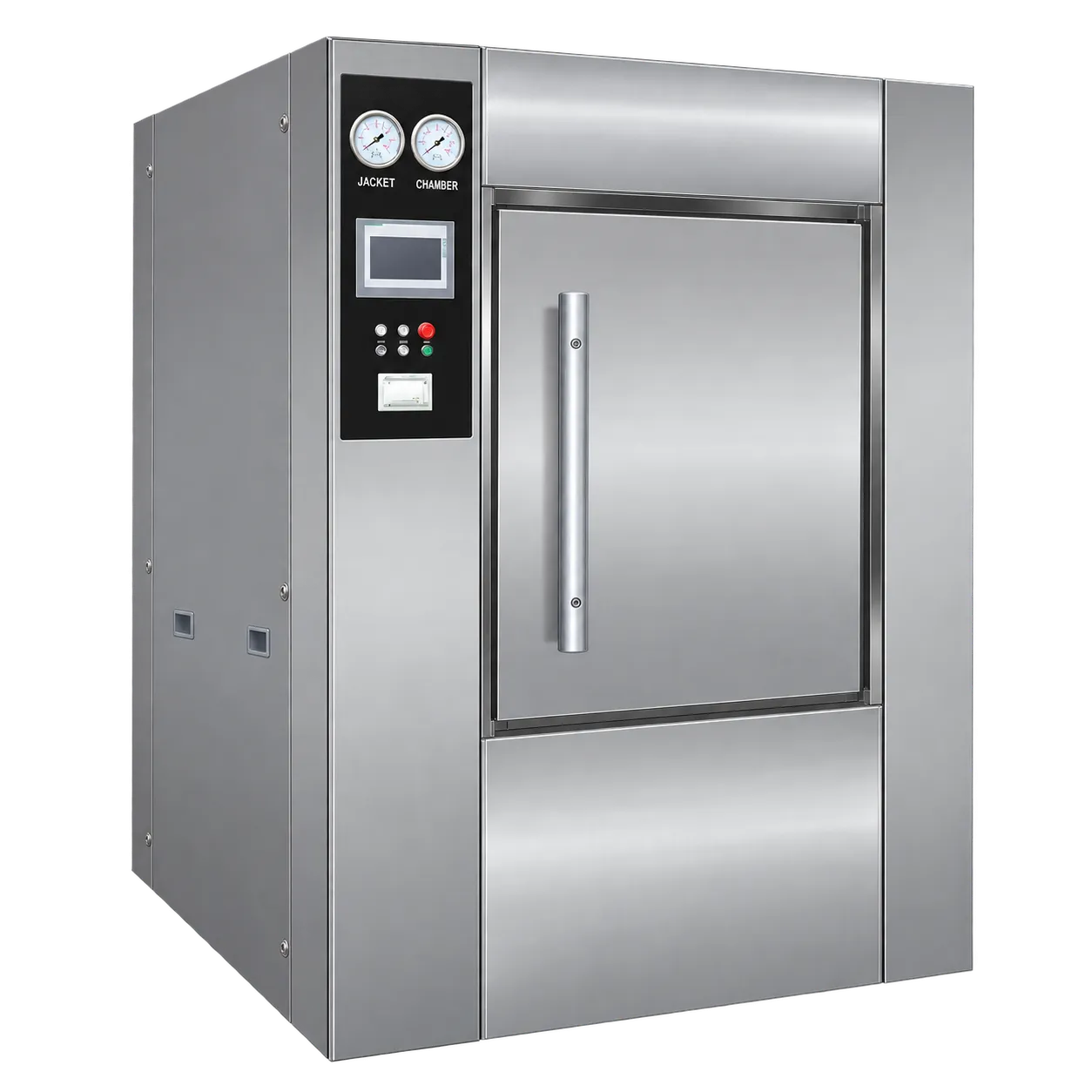
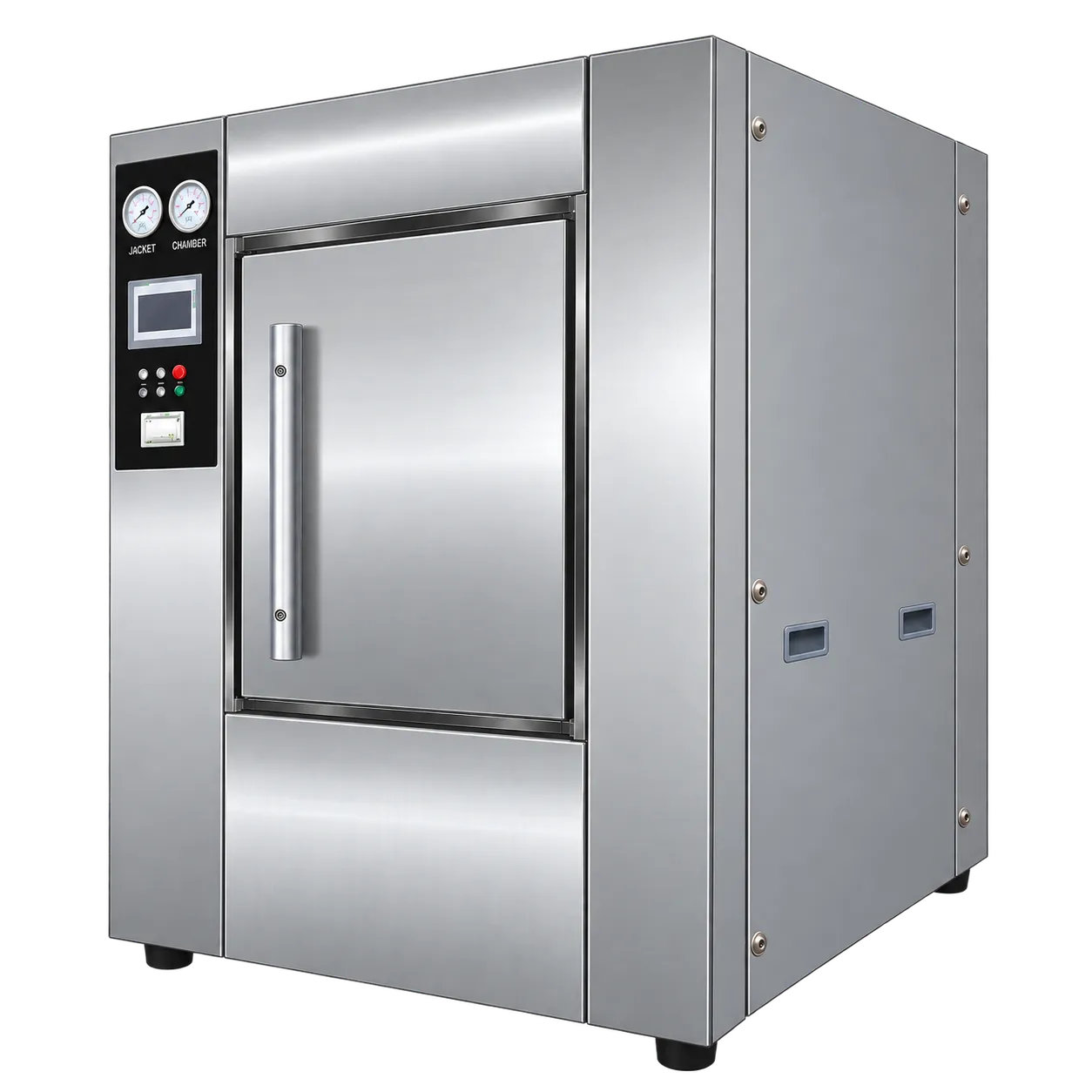
Central sterile services departments and off-site hubs are where a 1,000-litre chamber earns its floor space, especially for reprocessing heavy orthopaedic sets, loaned implant kits, and, where still in use, reusable surgical gowns, drapes, and other textiles. Its pulsating vacuum also suits wrapped trays, rigid containers and lumened instruments.
Heavy, dense loads are where drying is hardest. The weight of metal in a load sets how much condensate forms as steam heats it, and residual water left in a pack after the cycle makes it a wet pack. A Chinese medical centre recorded 128 wet packs among 4,099 sterilised, with instrument packs about 3.3 times more likely to be wet than dressing packs and non-woven wraps more prone to wetness than cotton. Studies of loaned instruments, which tend to arrive in heavy containers, report wet-pack rates from roughly 13% to 37.5%.
The WF-1000DM answers that problem with a mechanism: a jacket that keeps the chamber walls hot and a vacuum drying stage that draws off the vapour. Neither replaces good practice. Set weights, shelf positions, packaging choices and steam dryness still decide whether a load leaves dry, and a validation programme should prove drying performance on the department's own heaviest sets.
Health services buying through formal tenders, the NHS among them, ask for EN 285 test evidence and a validation plan from sterilisers at this capacity, and public buyers in other countries require much the same. The manufacturer issues the conformity documentation those procurement routes require, and the enquiry team shares it.