
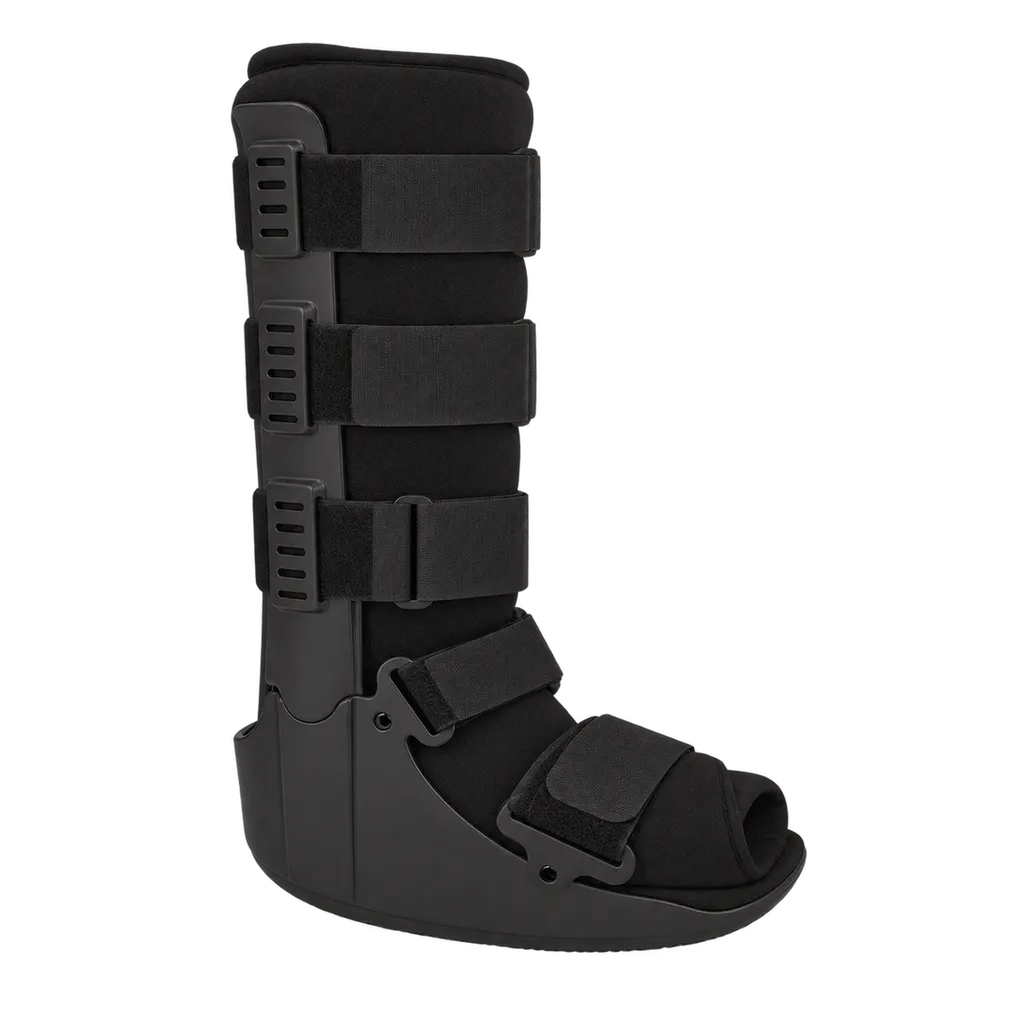
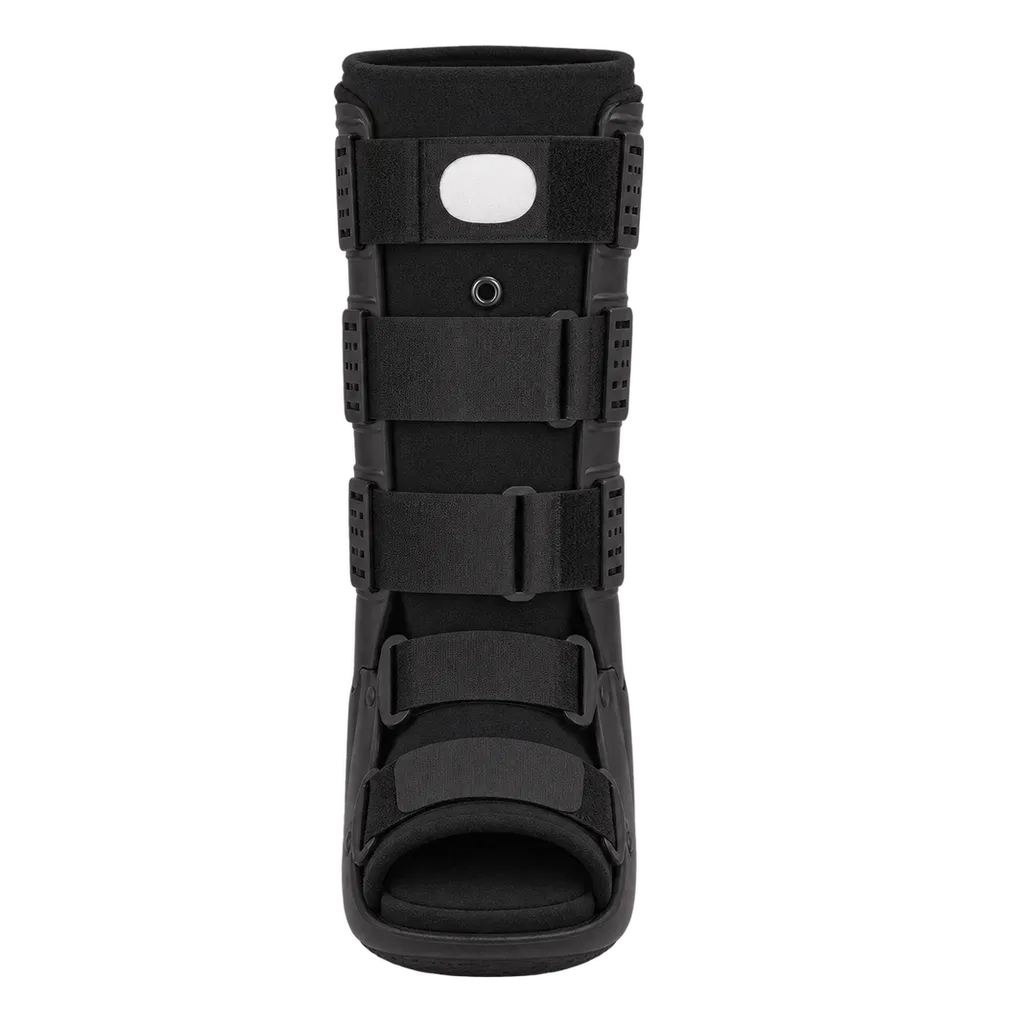
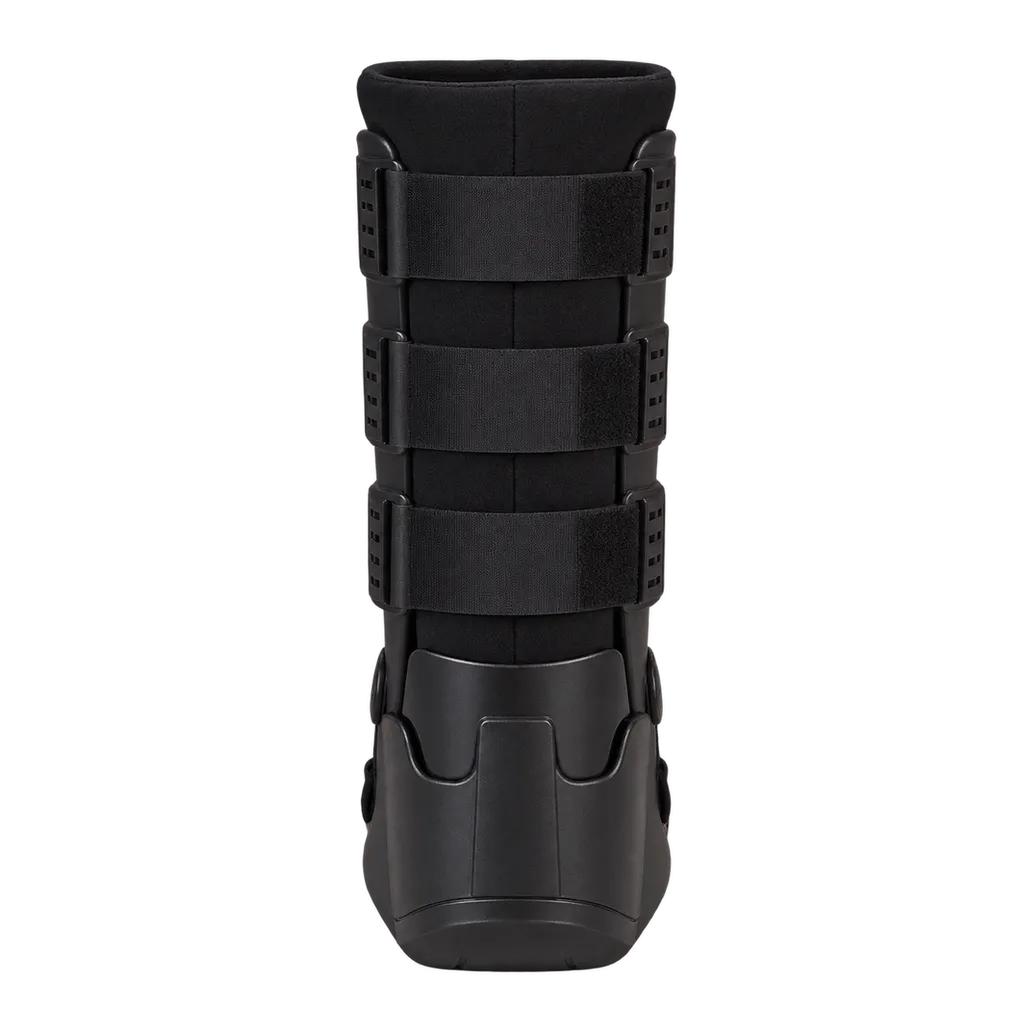
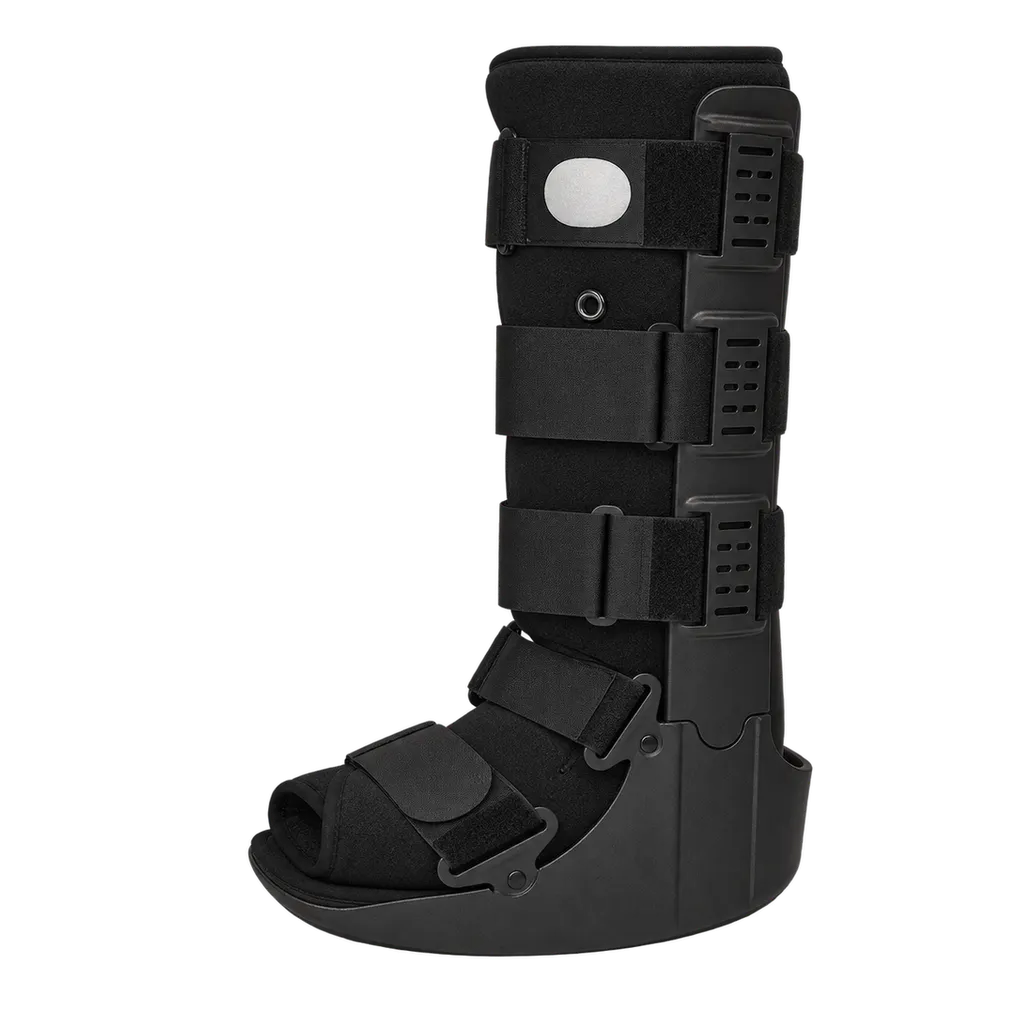
Fracture clinics are the main setting. A stable ankle fracture judged suitable for a removable device can go into the BL-52036-A at the first appointment, with the tall shell holding the lower leg along its length and the air cells taken up as oedema settles over the following weeks. The upper rim then becomes a standing item on each review, alongside the toe check the open front allows.
Orthopaedic and foot and ankle surgical units can issue the boot for protection after ankle surgery, including ligament repair, where the surgeon wants the whole lower leg controlled while the repair heals. Day-case patients going home the same day can be shown the pump before discharge.
Emergency departments and minor injury units can hold it for ankle injuries under a clinician's direction. The CAST findings on walker boots in acute severe sprain are worth weighing before the boot becomes routine for that group, and many soft tissue injuries do not need the calf enclosed at all.
Physiotherapy services see the boot as patients return to walking and begin coming out of it. A detachable liner helps during periods when the boot comes on and off many times a day.
Achilles pathways need a way to hold the foot pointing down. Until the seller confirms heel wedges or an equivalent, the boot does not belong on those pathways.
Any service issuing lower limb immobilisation to adults also needs to embed its VTE risk assessment in the fitting routine. NHS procurement routes ask for the device class and the declaration of conformity, and public procurement in other countries asks for the equivalent. The conformity documentation those procurement routes require is issued by the manufacturer and provided by the seller.