
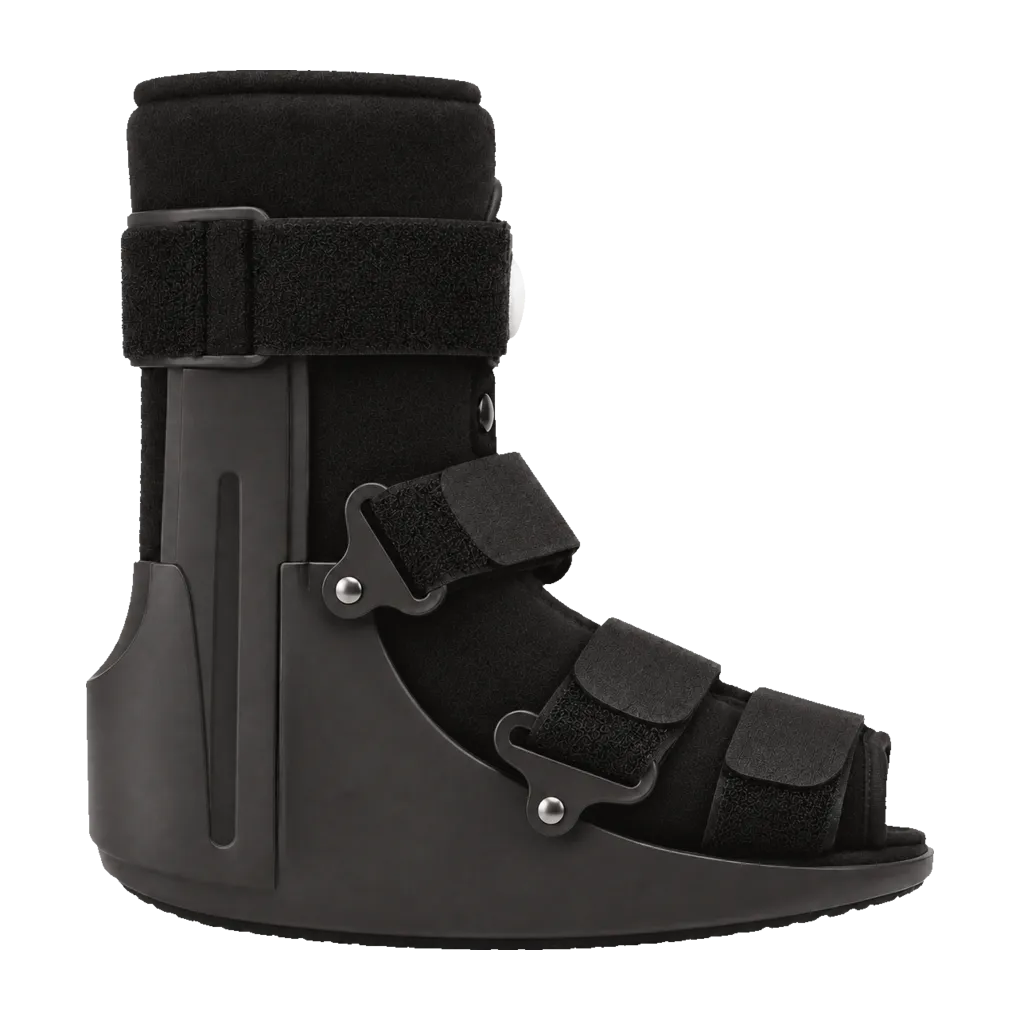
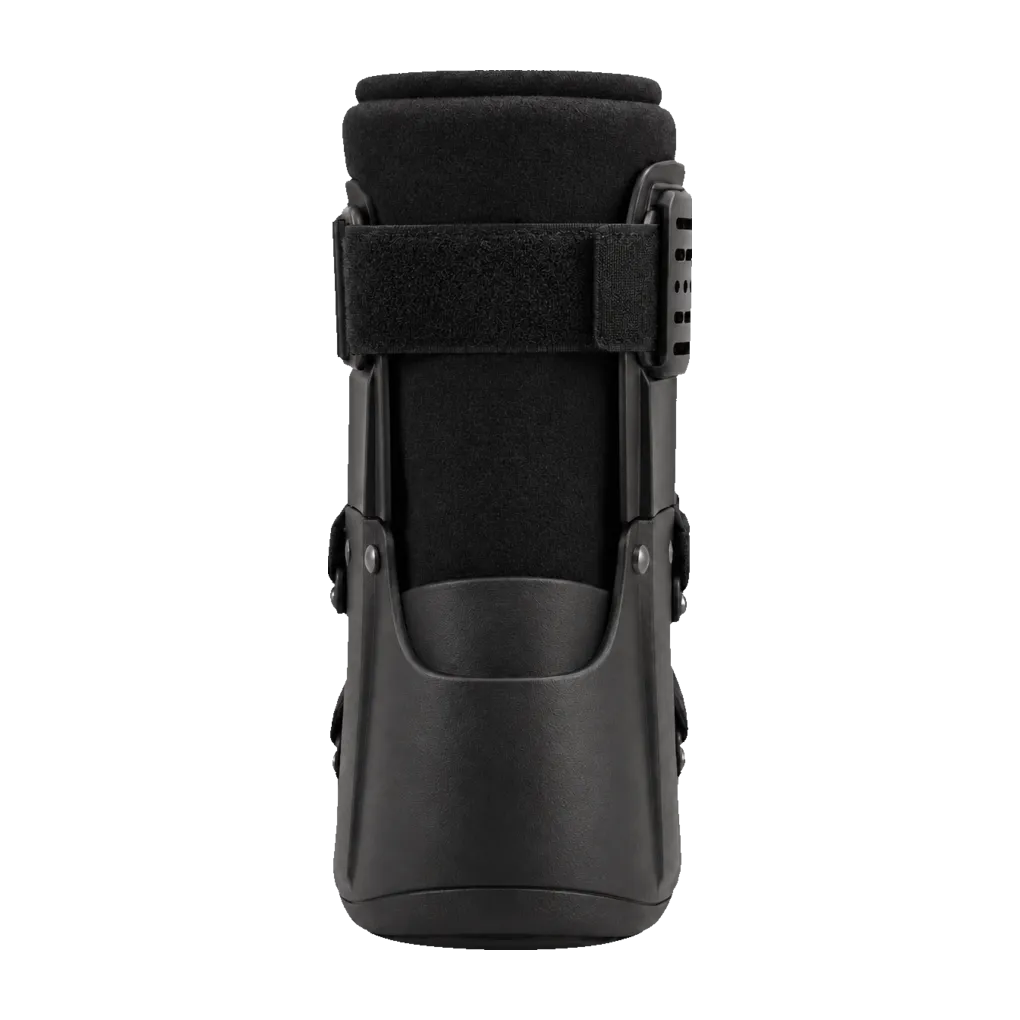
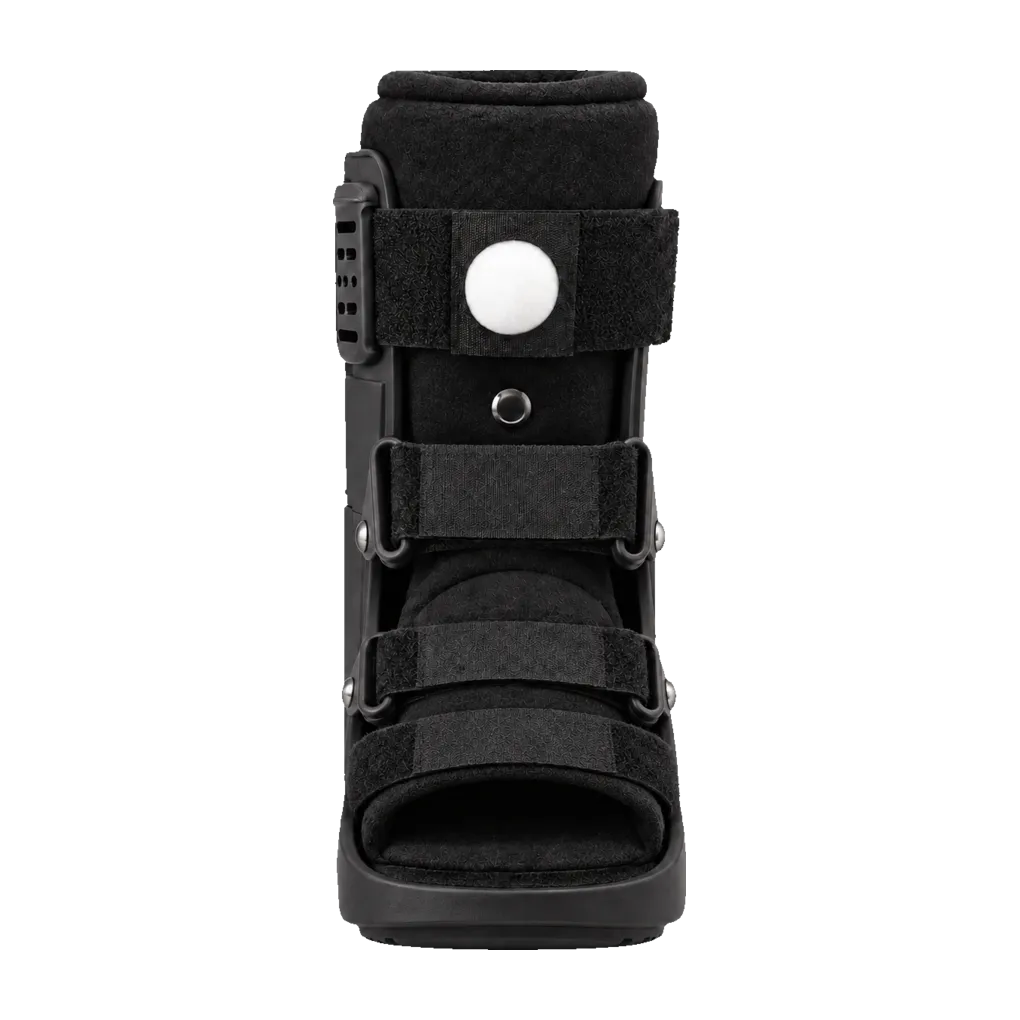
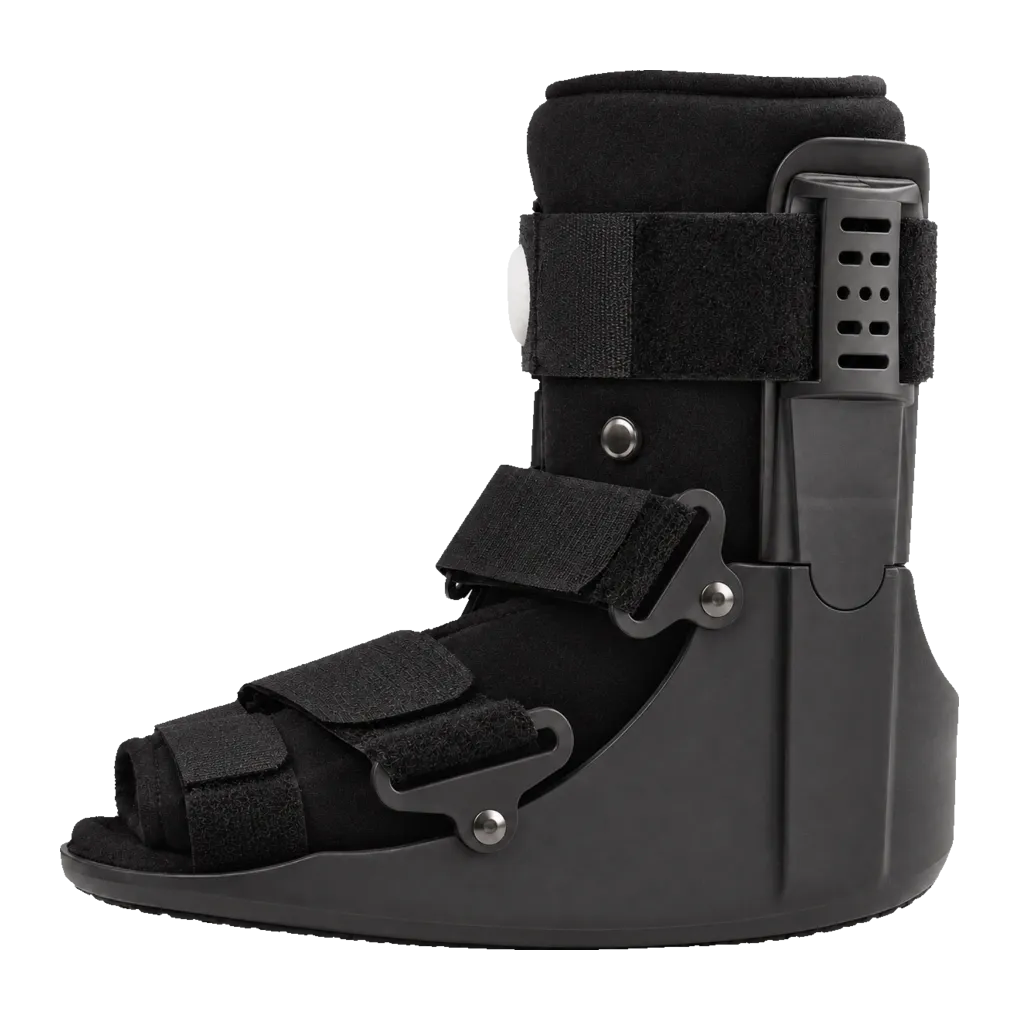
Fracture clinics are the most natural home for the BL-52036. For stable foot and ankle fractures, a surgeon can comfortably manage with a removable device; the boot can be fitted at the first clinic visit, and the air cells allow the fit to follow swelling as it comes down over the following weeks. The open toe gives the reviewing clinician a clear view of toe colour and capillary refill without removing the boot.
Orthopaedic and podiatric surgical units can issue it for post-operative ankle protection, including after ligament repair. A day-surgery patient going home the same afternoon often has the most swelling in the first few days, and a pump the patient can use without help suits that period well.
Emergency departments and minor injury units may stock it for soft tissue and ligament injuries under a clinician's direction. The CAST trial result on walker boots in acute severe sprain is worth reading before it becomes a default choice for that group.
Physiotherapy and rehabilitation services meet the boot when patients start walking again and learn to come out of it. The washable liner supports a device that will be put on and taken off repeatedly during that stage.
Achilles pathways are possible only where the seller confirms a way to hold the foot pointing down, since the sheet lists no heel wedges.
Every service issuing lower limb immobilisation to adults will also need its VTE risk assessment in place, as NICE NG89 expects. NHS procurement routes ask for the declaration of conformity and the device class, and equivalent public procurement elsewhere asks for the same. The conformity documentation those procurement routes require is issued by the manufacturer and provided by the seller.