
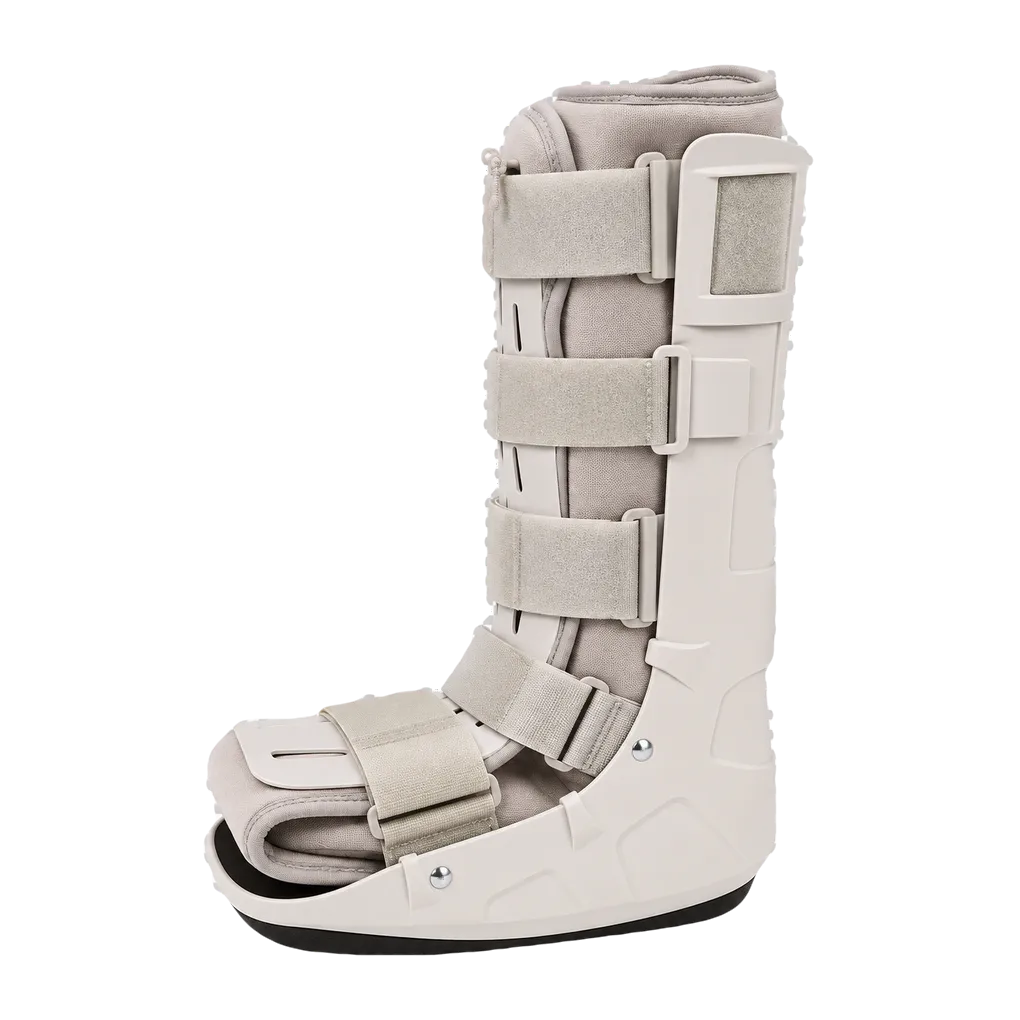
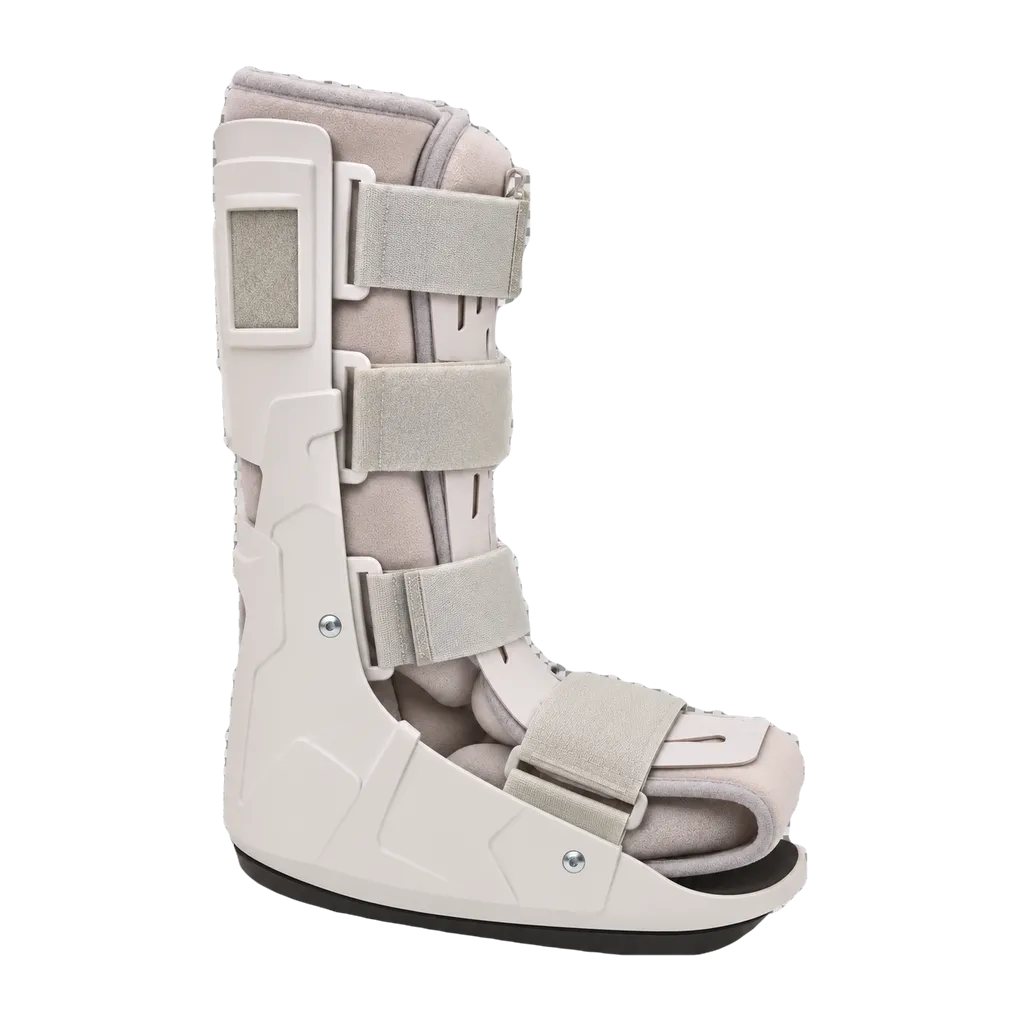
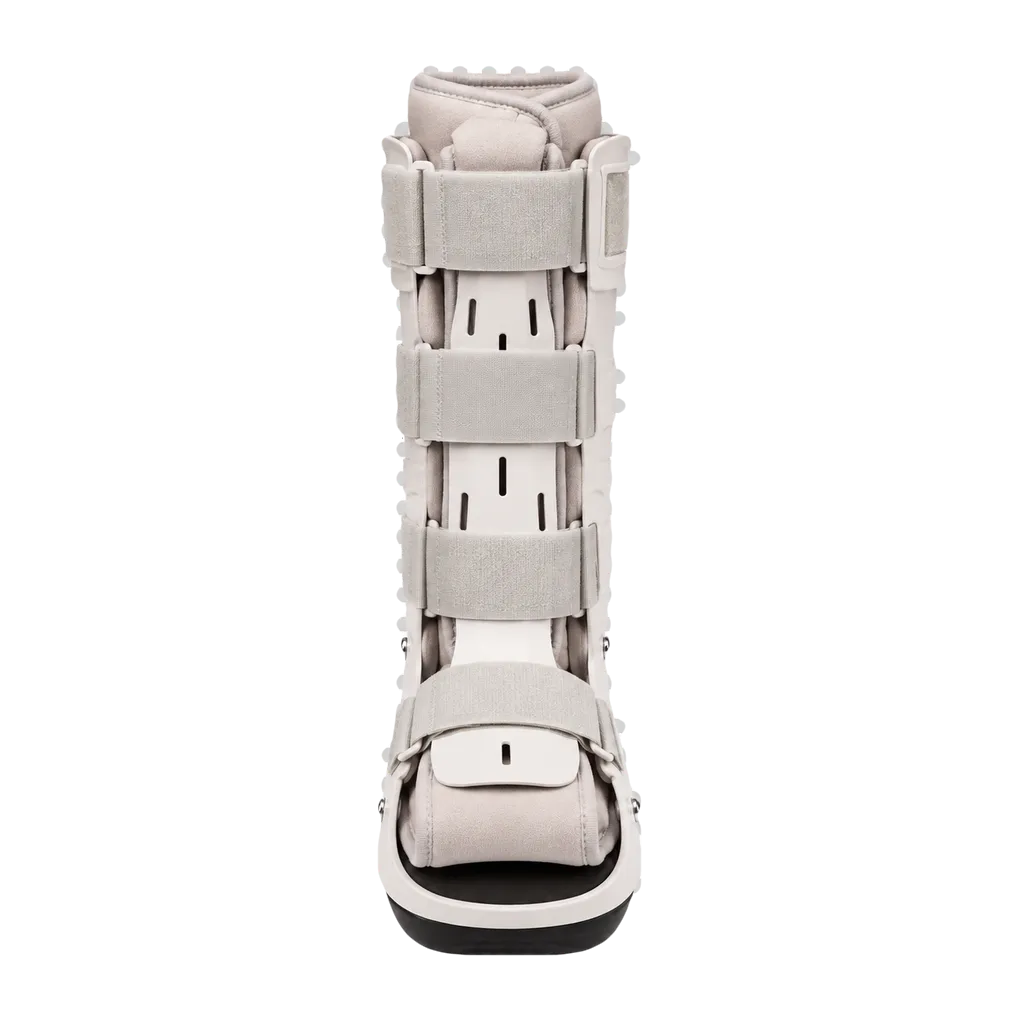
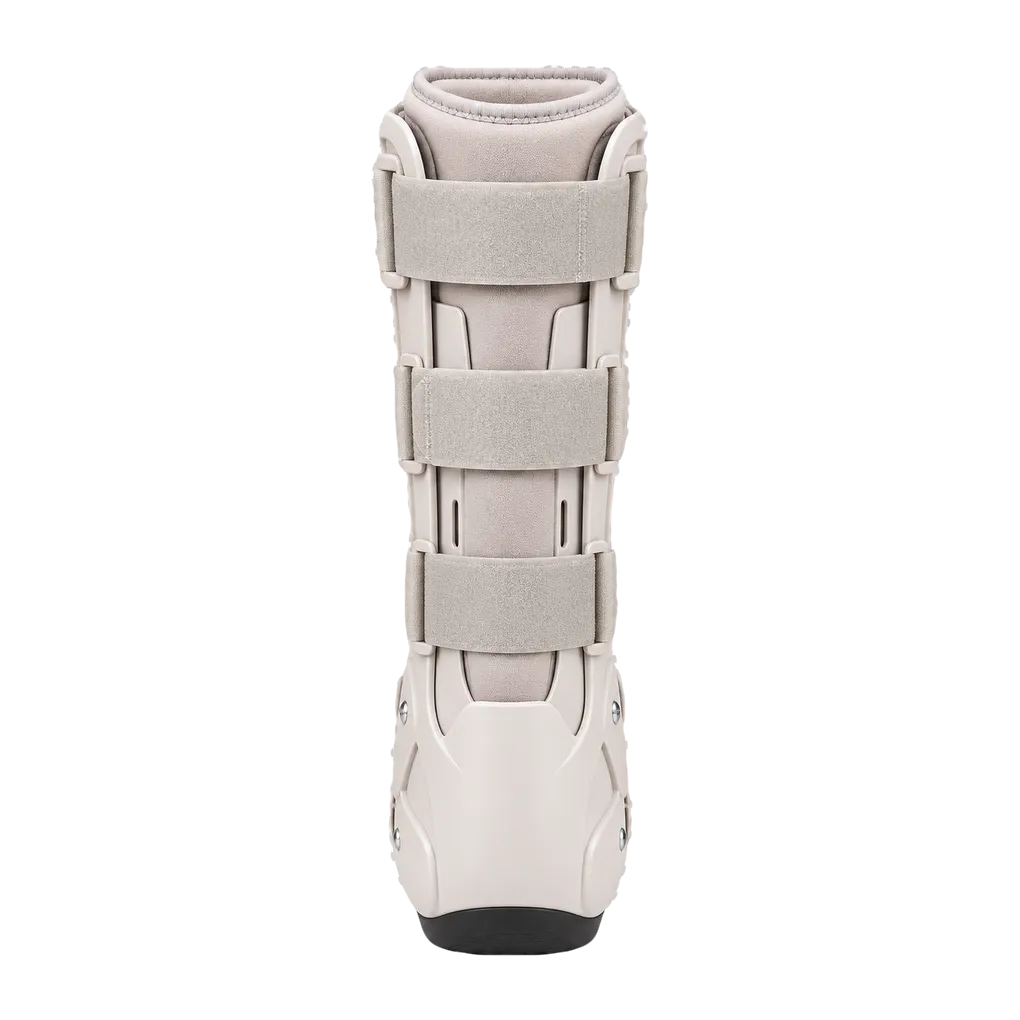
Fracture clinics are the obvious home for the BL-52014-A, and also where its documentation load shows up. A stable ankle fracture managed in a removable device can be fitted at the first appointment, with the tall shell holding the lower leg along its length and the air cells taken up as swelling falls. The fitting record, VTE assessment, and patient leaflet complete the episode.
Orthopaedic and foot and ankle surgical units can issue it for protection after ankle surgery, including fracture fixation and ligament repair where the surgeon wants the whole lower leg held. Theatre and ward teams will want the instructions for use on file before the first patient goes home in one.
Emergency departments and minor injury units may stock it for ankle fractures and ligament injuries under a clinician's direction. The boot meets RCEM's audit standards on VTE in lower limb immobilisation, which require a documented risk assessment, a patient leaflet, and a first dose of any prescribed prophylaxis before the patient leaves.
Physiotherapy services continue care as patients start weaning out of the boot. The washable liner and open toe help with the skin care that runs through that stage.
Procurement and medical device governance teams carry the rest. Before listing the boot on a formulary, they will want the declaration of conformity, the UK Responsible Person and registration details, and written answers on reuse and heel wedges. NHS procurement routes ask for exactly that pack, and equivalent public procurement elsewhere asks for its own version. The conformity documentation those procurement routes require is issued by the manufacturer and provided by the seller.