
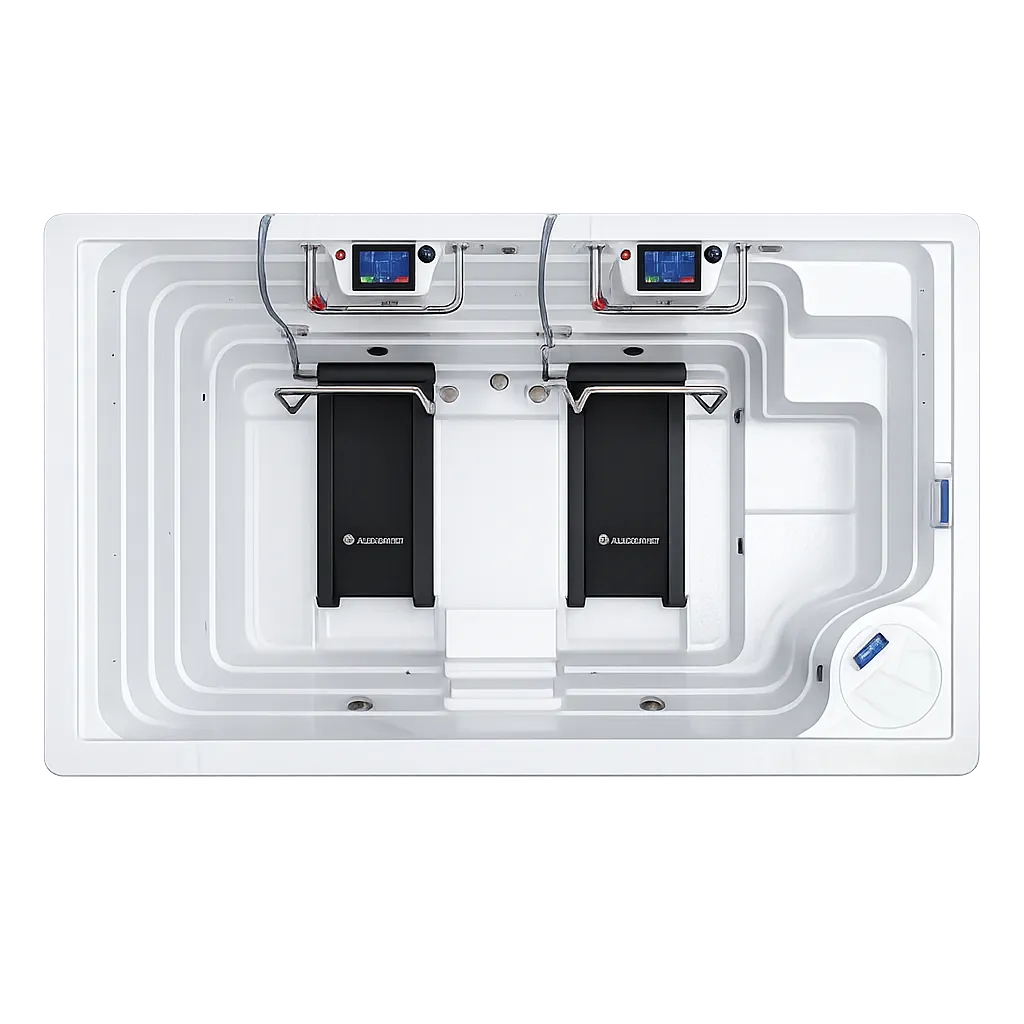
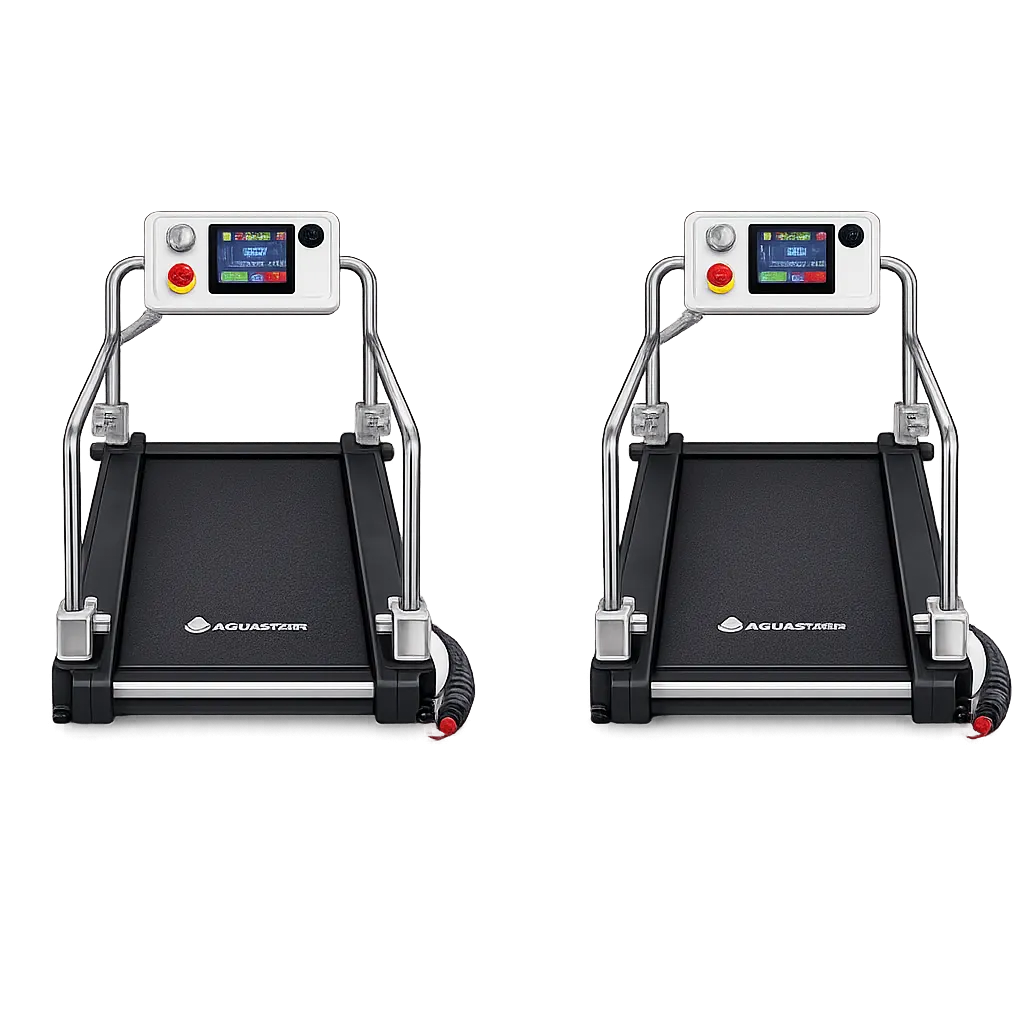
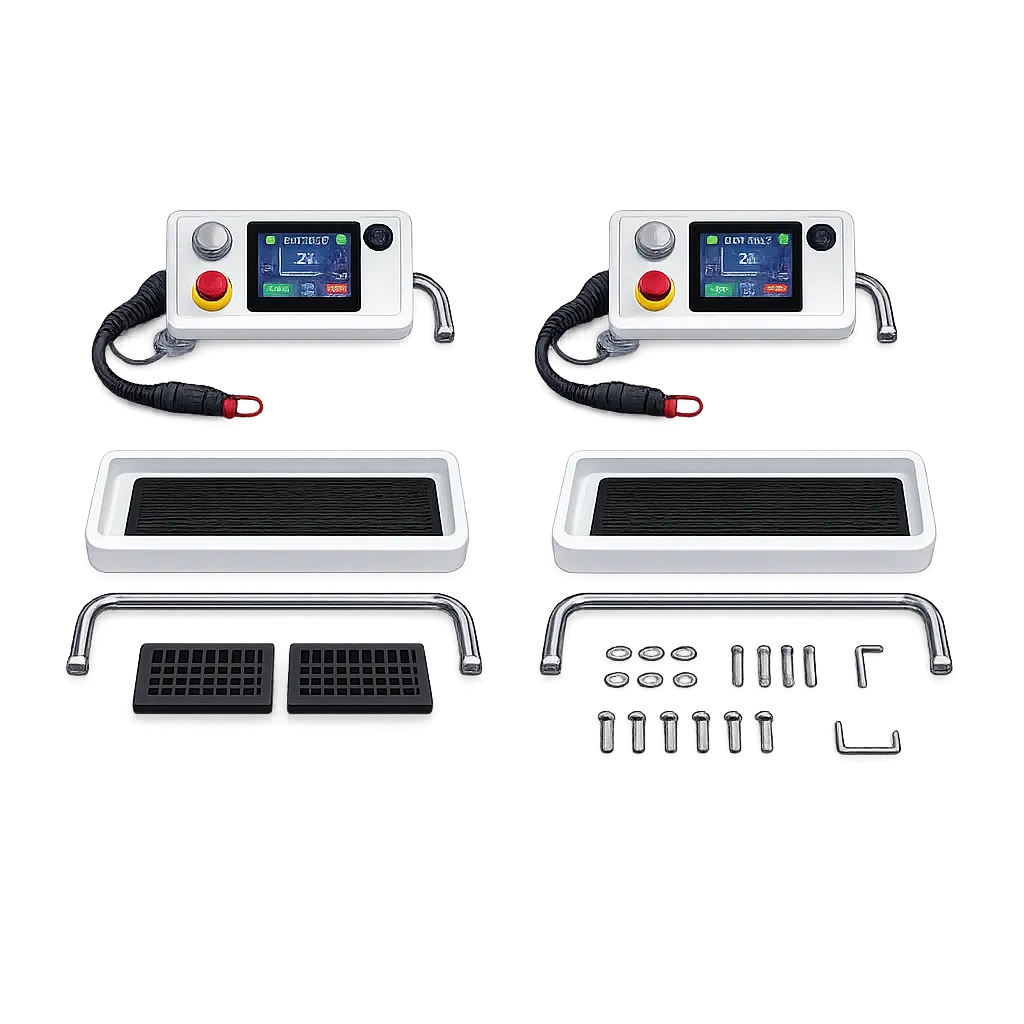
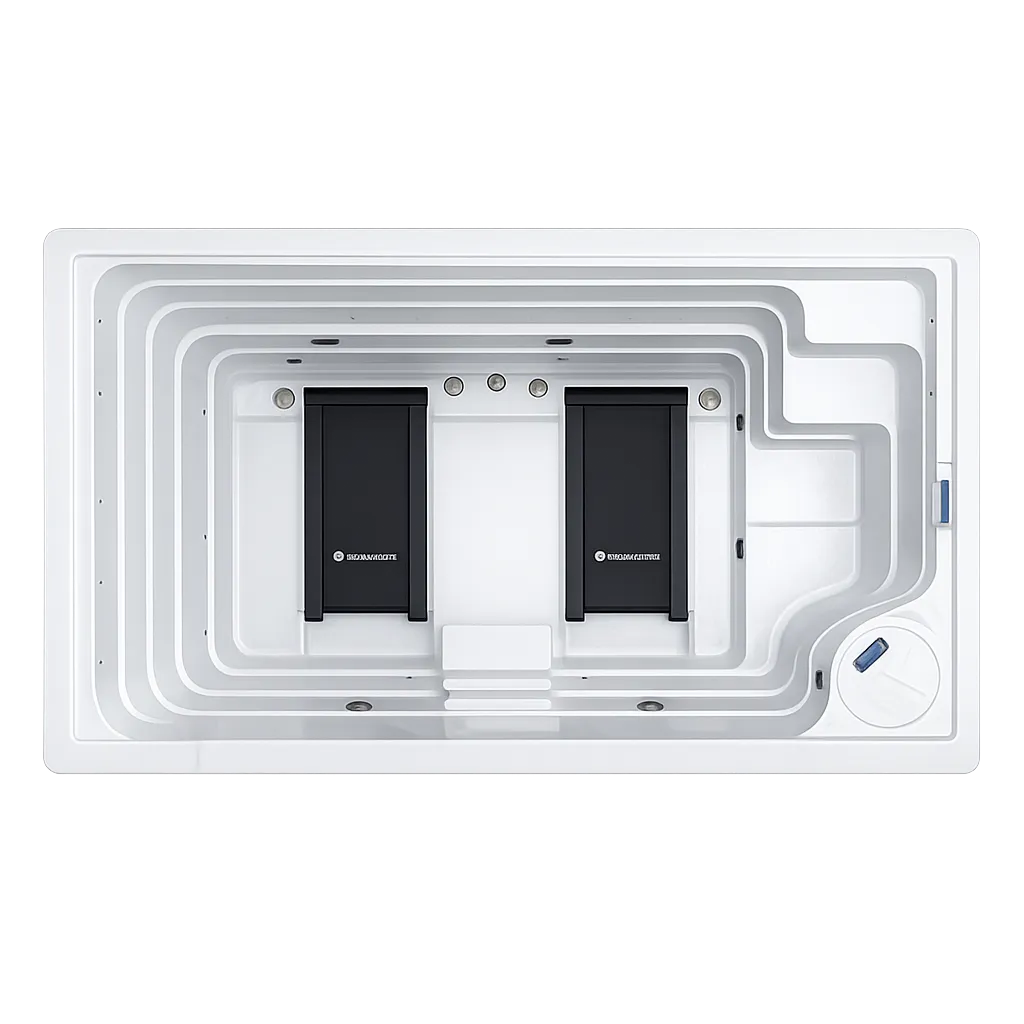
Rehabilitation facilities running appointment-based caseloads gain most obviously from a twin-station shell, because two users occupy one installation rather than queuing for a single position. Buoyancy carries part of each user's body weight through the walking cycle while a powered belt sets the pace, making session conditions defined rather than approximate. Where both stations adjust independently, two people at very different stages can work simultaneously in the same water. Medigear.uk supplies aquatic exercise equipment on the basis that programme design and clinical decision-making remain with the qualified practitioner directing the session, and confirms the SPA-8368 parameter set before any clinical procurement decision is made.
Gait re-education programmes can use paired working in ways a single station does not permit. A practitioner supervising two users at once observes both within the same field of view, and a user walking alongside someone else often sustains a session more readily than one working alone. Water reduces the consequence of a stumble compared with land walking throughout. Medigear.uk obtains the belt speed range and station independence in writing, so a service can properly assess suitability.
Fitness and conditioning environments use treadmill pools to provide reduced-impact walking and running volume. The manufacturer's framing for the category is that land running loads every joint of the legs and feet while swimming reduces loading but trains leg musculature less directly, with a treadmill pool sitting between the two. Twin stations let a facility timetable paired sessions rather than individual slots. Medigear.uk supplies facility operators on account terms.
Group and partner programmes suit this configuration particularly, since shared water and adjacent positions support working alongside a partner, carer or training peer. Medigear.uk advises on configuration for shared usage patterns.