
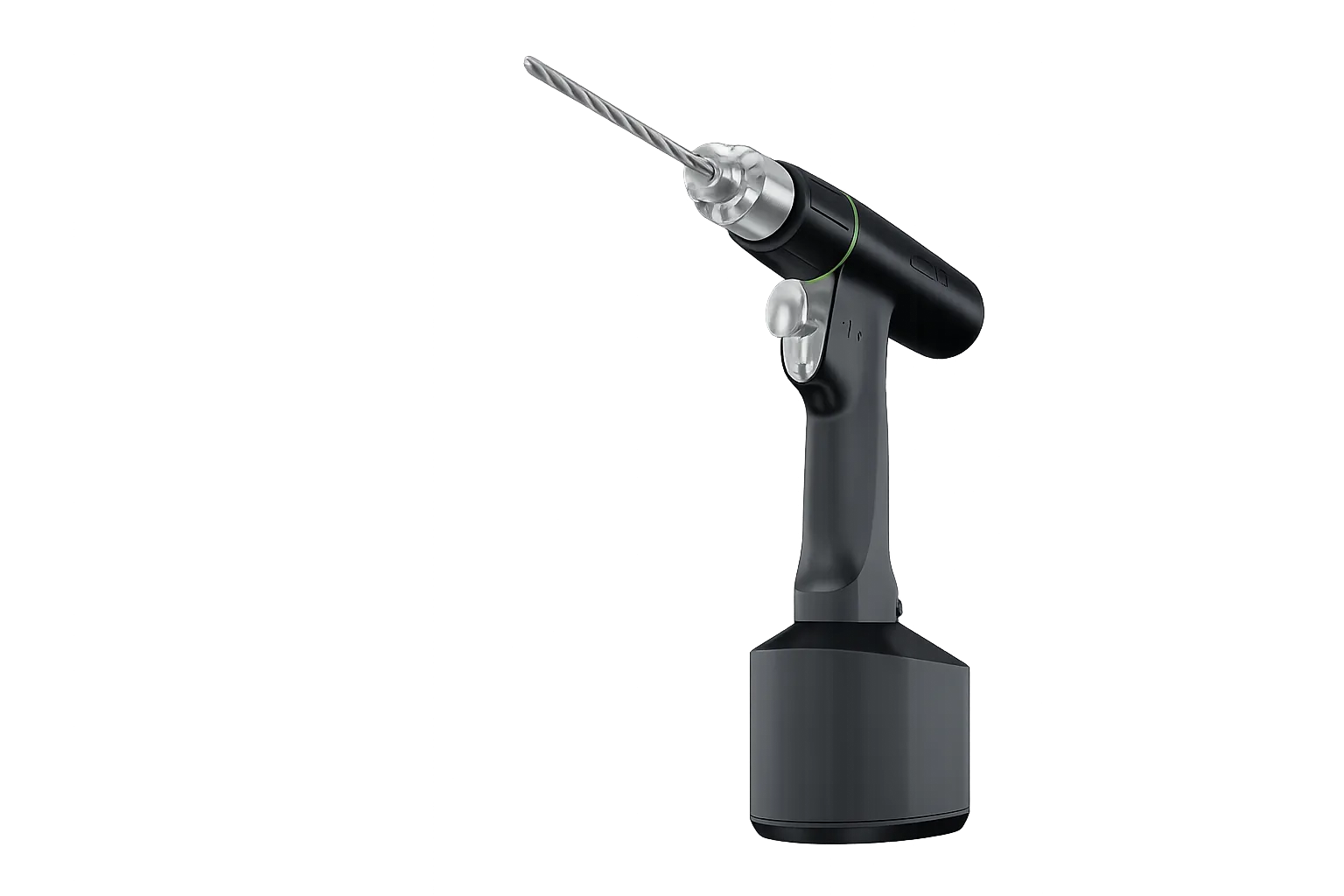
Orthopedic And Trauma Surgery
In orthopedic and trauma surgery, the drill helps prepare bone for screws, plates and implants. Precise, high-speed cutting helps a surgeon shape and drill bone accurately. Interchangeable burrs suit a range of fixation and reconstruction tasks at the site. Steady power helps hold speed while drilling dense bone. A cool, clean site supports careful fixation. A clear field helps the whole team stay confident during fixation.
Neurosurgery And Craniotomy
For neurosurgery and craniotomy, the drill removes bone from the skull with control. Fine, high-speed cutting helps a surgeon work carefully near delicate tissue. Irrigation keeps the site cool, which helps protect bone and surrounding structures during the work. A balanced handpiece helps a surgeon guide fine cuts. Careful control matters most near the brain. Fine, cooled cutting suits the care these cases demand.
ENT And Skull Base Surgery
In ENT and skull base work, the drill shapes and removes fine bone in tight spaces. High speed and small burrs help a surgeon reach and work on delicate areas. Careful control supports accuracy where the working field is close and detailed. Small burrs reach narrow spaces without crowding the field. Precise removal helps protect nearby nerves. A steady grip helps hold accuracy in a confined space.
Spinal And Hospital Surgical Use
For spinal work and general surgical use, the drill helps remove and shape bone with precision. Dependable power suits a hospital or surgical centre that handles a mix of cases. Interchangeable attachments help one drill cover a wide range of procedures. Steady, controlled cutting helps shape bone close to the cord. One versatile drill suits a busy list. A dependable drill helps keep a long list moving smoothly.