
Laparoscopic and Abdominal Endoscopy
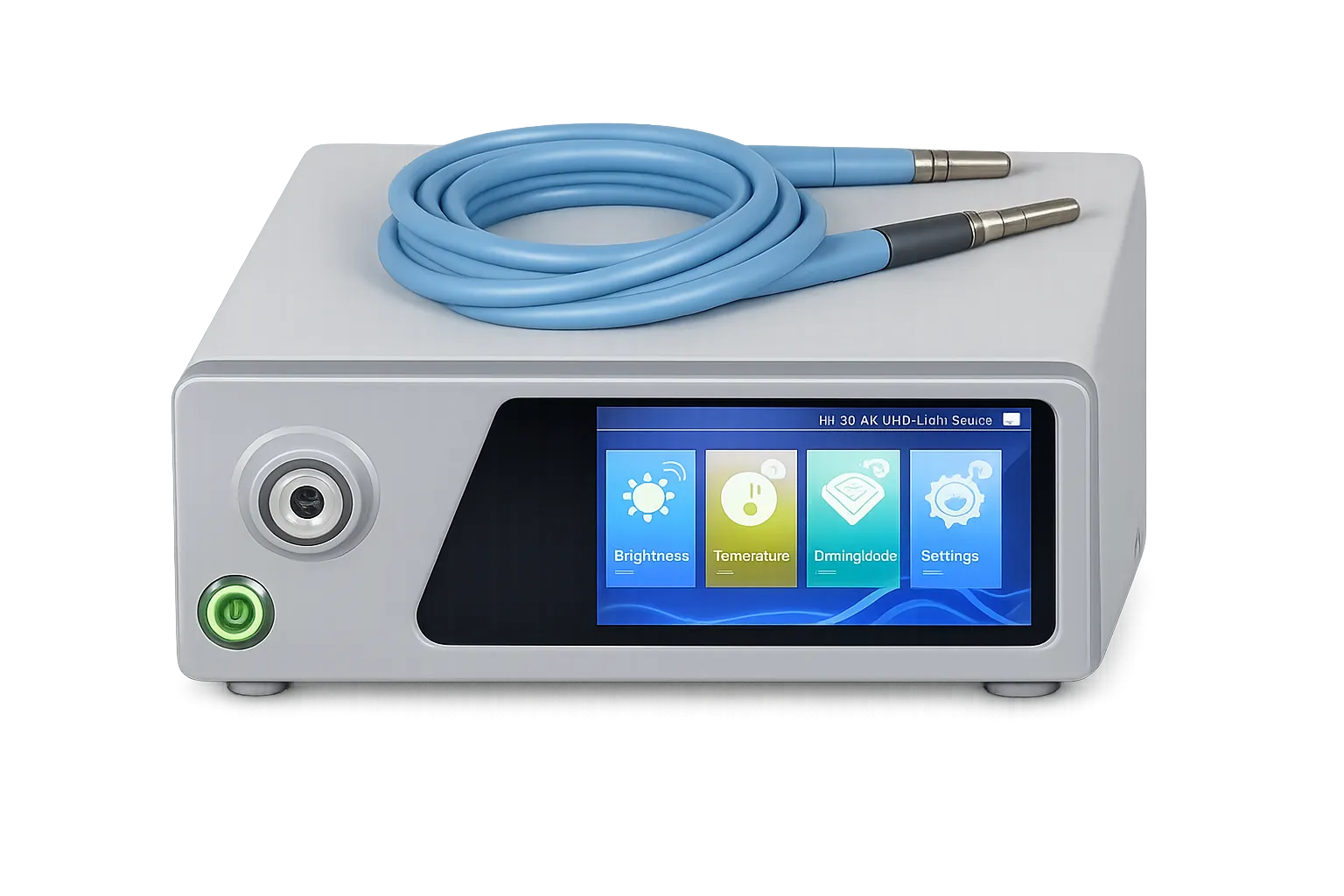
Abdominal work places the scope tip deep inside a cavity where light falls away quickly across distance, and the peritoneal surface absorbs a good deal of what reaches it. Output beyond 1,600,000 lux supplies the reserve that situation demands, while three-level power selection lets the operator ease back once the field is established. A rendering index above 93 keeps vessel and fat distinctions legible, which matters through a dissection where colour carries as much information as contour does.
Arthroscopy and Orthopaedic Work
Joint spaces are small, fluid-filled and highly reflective, so raw output must be controlled as carefully as it is supplied. Touchscreen dimming through pulse width modulation gives fine command over delivered brightness, and configurable working curves let a unit settle on behaviour that suits its regular list. Cool emission avoids adding thermal load to cartilage and synovium during procedures that can run considerably longer than planned.
ENT, Urology and Gynaecology
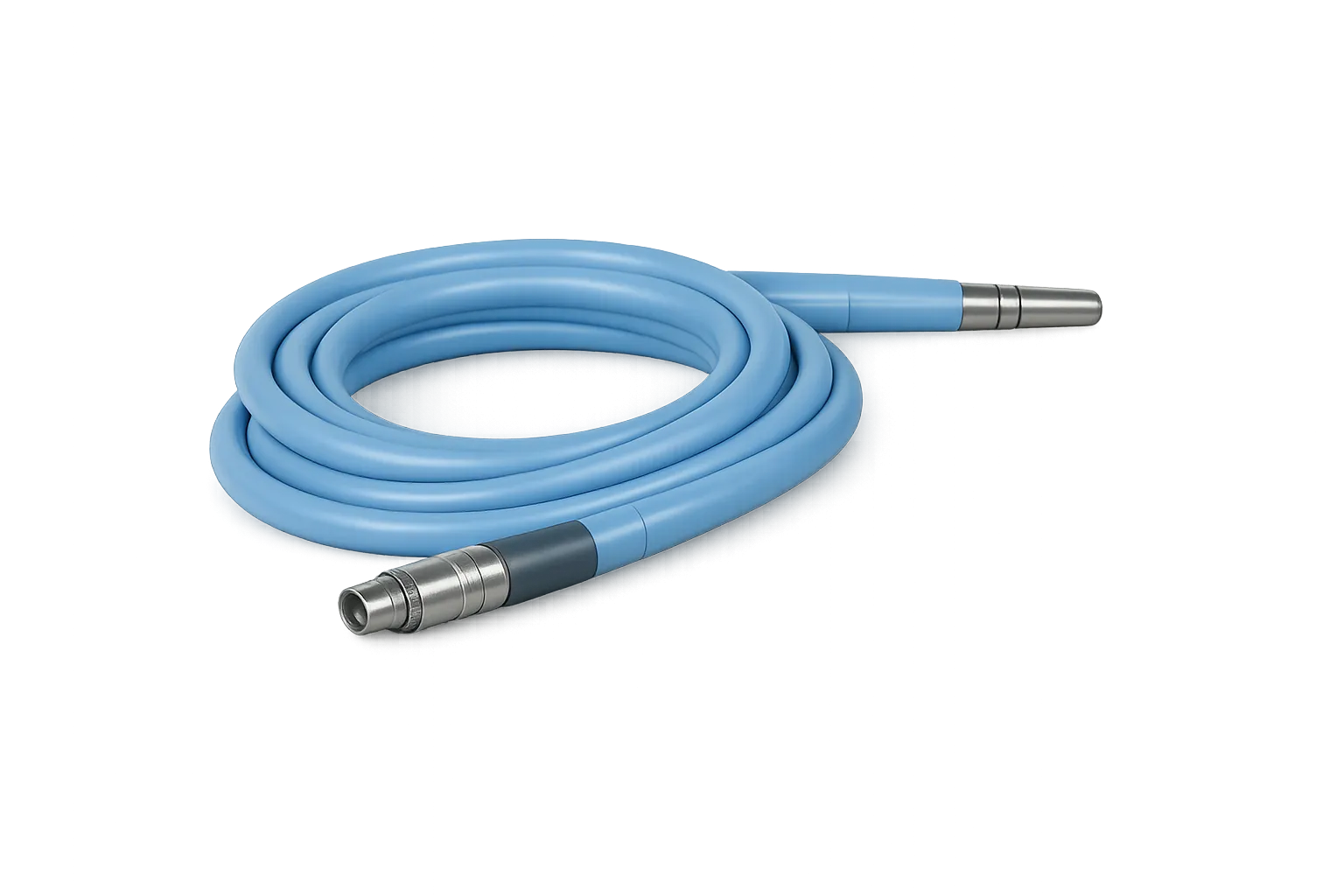
Narrow-lumen endoscopy through the airway, urinary tract or uterine cavity leaves very little margin for heat at the distal end, and diode emission keeps thermal transfer low by design. Adjustable colour temperature across the 3000 to 7000 kelvin range helps match mucosal appearance to what each specialty expects to see, while the autoclavable cable moves through the same reprocessing route as the scopes it serves.
High-Turnover Theatre Lists
Departments running back-to-back sessions need illumination that starts instantly and holds its character all day. Diode output reaches full brightness immediately with no warm-up period, and rated life beyond 50,000 hours removes the mid-list lamp failure that interrupts a running theatre. Automatic thermal regulation keeps performance consistent from the first case through to the last.