
Theatres With Mixed Display Equipment
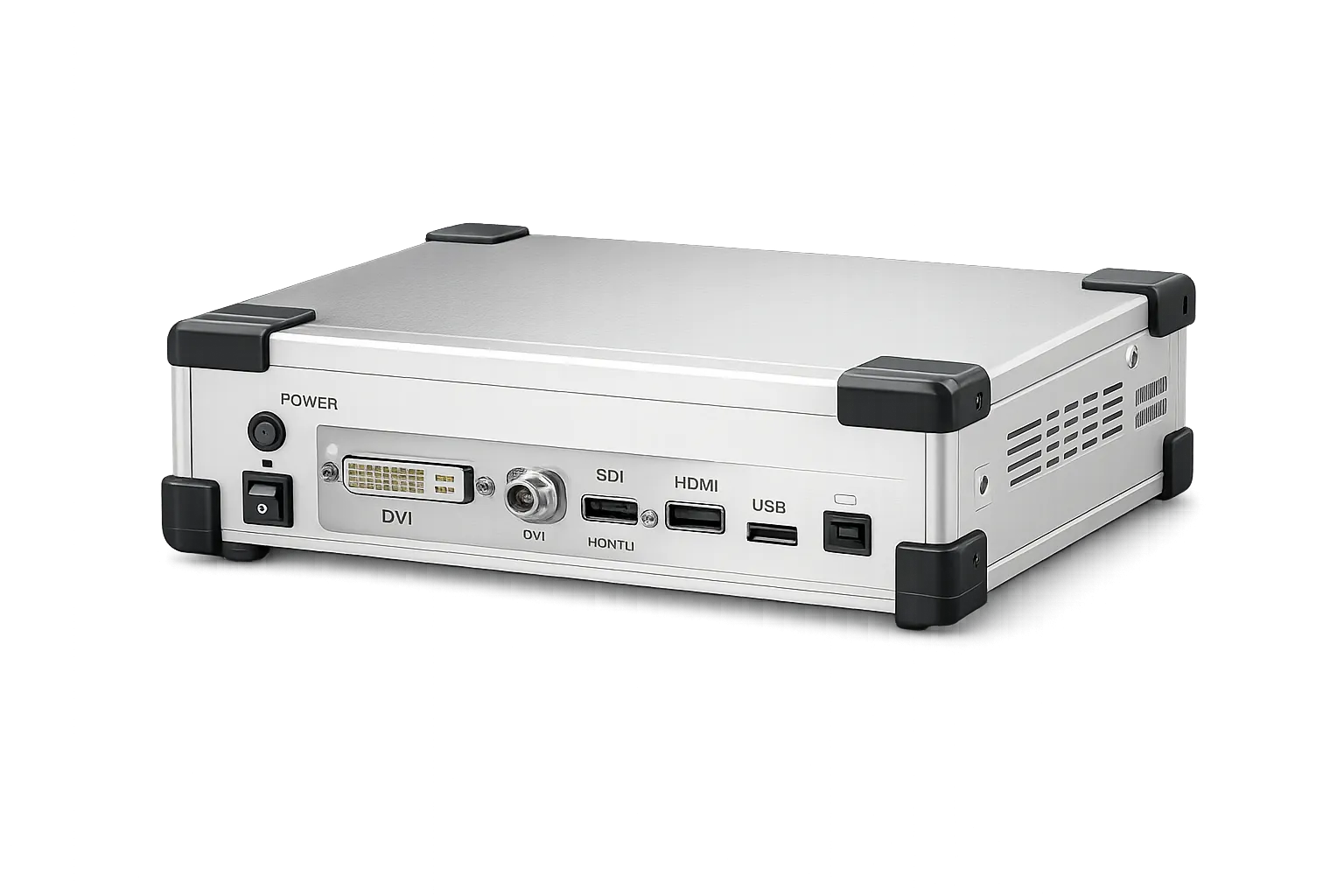
Five outputs spanning HDMI, SDI, DVI, BNC and USB is an unusually broad set for a portable unit, and it addresses a common practical problem: display equipment accumulates over years in several standards. A room running an older BNC monitor alongside a newer HDMI screen accommodates this unit directly, with no adaptors in the chain and nothing needing replacement to make the connection work. Existing display investment continues earning its place.
Clinic Rooms and Shared Spaces
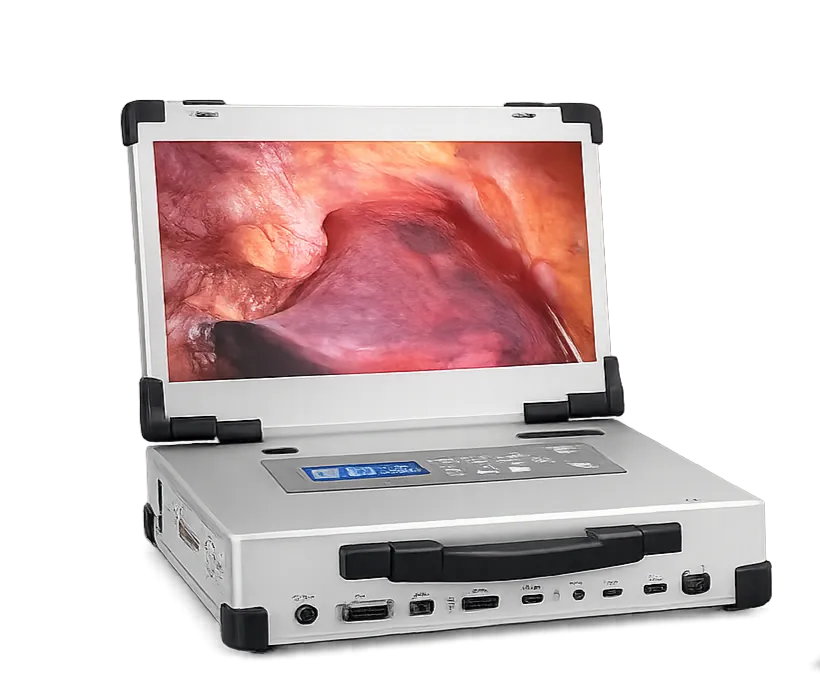
A clamshell case that folds flat suits rooms where equipment cannot occupy a permanent position. The unit opens for a session, works as a complete imaging arrangement with its own screen and lighting, then closes and stores away. Two panel sizes let a department pick what genuinely fits rather than accepting a single fixed dimension. The room returns to its other uses once the case closes.
Documentation and Case Records
White balance, freezing, photography and video storage run from the unit itself, so a finding is captured at the moment it appears rather than afterwards. This matters where a clinician is working single-handed and cannot rely on somebody else operating a separate capture station during the procedure. Records reach the file without depending on a colleague.
Extended Procedure Lists
Long depth of field reduces how often the scope needs repositioning purely to regain focus, and a 120 watt lamp rated beyond 50,000 hours holds output steady through a full list. Consistent illumination means the picture late in a session matches what the team saw at the start of it. Assessment stays reliable from the first case to the last.