
Laparoscopic Abdominal Surgery
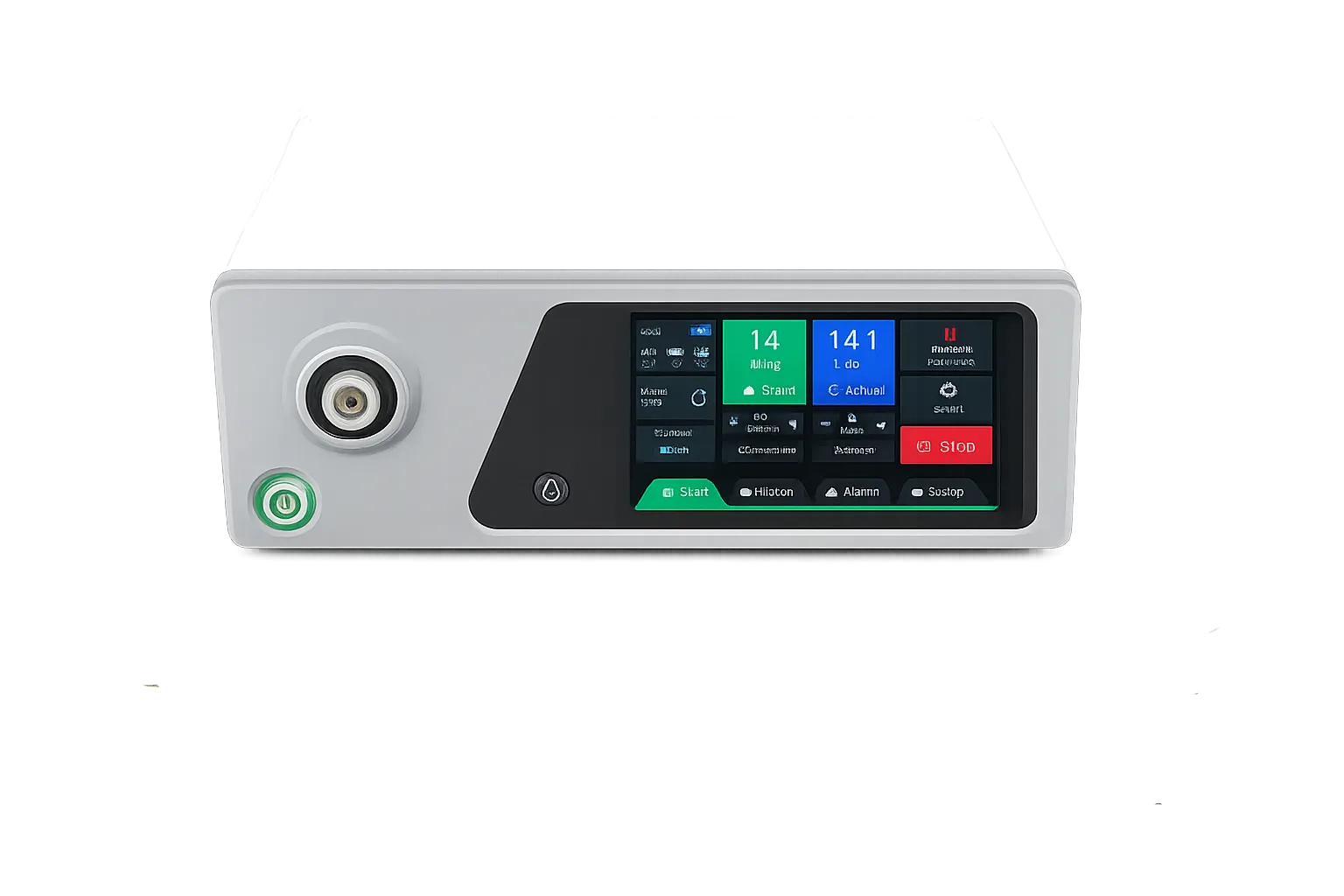
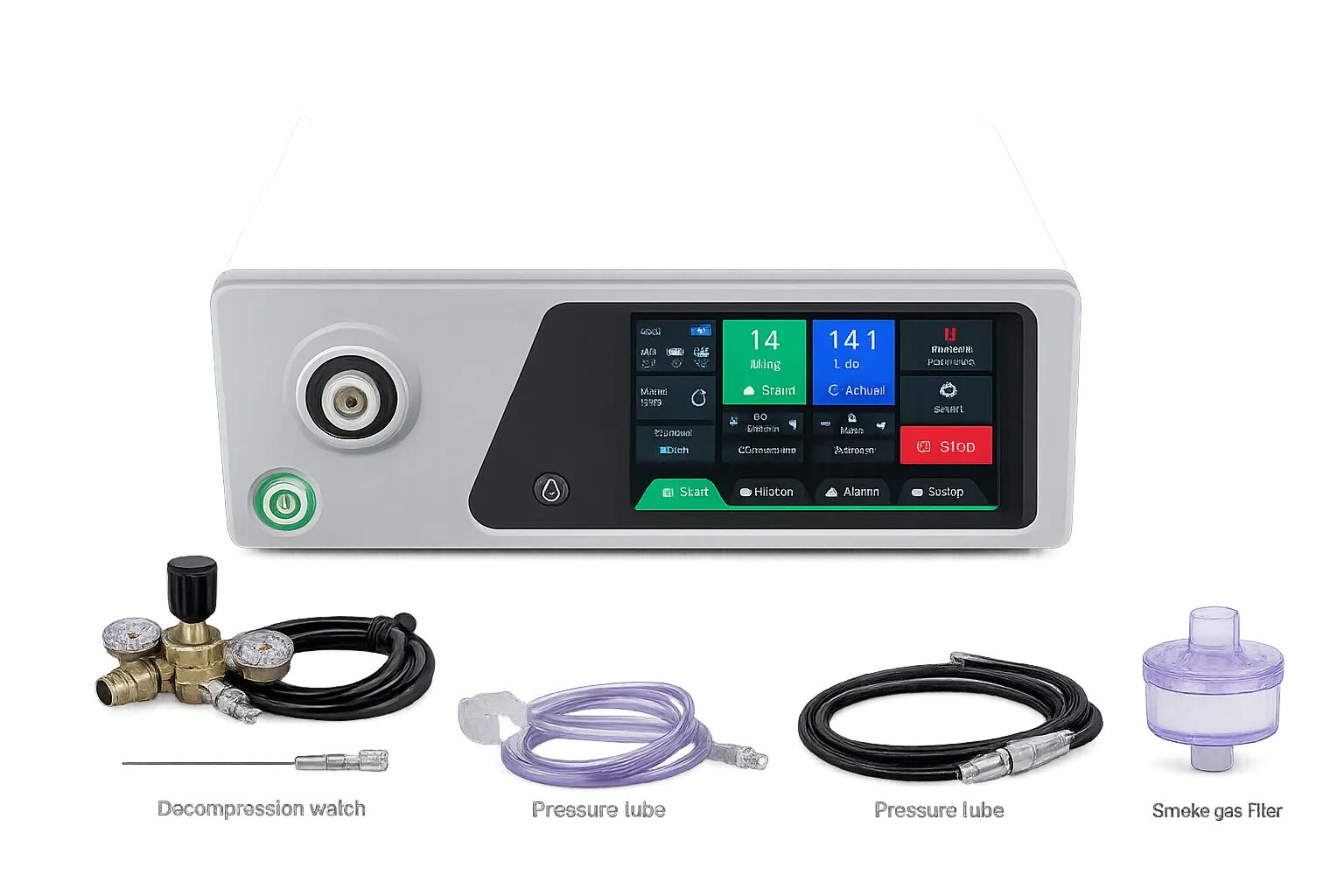
Pneumoperitoneum is the working space every laparoscopic procedure depends on, and maintaining it steadily matters as much as establishing it. Flow to 30 litres per minute replaces gas lost through instrument exchange, suction and leakage around ports, while the display showing requested against delivered figures lets the team see whether the abdomen is holding pressure or losing it faster than expected. A working space that collapses interrupts the whole procedure. Gas is lost steadily rather than only at the outset.
Gynaecological Laparoscopy
Pelvic laparoscopy places similar demands on gas management, and the same monitoring applies. Pressure alarms with audible and colour warnings mean a change in conditions reaches the team promptly. All pressure and flow settings remain matters for the operating surgeon, determined by the patient and the procedure rather than by the equipment. Equipment supplies capability, not clinical judgement. Settings follow the patient in front of the surgeon.
Procedures Generating Surgical Smoke
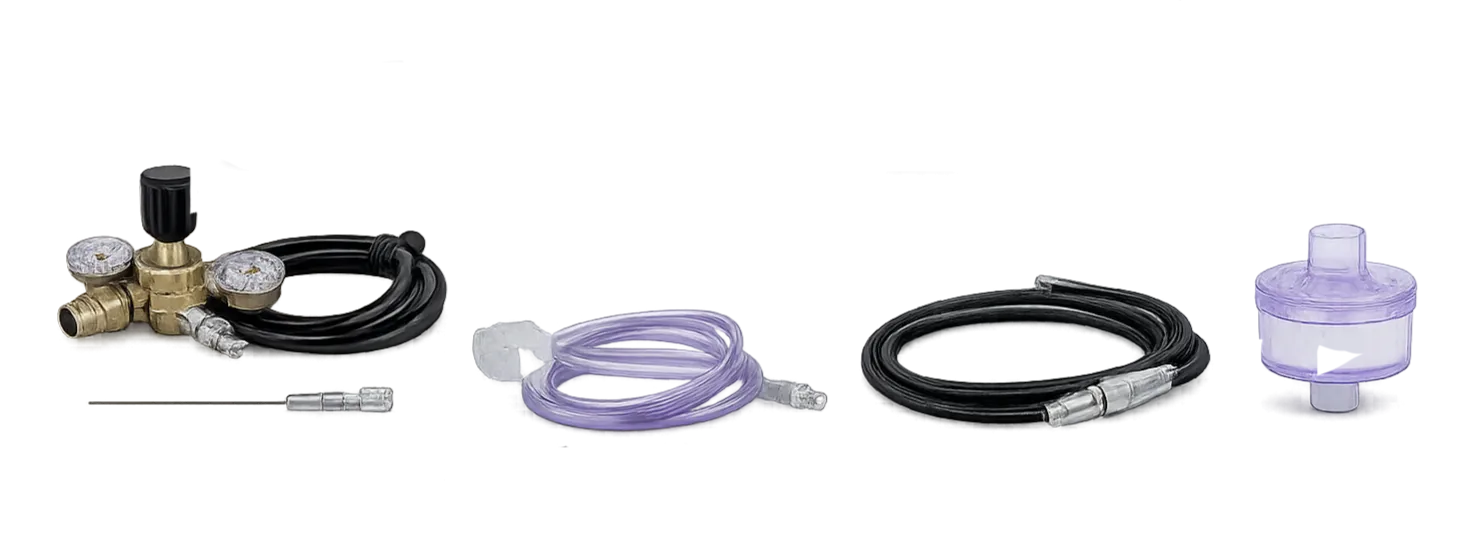
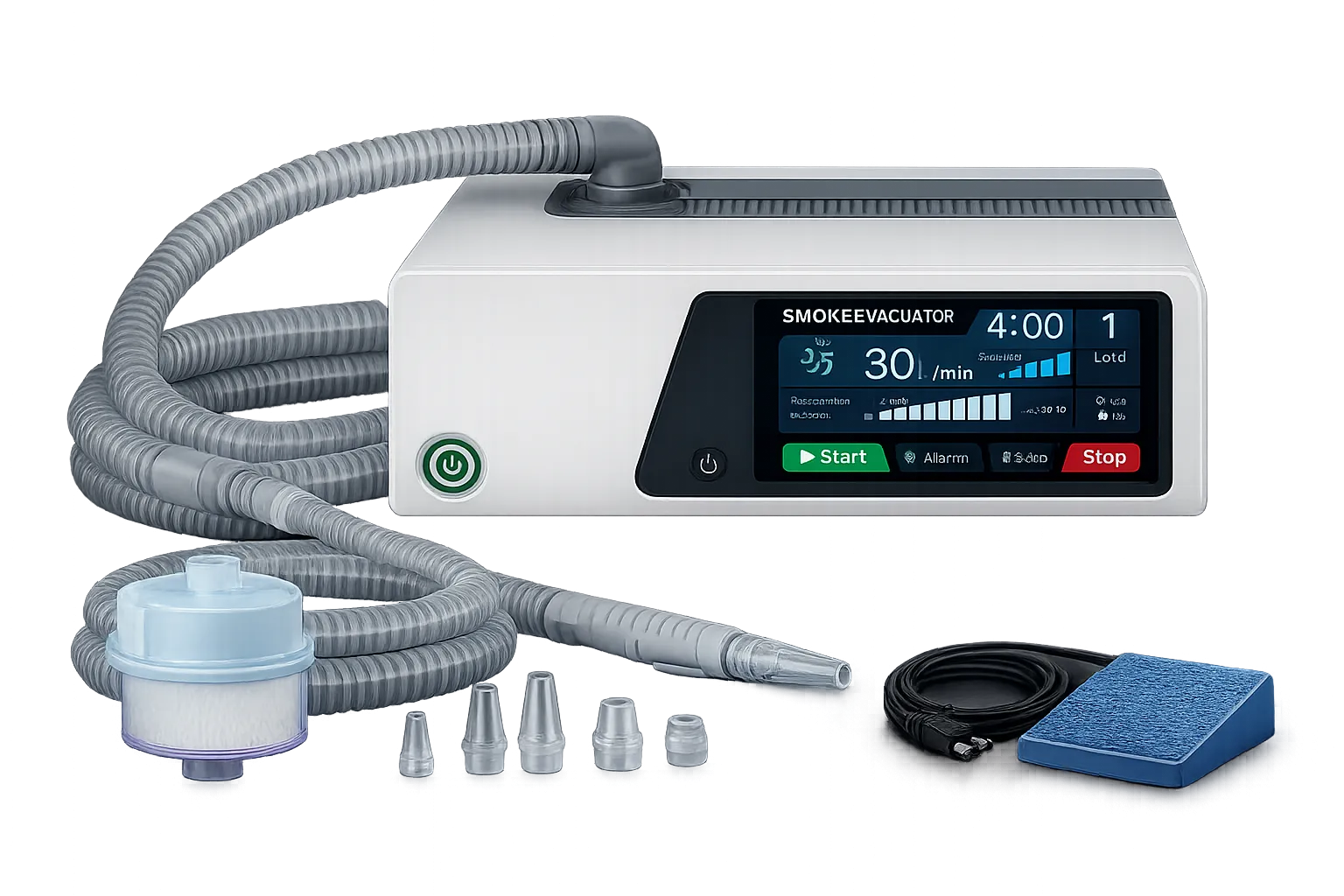
Electrosurgical instruments produce smoke that degrades the view and must be managed. The included smoke gas filter forms part of that arrangement, and the console's flow capacity supports replacing gas as smoke is evacuated, so the working space is not lost each time suction is applied to clear the field. Visibility returns without the abdomen deflating each time. Smoke management and gas management work together here.
Theatres Prioritising Clear Monitoring
A touchscreen presenting preset and actual values together suits teams who want the gas position visible without interrogating the console. Where a circulating nurse is monitoring several parameters, a display that shows divergence at a glance is more useful than one requiring interpretation. Fewer things demand interpretation during a busy list. Clear presentation reduces what has to be worked out.