
Urology and Gynaecology
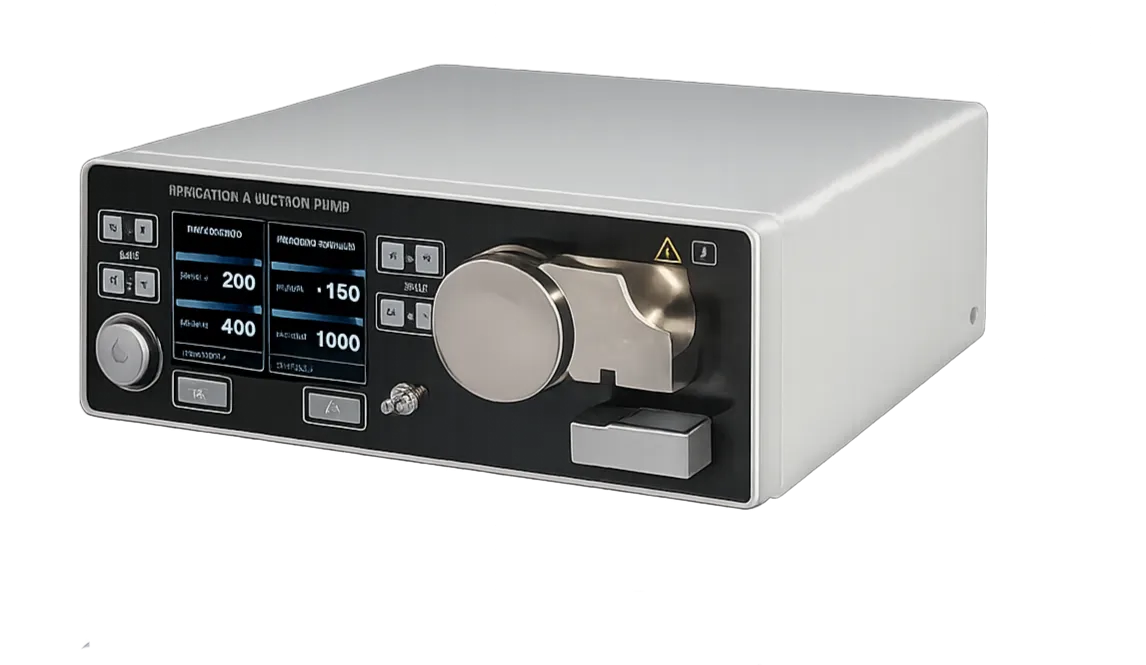
Both specialties work within cavities that irrigation distends and maintains, and both depend on a field kept clear of blood for the operator to see what they are doing. Independent irrigation and suction settings allow the balance between inflow and removal to be managed deliberately. Fluid absorption is a recognised consideration in these procedures, and monitoring it remains part of clinical practice rather than a function of the console. The console supplies capability rather than clinical judgement.
Orthopaedic and Arthroscopic Work
Joint procedures rely on liquid distension to open a working space and on continuous clearance to keep it visible. Flow adjustable from 10 to 1500 ml per minute covers both the gentle lavage suited to delicate work and the volumes needed to clear a field rapidly. Pressure appropriate to the joint and patient is set by the operating surgeon. Delicate work and rapid clearance both fall within the range.
Neurosurgical Procedures
Where the console is used in neurosurgery, the precision of its settings matters considerably, and the pressures appropriate there differ markedly from those used elsewhere. The console provides a wide adjustable range; the values suited to intracranial work are determined entirely by the operating team according to established neurosurgical practice. Nothing about the equipment substitutes for that expertise.
General and Proctological Surgery
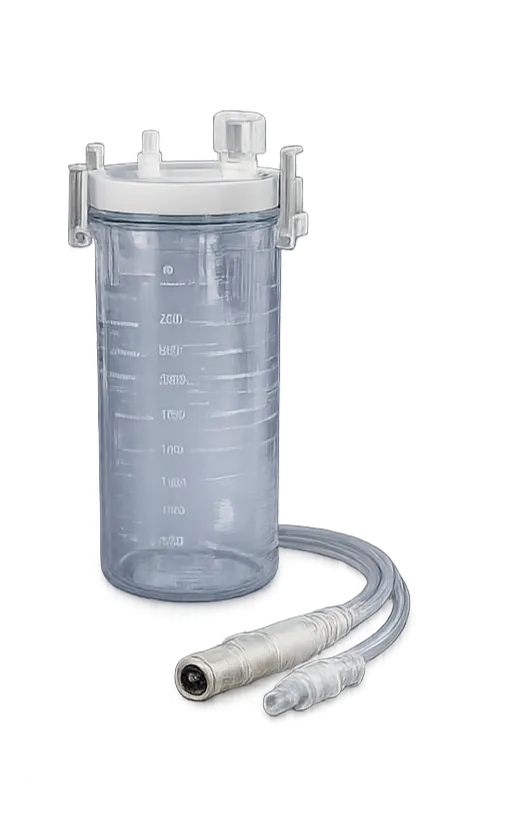
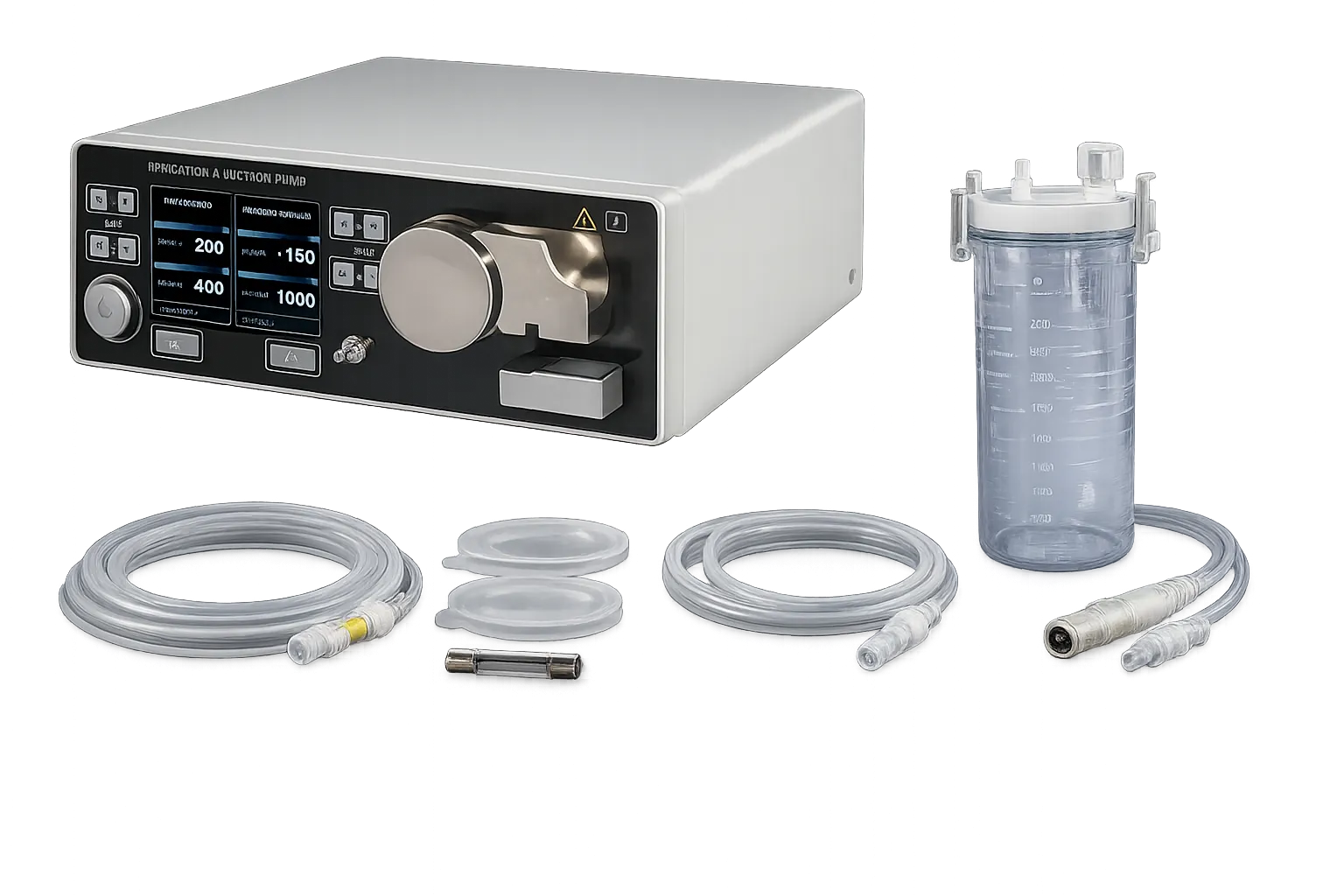
Broader surgical use draws on the same combination: liquid to open and clear a cavity, aspiration to remove it with debris, and both readable together on one screen. A 2000 ml collection bottle keeps removed volume visible, which supports the running account a theatre team keeps of fluid balance during a case. Both functions stay readable without switching views.