
Medtronic Vitalis Pacemaker Portfolio Gains European CE Mark
Medtronic’s Vitalis pacemaker portfolio has received European CE marking for five devices designed for conduction system pacing (CSP). The range includes advanced cardiac resynchronisation technology, automatic pacing adjustments, and remote monitoring features to support personalised cardiac therapy.
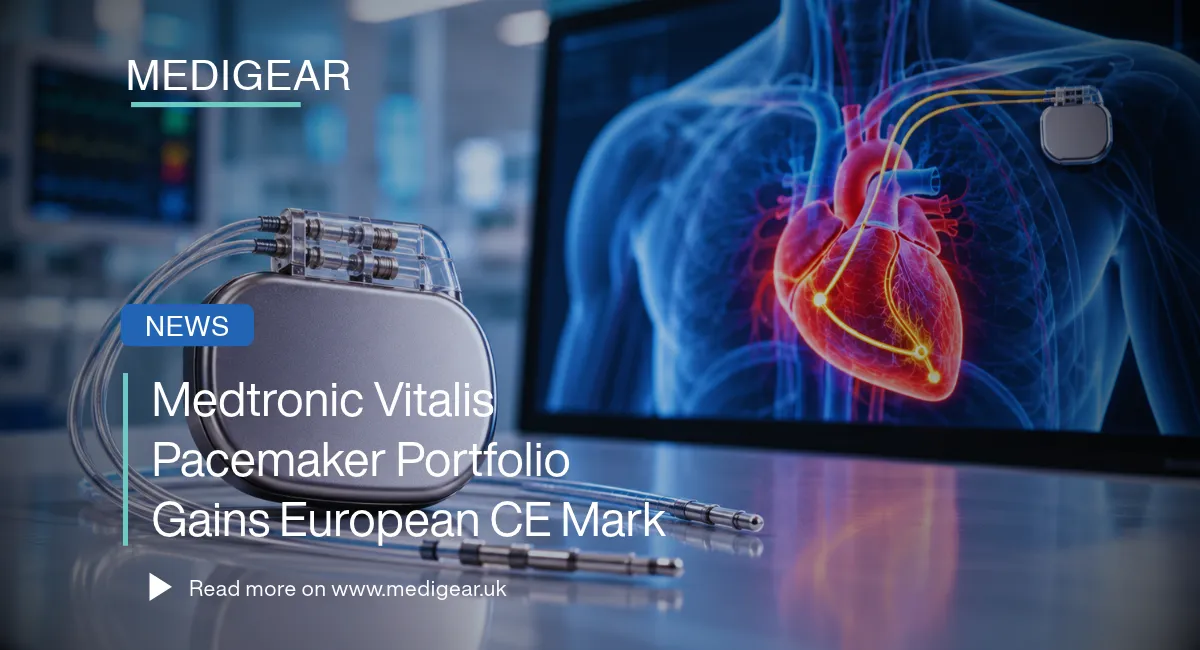
Medtronic has secured European CE marking for its Vitalis pacemaker portfolio, which includes five devices designed for conduction system pacing (CSP). The company announced the regulatory milestone on 19 October 2026, expanding its cardiac pacing options in Europe.
Five pacemakers receive European clearance
The Medtronic Vitalis pacemaker portfolio comprises ReSyncra CSP, Restoria CSP, Refina CSP, Effectra, and Confirma. Each device supports CSP, a technique that delivers electrical impulses through the heart's natural conduction pathways.
Conventional pacemakers typically stimulate the heart through the right ventricular wall. CSP instead targets its electrical network to manage heart rate and coordinate contractions. Medtronic describes this approach as a more physiological form of cardiac pacing.
The portfolio has not yet received clearance for the US market from the Food and Drug Administration (FDA).
ReSyncra CSP targets cardiac resynchronisation
ReSyncra CSP offers another treatment option for patients eligible for cardiac resynchronisation therapy (CRT) who cannot achieve effective results with conventional biventricular pacing.
Standard CRT stimulates both ventricles to coordinate their contractions. ReSyncra CSP instead uses the heart's conduction pathways to improve ventricular synchronisation.
The device also features AdaptivCSP, which automatically adjusts pacing intervals. This function aims to improve cardiac synchrony in patients with heart failure when conventional CRT cannot deliver effective results.
Remote monitoring supports CSP treatment
Three devices in the portfolio, ReSyncra CSP, Restoria CSP, and Refina CSP, include CSP Morphology Monitor technology.
The feature allows clinicians to assess conduction system pacing throughout a patient's treatment. Its monitoring capabilities provide information that can support ongoing therapy assessment.
Robert Kowal, general manager for cardiac pacing therapies within Medtronic’s electrophysiology therapies operating unit, said:
“From patients requiring traditional pacing support to those who may benefit from conduction system pacing or cardiac resynchronisation therapy, this portfolio was designed to personalise therapy, simplify physician workflows, and support patients throughout their healthcare journey.”
Clinical evidence raises procedural considerations
Conduction system pacing has attracted increasing clinical interest as an alternative to conventional ventricular pacing for selected cardiac patients.
However, research has also linked CSP to higher complication rates around implantation than conventional pacing. These findings highlight procedural risks that clinicians must consider when evaluating treatment approaches.
Pacemaker market outlook and competition
According to GlobalData, Medtronic accounted for 58.7% of the US pacemaker market in 2025.
Abbott ranked second with 35%, while Biotronik held 3%.
GlobalData forecasts a 4.9% compound annual growth rate for the worldwide pacemaker market, expected to reach $6.2bn by 2035.
For medical equipment distributors and healthcare procurement teams, the European CE mark adds five CSP-capable devices to Medtronic's approved portfolio. Medigear.uk covers this development as cardiac pacing technology advances and manufacturers expand their treatment options.
Source: Medical Device Network
Sourcing medical equipment?
Tell us the model and destination — our sourcing team will respond within one business day.

Intuitive Surgical Shares Fall 8% on Revised 2026 Growth Outlook
Intuitive Surgical shares fell approximately 8% on 21 October 2026 after the company narrowed its fu…

Labcorp Myriad Prenatal Testing Deal Reaches $210M Agreement
Labcorp has agreed to acquire the prenatal health testing business of Myriad Genetics for $210 milli…

IceCure ProSense Cryoablation Trial Enrols First US Patients
IceCure Medical has enrolled the first two patients in its US ChoICE study, evaluating ProSense cryo…
Medical device news, once a week.
Approvals, trials, recalls and market moves — the essentials for procurement and clinical teams.