Flash sterilisation is a rapid steam sterilisation cycle used on an unwrapped instrument that is needed immediately and cannot wait for a full reprocessing cycle — for example, a single instrument dropped mid-procedure. Because the item is processed without normal packaging and used straight away, the correct modern term is immediate-use steam sterilisation (IUSS). It is a legitimate but tightly restricted practice: appropriate only as an emergency measure, never as a routine substitute for planned, wrapped or containerised sterilisation with full drying and cooling.
For anyone equipping a theatre or writing local policy, the key is understanding why the method is limited, when it is genuinely justified, and what a compliant immediate-use steriliser and process look like. This guide sets that out for a procurement and governance audience.
Why the term changed from flash to immediate-use
The word "flash" implied speed and encouraged overuse. Guidance moved to "immediate-use steam sterilisation" to stress the defining feature: the item is sterilised and taken directly to the point of use, unwrapped or in a specialised open container, without being stored. Renaming it reframed the practice as an exception requiring justification rather than a quick everyday shortcut. The physics is ordinary steam sterilisation; what makes IUSS distinct is the absence of packaging, drying, cooling and storage.
The immediate-use cycle in practice
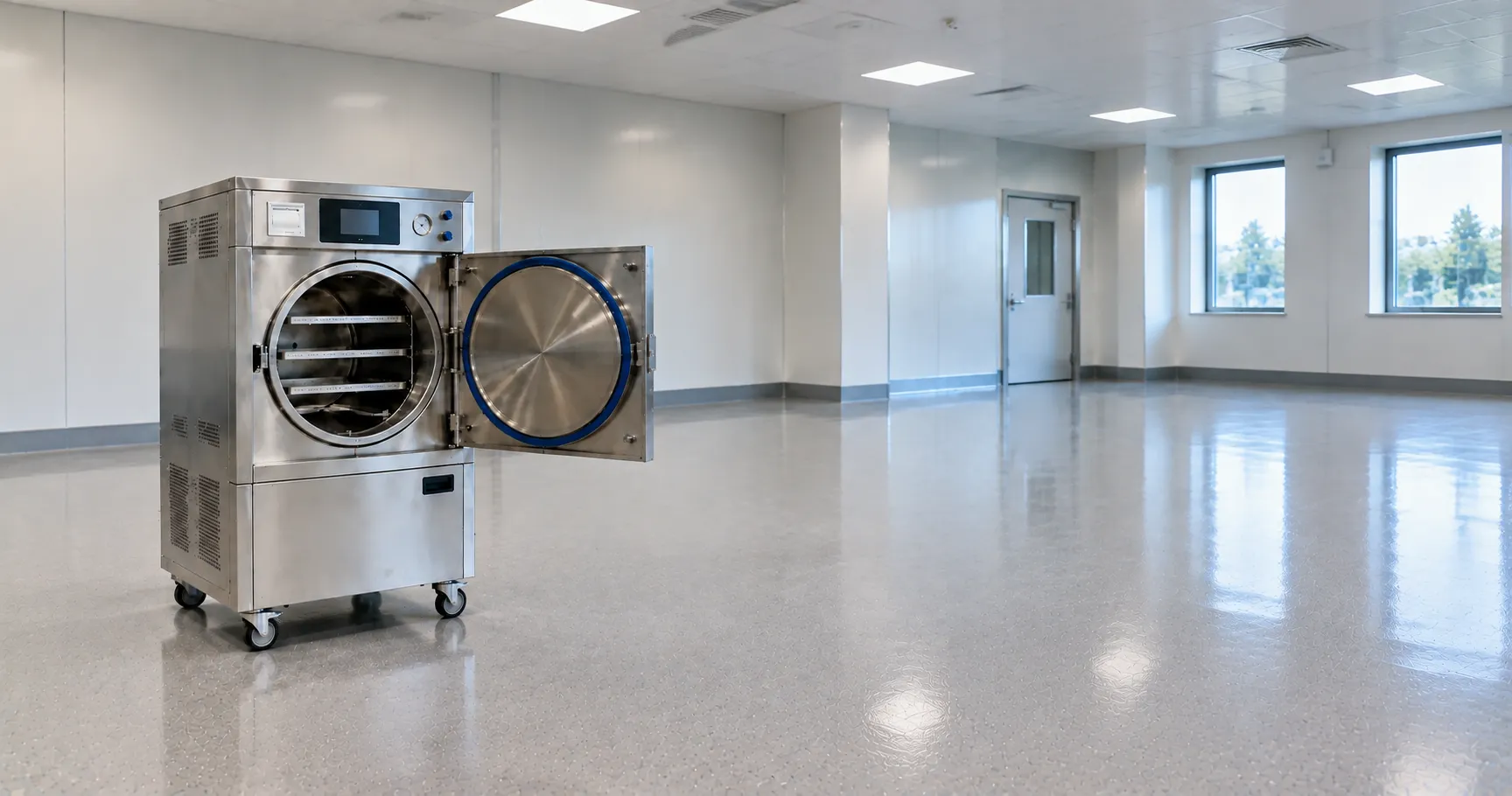
An immediate-use cycle exposes the cleaned, unwrapped instrument to saturated steam at high temperature for a short hold — commonly around 134°C for roughly three minutes in a porous-load or bench steriliser, though gravity-displacement cycles use different times. The item is then removed hot and moist and carried straight to the sterile field. There is no drying phase, no cooling to room temperature, and no period on a storage shelf. That compressed process is exactly what makes IUSS fast and exactly what makes it risky. The cycle relies on saturated steam; a fundamentally different method such as the dry heat steriliser uses hot air over a far longer cycle and has no place in immediate turnaround.
The risks that limit immediate-use sterilisation
Several factors constrain the method. The instrument leaves the chamber wet and hot, so it cannot be inspected, cooled or stored, and transferring it across a non-sterile environment to the field creates a recontamination window. Cleaning may be rushed under time pressure, undermining sterilisation, because sterilisation cannot compensate for inadequate decontamination. There is no wrapping to maintain sterility, and results are typically released before a biological indicator has been fully incubated. Each factor raises the chance of a surgical site infection compared with a fully processed, packaged load, which is why governance frameworks treat IUSS as a last resort and monitor its frequency.
Cleaning still comes first.
The urgency of immediate use never overrides the need to clean. Sterilisation acts on a decontaminated surface; organic soil, blood or bone debris shields micro-organisms and can leave an item unsterile even after a correct cycle. A dropped instrument must therefore be manually cleaned and, where possible, put through a washer-disinfector step before the immediate-use cycle, not simply rinsed and loaded. This is one reason IUSS should not be treated as instant — the cleaning it demands takes time, and cutting that corner is where the real danger lies.
How it differs from a standard wrapped cycle
A conventional load is cleaned, inspected, wrapped or placed in a container, sterilised with a drying stage, cooled, checked against chemical and biological indicators, labelled and stored. Immediate-use sterilisation strips out the wrapping, the drying, the cooling, the storage and often the wait for a biological indicator result. What remains is only the sterilisation exposure itself. Understanding this makes the limitation obvious: IUSS delivers the kill step but sacrifices every safeguard that normally protects the item afterwards, which is precisely why it cannot be a routine method.
When emergency use is justified — and when it is not
Immediate-use sterilisation is defensible when a specific, cleaned item is urgently required, and no sterile alternative is available: a single instrument contaminated during a case, or a device for which there is genuinely no spare. It is not justified as a way to compensate for insufficient instrument stock, to speed up turnover between routine cases, or to process convenience items or whole sets simply because the schedule is tight. A high or rising IUSS rate is usually a sign that inventory or scheduling needs attention rather than that the practice is working well.
Implants must not be flash sterilised
National and international guidance is consistent that implantable devices should not be processed by immediate-use sterilisation except in a documented, unavoidable emergency, and then only with biological indicator monitoring. The stakes of an implant-associated infection, and the inability to quarantine the item pending a fully read biological indicator, make routine IUSS of implants unacceptable. Departments should hold adequate sterile implant stock precisely so this situation does not arise.
Governance, records and standards
Immediate-use sterilisation must be documented like any other cycle: the item, the cycle parameters, the operator, the reason for immediate use, and the patient it was used on, so any failure can be traced. In UK acute care th, this sits within HTM 01-01 decontamination guidance and the general medical device oversight of the MHRA, while infection-prevention expectations across the NHS and guidance from NICE on preventing surgical site infection reinforce that reprocessing must not be shortcut without cause. Local policy should define who may authorise IUSS and require regular audit of how often it is used.
Designing out the need for it
The best way to keep immediate-use sterilisation safe is to rarely need it. Adequate instrument inventory, well-composed sets with spares of frequently dropped items, and reliable scheduling remove most of the pressure that drives IUSS. Reviewing the reasons recorded for each immediate-use cycle usually reveals patterns — a particular instrument that is always short, or a list that regularly overruns capacity — that can be fixed by buying more stock or adjusting the set. Treating a high IUSS rate as a procurement and planning signal, rather than an operational fact of life, is how good departments drive it down.
Specifying an immediate-use steriliser
If your theatre needs immediate-use capability, choose and site the steriliser so that emergency use stays safe and controlled rather than casual.
-
Confirm the steriliser is validated for unwrapped immediate-use cycles and meets the relevant small-steriliser standard, such as BS EN 13060 for bench units like dental and tabletop autoclaves.
-
Check cycle temperature, hold time, and any drying options against the instruments you would realistically need to process.
-
Ensure the unit prints or logs cycle parameters so every immediate-use cycle is traceable.
-
Verify a validated cleaning process is available at the point of use, since sterilisation cannot rescue a dirty instrument.
-
Provide a means of safe transfer to the sterile field that minimises the recontamination window.
-
Confirm chemical indicator and biological indicator provision, and a policy for releasing loads.
-
Set a local protocol defining authorisation, permitted items (excluding routine implants) and audit of usage frequency.
The bottom line on flash sterilisation
Flash — now immediate-use — steam sterilisation is a fast cycle for an unwrapped instrument needed at once, and it is safe only as a governed exception, not a routine. The compressed process trades drying, cooling, packaging and storage for speed, so it must be justified, documented and audited, with implants excluded save in true emergencies. Buying well means specifying a validated, traceable steriliser and backing it with adequate instrument stock so IUSS stays rare. MediGear supplies UK theatre and decontamination teams; register as a buyer or contact us to specify sterilisation equipment that keeps emergency use safe.
Disclaimer
This article is for informational purposes only. It is published by MediGear (medigear.uk) for general information and procurement guidance, and is not clinical, diagnostic, treatment, technical, engineering, legal or regulatory advice, nor a product endorsement, guarantee or substitute for professional assessment. MediGear does not provide medical consultations. Buyers should consult their clinical, biomedical, estates and regulatory contacts, and the manufacturer's documentation, and independently verify all specifications, certifications, compatibility and suitability before purchase. Specifications, certifications and availability are correct at the time of publication and may change without notice. MediGear is a medical-equipment distributor and does not sell medicines or pharmaceutical products.