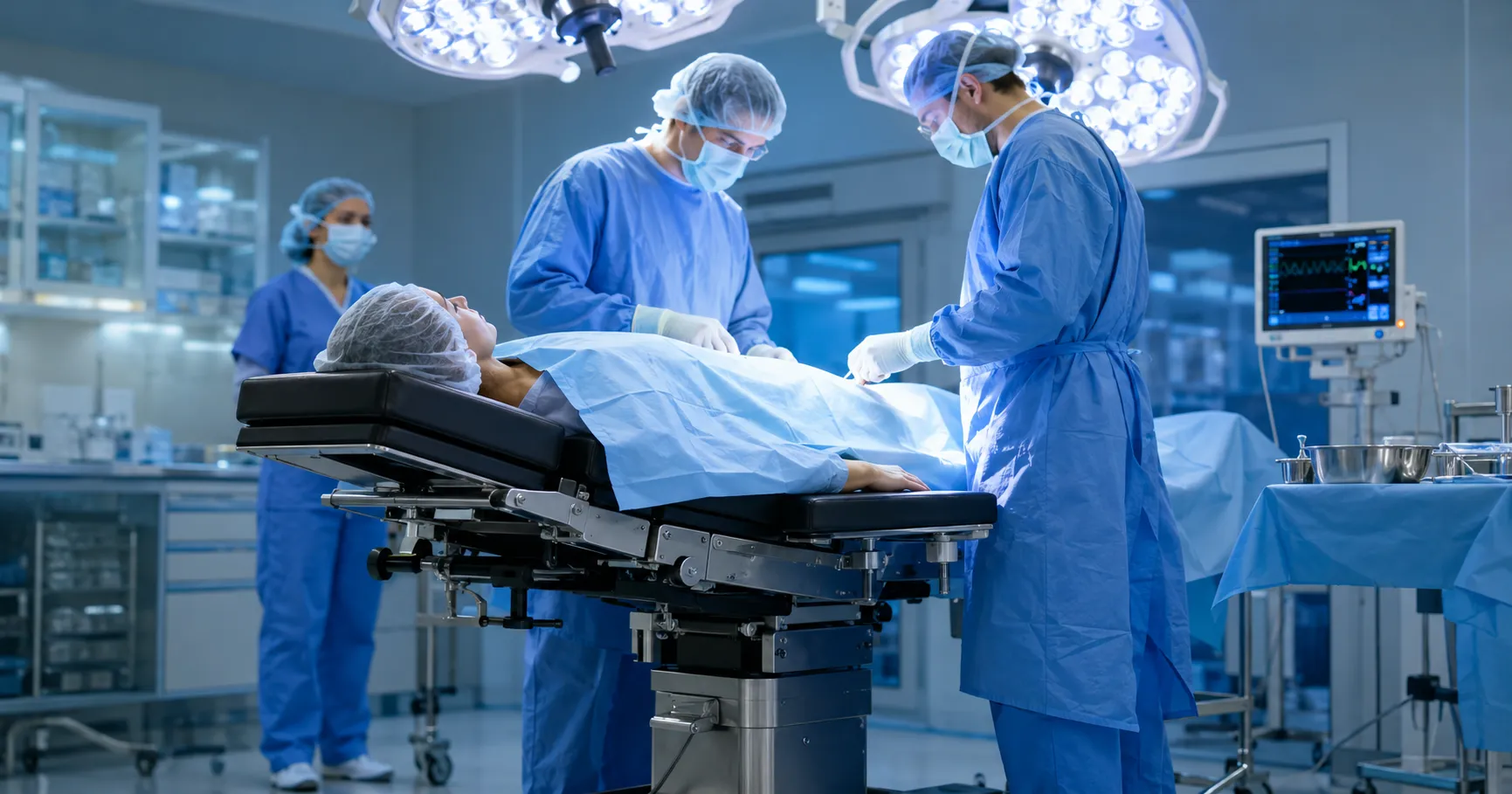
A forty-six-year-old woman arrives for a planned gallbladder removal. The surgical team wheels the laparoscopic tower into theatre two. The monitor turns on. The camera locks in place. The gas machine runs its self-test. Within minutes, the team is ready. That sequence happens many times each day across hospitals in the United Kingdom. Every step relies on one mobile unit. That unit is the laparoscopic tower. It holds the core tools that make keyhole surgery work. Without it, the case cannot start. Knowing each part helps procurement teams, theatre staff, and distributors pick the right build. Buyers sourcing theatre gear through the Medigear.uk buyer portal can compare laparoscopic tower options from many suppliers in one place.
What Is a Laparoscopic Tower
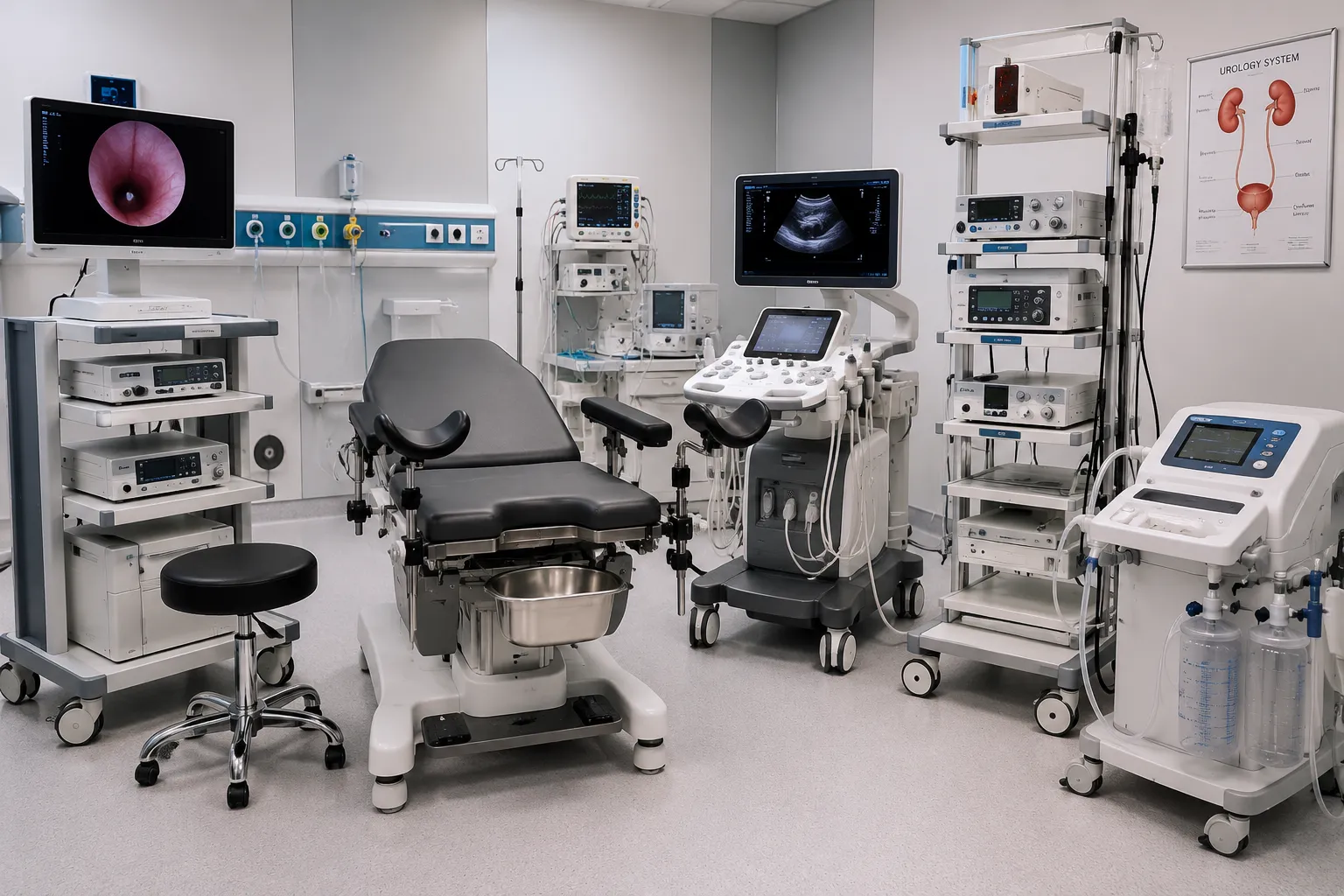
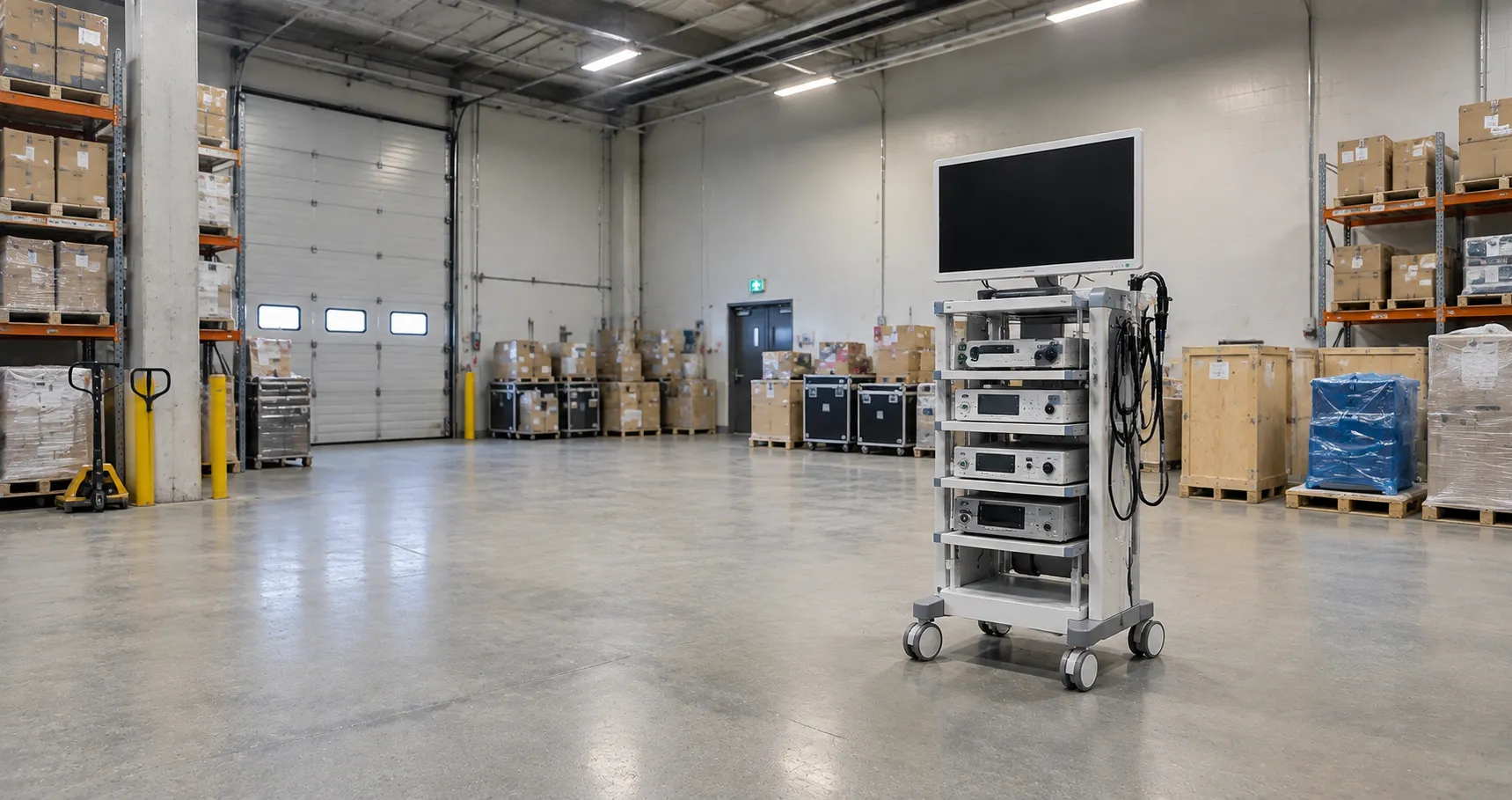
A laparoscopic tower is a wheeled cart. It houses the electronic and optical devices used during keyhole surgery. Surgeons call it the video tower. Some call it the endo tower. Others simply say the stack. The name changes, but the role stays the same. It groups all the devices the surgeon needs into a single station. The tower stands beside the operating table. Cables run from it to the surgical field. This layout keeps the theatre floor clear. It also speeds up setup between cases. Most laparoscopic towers stand between 140 and 170 centimetres tall. A flat-screen display sits at the top. The rest of the devices stack on shelves below. Cable channels in the frame stop leads from tangling. Lockable castors let staff move the tower between theatres with ease. A laparoscopic tower is central to general surgery. It also serves gynaecology, urology, and bariatric work. Its modular build means hospitals can add or swap parts as their surgical scope grows.
How Does the Monitor Work on a Laparoscopic Tower
The monitor sits at the top of the laparoscopic tower. It shows the live camera feed from inside the patient. Surgeons watch this screen throughout the case. Image quality matters. Most current units use full high-definition panels. Some units now use four-K screens. The monitor must show true colour. Accurate colour helps surgeons distinguish tissue types. Screen sizes range from 19 to 32 inches. Larger screens suit teaching theatres. Many viewers need a clear line of sight in those rooms. Anti-glare coatings cut reflections from theatre lights. The display connects to the camera head through a video cable. Dual-input screens let teams switch between two sources fast. Mounting brackets fix the screen to the top shelf of the laparoscopic tower. Tilt and swivel arms let the surgeon adjust the angle. Suppliers listing monitors on Medigear.uk can reach theatre procurement leads across the NHS and the private sector.
What Role Does the Camera Head Play
The camera head clips onto the end of the laparoscope. It grabs the image and sends it to the control unit on the laparoscopic tower. The control unit then outputs the signal to the monitor. Resolution is the key spec. High-definition heads produce 1080p images. Three-chip heads give better colour depth. Single-chip heads work well for basic cases. White balance and exposure are adjusted through the control unit. Some systems do this by default. Others let the surgeon tune them by hand. The camera head must be light. Surgeons hold it for the full case. A heavy head tires the hand. Most heads weigh between 100 and 200 grams. The cable from the head to the control unit should be flexible. Poor shielding on the cable adds image noise. The control unit sits on a middle shelf of the laparoscopic tower. It handles signal gain, zoom, and colour correction. Conditions such as those in the Medigear.uk guide to asthma and COPD equipment need different clinical tools. Yet the same principle holds. Match the device to the clinical task.
Why Is the Light Source So Important
The inside of the body is dark. The light source on the laparoscopic tower sends bright light through a fibre-optic cable into the scope. Without it, the camera sees nothing useful. Xenon lamps were the standard for many years. They make white light close to daylight. LED sources have gained ground. They run cooler. They last longer. They use less energy. LED units can pass 50,000 hours of use. Xenon bulbs need to be swapped after 500 to 1,000 hours. The light source links to the scope through a fibre-optic cable. Cable width and length vary. Thicker cables carry more light but bend less freely. The light source sits on a shelf of the laparoscopic tower below the control unit. Output adjusts from the front panel or a foot pedal. Auto brightness ties to the camera system. It raises or lowers output based on the scope-to-tissue distance. Heat is a risk with strong sources. Insulation mats at the drape entry point help manage it. Hospitals that contact the Medigear.uk team can discuss which light source fits their theatre needs.
What Does the Insufflator Do
The insufflator pumps carbon dioxide gas into the belly. This creates a working space. Surgeons call it the pneumoperitoneum. Without it, there is no room to see or work. The insufflator sits on the laparoscopic tower. It links to a gas cylinder through a high-pressure hose. It controls the flow rate and pressure inside the abdomen. Safe pressure ranges from 12 to 15 millimetres of mercury for adults. Children need lower levels. The screen shows live readings of pressure, flow, and total gas used. Alarms sound if the pressure exceeds the set limit. High-flow units push 40 to 50 litres per minute. Standard units push 20 litres per minute. High flow helps when gas escapes fast during suctioning. Some newer units heat and moisten the gas. This may reduce post-surgery pain and scope fogging. Gas tubing runs from the insufflator on the laparoscopic tower to a trocar port on the patient. An in-line filter in the tubing stops moisture and debris. Suppliers listing insufflation systems through Medigear.uk gain direct access to hospital and distributor procurement teams.
How Does the Electrosurgery Unit Fit In
Many laparoscopic tower setups include an electrosurgical generator. This device sends electrical energy to cut tissue and stop bleeding. It has two main modes. Monopolar energy passes through the patient. It exits via a return pad on the skin. Bipolar energy stays between the tips of the instrument. The generator sits on a lower shelf of the laparoscopic tower. A foot pedal or hand switch turns it on. Power settings adjust in watts. Lower settings suit delicate tissue. Higher settings help with larger vessels. Vessel-sealing devices plug into some generators. They seal vessels up to seven millimetres across. Argon plasma units add yet another option. The generator must have safety alarms. It should warn the team if the return pad loses contact. Newer units track tissue resistance. They adjust output on the fly. Telemetry monitors track a different set of vital signs. The Medigear.uk telemetry guide covers that topic in detail. In theatre, though, the laparoscopic tower remains the primary technical platform.
What Other Devices Sit on the Laparoscopic Tower
Several add-on devices share shelf space on the tower. An image capture unit records video and stills from the case. Surgeons use these for training, audit, and patient records. Some units save files to a USB drive. Others send them straight to the hospital network. A suction and irrigation pump may also sit on the laparoscopic tower. It flushes the surgical field with saline. It also removes fluid and smoke. Smoke matters during electrosurgery. Surgical smoke holds fine particles. These particles block the camera view. A dedicated smoke filter or a built-in unit clears the air. A printer module is less common now. It prints still images from the video feed for the patient file. Some laparoscopic towers include a backup power supply. This guards the equipment against sudden power loss during a case. Cable trays, brackets, and accessory hooks finish off the build.
Does Your Theatre Team Have the Right Laparoscopic Tower
Theatre managers must match the laparoscopic tower to the surgical workload. A general surgery unit doing gallbladder and appendix cases needs a solid mid-range setup. A bariatric centre or teaching hospital may need a four-K camera and a high-flow insufflator. Gynaecology teams may want a second monitor for the assistant. Urology teams doing complex stone or repair work need clear optics and strong energy devices. Each field brings its own demands. Mapping those demands to the right laparoscopic tower stops waste. A tower that lacks key parts slows turnover. A tower loaded with unused features ties up funds. The decision starts with a clinical needs check. It then moves to a technical review. Camera clarity, light output, gas flow, and energy device fit all come into play. Parts from the same maker often share one user interface. Mixed-brand towers work. They may need extra cables or adapters, though. Medigear.uk distribution partners can help clinical teams assess, build, and source the right mix of devices.
How to Maintain a Laparoscopic Tower
Good care keeps the laparoscopic tower reliable. The camera head and scope need careful cleaning after every case. Follow the maker's sterilisation guide. Most camera heads must not be fully submerged. Light cables need to be checked for broken fibres. Hold the cable up to a light. Look at the end face. Dark spots mean snapped fibres. Swap the cable when more than twenty percent are broken. Change the insufflator filter at set intervals. Check the gas cylinder before every list. Running out mid-case is easy to avoid with good planning. Electrical safety tests follow local medical device rules. Each part on the laparoscopic tower needs its own service log. Annual servicing by the maker or an accredited third party is the norm. Software updates fix bugs and improve safety. A fault log helps spot devices that need early replacement. Planned service contracts cut unplanned downtime. A laparoscopic tower in good working order supports safe surgery and smooth theatre flow.
Why Choose Medigear.uk for Laparoscopic Tower Equipment
Medigear.uk links hospitals, clinics, and distributors with a wide supplier network. The platform covers a broad range of surgical devices. That includes every part found on a laparoscopic tower. Procurement teams can compare specs from many makers without locking into one source. Distributors gain access to a curated supplier list that spans the United Kingdom, Europe, and beyond. Every listing on Medigear.uk meets quality and compliance standards for the UK market. The platform serves NHS trusts, private hospital groups, and overseas buyers alike. Whether a department needs a full laparoscopic tower or a single replacement part, the Medigear.uk marketplace makes the search simpler. Contact the Medigear.uk team to discuss your theatre equipment needs and find the right supplier for your next laparoscopic tower project.
Conclusion
A laparoscopic tower is the backbone of every keyhole surgery theatre. It brings together the monitor, camera head, camera control unit, light source, insufflator, electrosurgical generator, and recording equipment in a single mobile station. Each component serves a distinct clinical function, and selecting the right combination depends on the surgical specialities a department supports. Routine maintenance, proper sterilisation, and planned servicing keep the tower reliable and safe for patients. Procurement teams, theatre managers, and distributors who understand what a laparoscopic tower holds are better placed to make informed purchasing decisions. Contact Medigear.uk to explore supplier options and find the right laparoscopic tower configuration for your clinical setting.
Disclaimer
This article is for informational purposes only. It is published by MediGear (medigear.uk) for general information and procurement guidance, and is not clinical, diagnostic, treatment, technical, engineering, legal or regulatory advice, nor a product endorsement, guarantee or substitute for professional assessment. MediGear does not provide medical consultations. Buyers should consult their clinical, biomedical, estates and regulatory contacts, and the manufacturer's documentation, and independently verify all specifications, certifications, compatibility and suitability before purchase. Specifications, certifications and availability are correct at the time of publication and may change without notice. MediGear is a medical-equipment distributor and does not sell medicines or pharmaceutical products.