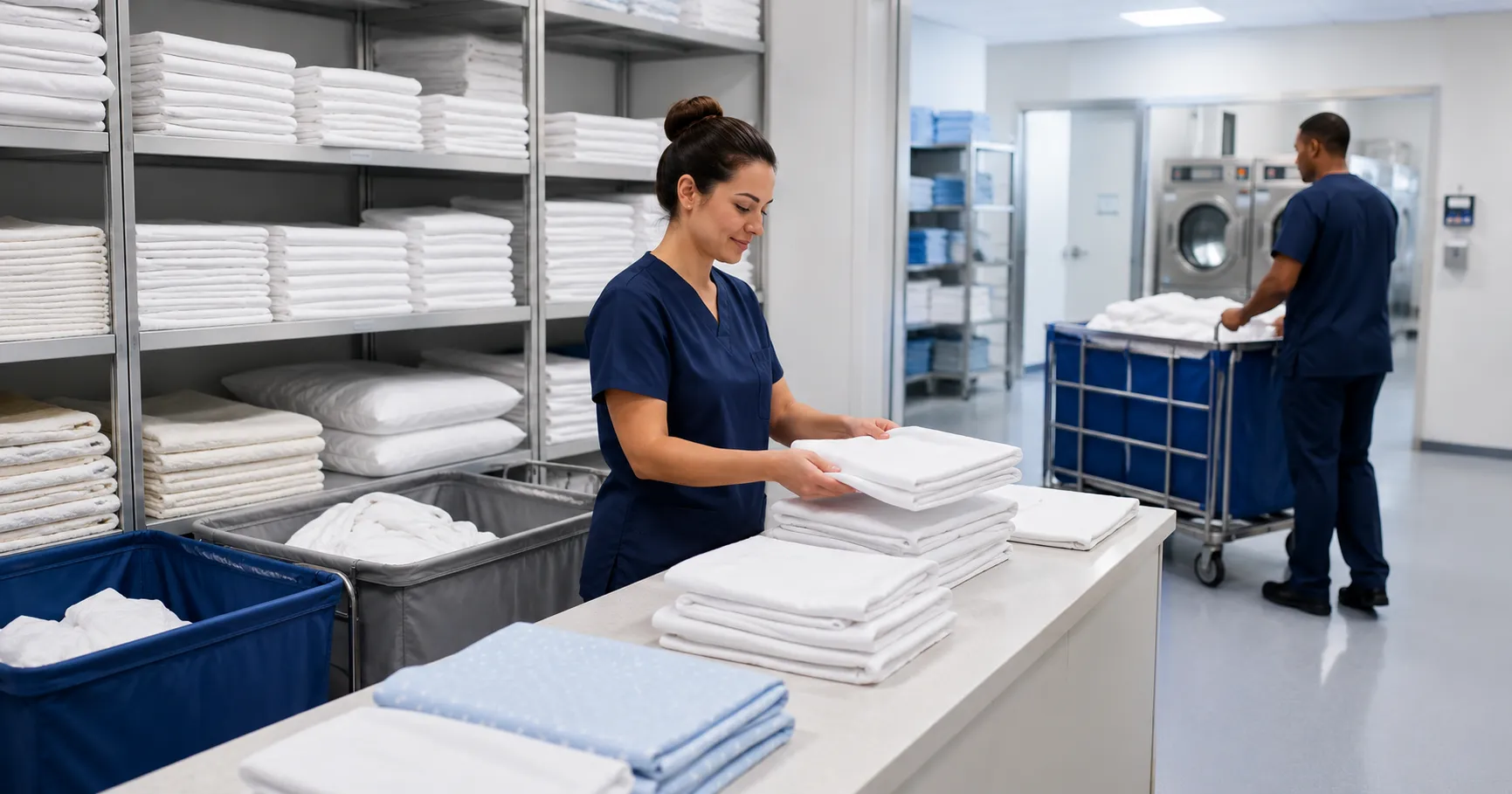
Hospital linen management systems help healthcare facilities control the collection, sorting, transportation, washing, storage, tracking, and return of linen to clinical areas. Linen includes bedsheets, gowns, towels, blankets, drapes, patient clothing, theatre textiles, and other reusable healthcare fabrics. In busy hospitals and clinics, linen movement happens every day across wards, procedure rooms, emergency areas, operating departments, laundries, and storage zones.
For healthcare buyers' services, linen management is not only a laundry issue. It affects infection prevention, patient comfort, staff workload, stock availability, storage space, transport routes, outsourcing contracts, and cost control. CDC healthcare cleaning guidance advises careful handling of soiled linen, including placing it in designated containers and not shaking it, underscoring the importance of clear workflows and staff training.
How Hospital Linen Management Systems Support Daily Care
Hospital linen management systems create a structured process for handling clean and soiled textiles. A good system helps staff know where linen comes from, where it goes, who handles it, and when it must be replaced.
Clean Linen Availability — Wards and procedure rooms need enough clean linen for patient turnover. If clean linen is delayed, staff may waste time searching in other departments or using emergency stock.
Safe Soiled Linen Handling — Used linen may contain body fluids, dirt, or microorganisms. CDC guidance states that soiled linen should be rolled carefully to prevent contamination of the air, surfaces, and cleaning staff.
Clear Movement Pathways — Clean and soiled linen should move through planned routes. In practice, facilities often face problems when clean linen trolleys, dirty linen bags, waste carts, and patient transport routes overlap.
Better Inventory Control — A linen system helps facilities understand how much linen is used, lost, damaged, delayed, or overstocked. This improves purchasing plans and reduces last-minute shortages.
Where Hospital Linen Systems Are Used
Hospital linen management systems are used in almost every healthcare facility. Their design depends on bed count, patient turnover, laundry capacity, infection risk, and whether laundry is handled in-house or outsourced.
Inpatient Wards — Wards need daily access to bedsheets, pillow covers, blankets, patient gowns, and towels. The linen supply should be easy for nurses and support staff to access without overcrowding clinical storage areas.
Emergency and Critical Care Areas — Emergency departments, ICUs, recovery rooms, and procedure areas may use linen quickly. Facilities sourcing through regulated and certified equipment suppliers worldwide should check trolley types, linen bags, storage cabinets, labelling systems, and laundry workflow equipment before procurement.
Operating and Procedure Departments — Surgical and procedure areas may use sterile or specially processed textiles depending on local policy. Linen handling must support clean workflow, sterile processing requirements, and theatre turnover.
Laundry and Utility Areas — Hospital laundries and soiled utility rooms need strong sorting, weighing, washing, drying, folding, and dispatch processes. CDC laundry guidance notes that healthcare facilities should determine where textiles and fabrics are sorted in the laundry process.
Core Parts of a Linen Management System
A hospital linen management system is not one product. It is a combination of equipment, workflow, training, storage, tracking, and documentation.
Clean Linen Storage — Clean linen should be stored in a clean, dry, protected area. Open storage can be suitable in some settings, but covered cabinets or closed carts may be better where dust, traffic, or contamination risk is higher.
Soiled Linen Collection — Soiled linen needs dedicated bags, hampers, or carts. CDC guidance says laundry bags should be closed or secured to prevent contents from falling out into chutes or transport pathways.
Linen Trolleys and Transport Carts — Clean and soiled linen should be transported using suitable transport systems. Covered trolleys, washable carts, colour-coded bags, and labelled containers can reduce confusion during movement.
Laundry Workflow Equipment — Large facilities may use washers, dryers, extractors, folding tables, weighing scales, conveyors, and packing zones. Smaller clinics may rely on outsourced laundry but still need proper storage and collection systems.
Tracking and Inventory Tools — Some facilities use manual logs, barcode systems, RFID tags, or linen management software. Tracking helps identify shortages, losses, overuse, and delayed laundry return.
Clean and Soiled Linen Separation
Separating clean and soiled linen is one of the most important parts of hospital linen management. The goal is simple: keep clean textiles protected and keep used textiles contained until reprocessing.
Separate Handling Points — Clean linen rooms and soiled utility areas should not function as the same space. When both streams mix, staff may unintentionally contaminate clean supplies.
Dedicated Containers — Soiled linen should be placed directly into designated bags or containers. Staff should avoid carrying soiled linen against their bodies, as this can spread contamination to uniforms and surfaces.
Colour Coding and Labelling — Colour-coded bags and labels can help staff identify clean, soiled, infected or isolated, and special-handling linen. The system should be simple enough for all shifts to follow.
Transport Discipline — Clean linen should not be transported in the same uncovered cart used for soiled linen unless it has been properly cleaned according to facility policy. In practice, this is where many linen systems fail.
Procurement Guidance for Healthcare Buyers
The purchase of hospital linen management equipment should involve infection prevention staff, housekeeping teams, nursing leaders, laundry managers, facility teams, and supply chain staff. The linen workflow touches many departments, so procurement decisions should not be made based on a catalogue alone.
Total Cost of Ownership — Buyers should include linen stock, bags, trolleys, shelves, cabinets, laundry equipment, tracking tools, cleaning products, staff time, repairs, outsourced laundry charges, and linen replacement. A low-cost cart or bag system may become expensive if it breaks quickly or cannot be cleaned properly.
Workflow Mapping Before Purchase — Procurement teams should map the flow of linen from patient rooms to collection points, laundry areas, clean storage, and ward restocking. This helps identify the right trolley size, storage volume, bag type, and tracking system.
Supplier Transparency — Suppliers and manufacturers advertising to global healthcare buyers should provide clear information about trolley materials, bag capacity, washable surfaces, caster quality, cover options, RFID compatibility, spare parts, and cleaning instructions. Healthcare buyers should avoid vague listings that do not explain their suitability for healthcare.
Compliance and Documentation — Buyers should request product specifications, cleaning guidance, material details, load capacity, warranty terms, spare part information, and conformity documents. Compliance should be checked against applicable local regulatory standards, such as CE, FDA, ISO, or their regional equivalents, where relevant.
Healthcare groups managing several hospitals or clinics may benefit from structured distribution and reseller partnership arrangements. Standardising trolleys, linen bags, labels, storage systems, and tracking tools can reduce confusion and improve purchasing consistency.
Linen Tracking and Inventory Control
Linen loss and shortage are common operational problems in hospitals. A tracking system helps facilities understand what is available, what is in use, what is waiting for laundry, and what has been lost or damaged.
Manual Tracking Systems — Smaller facilities may use ward-level logs, laundry issue sheets, and stock cards. This can work when linen volume is low, and staff follow the process carefully.
Barcode and RFID Systems — Larger hospitals may use barcode or RFID tracking to monitor linen movement. These tools can show where linen is used most, how quickly it returns from laundry, and which departments need better stock control.
Par Level Planning — Each ward or department should have a planned linen stock level. Too little stock causes shortages, while too much stock can create clutter and increase hidden loss.
Loss and Damage Monitoring — Linen can be lost during patient discharge, in waste streams, due to external laundry errors, or from poor storage control. Tracking helps procurement teams decide when to reorder and where to improve workflow.
Infection Prevention and Laundry Safety
Hospital linen is not always highly infectious, but it must still be handled safely. The risk increases when linen is wet, heavily soiled, mixed with sharp items, or handled without proper protective equipment.
Staff Protection — Staff handling soiled linen should use the protective equipment required by facility policy. CDC appendix guidance specifically highlights the use of eusable rubber gloves before handling soiled linen.
Do Not Shake Linen — Shaking linen can spread particles and contaminate nearby surfaces. Staff should roll or fold linen carefully and place it into the correct container.
Laundry Facility Conditions — Infection prevention does not stop at the ward. A review of healthcare linens notes that infection preventionists should evaluate laundry facility conditions, including heating, ventilation, and air-conditioning systems, because outbreaks have been linked to these issues.
Clean Return Process — Clean linen should return in protected carts or packaging. If clean linen is exposed during transport, stored in dusty areas, or handled with unclean hands, the laundry process loses value.
Equipment Used in Linen Management
Hospitals may need several types of equipment to manage linen safely and efficiently. The right equipment depends on facility size, laundry model, patient volume, and infection prevention requirements.
Linen Trolleys — Trolleys move clean or soiled linen between wards, laundry areas, and storage rooms. They should have strong frames, smooth wheels, brakes where needed, and cleanable surfaces.
Linen Bags and Hampers — Bags and hampers collect used linen at the ward level. The bag material should align with the facility’s laundry workflow and waste-handling policy.
Clean Linen Cabinets — Cabinets protect folded linen from dust and unnecessary handling. Lockable cabinets may be useful in departments where stock loss is a frequent issue.
Laundry Sorting Tables — Sorting areas help staff separate linen according to type, level of soiling, reprocessing method, or department. Sorting should follow facility policy and staff safety requirements.
Shelving and Storage Racks — Storage racks should keep linen off the floor and away from moisture. Shelves should be easy to clean and arranged so older stock is used first.
Maintenance and Cleaning Planning
Hospital linen management equipment also needs maintenance. Carts, shelves, cabinets, bags, and tracking devices can become sources of workflow problems if they are not inspected.
Cart and Wheel Inspection — Trolley wheels, handles, brakes, frames, and covers should be checked regularly. A cart with broken casters can delay linen movement and pose handling risks for staff.
Bag and Hamper Condition — Torn linen bags or damaged hampers can leak contents or become difficult to clean. They should be removed from use when damaged.
Storage Area Cleaning — Linen storage rooms should be cleaned on schedule. Dust, moisture, overcrowding, and poor airflow can affect clean linen protection.
Tracking Equipment Checks — Barcode scanners, RFID readers, tags, printers, and software should be maintained. A tracking system fails when labels fall off, readers stop working, or staff do not record movement.
Laundry Equipment Service — In-house laundries should maintain washers, dryers, extractors, and folding equipment in accordance with manufacturer guidance and facility policy. Equipment downtime can quickly affect ward supply.
Outsourced Versus In-House Laundry
Healthcare facilities may process linen in-house, outsource laundry, or use a mixed model. Each approach has operational trade-offs.
In-House Laundry — In-house laundry gives the facility more direct control over timing, handling, and quality checks. It also requires space, equipment, trained staff, water, energy, maintenance, and compliance oversight.
Outsourced Laundry — Outsourcing can reduce equipment burden and staffing needs. Buyers should still review collection schedules, transport hygiene, quality standards, processes for missing linen, emergency stock plans, and contract accountability.
Hybrid Models — Some hospitals outsource routine linen but manage selected textiles internally. This may work for specialist areas, urgent turnaround items, or departments with unique linen needs.
Contract Review — Laundry contracts should define pickup times, delivery schedules, sorting rules, handling of rejections, reporting of damaged linen, responsibility for loss, emergency supply, and documentation.
International Sourcing Considerations
Hospital linen management systems can be sourced internationally when buyers clearly define facility size, linen volume, trolley type, bag system, storage requirements, tracking needs, laundry model, documentation, packaging, and spare part support. This is especially important for new hospital projects, clinic networks, and healthcare groups that standardise across multiple facilities.
Buyers should confirm whether they need clean linen trolleys, soiled linen carts, laundry hampers, shelves, cabinets, RFID linen tags, barcode systems, laundry equipment, linen bags, or full workflow packages. For project-based sourcing, buyers can contact the Medigear.uk team for supply support to discuss availability, documentation, export needs, and procurement requirements.
How Linen Systems Improve Hospital Efficiency
A good linen management system helps staff spend less time searching for, moving, counting, and correcting linen issues. It also helps patients receive clean bedding and gowns without avoidable delay.
Faster Ward Restocking — Planned restocking routines reduce interruptions during patient care. Staff know when linen will arrive and where it should be stored.
Reduced Waste and Loss — Better tracking can reduce unnecessary ordering and hidden stock loss. Procurement teams can use linen data to improve purchasing decisions.
Cleaner Patient Experience — Clean, available linen improves patient comfort and supports the appearance of a well-managed facility.
Better Staff Accountability — Clear roles make the system easier to manage. Housekeeping, nursing, laundry, and procurement teams should all understand their part of the linen cycle.
Final Thoughts
Hospital linen management systems support infection prevention, patient comfort, staff workflow, and cost control. They help healthcare facilities manage clean and soiled textiles through planned collection, transport, laundry, storage, tracking, and restocking.
The right system should match the facility’s linen volume, laundry model, storage space, infection prevention policy, tracking needs, maintenance capacity, and local compliance standards. Buyers should review workflow, documentation, equipment quality, spare parts, and supplier support before ordering.
Disclaimer
Medigear.uk is a global medical equipment supplier, exporter, and distributor. The content published on this site is intended for educational and product awareness purposes only. Nothing on this page constitutes medical advice, clinical guidance, or treatment recommendations. All healthcare procurement and clinical decisions should be made by qualified medical professionals and compliant procurement teams operating within the regulatory frameworks of their respective countries.