Medical procedure chairs are used in outpatient healthcare settings where patients need safe positioning for examinations, treatments, minor procedures, diagnostic support, and specialist care. They are common in clinics, day procedure centres, dental and ENT rooms, dermatology units, ophthalmology areas, infusion spaces, wound care rooms, and ambulatory treatment departments.
For healthcare buyers' services, selecting a procedure chair is not only about comfort. Buyers need to review patient access, height adjustment, backrest movement, leg support, armrest design, upholstery cleanability, electrical safety, load capacity, mobility, spare parts, and compliance with applicable local regulatory standards. FDA product classification data include medical chairs and tables, examination and treatment chairs, geriatric chairs, and blood donor chairs under the medical chair and table classifications, underscoring the need to review intended use and documentation before procurement.
How Medical Procedure Chairs Support Outpatient Care
Medical procedure chairs help clinical teams position patients safely and efficiently during outpatient care. They support both patient comfort and staff access during procedures that may require sitting, reclining, semi-reclining, or near-flat positioning.
Patient Positioning Support — A good procedure chair allows staff to adjust the patient’s posture for the specific activity. Backrest, seat tilt, leg rest, and height controls help clinicians reach the treatment area without forcing awkward staff posture.
Improved Access for Clinicians — Procedure chairs offer greater access around the patient than fixed seating. In practice, clinicians often value smooth height adjustment because it reduces bending during repeated outpatient consultations.
Support for Short Procedures — Outpatient departments may use procedure chairs for wound care, injections, infusion support, ENT work, dermatology care, minor surgical tasks, podiatry, or examination support. The chair should remain stable while allowing staff to move instruments, trolleys, and lighting around it.
Comfort During Longer Visits — Some patients may remain seated for extended care sessions. A well-padded chair with suitable armrests and leg support can reduce discomfort and improve patient cooperation during treatment.
Where Medical Procedure Chairs Are Used
Medical procedure chairs are used across many outpatient and ambulatory healthcare settings. The correct model depends on patient group, procedure type, department layout, and cleaning requirements.
Outpatient Consultation Rooms — Clinics may use procedure chairs where examinations and minor treatments happen in the same room. The chair should support easy entry, safe positioning, and quick reset between patients.
Minor Procedure Rooms — Dermatology, wound care, ENT, podiatry, and ambulatory surgery areas often need chairs with more adjustment than a standard examination couch. Facilities sourcing through regulated and certified equipment suppliers worldwide should confirm load capacity, adjustment range, upholstery grade, control type, and accessory availability before procurement.
Infusion and Treatment Areas — Some outpatient treatment areas need chairs that support longer seated care. Armrest stability, recline function, emergency positioning, and easy cleaning become important in these settings.
Specialist Clinics — Ophthalmology, dental, gynaecology, cosmetic medicine, and diagnostic clinics may need procedure chairs designed for specific positioning. Buyers should check whether accessories, headrests, stirrups, side rails, or examination lights can be integrated.
Common Types of Medical Procedure Chairs
Medical procedure chairs are available in different forms. The right type depends on the clinical task, patient access needs, procedure duration, and department budget.
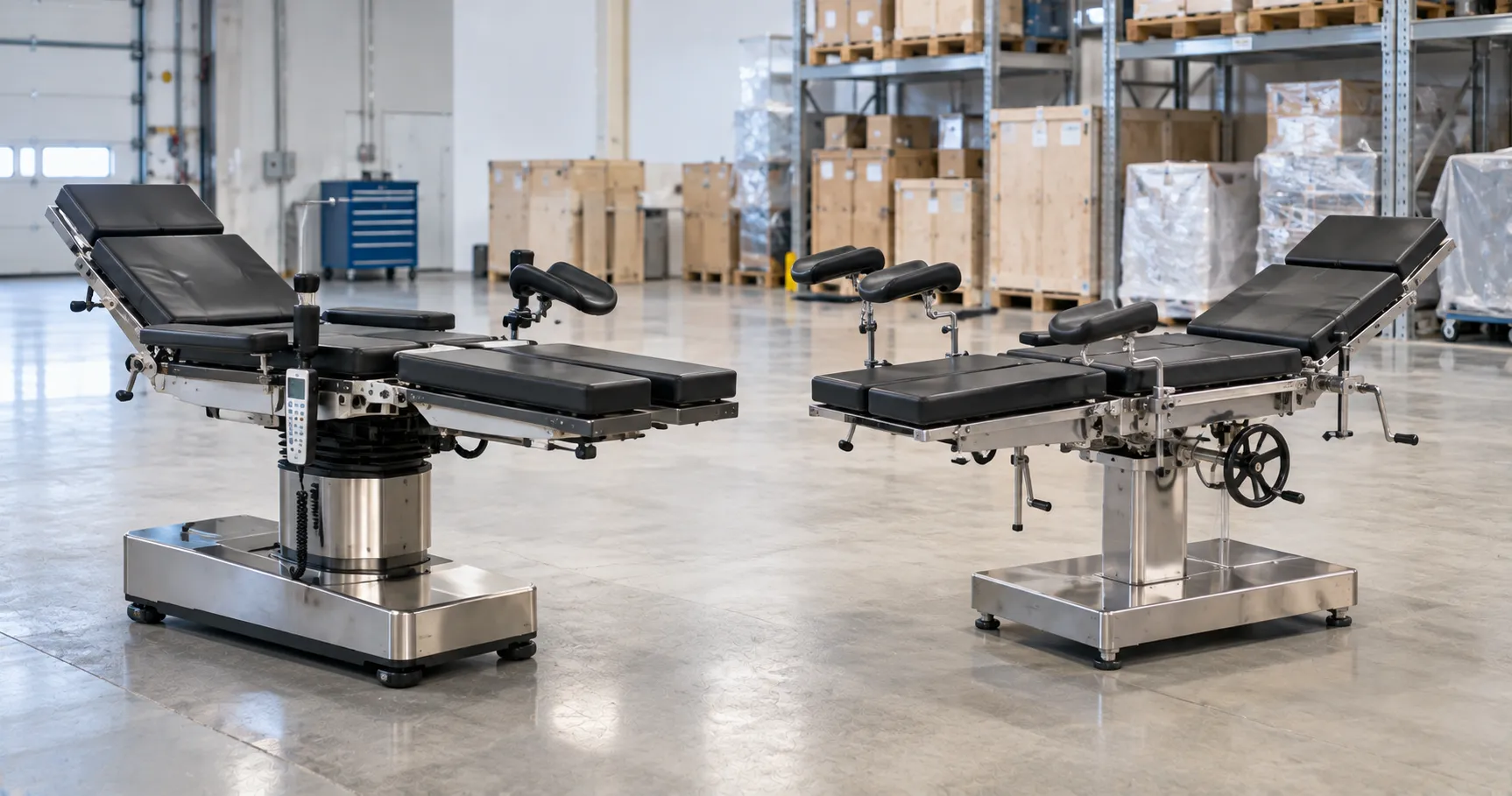
Manual Procedure Chairs — Manual chairs use mechanical levers or gas-assisted adjustment. They can be practical in smaller clinics where electrical systems, battery replacement, or powered servicing may be difficult.
Electric Procedure Chairs — Electric chairs use motors to adjust height, backrest, tilt, or leg position. They improve staff workflow when many patients are seen daily and when precise positioning is needed.
Specialist Procedure Chairs — ENT, dental, ophthalmology, podiatry, and gynaecology chairs may include speciality supports or positioning accessories. Buyers should confirm intended use rather than adapting a general chair beyond its design.
Mobile Procedure Chairs — Mobile models may include castors and locking systems for movement between rooms. They are useful in flexible outpatient spaces but must remain stable during procedures.
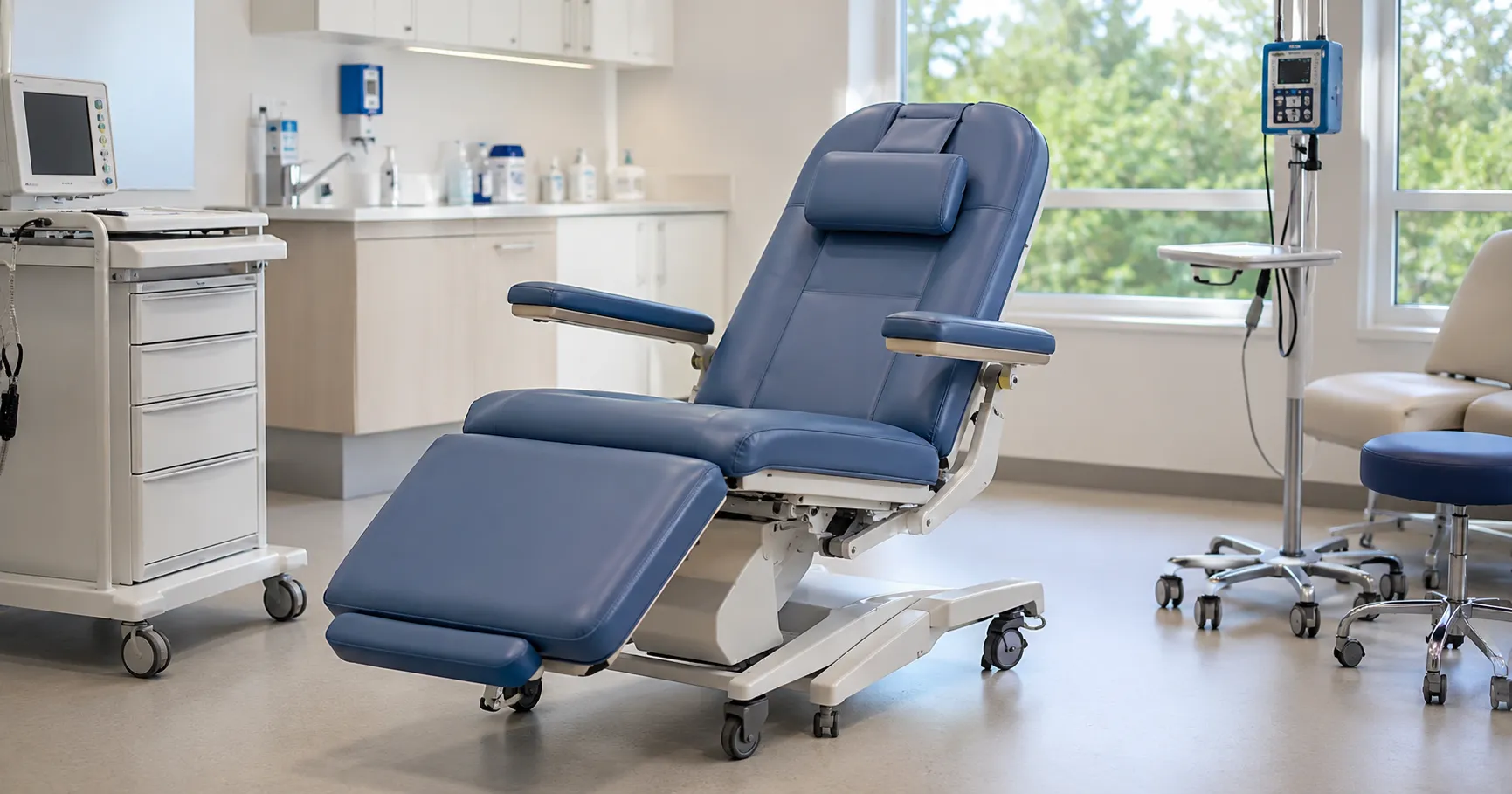
Reclining Treatment Chairs — Reclining chairs are often used for infusion, recovery, and longer outpatient treatments. They should support comfort while allowing staff to manage access, monitoring, and emergency response.
Selection Points for Healthcare Buyers
Medical procedure chairs should be selected based on the actual outpatient workflow. A chair that looks suitable in a catalogue may cause problems if the controls are slow, the upholstery tears easily, or the height range does not suit the clinical team.
Adjustment Range — Buyers should review the minimum and maximum heights, backrest angle, legrest movement, seat tilt, and emergency positioning options. A wider adjustment range can help staff work more comfortably and support different patient sizes.
Load Capacity and Stability — The chair should safely support the intended patient population. Stability during reclining, turning, transfer, and procedure positioning is essential.
Patient Entry and Transfer — Low entry height, movable armrests, sturdy hand grips, and stable footrests can make patient access easier. This is important for elderly patients, patients with limited mobility, and outpatient areas with high turnover.
Upholstery and Cleanability — Upholstery should resist cracking, fluid ingress, staining, and approved disinfectants. CDC environmental cleaning guidance covers patient care areas and noncritical patient care equipment, which supports the need for cleanable surfaces and clear cleaning routines.
Controls and Accessories — Foot controls, hand controls, side rails, headrests, paper roll holders, IV poles, trays, and procedure-specific supports should be reviewed before purchase. Accessories should be compatible with the chosen model and easy to replace.
Procurement Guidance for Procedure Chairs
Procedure chair procurement should include clinical teams, biomedical engineers, infection prevention staff, facilities teams, and supply chain managers. The chair must fit the room, staff workflow, patient population, and service plan.
Total Cost of Ownership — Buyers should include chair price, delivery, installation, accessories, upholstery replacement, service visits, motor repairs, control replacements, cleaning products, and downtime. A budget-tier chair may become expensive if it fails under high outpatient use.
Compliance and Documentation — Procurement teams should request product specifications, load rating, electrical safety documentation, cleaning instructions, warranty terms, spare part information, and conformity documents. Compliance should be checked against applicable local regulatory standards, as well as CE, FDA, IEC, ISO, or their regional equivalents, where relevant.
Supplier Transparency — Suppliers and manufacturers advertising to global healthcare buyers should provide clear details on adjustment range, motor type, load capacity, upholstery material, control options, accessories, cleaning method, and service support. Healthcare buyers should avoid listings that describe the chair only as comfortable, without measurable technical details.
Room Planning and Workflow Fit — Buyers should check chair footprint, recline clearance, power socket position, trolley access, staff movement, and patient transfer space. In practice, a chair may be technically suitable but too large for a compact procedure room.
Healthcare groups managing several outpatient clinics or specialist departments may benefit from structured distribution and reseller partnership arrangements. Standardising chair models, accessories, upholstery types, and service schedules can reduce ordering errors and simplify maintenance.
Maintenance and Infection Prevention Planning
Medical procedure chairs need regular inspection because patients and staff touch them throughout the day. They also carry risks of mechanical, electrical, and upholstery wear.
Routine Safety Checks — Staff should check stability, castor locks, armrests, footrests, controls, cables, upholstery, and adjustment movement. Any chair with unstable movement, damaged wiring, or torn upholstery should be removed from use according to facility policy.
Cleaning Between Patients — Procedure chairs should be cleaned according to manufacturer instructions and local infection prevention policy. Healthcare furniture cleanability guidance helps manufacturers and healthcare teams understand cleaning products, disinfectants, cleaning methods, and furniture performance when exposed to those products.
Upholstery Damage Control — Cracks, seams, holes, or peeling surfaces can make cleaning less reliable. Buyers should choose upholstery that is compatible with the facility’s disinfectants and expected patient turnover.
Service and Spare Parts — Motors, control boxes, handsets, foot controls, castors, batteries, cushions, and upholstery panels may need replacement during the product’s life. Procurement teams should confirm spare part availability before ordering in bulk.
International Sourcing Considerations
Medical procedure chairs can be sourced internationally when buyers clearly define the intended use, adjustment type, load capacity, upholstery material, power requirements, plug type, accessory needs, packaging, warranty, documentation, and spare parts support. This is especially important for healthcare groups purchasing for multiple outpatient departments or specialist clinics.
Buyers should confirm whether they need manual chairs, electric chairs, specialist procedure chairs, infusion chairs, podiatry chairs, dental-style positioning chairs, mobile chairs, or reclining treatment chairs. For project-based sourcing, buyers can contact the Medigear.uk team for supply support to discuss availability, documentation, export needs, and procurement requirements.
Final Thoughts
Medical procedure chairs support outpatient healthcare by improving patient positioning, clinical access, and room workflow. They are useful across treatment rooms, specialist clinics, minor procedure areas, and ambulatory care settings.
The right chair should match the procedure type, patient group, adjustment needs, cleaning policy, room size, accessory requirements, and local compliance standards. Buyers should review documentation, user feedback, spare parts, and supplier support before ordering.
Disclaimer
Medigear.uk is a global medical equipment supplier, exporter, and distributor. The content published on this site is intended for educational and product awareness purposes only. Nothing on this page constitutes medical advice, clinical guidance, or treatment recommendations. All healthcare procurement and clinical decisions should be made by qualified medical professionals and compliant procurement teams operating within the regulatory frameworks of their respective countries.