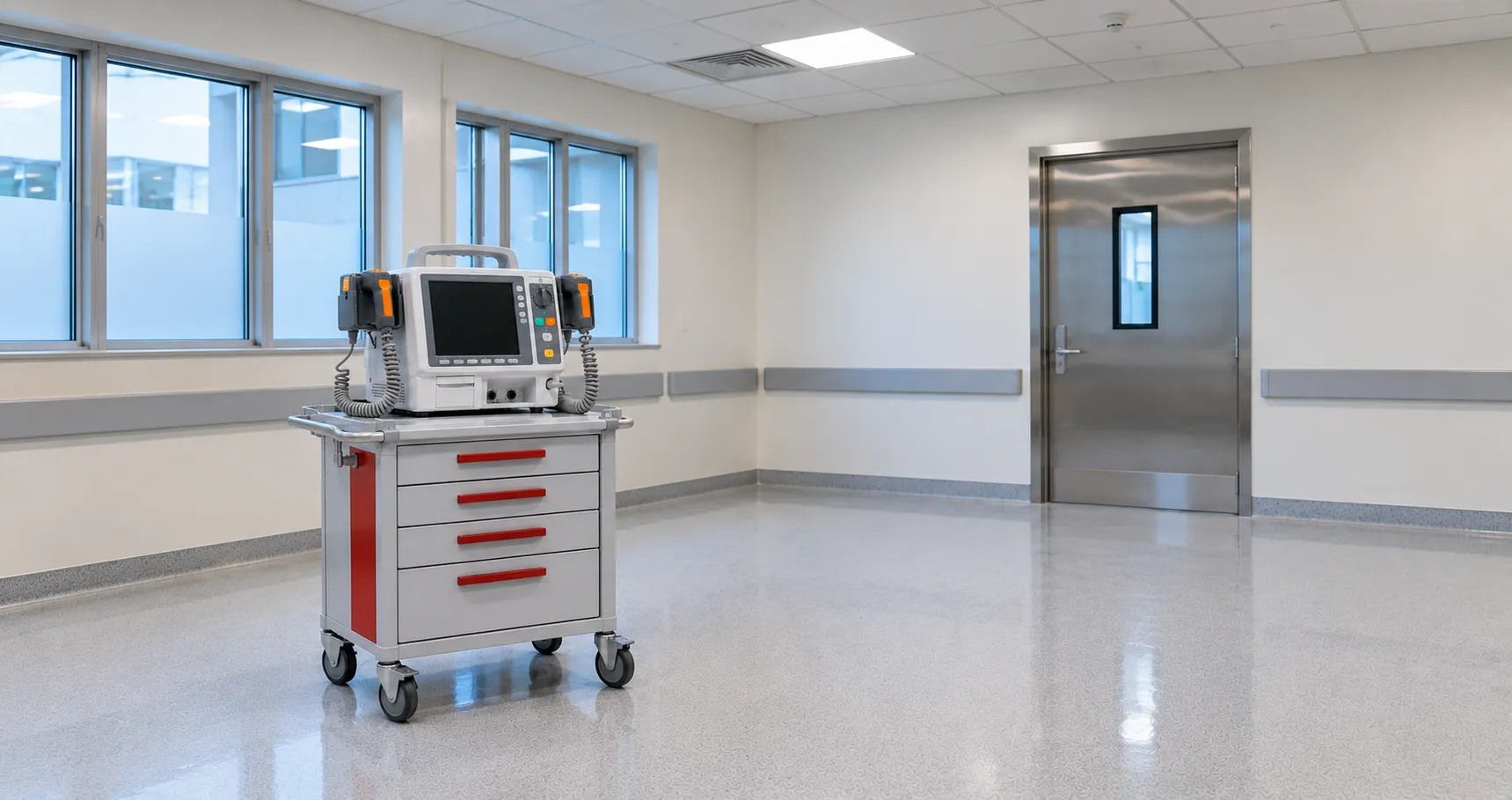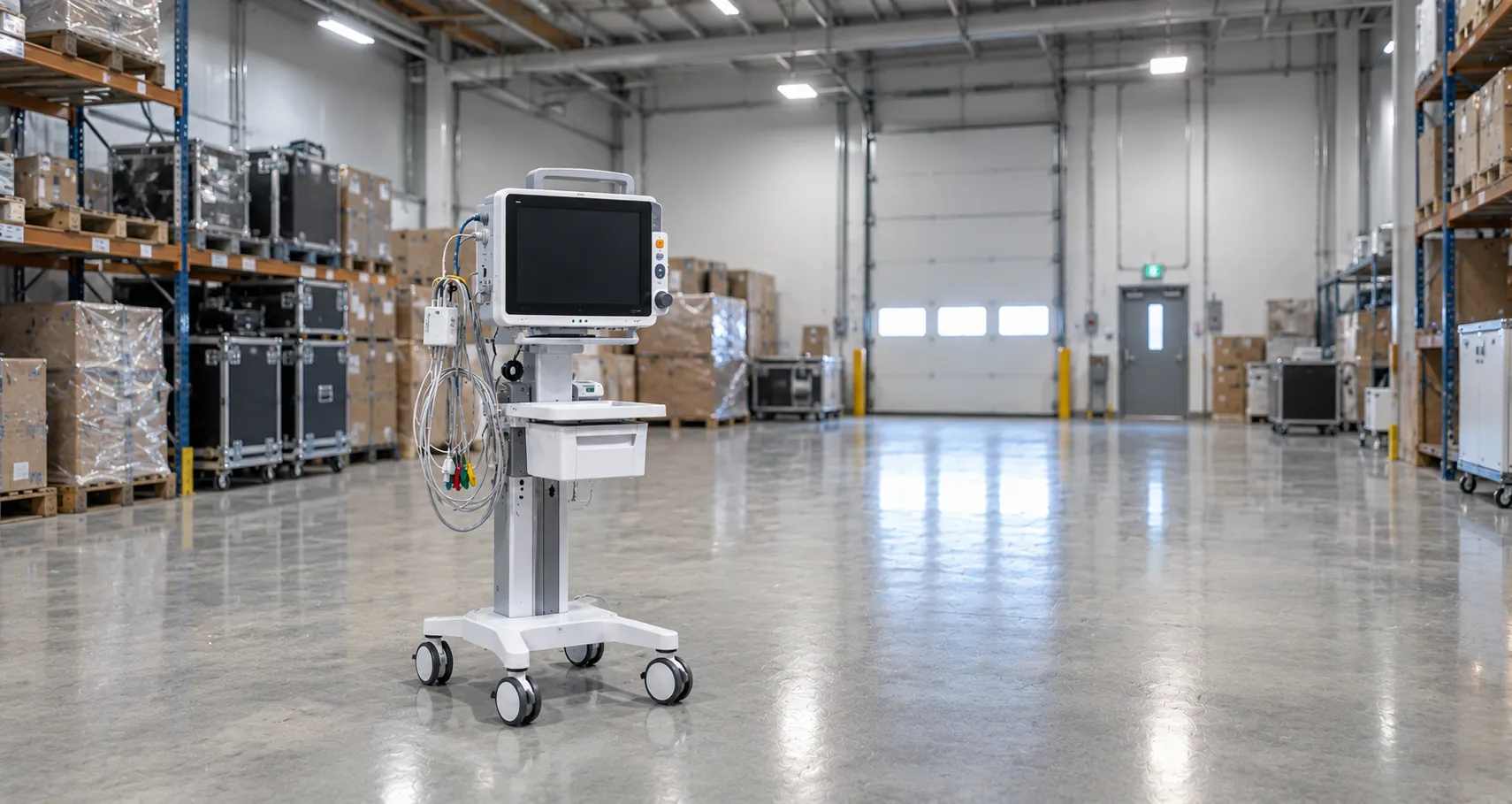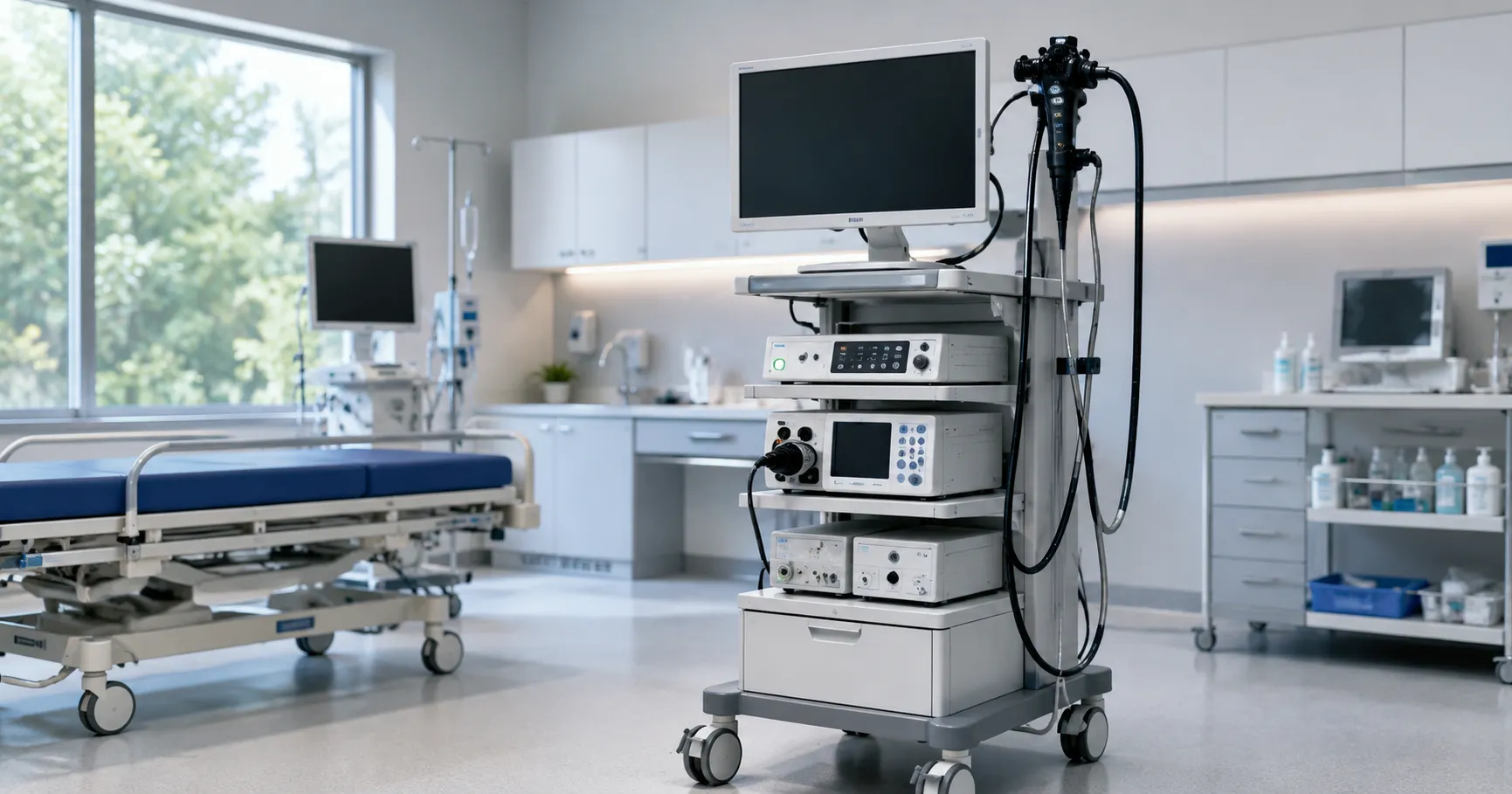
Endoscopy trolleys are mobile medical carts designed to support endoscopy equipment during diagnostic and therapeutic procedures. They help organise monitors, processors, light sources, insufflation units, suction accessories, documentation devices, cables, drawers, and procedural supplies at a single controlled workstation. In outpatient clinics and hospital procedure rooms, the trolley often becomes the centre of the endoscopy workflow.
For healthcare buyers' services, selecting an endoscopy trolley is not just about choosing a cart with shelves. Buyers need to review equipment load, monitor support, drawer layout, cable control, caster quality, cleanable surfaces, power management, accessory compatibility, staff ergonomics, and compliance with applicable local regulatory standards. FDA guidance states that reusable medical devices must undergo detailed reprocessing after patient use, which is why endoscopy room equipment should support clean handling, an organised workflow, and a clear separation between procedure and reprocessing tasks.
How Endoscopy Trolleys Support Procedure Room Workflow
Endoscopy trolleys help clinical teams keep essential equipment close to the patient and clinician during procedures. They are commonly used by gastroenterology, ENT, urology, and pulmonology teams, as well as nurses, technicians, and procedure room assistants.
Central Equipment Organisation — A well-designed trolley gives each device a stable place. The monitor, processor, light source, pump, suction accessories, keyboard, recording unit, and procedure supplies should not compete for space. In practice, clinics often find that a low-cost general trolley quickly becomes crowded once real equipment and cables are added.
Efficient Procedure Setup — Endoscopy teams need fast room preparation between patients. A trolley with the right shelf spacing, drawers, cable hooks, and accessory points can reduce setup delays and streamline staff movement.
Support for Clean and Used Workflows — Endoscopes and accessories require careful handling before, during, and after use. CDC reprocessing guidance states that policies should address the selection, use, transport, reprocessing, and storage of endoscopes and accessories, which makes workflow planning important for procedure rooms and clinics.
Better Staff Ergonomics — The trolley should place screens, controls, and accessories at usable heights. A monitor that sits too low or cables that pull across the floor can create staff discomfort, trip risks, and slower work.
Where Endoscopy Trolleys Are Used
Endoscopy trolleys are used across many healthcare environments. The right trolley design depends on procedure volume, equipment type, room size, infection prevention policy, and whether the trolley is dedicated to one room or moved between areas.
Gastroenterology Clinics — GI clinics commonly use endoscopy trolleys to hold processors, monitors, light sources, irrigation accessories, and documentation devices. The trolley should support smooth movement around the patient bed and enough space for the clinical team.
ENT and Bronchoscopy Rooms — ENT and airway procedure areas may use compact trolleys where room space is limited. Facilities sourcing through regulated and certified equipment suppliers worldwide should confirm monitor mounting, shelf capacity, cable routing, and accessory compatibility before procurement.
Urology and Cystoscopy Areas — Urology procedure rooms may require trolleys that support camera systems, light sources, irrigation support, suction accessories, and instrument storage. Splash-resistant surfaces and easy wipe-down design are important because fluid exposure may occur.
Outpatient and Day Procedure Centres — These facilities often require mobile, space-efficient systems. A trolley that can be repositioned easily without destabilising equipment can improve workflow in multipurpose procedure rooms.
Hospital Endoscopy Departments — Larger departments may need several trolleys with standard layouts. Standardisation helps staff move between rooms without having to relearn where equipment, drawers, accessories, and cables are kept.
Core Features Clinics Should Review
Endoscopy trolleys should be chosen for equipment support, clinical workflow, and long-term durability. A trolley that looks organised when empty may fail once loaded with monitors, processors, cables, drawers, pumps, and accessories.
Shelf Strength and Load Capacity — Each shelf should safely support the equipment placed on it. Buyers should check total load capacity and individual shelf load limits, especially when placing heavy processors, light sources, printers, or recording systems on the same trolley.
Monitor Mounting System — The monitor should be secure, stable, and adjustable enough for the clinician's viewing angle. A good mounting arm or fixed bracket should reduce wobble and allow the screen to be positioned without blocking equipment access.
Cable Management — Endoscopy systems involve power cords, video cables, light cables, suction tubing, irrigation lines, and data cables. Cable channels, hooks, rear posts, or clips help prevent tangling and reduce floor-level hazards.
Drawer and Storage Layout — Drawers should be easy to open, clean, and label. Lockable drawers may be useful for selected accessories, while open shelves may work better for equipment that needs ventilation and quick access.
Caster and Brake Quality — Good wheels matter. The trolley should move smoothly across clinical flooring and lock securely during procedures. In practice, weak brakes or rough caster movement can frustrate staff and increase the risk of equipment movement.
Design Choices That Affect Daily Clinical Use
The best endoscopy trolley is not always the biggest or most complex model. Clinics should match design choices to room layout, staff habits, and the equipment stack they actually use.
Trolley Footprint — A compact trolley may suit small rooms, but it must still hold the equipment safely. Buyers should measure doorways, bed clearance, staff movement space, and parking location before choosing a model.
Ventilation Around Equipment — Processors, light sources, recording systems, and power components may generate heat. Shelves should allow airflow and should not crowd devices tightly together. Poor ventilation can shorten equipment life and create avoidable service problems.
Height and Viewing Position — Monitor height affects clinician comfort. A trolley that allows the monitor to sit near eye level can reduce neck strain during longer procedures.
Accessory Rails and Holders — Side rails, baskets, probe holders, cable arms, keyboard trays, bottle holders, and suction holders can improve organisation. Buyers should confirm whether accessories are included or purchased separately.
Power Strip and Electrical Safety — Some trolleys include integrated power options, while others require an external power strip. The electrical setup should be reviewed by biomedical or facilities engineering teams, especially when multiple devices are connected to one trolley.
Infection Prevention and Reprocessing Workflow
Endoscopy trolleys are not reprocessing machines, but they influence how staff handle equipment and accessories around the procedure. A good trolley design can support safer routines; a poor design can create clutter and confusion.
Cleanable Surfaces — Trolley surfaces should be compatible with approved cleaning products. Smooth panels, sealed edges, and minimal dirt-trapping gaps help cleaning teams properly clean the unit between sessions.
Separation of Supplies — Clean accessories, used items, documentation tools, and waste handling should not be mixed casually. Endoscope reprocessing is a multistep process involving cleaning, followed by disinfection or sterilisation, and the handling of contaminated devices must be managed carefully.
Transport Awareness — Some clinics use separate systems for transporting clean and used scopes. A trolley used for procedure equipment should not become an informal transport cart for contaminated endoscopes unless the facility has approved that workflow.
Storage Limitations — Endoscopy trolleys are generally not a substitute for proper endoscope storage. Professional guidance commonly emphasises storage that minimises contamination and protects devices from damage, so buyers should distinguish between a procedure trolley, a transport system, and a storage cabinet.
Cleaning Responsibility — Clinics should define who cleans the trolley, when it is cleaned, and which areas require attention. Handles, drawer pulls, monitor arms, keyboard trays, and cable points often become high-touch areas during procedures.
Procurement Guidance for Endoscopy Trolleys
Endoscopy trolley procurement should include clinical users, biomedical engineers, infection prevention staff, facility teams, and supply chain managers. The trolley must fit the equipment, room, workflow, cleaning policy, and service plan.
Total Cost of Ownership — Buyers should include the trolley, monitor arm, drawers, shelves, cable holders, accessory rails, power options, replacement casters, brakes, cleaning products, and service parts. A budget-tier trolley may become expensive if it requires modifications after delivery.
Equipment Compatibility — Before ordering, procurement teams should list the exact devices that will sit on the trolley. This includes monitor size, processor dimensions, light source size, pump or insufflator units, keyboard, documentation tools, suction accessories, and cable lengths.
Supplier Transparency — Suppliers and manufacturers advertising to global healthcare buyers should provide clear details on load rating, shelf dimensions, monitor support, caster type, brake system, material finish, cleaning compatibility, accessory options, and packaging. Healthcare buyers should avoid listings that only show product photos without technical data.
Compliance and Documentation — Buyers should request product specifications, electrical safety details where relevant, material information, cleaning instructions, warranty terms, spare part availability, and conformity documents. Compliance should be checked against applicable local regulatory standards, as well as CE, FDA, IEC, ISO, or their regional equivalents, where relevant.
User Evaluation Before Bulk Orders — A trial setup can reveal problems that do not appear in a catalogue. Staff should test screen angle, shelf spacing, cable routing, drawer access, brake performance, and movement around the bed before standardising the trolley.
Healthcare groups managing several procedure rooms or outpatient clinics may benefit from structured distribution and reseller partnership arrangements. Standardising trolley models, accessories, spare casters, monitor arms, and drawer layouts can reduce ordering errors and simplify staff training.
Maintenance and Service Life
Endoscopy trolleys require planned maintenance because they are frequently moved, cleaned, loaded, and handled. Even a strong trolley can become unsafe if its brakes fail, its shelves loosen, or its cable supports break.
Routine Visual Checks — Staff should inspect caster movement, wheel locks, shelf stability, monitor arm tightness, drawer function, handle condition, cable hooks, and surface damage. Any unstable trolley should be removed from use until checked.
Cleaning and Surface Care — The trolley should be cleaned according to the manufacturer's instructions and the facility's infection prevention policy. Harsh chemicals can damage some coatings, labels, plastic parts, or rubber wheels, so cleaning compatibility should be confirmed before purchase.
Cable and Accessory Checks — Cable supports, clips, rails, baskets, and holders should remain secure. Loose accessories can fall during movement or interfere with equipment operation.
Caster and Brake Replacement — Casters and brakes experience daily stress. Procurement teams should confirm whether replacement wheels and locking mechanisms are available before bulk ordering.
Load Management — Staff should avoid adding unplanned equipment to the trolley without checking load limits. Overloading can affect stability, mobility, and long-term service life.
International Sourcing Considerations
Endoscopy trolleys can be sourced internationally when buyers clearly define the intended use, equipment stack, room layout, monitor size, shelf load, material preference, electrical needs, accessory list, packaging, documentation, warranty, and spare part support. This is especially important for clinics purchasing complete endoscopy room setups.
Buyers should confirm whether they need a basic mobile trolley, a multi-shelf endoscopy cart, a video endoscopy workstation, a monitor-mounted trolley, a compact clinic trolley, a powered trolley, or a customised trolley with drawers and accessory rails. For project-based sourcing, buyers can contact the Medigear.uk team for supply support to discuss availability, documentation, export needs, and procurement requirements.
Final Thoughts
Endoscopy trolleys support procedure room organisation, equipment safety, staff workflow, and cleaner clinical routines. They may look simple, but their design affects how well the room functions during real endoscopy sessions.
The right trolley should match the clinic's equipment stack, procedure type, room size, cleaning policy, monitor needs, cable layout, mobility requirements, and local compliance standards. Buyers should review technical documentation, staff feedback, spare parts, and supplier support before ordering.
Disclaimer
Medigear.uk is a global medical equipment supplier, exporter, and distributor. The content published on this site is intended for educational and product awareness purposes only. Nothing on this page constitutes medical advice, clinical guidance, or treatment recommendations. All healthcare procurement and clinical decisions should be made by qualified medical professionals and compliant procurement teams operating within the regulatory frameworks of their respective countries.