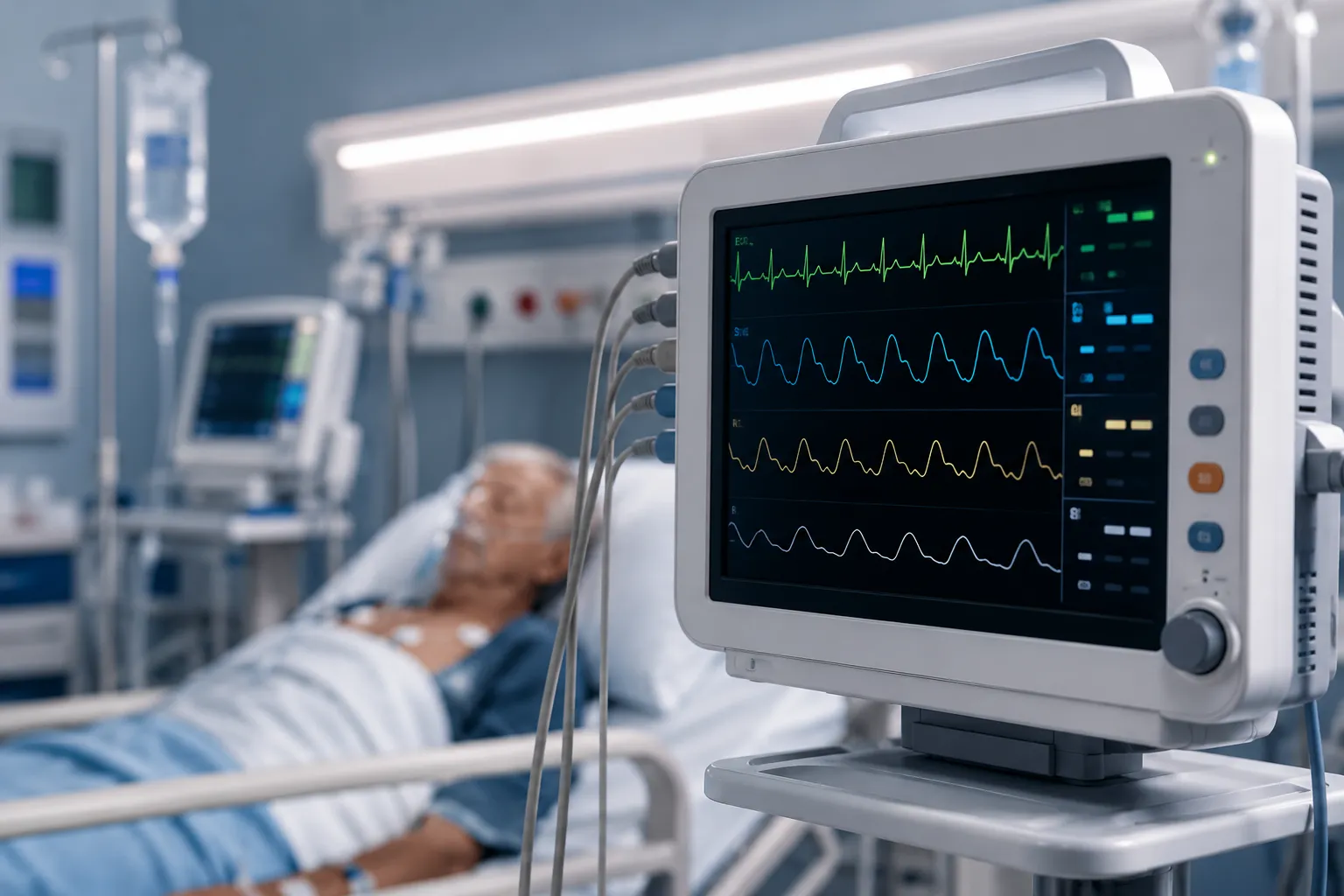
What is the device that lets a patient walk the ward, sit in a chair, eat lunch, visit the bathroom — while the team at the nurses' station watches their heart rhythm? The telemetry monitor. Cardiac monitoring without confinement to the bed. Without trailing wires. Without loss of mobility. Freedom and safety together. Transmits the ECG wirelessly. From a small device worn on the body. To a central station where trained staff watch every beat.
She was seventy-one. Admitted after a syncopal episode. No ECG changes. Troponin negative. But something had made her fall. The ward round is decided. Telemetry for forty-eight hours. At six hours, the monitoring staff called the team. Nine-second pause. Complete heart block. Four beats. Asymptomatic. The patient was walking to the bathroom. Felt nothing. Cardiology called. Permanent pacemaker. Implanted the next day. She went home. Without it, the pause is unseen. It would have been the fall. Or the arrest.
This guide covers what a telemetry monitor is and how it helps patients. Honest detail. For ward nurses, cardiology teams, and procurement staff. Medigear supplies certified telemetry systems and cardiac monitoring equipment. To NHS trusts, private hospitals, and cardiac units. Wards sourcing certified telemetry equipment can explore the Medigear buyers portal for pricing, availability, and procurement built for cardiac monitoring purchasing.
What a Telemetry System Is
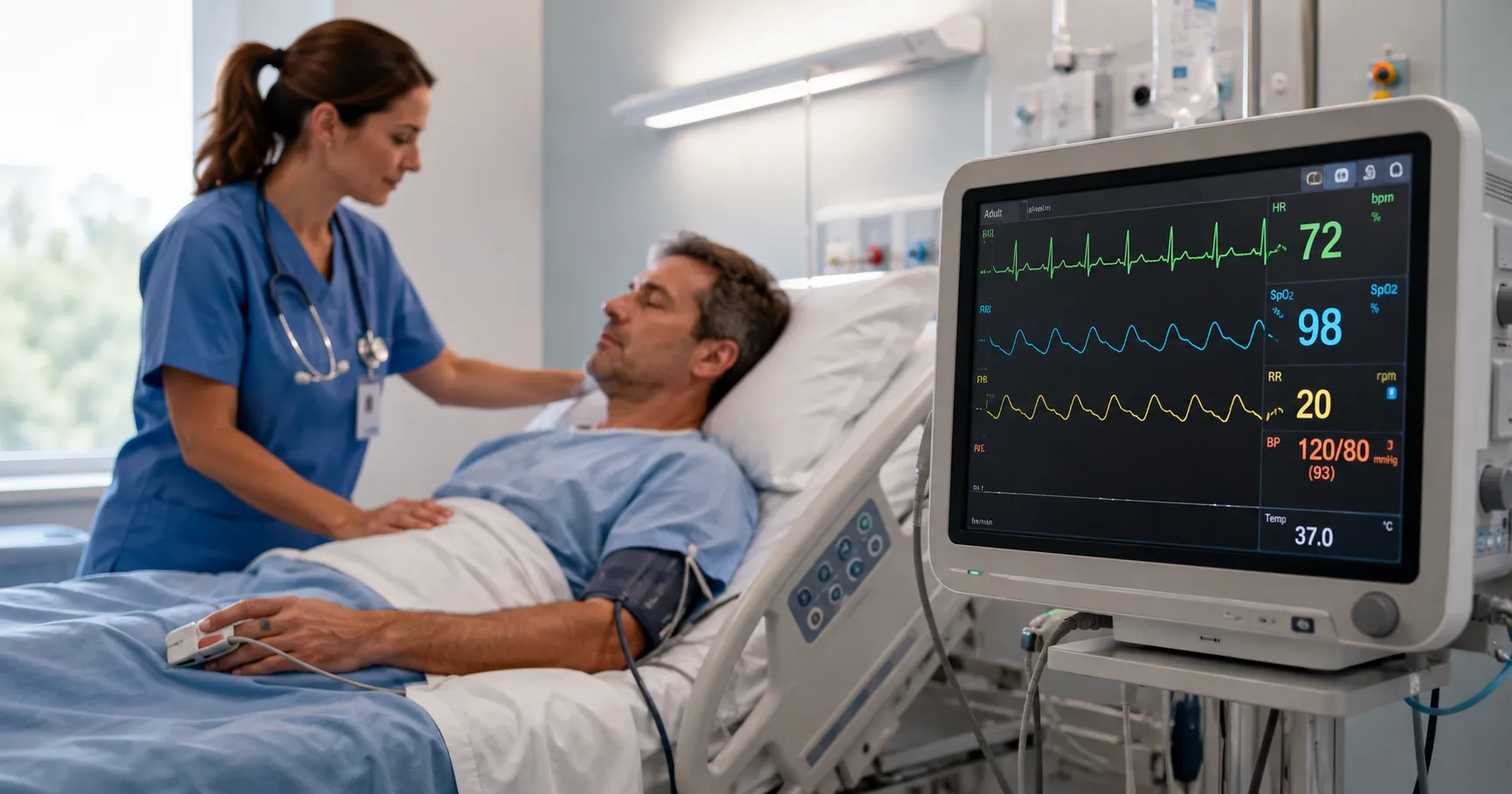
A telemetry system has three parts. The transmitter is a small, light device worn by the patient. Connected to adhesive electrodes on the chest. Captures the ECG signal. Sends it wirelessly. Radio frequency or Wi-Fi. To the receiving station. The central station — a monitor at the nurses' station or a dedicated monitoring room. Every patient's waveform is on screen. Continuously. The technician or nurse who watches and responds to alarms. Some systems transmit to a remote centre. Staffed by cardiac technicians. Around the clock. Does not stop when the ward is busy. Does not stop at three in the morning. Always watching every waveform.
Clinical Use
Telemetry is used in cardiac wards, step-down units, and post-operative areas. Patient needs rhythm monitoring. Not one-to-one ICU nursing. The post-MI patient stepped down from the CCU, but is not yet safe to discharge. The patient has new atrial fibrillation. Rate controlled. Rhythm still needs watching. The patient has syncope of unknown cause. The patient is starting a new antiarrhythmic. The patient has a known arrhythmia. Admitted for something else. The patient who has had cardiac surgery. In the step-down phase. Each needs rhythm monitoring. None needs to be in bed to receive it. Telemetry monitor manufacturers wanting to list wireless, central station, and remote monitoring systems where cardiac units and step-down wards are searching can reach buyers through the Medigear advertising platform.
The Transmitter and Event Button
The telemetry transmitter is worn by the patient. Compact. Light. Electrodes — typically five leads — on the chest. ECG captured continuously. Transmitted wirelessly. The patient moves freely. Monitoring continues uninterrupted. Most transmitters include an event button. The patient presses it when they feel a symptom. The device marks the ECG at that moment. The technician reviews the rhythm at the time of the symptom. Palpitation at two. Dizziness for thirty seconds. Event button pressed. ECG marked. Rhythm recorded. Symptom and rhythm correlated. That is the diagnostic gold. Without the button — never connected. Reach out to our team for guidance on telemetry system selection for your ward or cardiac unit.
Central Station Monitoring
Central station receives the ECG from every patient. At the same time. A screen or bank of screens displays each patient's waveform in real time. Alarms set for specific abnormalities — heart rate threshold, pause duration, ST change, ventricular tachycardia, ventricular fibrillation. Alarm triggers. The technician reviews the rhythm. Confirms the finding. Escalates to the team. Not just a screen. Always a clinical decision point. The technician who spots a twelve-second pause and calls the registrar has changed the outcome of a patient they have never met. Our guide to surgical suction devices covers the equipment standards in clinical settings where team response time determines outcome — the same principle applies in telemetry monitoring, where the interval between alarm and clinical response is the variable that changes whether the arrhythmia is caught before it becomes a collapse.
Remote Monitoring
Remote monitoring services receive the ECG from ward transmitters via a secure network. Display it at a centre staffed by cardiac technicians. Continuously on screen. Ward does not need dedicated telemetry monitoring staff at the central station. The centre watches. Ward nurses care. Roles separated. Coverage uninterrupted. Particularly valuable at night. And at weekends. When staffing is reduced. When vigilance is hardest to maintain. Our guide to electrosurgical units covers the clinical monitoring standards across theatre and ward environments — the same standard of uninterrupted oversight that applies to electrosurgical equipment use in theatre applies to cardiac rhythm monitoring on the telemetry ward, regardless of the time of day.
Paroxysmal Arrhythmias
Telemetry detects paroxysmal arrhythmias. Rhythms that come and go without warning. Patient with palpitations. Normal twelve-lead in clinic. A patient who has had a stroke. Paroxysmal AF may be the cause. The patient is dizzy every morning when getting up. Holter normal. The episode did not happen during the recording. The rhythm the Holter missed may appear now. Continuous monitoring finds it. Changes the diagnosis. Changes the treatment. Changes the risk.
Over and Under Telemetry
Does your ward use the telemetry system for every patient who should be on it — and only those patients? Over-telemetry. Patients who do not need monitoring. Consuming transmitters. Consuming capacity. Consuming staff attention. Alarm fatigue follows. Genuine alarms missed. Screen full of patients who should not be there. Under-telemetry. The arrest that should have been prevented happens. Appropriate patient. Competent technician. Alarm triggers. Immediate response. That is the system working. Suppliers of telemetry transmitters, central station systems, and remote monitoring solutions can register through the Medigear supplier portal to connect with NHS trusts, private hospitals, and cardiac units building or upgrading their telemetry capability.
Training
Can your monitoring staff identify rhythms needing immediate escalation? Ventricular fibrillation. Sustained ventricular tachycardia. Complete heart block. Long pause. And distinguish them from rhythms needing documentation only? Training. Competency checks. Regular rhythm drills. Mistake artefact for ventricular fibrillation — crash team called. Resources wasted. Mistake ventricular fibrillation for an artefact and not call — patient's life lost. The difference is always training. Without exception. Companies seeking long-term collaboration on telemetry system supply, installation, staff training, and cardiac monitoring programmes can explore the Medigear partnership programme for ongoing opportunities beyond a single order.
Telemetry Criteria
Does your ward have clear written criteria for which patients go on telemetry? And which are removed once the clinical indication has resolved? Chest pain. ACS ruled out. Clinical picture clear. No further rhythm monitoring needed. New AF. Rate controlled. Rhythm stable for twenty-four hours. May be ready for step-down. Clear telemetry criteria prevent over-monitoring and under-monitoring. They protect capacity for patients who genuinely need it.
Electrode Application
Can your nursing staff apply electrodes correctly? Recognise when poor placement is producing an artefact? Electrode positions matter. Dry skin. Poor contact. Loose leads. False alarms follow. False alarms produce alarm fatigue. Missed genuine alarms follow from that. Electrode application is a clinical skill. Checked on initiation. After showering. If trace quality degrades.
Escalation Pathway
What is the escalation pathway when the monitoring technician identifies a significant rhythm at three in the morning? It must be clear. Written. Tested. The technician calls a set number. It is answered. Clinician responds within a defined time. Response documented. Tested during simulation. Not for the first time, the patient is in ventricular tachycardia. The pathway never tested is the pathway that fails.
Record Review
Does your ward review every telemetry recording at the end of each monitoring period? Not just the alarms that triggered. The pause just below the alarm threshold. Did not trigger. Still clinically significant. The short run of ventricular tachycardia at four in the morning. Dismissed as an artefact. Tired technician. Missed finding. Full review of the telemetry record. Every shift. Every episode. Missed in real time. Found on review. It changes the discharge plan.
Self-Disconnection
How does your ward handle the patient who removes their own telemetry transmitter without telling the nursing team? Transmitter offline alert triggers. Technician notifies the ward. Nurse reattaches or confirms that stopping monitoring is medically appropriate. Self-disconnect without authorisation. Rhythm unmonitored. Until the device is back on.
Documentation
What documentation does your ward produce from each telemetry episode? How is it archived in the patient's record? The strips that documented the pause. The event recordings during symptoms. The rhythm summary for the admission. These form part of the clinical record. The arrhythmia detected this admission is the one the next team needs to know about. Documentation is not secondary. It is clinical continuity.
Battery Management
How does your ward handle the patient whose telemetry transmitter battery runs out during monitoring? Discovered only when the technician notices the signal has been lost? Battery management matters. Batteries checked at handover. Charged overnight or replaced on schedule. Signal lost because the battery died. Equivalent to removing the patient from monitoring with no clinical decision made. Battery failure mid-monitoring is avoidable. Not checking it — is not.
Why Choose Medigear
Medigear supplies certified telemetry transmitters, central station systems, remote monitoring integration, and cardiac equipment to NHS trusts, private hospitals, and cardiac units across the UK. Whether equipping a new step-down unit, upgrading an existing system, or building a remote monitoring pathway — our team matches the right telemetry solution to your ward and staffing model. Reach out to our team for guidance built around the rhythm that must not be missed. The monitor that catches it. Before it becomes something irreversible.
Conclusion
What is the device that lets the patient walk the ward while the team watches their heart rhythm? The telemetry monitor. She was seventy-one. Nine-second pause. Complete heart block. Felt nothing. Permanent pacemaker. She went home. Without telemetry — a fall. Or an arrest. Three parts: transmitter, central station, trained eyes. Event button correlates symptom and rhythm. Central station alarms and escalates. Remote monitoring watches through the night. Paroxysmal arrhythmias — the holter missed it. Continuous monitoring finds it. Clear criteria prevent over-telemetry and under-telemetry. Apply electrodes correctly. Test the escalation pathway. Review every recording. Handle self-disconnection with an immediate offline alert. Document every episode. Check batteries at handover. Train the technicians. Distinguish the arrhythmia from the artefact. The difference is always training. Medigear stands alongside cardiac units and step-down wards with certified telemetry systems for every clinical use. Speak to our team today — because the rhythm that must not be missed deserves the monitor that never stops watching.
⚠️ This post is for general information only. We do not sell medications or provide prescriptions — Medigear.uk is a medical equipment supplier only.