Otoscopes are used dozens of times a day and replaced far less often than they should be. Dim illumination, a scratched lens or a depleted speculum stock all quietly reduce examination quality, and none of them announces itself. Specifying properly at purchase and maintaining it afterwards keep the examination reliable.
The ten otoscope types below cover general clinic, ENT and imaging use. Each entry explains its role and what to confirm before ordering.
Illumination, magnification and specula
Illumination quality is the first differentiator. Fibre-optic designs carry light along a viewing path, which reduces reflections and shadowing compared with a bulb mounted inside the head. Magnification is the second, affecting how much detail is visible without moving closer.
Specula are the third and most practical factor. Decide between reusable and single-use before purchase, because the decision affects both infection prevention and daily stock handling in every clinic room.
The ten otoscope types
1. Pocket otoscopes
Compact instruments for community, domiciliary and ward rounds. Convenient, with lower illumination than clinic instruments.
2. Standard diagnostic otoscopes
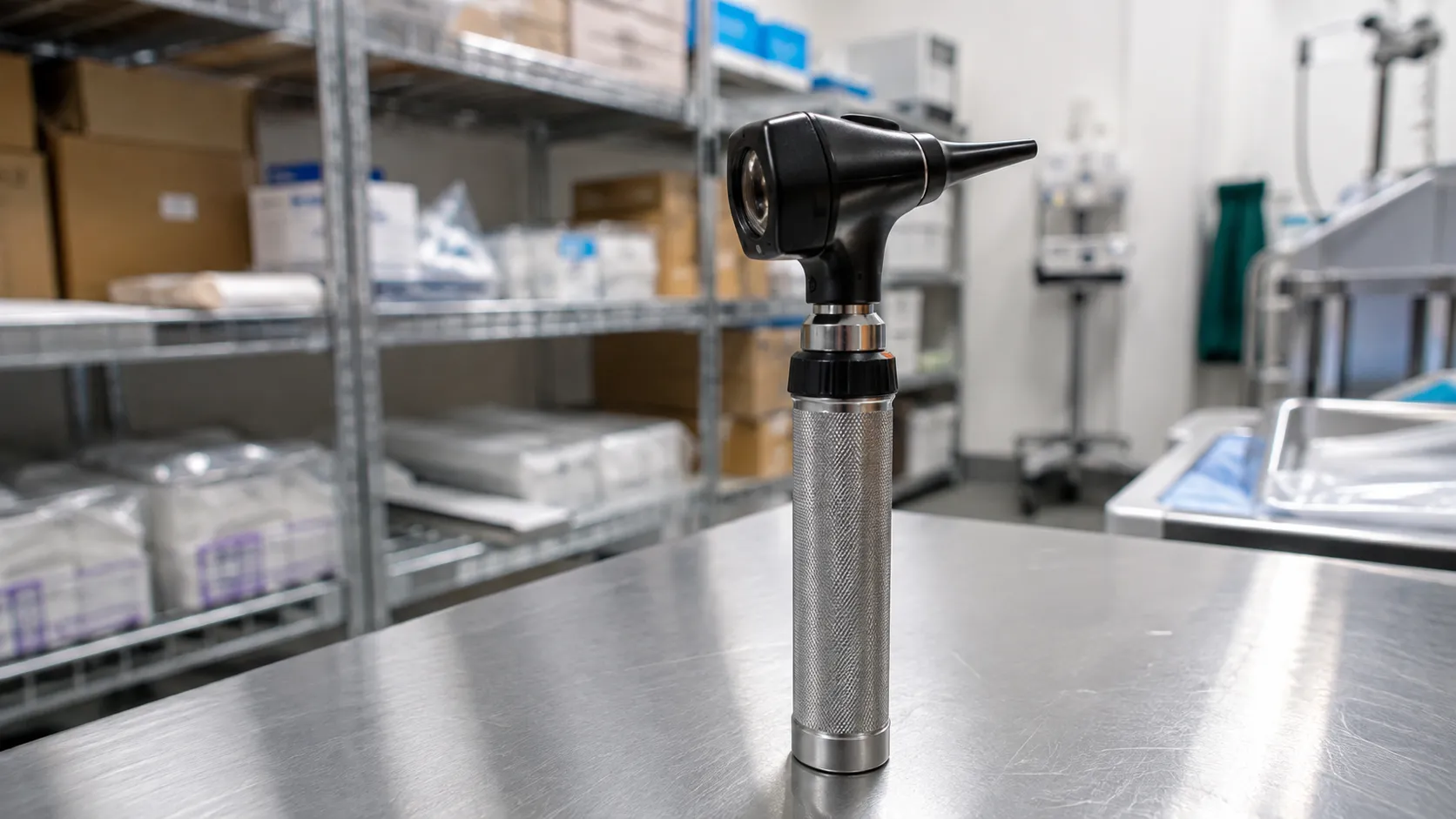
The general clinic instrument with a closed viewing head and magnifying lens, used for routine examination.
3. Fibre-optic illumination otoscopes
Light delivered around the viewing path for even illumination and fewer reflections. The usual choice for ENT and busy clinic use.
4. Operating otoscopes
Open or swing-lens heads that allow access for wax removal and direct vision.
5. Pneumatic otoscopes
Include a bulb and sealing speculum to assess tympanic membrane mobility. A sealing speculum is essential for the test to work.
6. Video otoscopes
Display the ear canal on a screen, supported by viewing with patients, teaching, and documentation.
7. Digital otoscopes with image capture
Record stills or video for the clinical record and referral. Confirm storage, transfer and information governance arrangements.
8. Wall-mounted diagnostic sets
Otoscope and ophthalmoscope heads on a permanently powered wall unit, suited to fixed clinic rooms with steady throughput.
9. Portable rechargeable otoscopes
Handle-based rechargeable instruments balancing portability with clinic-grade illumination. Charging arrangements need planning.
10. Otoscopes with single-use speculum systems
Designed around disposable specula with a defined fitting. These remove speculum reprocessing but create a stock commitment per room.
Stock, storage and room setup
Otoscope performance in daily use depends heavily on what sits beside it. Every examination room needs the full range of speculum sizes within reach, a charging point or wall bracket for the handle, and a clear place for the instrument to rest between patients so the lens is not laid face down on a worktop. Where rooms are shared between specialities, a standard layout keeps the instrument and its consumables easy to find during a busy clinic.
What to confirm before ordering
-
Speculum type. Confirm sizes, whether they are reusable or single-use, and the supply route.
-
Illumination. Compare light output and evenness, particularly between pocket and clinic instruments.
-
Magnification. Check the lens magnification and whether the lens swings aside for instrument access.
-
Pneumatic fitting. If mobility testing is required, confirm the insufflation port and sealing specula.
-
Handle platform. Standardise handles across instruments where possible to simplify charging and spares.
-
Cleaning. Verify approved cleaning methods for heads, lenses and reusable specula.
Care, training and servicing
Simple care makes a measurable difference. Lenses should be cleaned only as the manufacturer specifies; the specula should be checked at the start of each clinic; and handles should be returned to charge after use rather than left on a bench.
Training for new staff should cover speculum size selection, safe insertion depth, correct positioning and, where pneumatic testing is used, achieving a seal. These practical points affect examination quality more than instrument specification does.
For servicing, agree lamp or emitter replacement, battery replacement, lens repair arrangements and electrical safety testing for mains-connected sets. Ensure the department receives published device safety alerts so field safety notices reach clinical staff.
Speculum policy shapes room stock, instrument fitting, and infection prevention. To part departments sharing several can work through provision via healthcare buyer services.
Final thoughts
Specify for the clinic and its throughput. Fibre-optic instruments best serve most ENT rooms; a defined policy for operating room foreign-body retrieval capability is required where documentation or teaching matters. Confirm speculum supply and handle standardisation before ordering.
This article provides general procurement guidance for healthcare organisations and clinics. It is not clinical advice and does not replace manufacturer instructions or professional judgement.