
Introduction
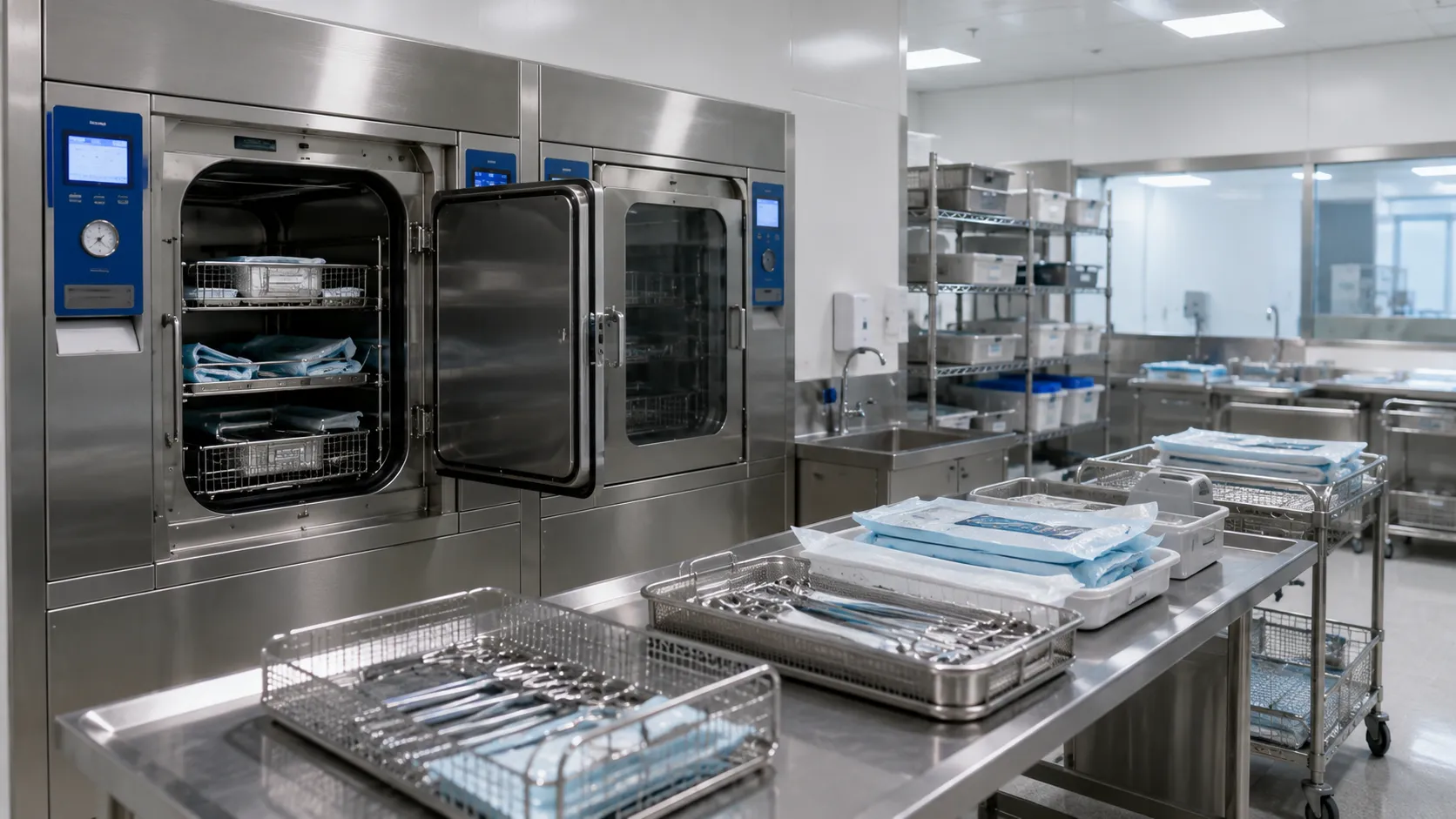
Sterilisation is one of the oldest safeguards in medicine and one of the easiest to take for granted. Every reused instrument that touches a patient must be reliably clean, and proving that it was is as important as ensuring it is. Smart sterilisation systems add connection and data to this vital, invisible work — tracking each instrument, recording each cycle, and turning trust into evidence. This article explains what smart sterilisation systems do and what a hospital should consider.
The problem of proof
Cleaning an instrument is only half the task; the other half is knowing, later and for certain, that it was cleaned properly. If a problem is found — a faulty cycle, a contamination concern — a hospital must be able to trace exactly which instruments were affected and where they went. Done on paper, this is slow and fragile. Smart sterilisation systems solve it by automatically recording the entire process: which instruments went through which cycle, under what conditions, and where they ended up. Established guidance, such as the World Health Organisation's guidance on the decontamination and reprocessing of medical devices, underscores the importance of reliable, well-documented reprocessing to safety.
What smart sterilisation adds
-
Traceability. Each instrument and each cycle is tracked so that a problem can be traced in minutes, not days.
-
Automatic records. Cycle conditions are logged without handwritten paperwork.
-
Consistency. Connected systems help ensure every cycle meets the required standard, every time.
-
Efficiency. Knowing exactly where instruments are keeps sets moving and theatres supplied.
Traceability as a safety tool
The heart of smart sterilisation is traceability — the ability to follow an instrument through its whole journey of use, cleaning and reuse. This is not bureaucracy for its own sake; it is a direct safety benefit. If a decontamination failure is ever suspected, a hospital with full traceability can pinpoint precisely which instruments were involved and act at once, rather than casting a wide, uncertain net. It also builds a clear evidence trail that supports quality standards and inspection. In effect, smart sterilisation converts a process that once relied on trust into one backed by records.
Manual sterilisation records versus smart systems
|
Manual records |
Smart sterilisation |
|---|---|
|
Instruments hard to trace |
Each instrument tracked |
|
Cycle logs on paper |
Cycle conditions logged automatically |
|
Problems traced slowly |
Problems traced in minutes |
|
Evidence scattered |
A clear, ready audit trail |
Part of a well-run hospital
Smart sterilisation does not stand alone; it works best woven into the hospital's wider systems so that instrument sets can be matched to theatres, procedures and, where needed, patients. And like any equipment that patients ultimately depend on, sterilisation systems must be reliable, properly maintained and compliant with the rules for regulating medical devices in the UK and the relevant decontamination standards. The data a smart system produces is only as trustworthy as the process and equipment behind it, which is why sound engineering and proper maintenance remain the foundation.
What to weigh before you buy
-
How complete is the traceability? The value lies in following the instruments all the way, not partway.
-
Does it integrate? Records are most useful linked to theatres, sets and the wider hospital.
-
Is the data secure and durable? A sterilisation record may be needed long after the cycle it describes.
-
Is the equipment sound? Reliable, compliant hardware is what makes the records worth trusting.
The bottom line
Smart sterilisation systems take a task that has always depended on trust and back it with evidence. By tracking each instrument and logging each cycle, they make it possible to prove that reprocessing was done properly and to trace any problem in minutes rather than days — a genuine safety benefit, not just tidier paperwork. The records they produce are only as good as the process behind them, so reliable, compliant equipment and sound maintenance remain essential. Woven into the wider hospital, smart sterilisation turns an invisible safeguard into a visible, defensible one.
More from Business
-
Buyers — source approved, well-documented equipment.
-
Suppliers — list your equipment and reach buyers worldwide.
-
Advertise — promote your products and services to a clinical audience.
-
Business overview — explore everything MediGear offers healthcare organisations.
Disclaimer
This article is for general information only and does not constitute clinical, procurement, regulatory, security or legal advice. Smart sterilisation and decontamination systems and the standards and rules that govern them are evolving, and requirements vary by market and change over time. Cybersecurity and interoperability requirements should always be confirmed with the relevant authorities. Always consult qualified clinical, biomedical engineering, information governance and security professionals for decisions specific to your organisation. medigear.uk accepts no liability for actions taken based on this content.
Equip provable sterile services.
Genuine, approved, fully documented medical equipment — the reliable hardware a smart, connected hospital is built on, wherever you work.
Frequently Asked Questions
A smart sterilisation system adds connection and data to the reprocessing of reusable instruments. Instead of relying on paper logs, it automatically tracks each instrument. It records each cleaning cycle — which instruments went through, under what conditions, and where they ended up — turning a process that once depended on trust into one backed by evidence.
Its core benefit is traceability. If a decontamination failure is ever suspected, a hospital with full traceability can pinpoint exactly which instruments were involved and act at once, rather than casting a wide, uncertain net. It also automatically logs cycle conditions, helps ensure every cycle meets the required standard, and builds a clear evidence trail for quality and inspection.
Instrument traceability is the ability to follow a surgical instrument through its whole journey of use, cleaning and reuse. It means a hospital can say, for any instrument, which cycles it went through and where it has been. This is a direct safety benefit, enabling precise and rapid action if a reprocessing issue is ever found.
No. It does not clean instruments; it records and tracks the process that does. The actual decontamination still depends on reliable, well-maintained equipment following established standards. Smart sterilisation adds proof and traceability to good practice — the data it produces is only as trustworthy as the process and equipment behind it.
Because records are most useful when instrument sets can be matched to theatres, procedures and, where needed, patients. Integration lets a hospital connect what was sterilised with where it was used, strengthening both safety and efficiency. Standalone records are helpful, but linked records make traceability actionable for the whole hospital.
Check how complete the traceability is — following instruments all the way, not partway — whether the system integrates with theatres and the wider hospital, whether the data is secure and durable enough to be retrieved long after a cycle, and whether the underlying equipment is reliable and compliant with medical device and decontamination standards. Sound hardware is what makes the records worth trusting.