
Introduction
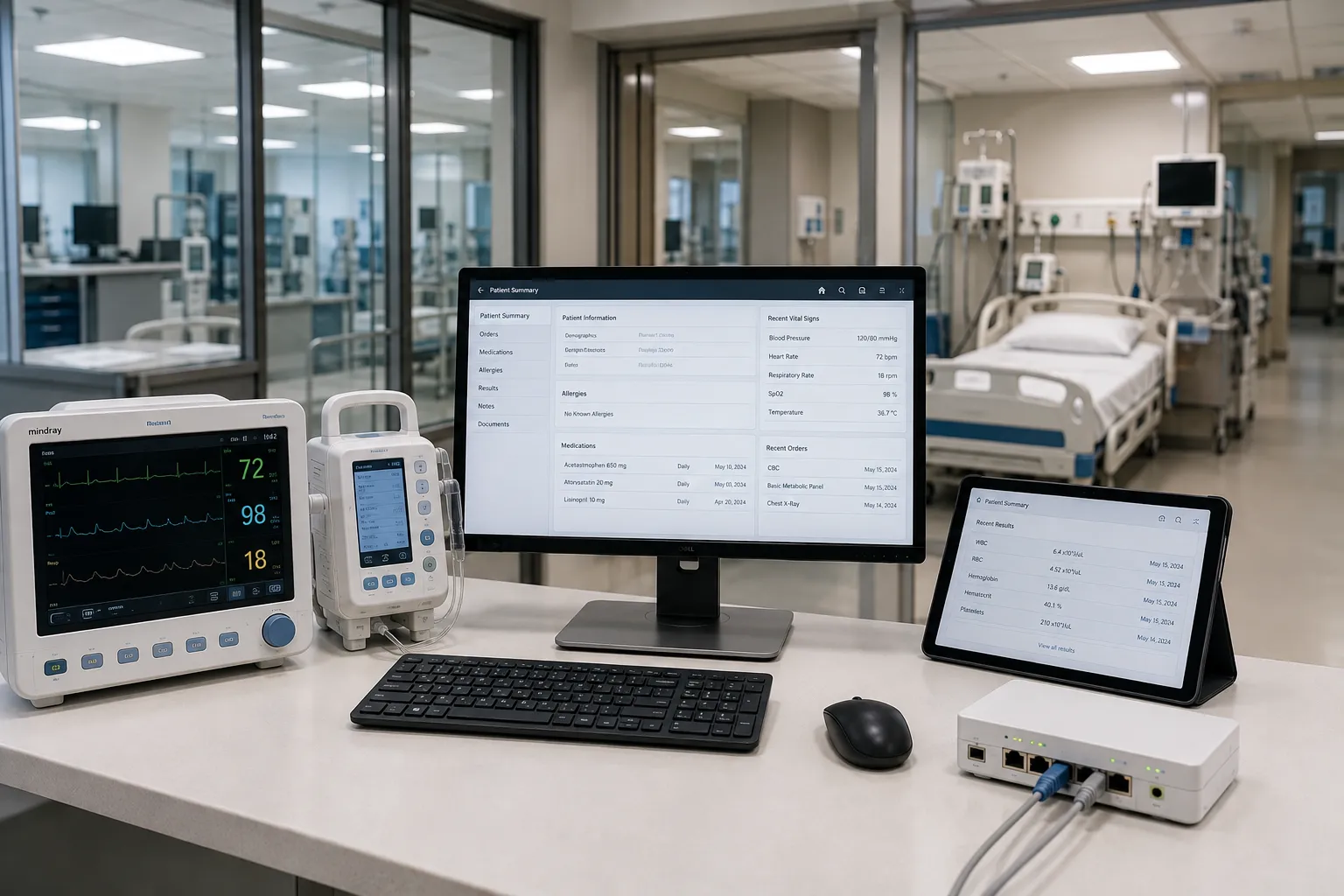
The electronic health record is the story of a patient's care, and a medical device is one of its most important authors. When a device can write directly into that record, the story stays complete and current; when it cannot, someone has to transcribe it, and the story develops gaps and errors. Integrating medical devices with EHR systems is about letting devices tell their part of the story directly. This article explains what that integration involves, why it matters, and what a hospital should consider.
Why the EHR is the destination
A reading is most useful when it reaches the place clinicians actually look: the patient's electronic health record. The EHR is where the whole picture comes together, so a device's data only realises its value when it lands there, in context, alongside everything else known about the patient. A monitor whose readings stay on its own screen, or must be typed in by hand, is contributing to the record slowly and imperfectly. Integration closes that gap, letting the device's findings flow straight into the shared story of the patient's care.
What integration delivers
-
No transcription. Readings enter the record directly, without hand-copying or its errors.
-
A complete record. The patient's story stays whole and current, not patchy.
-
Data in context. A reading appears alongside all other information known about the patient.
-
Time saved. Clinicians are freed from having to re-enter what a device already knows.
The standards that make it work
Device-to-EHR integration depends on the two speaking a common language, which is the role of interoperability standards. HL7 FHIR provides devices and record systems with an agreed-upon way to exchange clinical information, so a reading arrives structured and understood rather than as raw text to be interpreted. The wider effort to make records interoperable — supported by work such as the certification of health IT for interoperability — exists precisely so that data can move cleanly between devices and records. Without shared standards, every device-to-EHR link becomes a fragile custom bridge; with them, integration becomes routine.
Devices outside the record versus integrated with it
|
Not integrated |
Integrated with the EHR |
|---|---|
|
Readings typed in by hand |
Readings flow in directly |
|
Gaps and transcription errors |
A complete, accurate record |
|
Data seen in isolation |
Data seen in full context |
|
Clinicians re-enter data |
Clinicians freed for care |
Integration done safely
Writing device data into the record carries responsibilities as well as benefits. The data must reach the right patient's record — a misattributed reading is worse than none — and it must arrive accurately and securely, protected as the sensitive information it is. Sound integration, therefore, depends on reliable devices, correct patient identification, and secure data flow, all resting on the shared standards and connected foundation that NHS England's connected digital systems describe. When done well, integration makes the record more complete and trustworthy; done carelessly, it can introduce the very errors it was meant to remove.
What to weigh before you integrate
-
Does it speak your EHR's language? Look for recognised standards, not a custom bridge.
-
Does data reach the right patient? Correct identification is essential to safe integration.
-
Is the flow secure? Data entering the record must be protected in transit.
-
Is the device reliable? The record is only as trustworthy as the device feeding it.
The bottom line
Integrating medical devices with EHR systems lets each device tell its part of the patient's story directly, keeping the record complete, current and free of transcription errors. It works through shared interoperability standards that let devices and records speak the same language, and it delivers real gains: accuracy, context, and time returned to clinicians. But it must be done safely — right patient, accurate data, secure flow, reliable device — because a record is only as trustworthy as what writes to it. Get integration right, and the electronic health record becomes the complete, living story it is meant to be.
More from Business
-
Buyers — source approved, well-documented equipment.
-
Suppliers — list your equipment and reach buyers worldwide.
-
Advertise — promote your products and services to a clinical audience.
-
Business overview — explore everything MediGear offers healthcare organisations.
Disclaimer
This article is for general information only and does not constitute clinical, procurement, regulatory, security, or legal advice. Medical device integration with EHR systems and the standards and rules that govern them are evolving, and requirements vary by market and change over time. Cybersecurity and interoperability requirements should always be confirmed with the relevant authorities. Always consult qualified clinical, biomedical engineering, information governance and security professionals for decisions specific to your organisation. medigear.uk accepts no liability for actions taken based on this content.
Equip a complete record.
Genuine, approved, fully documented medical equipment — the reliable hardware a smart, connected hospital is built on, wherever you work.
Frequently Asked Questions
It allows a medical device to write its readings directly into the patient's electronic health record, rather than leaving data on the device's screen, which requires manual entry. This lets the device tell its part of the patient's story directly, keeping the record complete, current and free of transcription errors.
Because a reading is most useful when it reaches the place clinicians actually look — the health record, where the whole picture comes together. A device whose readings stay isolated or must be typed in contributes slowly and imperfectly. Integration lets its findings flow straight into the shared story, in context alongside everything else known about the patient.
It depends on the device and the record system speaking a common language through interoperability standards. HL7 FHIR provides a standardised way to exchange clinical information, so a reading arrives structured and understood rather than as raw text. Without shared standards, every link becomes a fragile custom bridge; with them, integration becomes routine.
Chiefly misattribution and insecurity. The data must reach the right patient's record — a misattributed reading is worse than none — and it must arrive accurately and securely, protected as sensitive information. When done carelessly, integration can introduce the very errors it was meant to eliminate, so correct patient identification and secure data flow are essential.
Yes. When a device writes directly into the record, there is no manual copying to get wrong, so transcription errors disappear. The record stays complete and accurate, data appears in context, and clinicians are freed from re-entering what a device already knows — provided the device is reliable and its data correctly attributed.
Confirm the device speaks your record system's language through recognised standards rather than a custom bridge, that its data reaches the right patient through correct identification, that the data flow is secure in transit, and that the device itself is reliable. A record is only as trustworthy as what writes to it, so all four matter.