
Introduction
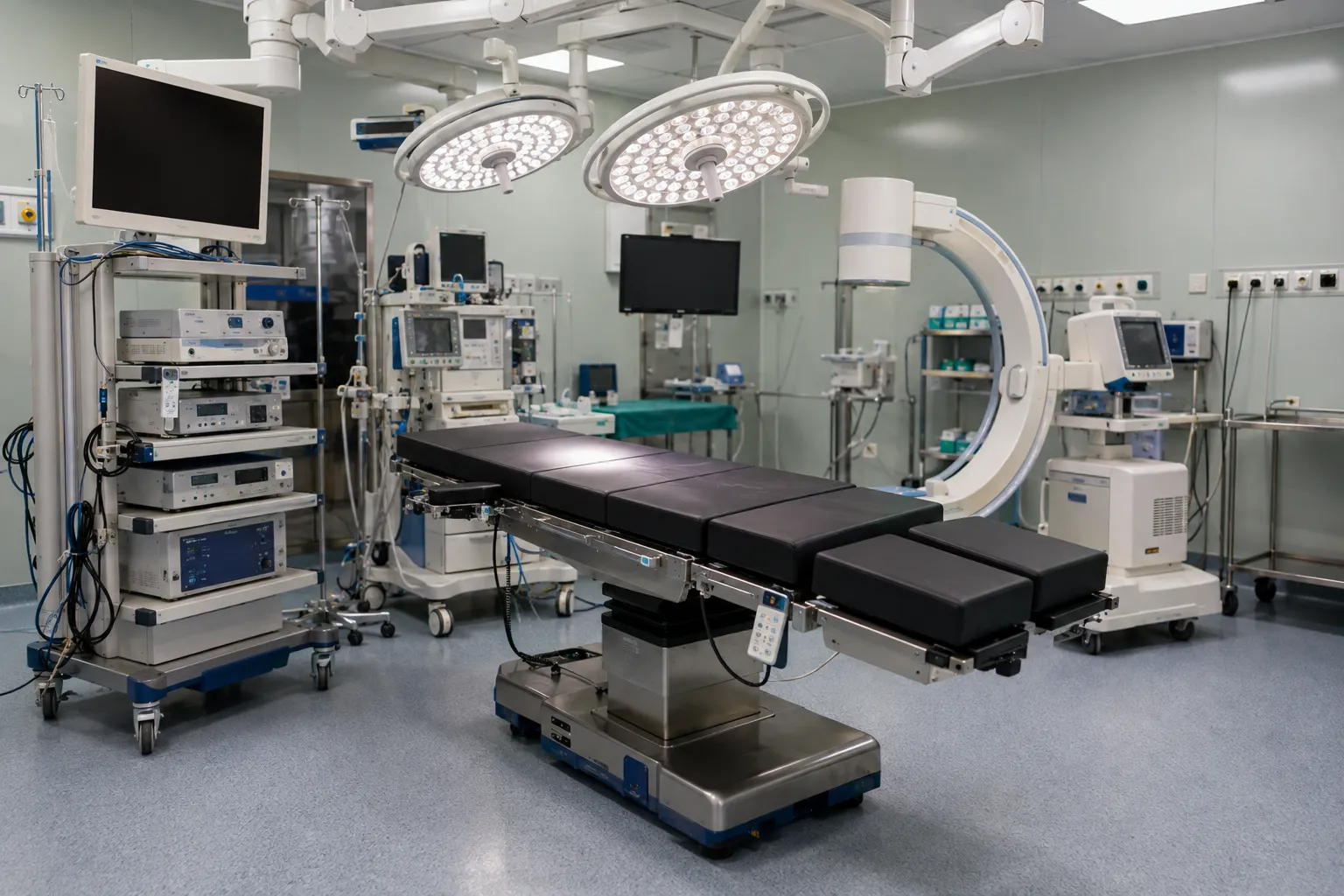
The operating theatre is one of the most equipment-dense places in any hospital, and one of the least forgiving. Everything in it must work, work together and work exactly when needed. Connecting surgical equipment — from anaesthesia machines and monitors to imaging and robotic systems — promises a theatre where information flows as smoothly as the procedure itself. This guide explains how IoT is used in surgical equipment, what it enables, and what a hospital should weigh before adopting it.
Why the theatre is a special case
In surgery, several complex devices operate on one patient simultaneously, and the surgical team's attention is fully committed to the operation. That makes two things valuable: equipment that presents a clear, combined picture rather than a scatter of separate screens, and equipment that records what happened without anyone having to stop and write it down. Connection delivers both. The reward is a calmer, better-documented theatre; the risk, as everywhere, is that complexity and connection must be matched by reliability and security.
What connected surgical equipment offers
-
A combined view. Data from several devices brought together, so the team reads one picture, not many.
-
Automatic records. The course of an operation is documented as it happens, freeing attention to focus on the patient.
-
Smoother coordination. Systems that share data help the theatre team and the wider hospital stay in step with each other.
-
Insight over time. Consistent data supports review, training and safer practice across many procedures.
The rise of robotic and advanced systems
The most visible face of connected surgery is robotic assistance, which has moved from novelty to a recognised part of care. That shift brings real benefits and real responsibilities, which is why bodies such as NICE have assessed these systems carefully — as reflected in NICE's recommendation of a set of robotic surgery systems for use in the NHS. Advanced equipment also demands the training and governance to use it safely; the Royal College of Surgeons has been clear that robotic surgery needs robust training and governance as it spreads. Connection makes powerful tools possible, but the people and processes around them decide whether that power is used well.
Standalone theatre kit versus connected theatre
|
Standalone theatre equipment |
Connected theatre |
|---|---|
|
Many separate screens |
One combined picture |
|
Records written afterwards |
Records captured as it happens |
|
Devices working in parallel |
Devices working together |
|
Little data for review |
Consistent data for learning |
Safety, approval and security first
Nowhere is the underlying equipment more important than in the theatre. Every connected surgical device must be properly regulated and reliable, meeting the UK medical device regulations, because a failure here is immediate and serious. Connection then adds its own duties: the systems must be secure, since they sit on the network, and they must combine data without ever confusing one patient's information for another's. In surgery, the sophistication of technology can never be an excuse to relax the fundamentals of safety, approval, and security.
What to weigh before you invest
-
Does it integrate cleanly? The goal is one clear picture, not another screen for the team to watch.
-
Is training in place? Advanced surgical systems are only as safe as the team trained to use them.
-
Is it approved and reliable? Theatre equipment must be regulated, dependable and well supported.
-
Is it secure? Connected surgical systems handle sensitive data and must be protected and kept up to date.
The bottom line
IoT in surgical equipment offers the theatre a real gift: a combined picture, automatic records and smoother coordination in a place where attention is precious, and mistakes are costly. Robotic and advanced systems extend that further, provided the training and governance keep pace. But the theatre also raises the stakes on the fundamentals. Connected surgical equipment must be approved, reliable and secure before it is clever, and the team around it must be ready to use it well. Get that balance right, and connection makes an already careful environmenteven safer and calmel.
More from Business
-
Buyers — source approved, well-documented equipment.
-
Suppliers — list your equipment and reach buyers worldwide.
-
Advertise — promote your products and services to a clinical audience.
-
Business overview — explore everything MediGear offers healthcare organisations.
Disclaimer
This article is for general information only and does not constitute clinical, procurement, regulatory, security or legal advice. IoT in surgical and theatre equipment and the standards and rules that govern them are evolving, and requirements vary by market and change over time. Cybersecurity and interoperability requirements should always be confirmed with the relevant authorities. Always consult qualified clinical, biomedical engineering, information governance and security professionals for decisions specific to your organisation. medigear.uk accepts no liability for actions taken based on this content.
Equip the connected theatre.
Genuine, approved, fully documented medical equipment — the reliable hardware a smart, connected hospital is built on, wherever you work.
Frequently Asked Questions
Connected surgical equipment — anaesthesia machines, monitors, imaging and robotic systems — shares data so the theatre works from one combined picture rather than many separate screens. It also automatically documents the course of an operation and helps the theatre team coordinate with the wider hospital, turning a scatter of devices into a cohesive system.
The main benefits are a combined view that is easier to read under pressure, automatic records that free up attention for the patient, smoother coordination between the team and the hospital, and consistent data that support review, training, and safer practice over time. In a place where attention is precious, these gains matter a great deal.
Yes, it is its most visible form. Robotic assistance has moved from novelty to a recognised part of care, with health bodies assessing systems for use in the health service. It brings real benefits but also demands robust training and governance, so the value depends as much on the people and processes around the technology as on the technology itself.
The theatre raises the stakes on the fundamentals. A failure is immediate and serious, so every device must be approved and reliable; connection adds duties of security, since the systems sit on the network, and of data integrity, since combined data must never confuse one patient's information for another's. Sophistication is never an excuse to relax on these basics.
Advanced systems, especially robotic ones, are only as safe as the team trained to use them. Recognised guidance stresses robust training and governance as such equipment spreads. A hospital investing in connected surgical technology should treat training and clear governance as part of the purchase, not an optional extra.
Confirm that the equipment integrates cleanly into a single clear picture rather than adding another screen, that training and governance are in place for advanced systems, that the equipment is properly regulated, reliable, and well supported, and that connected systems are secure and kept up to date. Approved, reliable and secure must come before clever in the theatre.