
Introduction
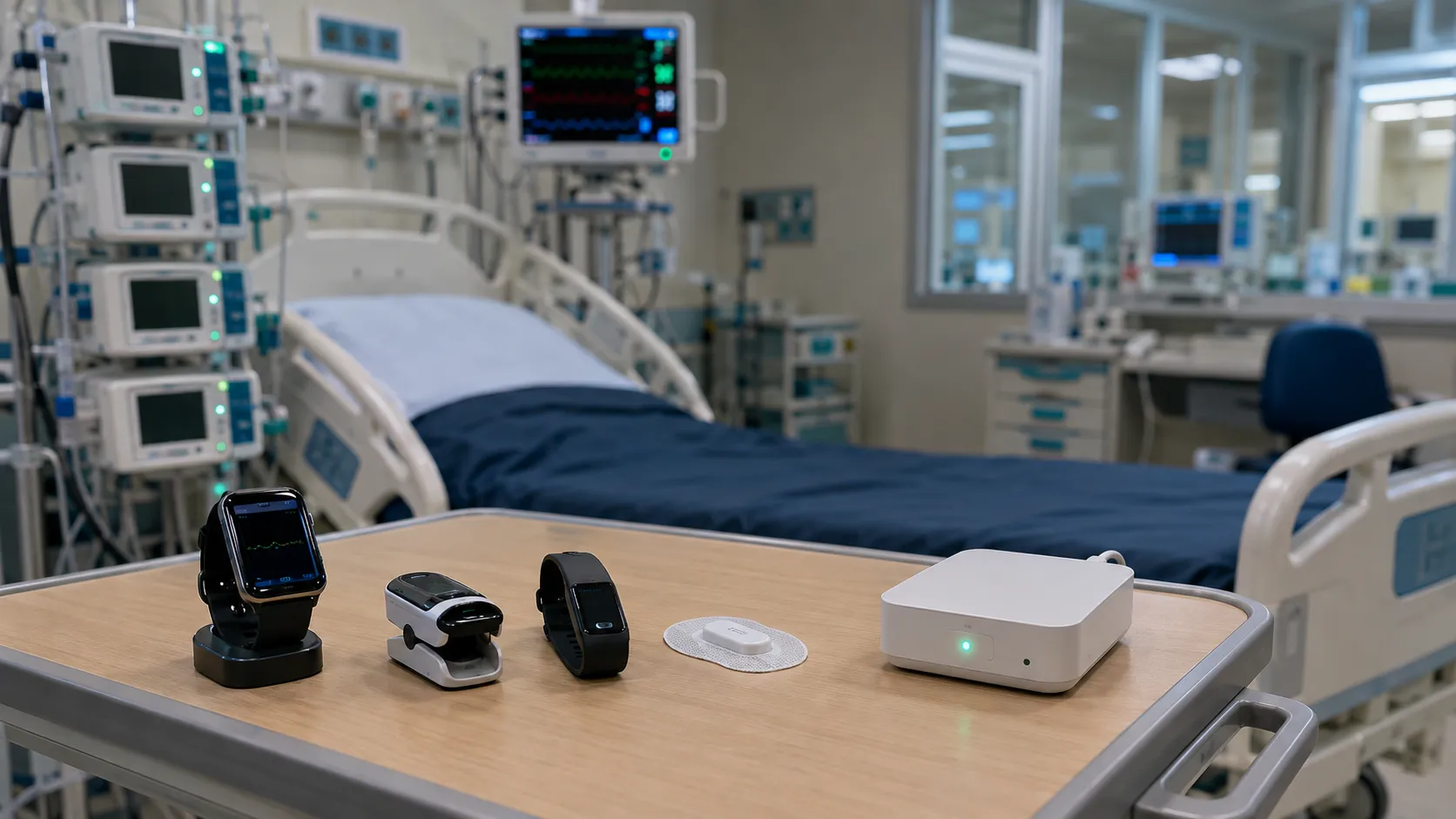
A wearable is simply a medical device small enough to travel with the patient. A patch on the chest, a band on the wrist, a sensor clipped to a finger — each keeps measuring while the person walks, rests or goes home. In a hospital, that portability changes something important: monitoring no longer has to keep a patient tethered to a bedside machine. This article explains how connected wearable devices are used in hospital care, what they make possible, and what a hospital should consider before relying on them.
Monitoring that moves with the patient.
Traditional monitoring anchors a patient to a spot. The equipment is by the bed, so the patient must stay near the equipment. A connected wearable turns that around: the device travels with the patient andwirelessly sends its readings back. A recovering patient can walk the corridor, sit with family or move between departments while still being watched. The measurement is the same as a bedside monitor would take; the freedom is new, and for both comfort and recovery, that freedom matters.
Where wearables help in hospital care
-
Freedom to move. Patients can be monitored without being confined to a bed or a machine.
-
Wider watching. Continuous monitoring can extend to patients who would not otherwise be wired up.
-
Beyond the walls. The same devices can be taken home by patients, supporting earlier discharge.
-
Comfort. Small, unobtrusive sensors are easier to live with than a tangle of cables.
A bridge between hospital and home
The most significant promise of wearables is that they blur the line between hospital and home. A patient who is well enough to leave but not yet fully recovered can go home wearing a device that keeps their care team informed, so problems are caught early and readmissions are avoided. This is a central theme of modern digital health: the FDA's Digital Health Centre of Excellence exists partly to support these remote monitoring technologies, and the flow of their data into hospital systems reflects the wider aim of NHS England's connected digital systems, where information follows the patient across settings.
Bedside monitor versus connected wearable
|
Bedside monitor |
Connected wearable |
|---|---|
|
Patient tied to the bed |
Patient free to move |
|
Monitoring stops at discharge |
Monitoring can follow home |
|
Cables and confinement |
Small, unobtrusive sensors |
|
One place, one patient |
Care that travels with the person |
The questions wearables raise
Freedom comes with responsibilities. A wearable sending data over a wireless link must be secure, because its signal is, in principle, exposed — the same data-protection duty that applies to any connected device applies here, made sharper by the fact that the device leaves the ward. Its readings must be reliable and clinically trustworthy, since decisions may rest on them. And the alerts it raises must reach someone who can act, wherever the patient is. A wearable that measures beautifully but streams to a screen no one watches, or that cannot be trusted or secured, is not yet ready to be relied on.
What to weigh before you rely on them
-
Are the readings trustworthy? A wearable used for clinical decisions must be accurate and approved.
-
Is the data secure? Wireless, mobile monitoring must protect data that travels beyond the ward.
-
Do alerts reach someone? Monitoring only helps if warnings reach someone able to respond.
-
Does it fit your systems? Data should flow into the record, not sit in a separate app.
The bottom line
Connected wearable devices free monitoring from the bedside, letting care travel with the patient through the ward and beyond it into the home. That freedom brings real gains in comfort, wider monitoring and earlier discharge, and it points towards a future where the hospital's reach extends past its walls. The conditions are the familiar ones, sharpened by mobility: the readings must be trustworthy and approved, the data secure in transit, and the alerts able to reach someone who can act. Meet those, and a small sensor on a patient becomes a genuinely powerful extension of hospital care.
More from Business
-
Buyers — source approved, well-documented equipment.
-
Suppliers — list your equipment and reach buyers worldwide.
-
Advertise — promote your products and services to a clinical audience.
-
Business overview — explore everything MediGear offers healthcare organisations.
Disclaimer
This article is for general information only and does not constitute clinical, procurement, regulatory, security or legal advice. Connected wearable devices in hospital care and the standards and rules that govern them are evolving, and requirements vary by market and change over time. Cybersecurity and interoperability requirements should always be confirmed with the relevant authorities. Always consult qualified clinical, biomedical engineering, information governance and security professionals for decisions specific to your organisation. medigear.uk accepts no liability for actions taken based on this content.
Equip monitoring that moves.
Genuine, approved, fully documented medical equipment — the reliable hardware a smart, connected hospital is built on, wherever you work.
Frequently Asked Questions
Connected wearables are medical devices small enough to travel with the patient — a chest patch, a wristband, a finger sensor — that keep measuring and send their readings back wirelessly. In hospital care, they allow monitoring to continue while a patient moves around, rather than tethering them to a bedside machine, and the same devices can be taken home.
They give patients the freedom to move while still being monitored, extend continuous monitoring to people who would not otherwise be wired up, can follow a patient home to support earlier discharge, and are more comfortable than a tangle of cables. In short, they let care travel with the person instead of keeping the person by the equipment.
Yes, and this is one of their most significant benefits. A patient who is well enough to leave but not fully recovered can go home wearing a device that keeps their care team informed, so problems are caught early and readmissions are avoided. This depends on the wearable's data flowing reliably and securely back into hospital systems.
It has to be. A wearable transmits data over a wireless link and leaves the ward with the patient, so its signal is, in principle, exposed. The same data-protection duty that applies to any connected device applies here, made sharper by mobility. Security and correct handling of the data are essential conditions for relying on a wearable.
They must be, if decisions will rest on them. A wearable used clinically has to be accurate and properly approved, not a consumer gadget. Reliability and regulatory approval are among the first things to check, because a device whose readings cannot be trusted should not be used to guide care.
Confirm the readings are trustworthy and approved, that the data is secured as it travels beyond the ward, that any alerts reach a person able to respond wherever the patient is, and that the data flows into the patient record rather than sitting in a separate app. A wearable that measures well but streams to a screen no one watches is not yet ready to be relied on.