
Introduction
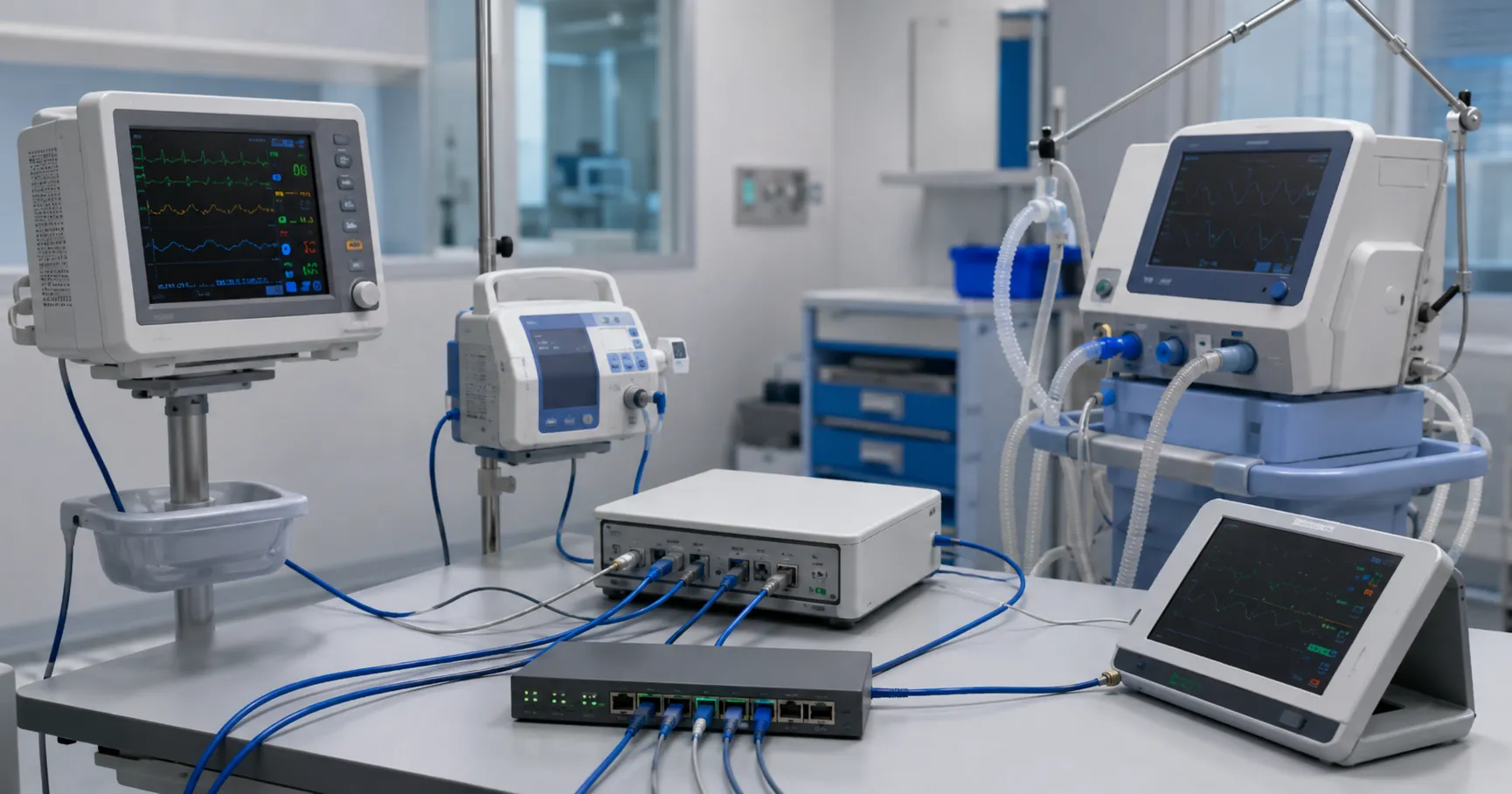
Modern healthcare depends on devices and systems working together — a monitor passing readings to a record, an imaging system sharing pictures, results flowing to the right clinician. Interoperability is the ability of equipment and systems to exchange information and use it, and interoperability standards are the shared rules that make this possible reliably and safely. Without them, every connection is a bespoke effort; with them, devices from different makers can share data in a common language. International standards work, including that coordinated through ISO, helps underpin this.
This guide explains what medical equipment interoperability standards are, how they work, and why they matter. It's written for biomedical engineering, IT, clinical and procurement teams across the UK, Europe, the US, the Gulf and South Africa.
What to hold onto — the short version
-
A shared language. Standards let different systems exchange data reliably.
-
More than a connection. True interoperability means the data is understood, not just moved.
-
Plan for it. Connectivity is easier when weighed at procurement.
What interoperability really means
Interoperability has layers. At a basic level, systems must be able to connect and move data between them. But moving data is not enough if the receiving system cannot interpret it correctly, so a deeper level — often called semantic interoperability — means the data is understood consistently, so a reading or result means the same thing to every system that handles it. Interoperability standards address both: common formats and protocols for exchange, and shared meaning for the information itself. That combination is what lets equipment genuinely work together rather than merely be wired together. Achieving shared meaning is often the harder part, because two systems can happily exchange data yet still interpret it differently, and that gap is precisely what interoperability standards exist to close.
What the standards address
-
Data exchange. Common formats and protocols for moving information.
-
Shared meaning. Consistent interpretation of what data represents.
-
Connectivity. How devices and systems physically and logically connect.
-
Record integration. Passing information into health records cleanly.
-
Profiles and frameworks. Agreed ways of applying standards in practice.
-
Safety and consistency. Reducing errors from manual transfer and mismatch.
A short example shows the payoff. A patient monitor that speaks a common standard can pass its readings straight into the health record, where any system can interpret them correctly, rather than a nurse transcribing numbers by hand. That saves time and, more importantly, reduces the chance of transcription error. Interoperability standards turn a collection of separate devices into a connected system where information flows safely — which is exactly what joined-up care needs.
Connected vs interoperable
|
|
Merely connected |
Truly interoperable |
|
Data moves |
Yes |
Yes |
|
Data understood |
Not necessarily |
Consistently |
|
Effort per link |
Often bespoke |
Based on standards |
|
Result |
Fragile integration |
Reliable, safe flow |
How buyers can use them
-
Ask which interoperability standards a device supports.
-
Check how it will integrate with your records and systems.
-
Favour equipment that uses widely recognised standards.
-
Consider shared meaning, not just the ability to connect.
-
Weigh interoperability at procurement, not after installation.
Standards make systems whole
Interoperability standards matter because they turn separate devices into a coherent system in which information flows safely and is understood. Widely used frameworks — such as HL7 FHIR for health data exchange, IHE profiles for applying standards in practice, and device-communication standards like IEEE 11073 — provide the shared language, while international standards from ISO and guidance from the World Health Organisation support the wider foundation. For buyers, asking what a device supports and how it will integrate — before buying — is the practical way to make interoperability real.
More from Business
-
Buyers — source approved, fully documented equipment.
-
Suppliers — list your equipment and reach buyers worldwide.
-
Advertise — promote your products and services to a clinical audience.
-
Business overview — explore everything MediGear offers healthcare organisations.
Disclaimer
This article is for general information only and does not constitute regulatory, technical, clinical or procurement advice. Interoperability standards and their adoption vary by market and system and change over time. Always confirm current standards and integration requirements with the relevant parties, and consult qualified technical, clinical and procurement professionals for decisions specific to your organisation. medigear.uk accepts no liability for actions taken based on this content.
Medical Equipment Interoperability Standards
We supply medical equipment to healthcare organisations across the UK, Europe, the US, the Gulf and South Africa — genuine, approved and fully documented, chosen with an eye on how well it will connect to your systems.
Frequently Asked Questions
Interoperability standards are the shared rules that let medical devices and systems exchange information and use it reliably and safely. They provide common formats and protocols for moving data, and shared meaning so the information is understood consistently. Without them, every connection is a bespoke effort; with them, devices from different makers can share data in a common language, turning separate devices into a connected system.
Being connected means data can move between systems. Being truly interoperable means the data is also understood consistently — a reading or result means the same thing to every system that handles it. Moving data is not enough if the receiving system cannot interpret it correctly, so interoperability addresses both exchange and shared meaning, which is what lets equipment genuinely work together rather than merely be wired together.
Semantic interoperability is the deeper level at which exchanged data is understood consistently across systems, so that a value or result carries the same meaning everywhere it goes. It goes beyond simply moving data to ensuring the receiving system interprets it correctly. Interoperability standards support this shared meaning alongside the formats and protocols used to exchange the information.
Because it reduces the errors that come from manual transfer and mismatch. When a monitor can pass readings straight into the health record where any system interprets them correctly, no one has to transcribe numbers by hand, cutting the chance of transcription error. Reliable, understood data flow turns a collection of separate devices into a connected system, which is what joined-up, safer care needs.
Buyers can ask which interoperability standards a device supports, check how it will integrate with their records and systems, favour equipment using widely recognised standards, consider shared meaning rather than just the ability to connect, and weigh interoperability at procurement rather than after installation. Planning for connectivity before buying is far easier than retrofitting it afterwards.
MediGear supplies medical equipment to healthcare organisations across the UK, Europe, the US, the Gulf and South Africa. As a distributor we provide genuine, approved and fully documented equipment, chosen with an eye on how well it will connect to your systems. Standards and integration needs differ by system and market, so we work with your team to consider interoperability and provide the documentation those decisions rely on.