
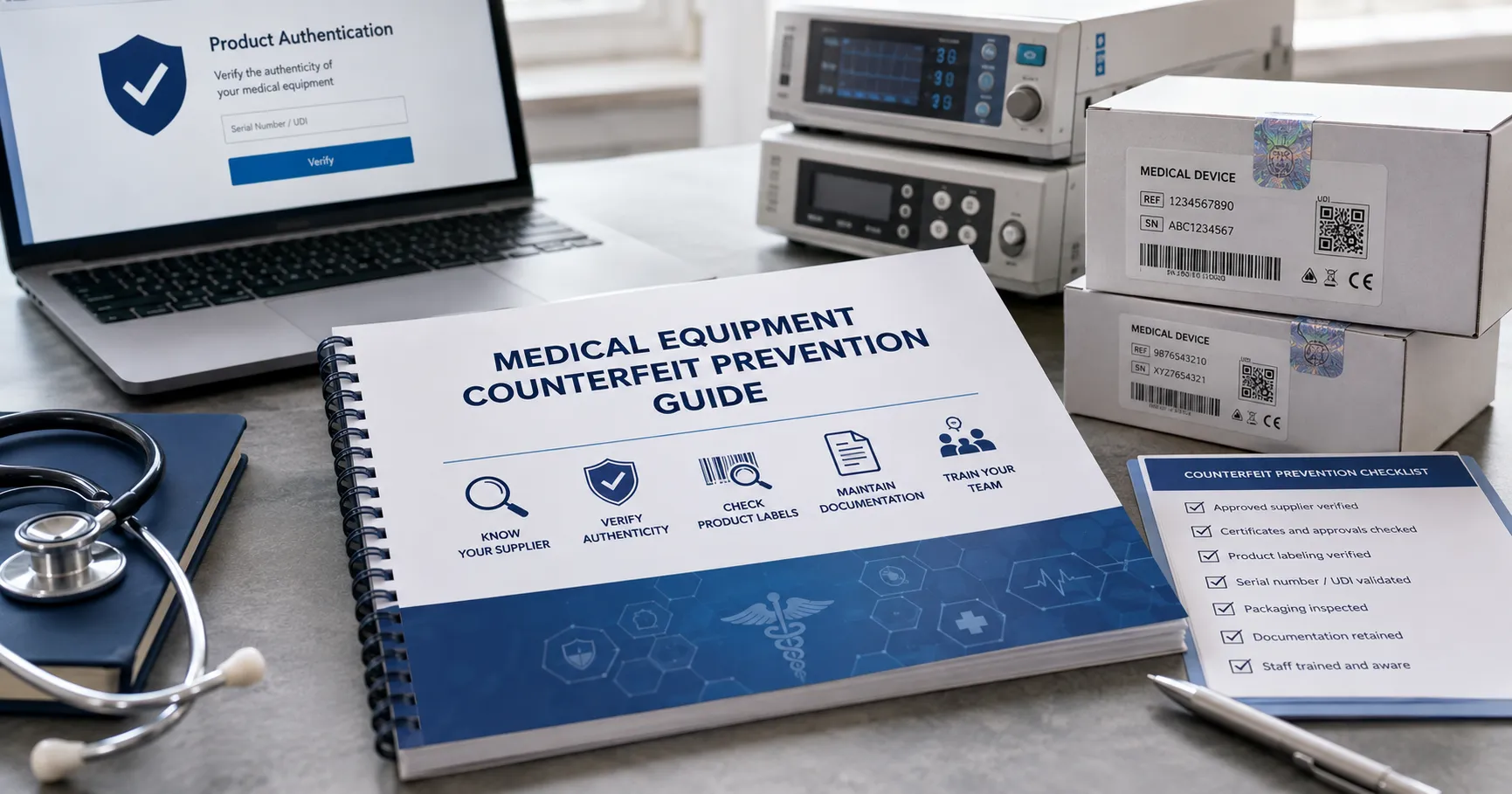
Introduction
Counterfeit medical equipment — fake, substandard or falsified devices passed off as genuine — is a serious patient-safety threat, and the most reliable defence is to stop it entering the supply chain in the first place. Prevention is largely a matter of discipline in how equipment is sourced, documented and tracked, rather than any single clever check at the point of use. The World Health Organisation has repeatedly warned about substandard and falsified medical products, and secure sourcing is the practical answer for buyers.
This guide sets out how counterfeit prevention works for medical equipment, focusing on the sourcing and supply-chain controls that keep fakes out. It's written for procurement, biomedical engineering and quality teams across the UK, Europe, the US, the Gulf and South Africa.
What to hold onto — the short version
-
Prevention beats detection. Keeping counterfeits out is safer than catching them later.
-
Source through proper channels. Authorised, documented supply is the strongest safeguard.
-
Traceability closes gaps. Documentation and identifiers make substitution far harder.
Where counterfeits get in
Counterfeits tend to enter through weak points in the supply chain: unfamiliar or unauthorised sources, opaque intermediaries, deals that seem too easy, and gaps where documentation is not demanded. A device that changes hands several times through unverified parties has many opportunities to be substituted or falsified. Prevention works by removing those opportunities — buying through authorised channels, insisting on complete documentation, and keeping a clear line of sight from manufacturer to end user. The tighter that line, the fewer chances a counterfeit has to slip in. Counterfeiters also exploit urgency and scarcity, so periods of unusually high demand call for extra caution rather than relaxed checks.
What prevention involves
-
Authorised sourcing. Buy from manufacturers and authorised distributors, not opaque intermediaries.
-
Supplier due diligence. Verify who you are dealing with before you buy.
-
Complete documentation. Require approvals, certificates and technical files with every device.
-
Identifier checks. Use unique device identification and serial numbers to confirm authenticity.
-
Staff awareness. Train teams to recognise and question suspicious supply.
-
Reporting routes. Have a clear way to report and escalate suspected counterfeits.
A short example shows how prevention pays off. Suppose a hospital is offered a batch of devices from an unfamiliar broker on unusually easy terms, with incomplete paperwork. A team practised in prevention treats the missing documentation and unverified source as red flags, declines, and sources through an authorised channel instead. A team without that discipline might accept the batch and only discover a problem when a device fails in use. Prevention is simply making the first response the safe one.
Secure vs exposed supply chains
|
|
Secure supply chain |
Exposed supply chain |
|
Sources |
Authorised and verified |
Unfamiliar or opaque |
|
Documentation |
Complete and required |
Missing or waved through |
|
Traceability |
Clear, end to end |
Broken or unclear |
|
Counterfeit risk |
Low |
High |
How to build prevention in
-
Set a rule to buy only through authorised, verifiable channels.
-
Require full documentation as a condition of purchase.
-
Check identifiers and approvals on receipt.
-
Train staff to spot and question suspicious offers.
-
Report suspected counterfeits to the relevant authority.
Sourcing is the front line
Because counterfeits enter through the supply chain, sourcing is where prevention is won or lost. Regulators such as the FDA and international bodies including the IMDRF support traceability measures that make substitution harder, and enforcement bodies act against fakes, but the everyday defence is a buyer's own sourcing discipline. Purchasing genuine, approved, fully documented equipment through authorised channels — and refusing anything that cannot be verified — keeps counterfeits out far more reliably than trying to catch them at the bedside.
More from Business
-
Buyers — source approved, fully documented equipment.
-
Suppliers — list your equipment and reach buyers worldwide.
-
Advertise — promote your products and services to a clinical audience.
-
Business overview — explore everything MediGear offers healthcare organisations.
Disclaimer
This article is for general information only and does not constitute regulatory, clinical, legal or procurement advice. Counterfeiting methods, regulations and reporting routes vary by market and change over time. Always confirm current requirements and reporting channels with the relevant national authority, and consult qualified quality, regulatory and procurement professionals for decisions specific to your organisation. medigear.uk accepts no liability for actions taken on the basis of this content.
Preventing Counterfeit Medical Equipment
We supply medical equipment to healthcare organisations across the UK, Europe, the US, the Gulf and South Africa — genuine, approved and fully documented, sourced through channels built to keep counterfeits out.
Frequently Asked Questions
Counterfeit prevention is the set of controls that keep fake, substandard or falsified devices out of the supply chain in the first place, rather than catching them at the point of use. It rests mainly on discipline in sourcing, documentation and traceability — buying through authorised channels, requiring complete documentation, checking identifiers, training staff and having clear reporting routes. Prevention is safer and more reliable than detection after the fact.
They tend to enter through weak points: unfamiliar or unauthorised sources, opaque intermediaries, deals that seem too easy, and gaps where documentation is not demanded. A device that changes hands several times through unverified parties has many chances to be substituted or falsified. Prevention removes those opportunities by keeping a clear line of sight from manufacturer to end user.
Sourcing through authorised, verifiable channels. Because counterfeits enter through the supply chain, buying from manufacturers and authorised distributors — and refusing anything that cannot be verified — is the strongest safeguard. Requiring complete documentation and checking unique device identifiers on receipt reinforce it. No single bedside check matches the protection of disciplined sourcing.
Common red flags include an unfamiliar or unauthorised source, opaque intermediaries, unusually easy terms, and missing or incomplete documentation. A team practised in prevention treats these as reasons to decline and source through an authorised channel instead. Making that cautious response the default is central to keeping counterfeits out.
It should quarantine the suspect device so it cannot reach a patient, avoid using it, and report the concern through the proper channels to the relevant national authority, alongside the manufacturer or authorised distributor. Having a clear, known reporting route in place beforehand makes this quick and effective. Reporting also helps protect others from the same counterfeit.
MediGear supplies medical equipment to healthcare organisations across the UK, Europe, the US, the Gulf and South Africa. As a distributor we provide genuine, approved and fully documented equipment, sourced through channels built to keep counterfeits out. Sourcing discipline is the front line of prevention, so we work with your team to ensure every device arrives verifiable, documented and traceable.