
Introduction
Authentication methods are the technologies and features that let someone confirm a medical device is genuine. They range from marks you can see with the naked eye to hidden features and digital checks against a manufacturer's records. No single method is foolproof, so they are usually layered, making a device progressively harder to fake convincingly. Understanding the main methods helps buyers know what to look for and what to ask suppliers about. International standards work, including those coordinated through ISO, underpins many of these approaches.
This guide explains the main authentication methods used on medical equipment and how they work together. It's written for procurement, biomedical engineering and quality teams across the UK, Europe, the US, the Gulf and South Africa.
What to hold onto — the short version
-
Layers, not one lock. Overt, covert and digital methods work best together.
-
Some you see, some you don't. Visible features deter; hidden ones catch sophisticated fakes.
-
Digital verification scales. Checking identifiers against records is powerful and fast.
The families of authentication
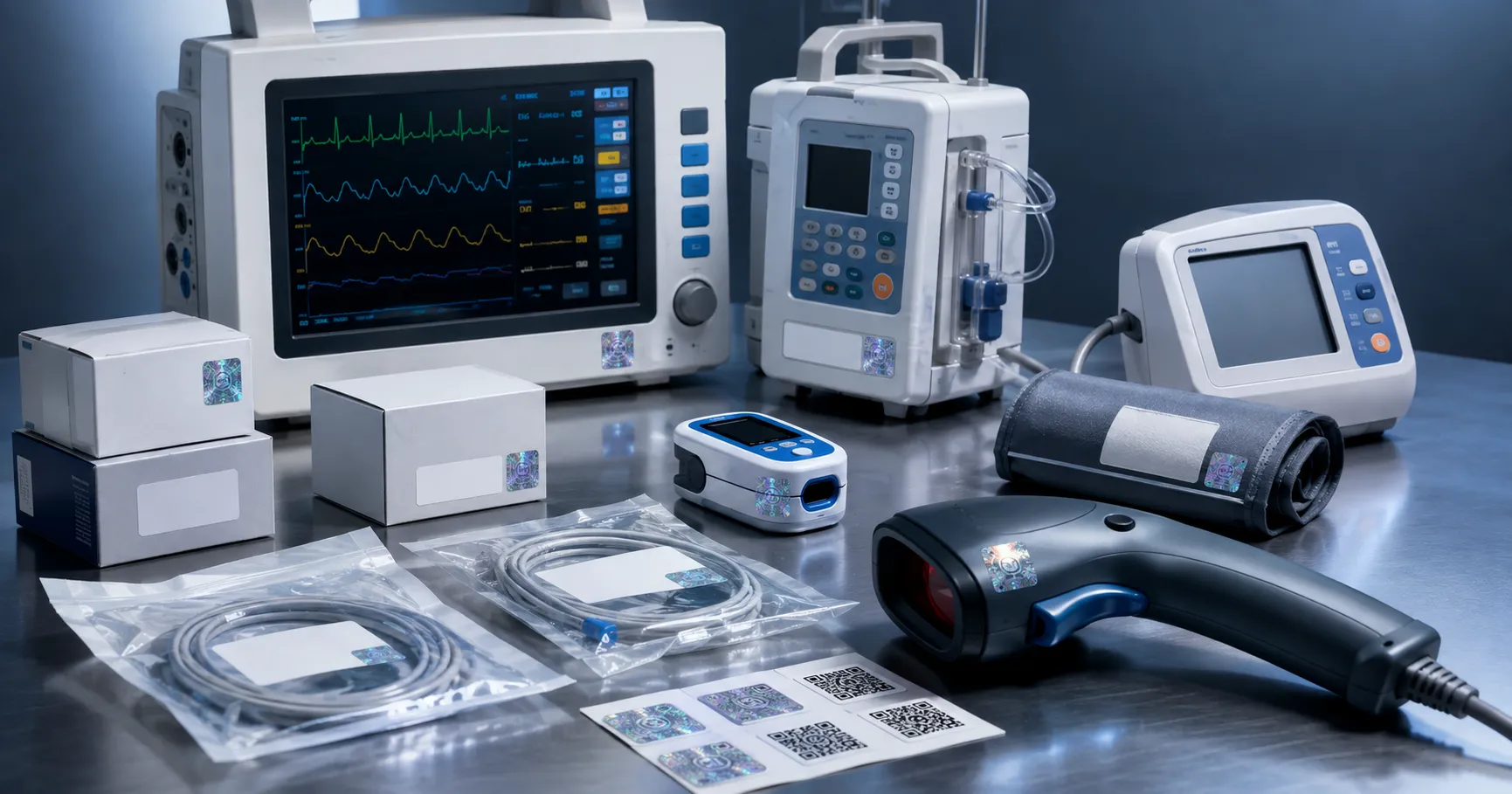
Authentication methods fall into a few broad families. Overt features are visible and meant to be checked easily — holograms, special inks and printed marks. Covert features are hidden and known only to those who need them, catching fakes that copy the visible layer. Tamper-evident packaging shows whether a device has been interfered with. And digital methods — serial numbers, two-dimensional barcodes and unique device identification, checked against a manufacturer or database — allow verification at scale. Most robust schemes combine several families rather than relying on one. The right mix depends on the device and the risk it faces, so manufacturers often tailor the layers rather than applying every method to everything.
The main methods explained.
-
Holograms and overt marks. Visible features that are quick to check and hard to copy well.
-
Covert features. Hidden markers that catch fakes reproducing only the visible layer.
-
Tamper-evident packaging. Seals and features that reveal interference.
-
Serialisation. A unique serial number per unit, checkable against records.
-
Barcodes and identifiers. Two-dimensional codes and unique device identification.
-
Digital verification. Online or database checks confirming a device is genuine.
A short example shows the layers at work. A device might carry a hologram a receiver can see, a covert feature only the manufacturer knows, tamper-evident packaging, and a unique identifier that verifies online. A counterfeiter might copy the hologram, but reproducing the covert feature and a valid, verifiable identifier at the same time is far harder. The layered approach means a fake has to defeat several methods at once, which is exactly the point.
Overt vs covert and digital methods
|
|
Overt methods |
Covert and digital methods |
|
Who checks |
Anyone, by eye |
Trained staff or systems |
|
Main strength |
Fast, deters casual fakes |
Catches sophisticated fakes |
|
Examples |
Holograms, printed marks |
Hidden markers, identifier checks |
|
Best used |
As a first layer |
Alongside overt features |
How buyers can use them
-
Ask suppliers what authentication features their devices carry.
-
Learn to check the overt features quickly on receipt.
-
Use identifier and digital verification where available.
-
Treat tamper-evident features as a signal worth checking.
-
Rely on layers rather than any single feature.
Layered methods, stronger assurance
Authentication is strongest when methods are combined, and when the underlying identifiers are consistent and verifiable. Unique device identification, supported by regulators such as the FDA and by international guidance from the World Health Organisation, gives digital verification a common foundation, while physical features add layers a counterfeiter must also defeat. For buyers, the useful takeaway is to ask what authentication a device carries, check what can be checked, and trust the combination rather than any single mark.
More from Business
-
Buyers — source approved, fully documented equipment.
-
Suppliers — list your equipment and reach buyers worldwide.
-
Advertise — promote your products and services to a clinical audience.
-
Business overview — explore everything MediGear offers healthcare organisations.
Disclaimer
This article is for general information only and does not constitute regulatory, clinical, legal or procurement advice. Authentication technologies and features vary by manufacturer and market and change over time. Always confirm a device's authentication features and verification routes with the manufacturer, and consult qualified quality, regulatory and procurement professionals for decisions specific to your organisation. medigear.uk accepts no liability for actions taken based on this content.
Medical Equipment Authentication Methods
We supply medical equipment to healthcare organisations across the UK, Europe, the US, the Gulf and South Africa — genuine, approved and fully documented, carrying the authentication features that confirm they are real.
Frequently Asked Questions
Authentication methods are the technologies and features that let someone confirm a medical device is genuine. They range from overt marks you can see — holograms, special inks — to covert hidden features, tamper-evident packaging, and digital methods such as serial numbers, two-dimensional barcodes and unique device identification checked against records. No single method is foolproof, so they are usually layered to make a device harder to fake convincingly.
Overt features are visible and meant to be checked easily, such as holograms and printed marks; they are fast to check and deter casual fakes. Covert features are hidden and known only to those who need them, so they catch counterfeits that copy only the visible layer. The two are complementary, which is why robust schemes use both alongside digital verification.
Digital verification checks a device's serial number, two-dimensional barcode or unique device identification against a manufacturer or database to confirm it is genuine. It scales well, because checks can be made quickly and consistently, and it is hard to defeat because a counterfeiter would need a valid, verifiable identifier as well as convincing physical features. It works best as one layer among several.
Because no single method is foolproof. A counterfeiter might copy a hologram, but reproducing a covert feature and a valid, verifiable identifier at the same time is far harder. Layering overt, covert, tamper-evident and digital methods means a fake has to defeat several at once, which greatly raises the difficulty and improves the assurance a genuine device provides.
Buyers can ask what authentication features a device carries, learn to check the overt features quickly on receipt, use identifier and digital verification where available, treat tamper-evident features as a signal worth checking, and rely on the combination of layers rather than any single feature. Knowing what a genuine device should carry makes it easier to spot when something is missing.
MediGear supplies medical equipment to healthcare organisations across the UK, Europe, the US, the Gulf and South Africa. As a distributor we provide genuine, approved and fully documented equipment carrying the authentication features that confirm they are real. Because devices are sourced through authorised channels, their identifiers and features are consistent and verifiable, so the checks a careful team makes come out clean.