
Introduction
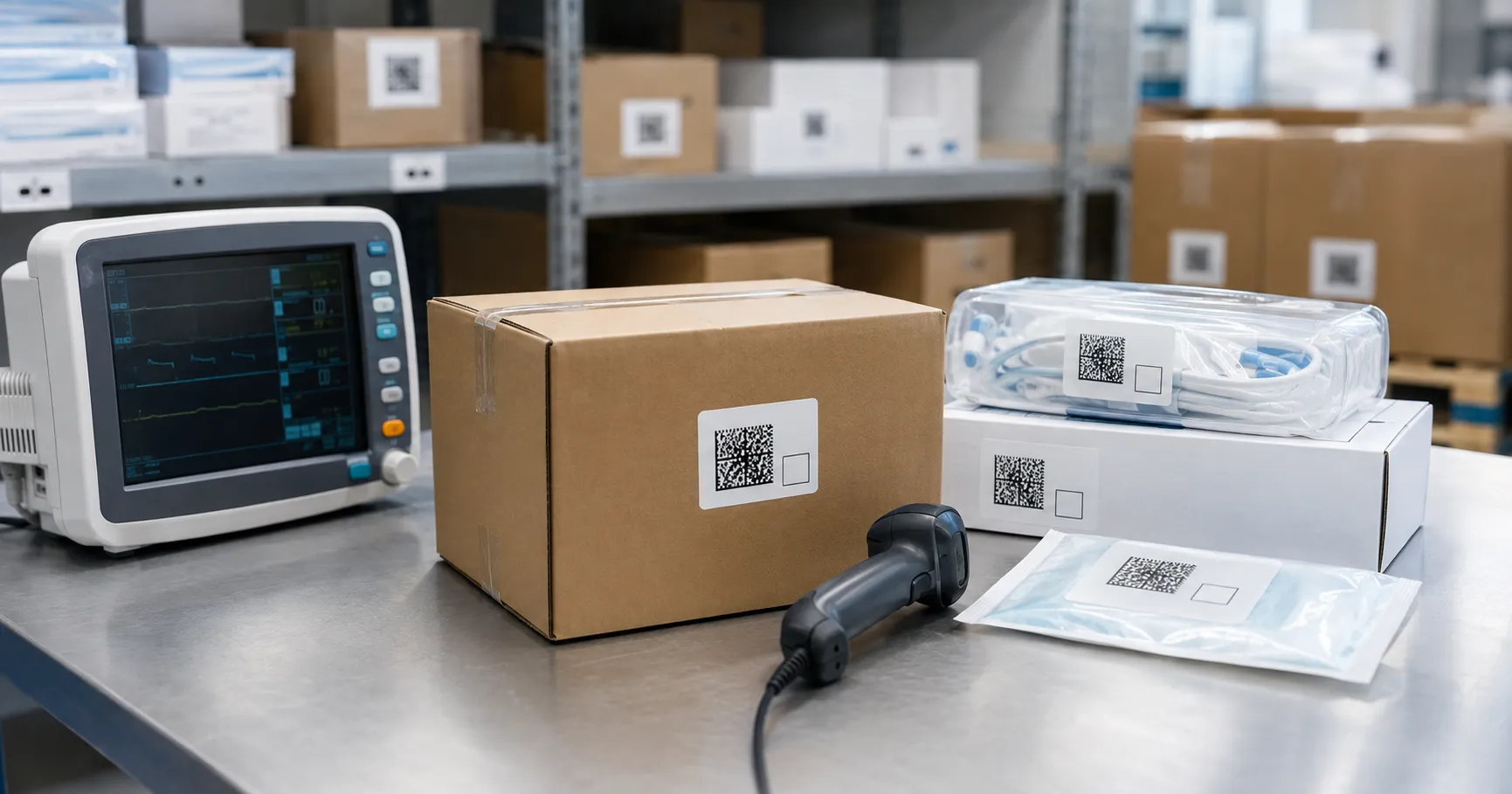
Serialisation means giving each unit of a product its own unique serial number, so that it can be identified, tracked and verified on its own rather than only as part of a batch. In the medical equipment supply chain, this simple idea has powerful effects: it enables end-to-end traceability, makes recalls precise, and makes counterfeiting and diversion much harder. Serialisation works closely with unique device identification, the standardised identifiers that regulators such as the FDA have promoted to improve traceability.
This guide explains how serialisation protects the medical equipment supply chain and why it matters to buyers. It's written for procurement, supply-chain and biomedical engineering teams across the UK, Europe, the US, the Gulf and South Africa.
What to hold onto — the short version
-
Unique identity per unit. Each item can be tracked and verified on its own.
-
Traceability throughout. A serial number follows a device across the supply chain.
-
Precise recalls, fewer fakes. Serialisation sharpens recalls and deters counterfeiting.
What serialisation actually does
By attaching a unique identifier to every individual unit, serialisation turns an anonymous flow of goods into a traceable one. Each unit can be recorded as it moves from manufacturer through distribution to the end user, so its history and current location are known. Units can also be aggregated — linked to the case or pallet they travel in — so whole shipments are traceable while individual items remain identifiable. This granular visibility is what underpins the security benefits: you cannot protect what you cannot see, and serialisation makes the supply chain visible. It also creates a record that supports audits and investigations, since the movement of any unit can be reconstructed after the fact.
How it protects the supply chain
-
End-to-end traceability. Every unit can be followed from manufacture to use.
-
Precise recalls. Affected units can be pinpointed rather than recalling everything.
-
Verification. A unit's identifier can be checked against records to confirm it is genuine.
-
Counterfeit deterrence. Unique, verifiable identifiers make fakes harder to pass off.
-
Diversion detection. Units appearing where they should not be are easier to spot.
-
Aggregation. Linking units to cases and pallets keeps shipments traceable.
A short example shows the recall benefit. Suppose a manufacturer finds a fault affecting a specific production run. With serialisation, exactly which units are affected, and where they went, can be identified, so only those units are recalled, and the rest keep serving patients. Without it, a hospital might have to withdraw a much larger group to be safe. Serialisation turns a blunt, disruptive recall into a precise, targeted one — better for patients and for continuity of care.
Unserialised vs serialised supply chains
|
|
Unserialised |
Serialised |
|
Unit identity |
Known only by batch |
Unique per unit |
|
Recalls |
Broad and disruptive |
Precise and targeted |
|
Verification |
Hard to confirm a unit |
Checkable against records |
|
Counterfeit risk |
Higher |
Lower |
How buyers can benefit
-
Prefer equipment that carries unique identifiers and serialisation.
-
Capture and keep identifiers as devices are received.
-
Use identifiers to verify devices and support recalls.
-
Ask suppliers how their serialisation and traceability work.
-
Keep records that let you trace any unit if needed.
Traceability is the foundation.
Serialisation protects the supply chain because it makes traceability possible, and traceability is what recalls, verification and anti-counterfeiting all depend on. Unique device identification, supported by the FDA and progressed internationally through the IMDRF, gives serialisation a common framework across markets, while guidance from the World Health Organisation underlines the value of tracking devices reliably. For buyers, favouring serialised, identifiable equipment and keeping the identifiers is a simple way to make the whole supply chain safer.
More from Business
-
Buyers — source approved, fully documented equipment.
-
Suppliers — list your equipment and reach buyers worldwide.
-
Advertise — promote your products and services to a clinical audience.
-
Business overview — explore everything MediGear offers healthcare organisations.
Disclaimer
This article is for general information only and does not constitute regulatory, clinical, legal or procurement advice. Serialisation and identification requirements vary by market and change over time. Always confirm current requirements with the relevant national authority, and consult qualified supply-chain, regulatory and procurement professionals for decisions specific to your organisation. medigear.uk accepts no liability for actions taken based on this content.
Secure Every Device in the Supply Chain
We supply medical equipment to healthcare organisations across the UK, Europe, the US, the Gulf and South Africa — genuine, approved and fully documented, with the identifiers and traceability a secure supply chain relies on.
Frequently Asked Questions
Serialisation means giving each individual unit its own unique serial number, so it can be identified, tracked and verified on its own rather than only as part of a batch. In the supply chain this enables end-to-end traceability, makes recalls precise, and makes counterfeiting and diversion much harder. It works closely with unique device identification, the standardised identifiers regulators have promoted to improve traceability.
When a fault affects a specific production run, serialisation lets a manufacturer identify exactly which units are affected and where they went, so only those units are recalled and the rest keep serving patients. Without it, a hospital might have to withdraw a much larger group to be safe. Serialisation turns a blunt, disruptive recall into a precise, targeted one — better for patients and continuity of care.
Unique, verifiable identifiers make fakes far harder to pass off, because a counterfeiter would need a valid serial number that checks out against records, not just a convincing copy. Serialisation also helps detect diversion, since units appearing where they should not be are easier to spot. Combined with authentication features, it makes the supply chain much less hospitable to counterfeits.
Aggregation links individual serialised units to the case or pallet they travel in, so whole shipments are traceable while each item remains individually identifiable. It lets a supply chain track goods efficiently at the shipment level without losing the ability to identify a single unit. Aggregation is part of what makes serialisation practical across large volumes of equipment.
They work closely together. Unique device identification provides standardised identifiers for devices, promoted by regulators to improve traceability, and serialisation gives each individual unit a unique identity within that framework. Together they allow a specific unit to be identified, tracked and verified across markets, which is why they are often implemented side by side.
MediGear supplies medical equipment to healthcare organisations across the UK, Europe, the US, the Gulf and South Africa. As a distributor we provide genuine, approved and fully documented equipment with the identifiers and traceability a secure supply chain relies on. Favouring serialised, identifiable equipment and keeping its identifiers makes recalls, verification and anti-counterfeiting far easier, so we work with your team to keep that traceability intact.